Whether the Bloodhound Standard Asks for a Sad Expression
A Bloodhound’s drooping eyes and solemn face can make it look as if it has just heard terrible news. That expression is part of the breed’s distinctive appearance, but the standard describes a desired look—not a requirement that a dog seem unhappy or have unhealthy eyelids. This guide explains what the standard means, how normal features differ from eye problems, and what owners should watch for.
What the Bloodhound standard means by a sad expression
A description of appearance, not emotion
The Bloodhound standard calls for a noble, dignified look and describes the breed’s expression as solemn and wise. Those words can sound as though judges are looking for a sad dog, but they describe the impression created by the head and face. A Bloodhound does not need to feel or act sad to match the standard.
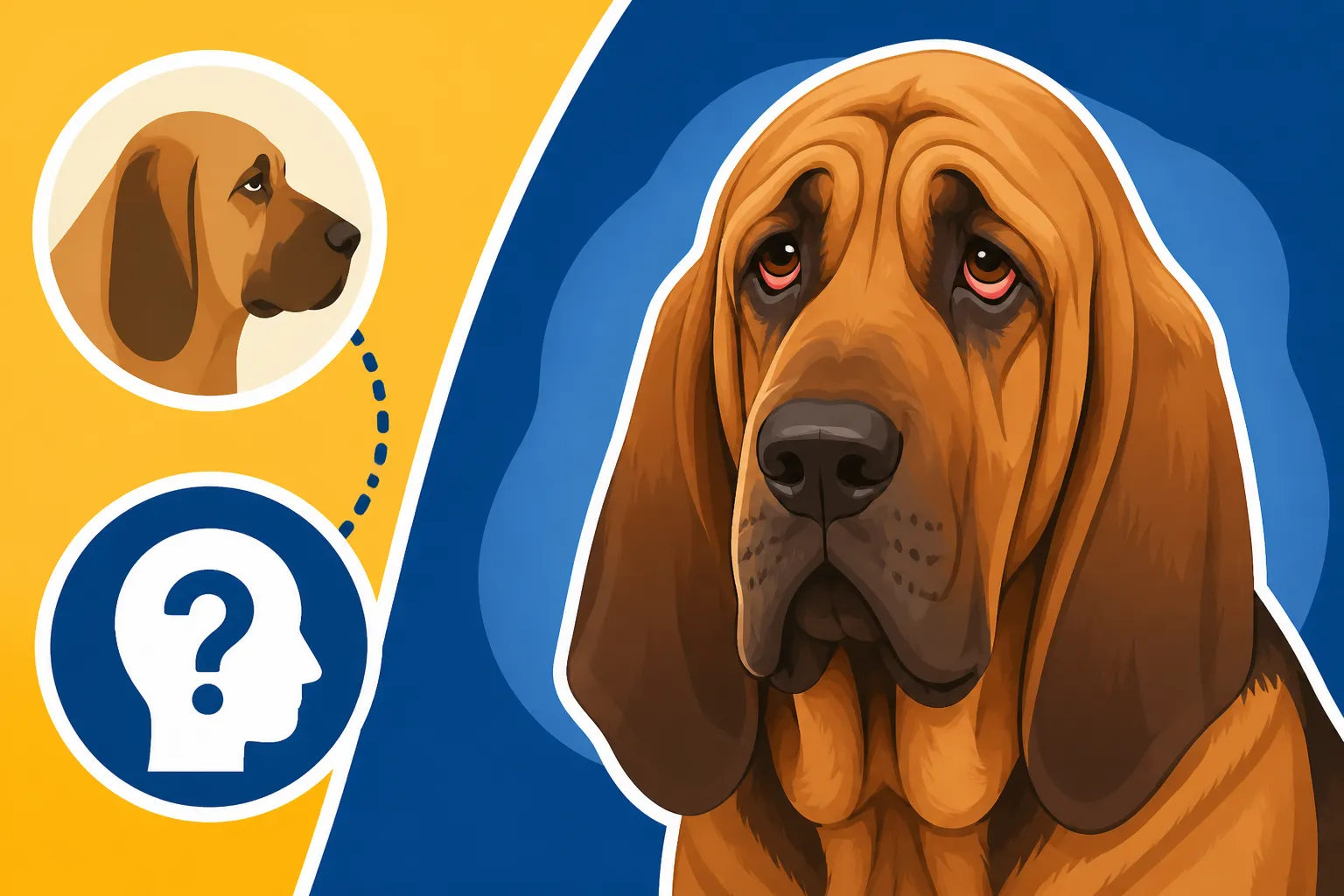
The effect comes from several features working together: the long head, loose skin, deep-set appearance of the eyes, and lower eyelids that may droop enough to show the haw, or inner eyelid. Add the heavy ears and relaxed jowls, and the dog can look thoughtful or mournful even when it is simply watching you open a cupboard.
If you have wondered whether that face is intentional, the answer is yes in the sense that the breed standard describes a solemn, wise expression. But “sad” is an everyday interpretation, not a diagnosis or a request to exaggerate facial features. For more on the anatomy behind the look, see Why a Bloodhound's Head Is Shaped the Way It Is and Whether a Bloodhound's Eyes Are Meant to Droop.
Why judges look at the whole dog
A breed standard is a guide to the breed’s overall type and structure. The expression is one part of the picture; it is not a stand-alone feature that should outweigh soundness, health, movement, or temperament. A judge considers how the head, eyes, ears, skin, body, and gait fit together rather than awarding points for the dog that looks most sorrowful.
That distinction matters because people sometimes assume that “more droop” must mean “more correct.” It does not. The aim is a characteristic Bloodhound expression, not eyelids so loose or irritated that they interfere with comfort or vision. A dog can have the familiar solemn look without having a medical problem, and a dog with a striking face is not automatically healthier or more correct.
A breed description also does not mean every individual will look exactly alike. Bloodhounds vary in the degree of looseness in their skin and eyelids. If you are comparing a particular dog with the standard, consider the complete picture and ask a knowledgeable breeder, breed mentor, or veterinarian to help distinguish normal variation from a welfare concern.
The features that create the Bloodhound’s solemn look
Lower eyelids, haw, and loose skin
The lower eyelid may hang away from the eye, exposing some of the pink or red tissue called the haw. That visible tissue can contribute to the breed’s characteristic expression. A small amount of visible haw is not, by itself, proof of disease; what matters is whether the eye appears comfortable and whether the eyelid is causing irritation or other problems.
Loose skin around the head and face adds to the impression. It can form folds and wrinkles that shift as the dog moves, making the expression seem especially dramatic in one moment and softer in another. The look is part of the Bloodhound’s familiar type, but folds should still be kept clean and dry. Skin that stays damp or becomes irritated needs attention, not a cosmetic adjustment.
The face’s distinctive proportions are not a reason to ignore persistent redness, discharge, squinting, or rubbing. Those signs call for veterinary advice because they can have causes that a description of the breed cannot explain. For a closer look at the differences between normal drooping and a structural concern, read Whether a Bloodhound's Drooping Lid Is a Defect or the Standard and What Ectropion Looks Like on a Bloodhound.
Ears and overall head shape
Long, low-set ears frame the Bloodhound’s head and make its expression seem even more serious. They are not an isolated decoration: the ears, skin, muzzle, and eyes combine to create the breed’s recognizable outline. When a Bloodhound lowers its head to sniff, the loose skin and ears shift, changing the face in ways that can look almost theatrical.
This is one reason photographs can be misleading. A close-up taken from below may make the eyes seem more exposed, while a relaxed dog looking straight ahead may appear gentler and less droopy. Lighting, head position, age, and individual anatomy all affect how pronounced the expression looks.
The standard’s description should not be treated as an instruction to pursue the most extreme version of every feature. A healthy, comfortable dog is more important than an exaggerated look. The same principle applies to loose skin: it contributes to breed type, but it should not be mistaken for an invitation to overlook irritation. See Whether a Bloodhound Must Have Loose Skin for more on the role of this feature.
When a solemn look may signal an eye problem
What to notice at home
A Bloodhound’s usual expression can make it harder for a new owner to know what is normal. Get familiar with your dog’s ordinary appearance when both eyes are open, clear, and comfortable. Then watch for changes: new redness, a sudden increase in tearing or discharge, cloudiness, squinting, frequent pawing at the face, or sensitivity to light.
A little visible haw does not tell you whether an eye is healthy. Nor does a sad-looking face, by itself, mean the dog is uncomfortable. Look at behavior as well as appearance. A dog that keeps an eye partly shut, rubs its face against furniture, or resists having the area touched may be signaling pain or irritation.
If you notice a sudden change, contact a veterinarian rather than trying to diagnose it from the breed’s typical features. Avoid putting human eye drops or household remedies into the eye unless a veterinarian specifically recommends them. The conditions behind similar-looking symptoms can differ, and the right treatment depends on the cause. The broader guide The Four Eye Problems a Bloodhound Is Born Toward explains why eye health deserves regular attention in this breed.
When professional advice matters
A persistent change is worth discussing with a veterinarian, even if your Bloodhound has always had a droopy look. An exam can help determine whether the eyelid position is simply part of the dog’s anatomy or is contributing to exposure, irritation, or damage to the eye’s surface. If needed, your primary veterinarian can advise whether an eye specialist should be involved.
Do not wait for a dramatic symptom before asking for help. Ongoing discharge, repeated redness, or frequent rubbing can be easy to dismiss as “just how Bloodhounds look,” especially when the dog’s face is naturally loose. A quick comparison with your dog’s usual appearance—and a note of when the change began—can help you explain the concern clearly at an appointment.
For basic face cleaning, use a soft, clean cloth and follow your veterinarian’s guidance about products and technique. Keep the area dry rather than scrubbing or pulling at the eyelids. If you are gathering routine grooming supplies, a pet retailer such as Chewy may be one place to look for washable cloths; the important part is choosing something gentle and using it only around the outside of the eye. Do not use a product in the eye just because it is marketed for pets.
Understanding the standard without chasing an extreme
Breed type and individual variation
The standard describes an ideal, not a promise that every Bloodhound will have an identical face. Some dogs have a more pronounced droop or visible haw than others. Differences can reflect ordinary variation, age, or individual structure, so a single photograph is not enough to judge whether a dog’s eyelids are healthy or whether it conforms well to the breed type.
When looking at breeders or show dogs, focus on health and function alongside appearance. Ask what health concerns occur in the family line, whether dogs have needed eye treatment, and how the breeder evaluates comfort and soundness. A responsible conversation should include more than whether a puppy has the most dramatic wrinkles or the most mournful expression.
The question is not whether show dogs are being bred for “sadness.” It is whether breeding choices preserve characteristic type without putting exaggerated features ahead of well-being. Whether Show Bloodhounds Are Bred for Looser Eyelids explores that concern, while Whether a Bloodhound's Ectropion Gets Worse With Age addresses a separate question about how eyelid changes may develop.
A simple way to assess what you are seeing
Use this practical comparison as a starting point, not as a substitute for a veterinary exam:
| What you notice | What it may mean | A sensible next step |
|---|---|---|
| A familiar solemn expression with clear, comfortable eyes | The usual breed appearance may be responsible | Keep observing during routine care |
| A small amount of visible haw without other changes | It can occur as part of the eye’s appearance | Ask your veterinarian at a regular visit if you are unsure |
| New redness, discharge, squinting, or face rubbing | Possible irritation or another eye concern | Contact your veterinarian for advice |
| Sudden cloudiness, marked pain, or an eye held shut | A potentially urgent change | Seek prompt veterinary guidance |
If you are new to the breed, it can help to take a clear photograph when your dog’s eyes look normal. Later, you will have a useful baseline for comparison. That does not replace professional care, but it may make it easier to describe a change rather than relying on memory.
For routine cleaning, keep supplies simple and use only products your veterinarian says are appropriate. Chewy may offer washable grooming cloths among its pet supplies, but avoid assuming that a general-purpose wipe is safe for the eye area. If you are unsure whether a product is suitable, ask before using it. A retailer can help you find supplies; it cannot determine whether a red or painful eye needs treatment.
The Bloodhound standard does ask for a solemn, wise expression, and the breed’s loose facial features help create that impression. But the goal is not to make a dog look as sad or droopy as possible. Learn what is normal for your own Bloodhound, treat new eye symptoms as health questions rather than breed quirks, and put comfort ahead of appearance. When comparing individual dogs, remember that the whole animal—not one dramatic expression—is what matters.
Disclaimer
This article is for general informational purposes only and does not constitute professional advice. Laws, prices and regulations vary by location and change over time. Consult a qualified professional for guidance on your specific situation.