Whether a Working Bloodhound Is Leaner Than a Show One
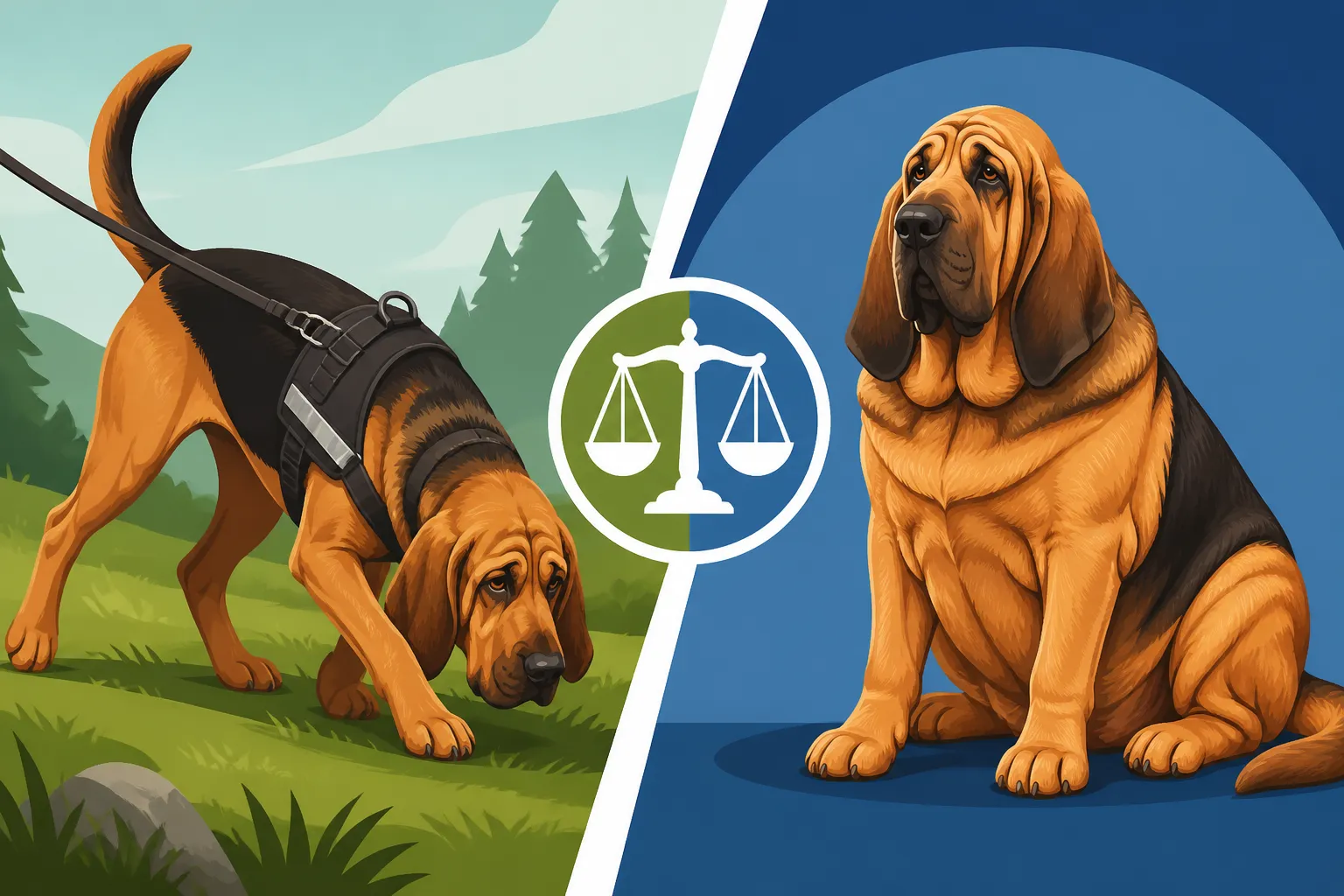
A working Bloodhound may look leaner than a show Bloodhound, but activity alone does not explain every difference. Workload, age, diet, genetics, and the dog’s individual build all matter—and scale weight can be misleading in a large, deep-chested breed. This guide explains how to compare body condition fairly and support a healthy weight without confusing “fit” with “too thin.”
Why working Bloodhounds may look leaner
Work and exercise can change body composition
Some working Bloodhounds spend more time walking over varied ground, practicing trails, or taking part in search work than dogs with less active routines. That activity can help build and maintain muscle while using energy. If the dog’s food intake matches its needs, it may have less stored body fat and a more visibly defined shape.
Still, “working” can mean very different things. One dog may train regularly on long trails; another may do occasional scent exercises and spend much of the day resting at home. Even a serious trailing dog may work in short sessions rather than exercise continuously. A job title does not tell you how much energy the dog uses day to day.
Show dogs are not automatically sedentary or overweight, either. Many receive regular walks, play, and conditioning. A dog preparing for the ring may also be kept in good muscle condition. The difference you notice between two Bloodhounds could reflect their routines, but it could just as easily come down to age, frame, or how they are groomed and presented.
Appearance is not the same as a healthy body condition
Bloodhounds have loose skin, long ears, and a substantial frame, so they can look very different from leaner-built breeds. Loose skin can obscure the outline of the body, while a thick coat, posture, or camera angle can make one dog appear heavier or lighter than it is. For context on the breed’s overall size, see What a Bloodhound Weighs and How Tall It Stands.
A lean working dog should still have enough muscle and energy for its ordinary life. “Lean” does not mean ribs, spine, or hip bones are sharply visible, nor does it mean a dog should be kept at the lowest weight possible. Conversely, a large-looking Bloodhound is not necessarily overweight simply because it is broad or tall. Body condition is more useful than comparing one dog’s silhouette with another’s.
When looking at a dog, consider how it moves, how its muscle feels, and whether its weight has changed over time. A dog that is suddenly losing weight, tiring more easily, or eating differently deserves a veterinary check rather than an assumption that its work has made it fit.
How to assess a Bloodhound’s weight fairly
Use body condition, not a single number on the scale
A scale can help track trends, but it cannot tell you whether a Bloodhound’s weight is appropriate for its frame. Two healthy dogs of the same breed may differ in height, bone structure, and muscle, so the same number does not necessarily mean the same condition. Breed-wide weight information, including How Much a Bloodhound Weighs, is a starting point—not a target for every individual dog.
A practical check is to look at and gently feel your dog’s body. You should generally be able to feel the ribs under a modest layer of tissue without pressing hard. From above, the body may show a waist behind the ribs; from the side, the abdomen may rise somewhat toward the hindquarters. Loose skin can make these outlines harder to judge, so use your hands as well as your eyes.
If you are unsure, ask your veterinarian to assess body condition and muscle condition during a routine visit. That is especially useful when a dog has a thick or loose-skinned build, is older, or has recently changed its activity level. A vet can help you set a realistic goal based on your dog’s frame rather than an idealized picture of a working or show dog.
Compare the same dog over time
Photos can be more useful than comparing unrelated Bloodhounds online. Take pictures from the side and above in similar lighting and posture, then review them alongside weigh-ins and notes about appetite, exercise, and health. This makes gradual changes easier to spot—particularly when a dog’s long ears and loose skin make its outline difficult to read at a glance.
A simple record might include:
| What to track | Why it helps |
|---|---|
| Weight at regular check-ins | Shows whether the dog is trending up or down |
| Body condition observations | Helps distinguish fat gain or loss from normal build |
| Work and exercise routine | Puts changes in energy needs into context |
| Food and treats | Makes portions and extras easier to review |
| Appetite, energy, and mobility | May reveal a health change that weight alone misses |
Keep in mind that a working dog can gain weight during an off-season or lose condition after an illness or change in routine. A show dog can be muscular and active, while a working dog can carry excess weight. Labels are not measurements.
Feeding for a working routine
Adjust portions to the dog in front of you
A Bloodhound’s calorie needs depend on more than whether it works. Body size, age, neuter status, health, weather, exercise intensity, and the amount of time spent resting all play a part. A dog doing regular, strenuous work may need more food than a similar-sized dog with a quiet routine, but an occasional trail session may not justify a large increase in daily portions.
Start with the feeding guidance for your dog’s food, then use your dog’s weight and body condition to discuss portions with your veterinarian. Measure meals rather than estimating by eye, and remember that training rewards, chews, table scraps, and food used in enrichment all contribute to daily intake. If you increase portions during a busy period, reassess after the workload changes instead of leaving the higher amount in place indefinitely.
If you are comparing foods, read the feeding directions and calorie information on the actual packaging. Retailers such as Chewy may list product details, but the label and your veterinarian’s advice should guide what you feed. Avoid changing food or sharply increasing portions just because another handler feeds a different amount; two dogs doing similar work can still have different needs.
For a closer look at adjusting intake, see Whether a Working Bloodhound Needs More Calories and Keeping a Bloodhound Lean on Purpose. Both questions are best answered by watching the individual dog over time, not by assuming every working Bloodhound should eat more or weigh less.
Keep exercise and meals sensible
Trail work can be physically demanding, but it is also mentally absorbing. Let your dog build stamina gradually, especially if it is returning to work after time off. Heat, uneven terrain, age, and the length of a session can all affect how comfortably a dog works. Allow water breaks and recovery time, and stop if your dog seems unwell, unusually tired, or reluctant to continue.
Large, deep-chested dogs also need thoughtful meal routines. Discuss meal timing and feeding practices with your veterinarian, particularly if your dog works around mealtimes or eats very quickly. Avoid making abrupt changes to the dog’s activity or feeding schedule, and do not use a heavy exercise session as a reason to force a large meal immediately before or afterward. For broader guidance, see Feeding a Bloodhound So It Does Not Bloat.
How work, age, and genetics affect the comparison
A Bloodhound’s build is individual
Some Bloodhounds are naturally taller, heavier-boned, or more muscular than others. A dog from a line selected for show presentation may have a different look from one whose family has a history of active work, but those broad impressions cannot predict the health or ideal weight of a particular dog. Even littermates can mature into noticeably different shapes.
That is why a direct comparison between a working dog and a show dog can be misleading. If one has a larger frame, it may weigh more while remaining lean. If another has less muscle or a different body shape, it may look lighter without being fitter. The useful question is not “Which type is supposed to weigh less?” but “Is this dog at a healthy condition for its own frame and routine?”
Puppies and adolescents require special care, too. They are still growing, and adult expectations do not apply to them. Avoid trying to make a young Bloodhound look like a finished working adult by restricting food or pushing strenuous exercise. The breed’s growth timeline is discussed in The Age a Bloodhound Reaches Full Weight.
Change plans when the routine changes
A working Bloodhound’s energy needs may shift when training pauses, the dog retires, or an injury limits activity. The same portions that suited regular trail work may lead to gradual weight gain during a quieter period. Make changes thoughtfully: keep a record, adjust with veterinary guidance, and give the dog time to settle into a new routine.
Likewise, a dog that begins working more often may need a nutrition review, but adding food automatically can cause weight gain if the work is not as demanding as expected. Watch for changes in stamina, muscle, appetite, and body condition. If weight changes despite a stable diet and routine, or if the dog seems weak, uncomfortable, or less interested in food, seek veterinary advice.
Chewy is one place owners may encounter different food options, but product choice should follow the dog’s needs rather than its working or show label. If you use an online retailer such as Chewy to compare foods, check the package details and discuss any major diet change with your veterinarian. A food’s marketing language does not establish that it is right for a particular Bloodhound.
The most useful conclusion is straightforward: working Bloodhounds may be leaner on average when their activity and feeding support a fit condition, but there is no rule that every working dog should weigh less than every show dog. Judge your dog by body condition, health, and changes over time—not by job title, a single scale reading, or someone else’s hound.
Disclaimer
This article is for general informational purposes only and does not constitute professional advice. Laws, prices and regulations vary by location and change over time. Consult a qualified professional for guidance on your specific situation.