Whether Show Bloodhounds Are Bred for Looser Eyelids
Those famously mournful, droopy eyes are a hallmark of the Bloodhound, instantly recognizable and deeply endearing. But for many owners, this unique look also sparks a nagging concern: are show Bloodhounds being bred for excessively loose eyelids, pushing the boundaries of what's healthy for the dog? This guide will explore the breed standard, the realities of conformation showing, and the health implications of those distinctive, deep-set eyes.
The Iconic Look of the Bloodhound's Eyes
When you picture a Bloodhound, a few features immediately come to mind: the long, sweeping ears, the abundant loose skin, and, of course, those expressive, somewhat droopy eyes. It's an iconic silhouette, but it's also a source of ongoing discussion among enthusiasts, breeders, and veterinarians alike. Understanding the breed's physical characteristics, particularly around the eyes, is crucial to appreciating why this question of "too loose" even arises.
What the Breed Standard Dictates for Eyelids
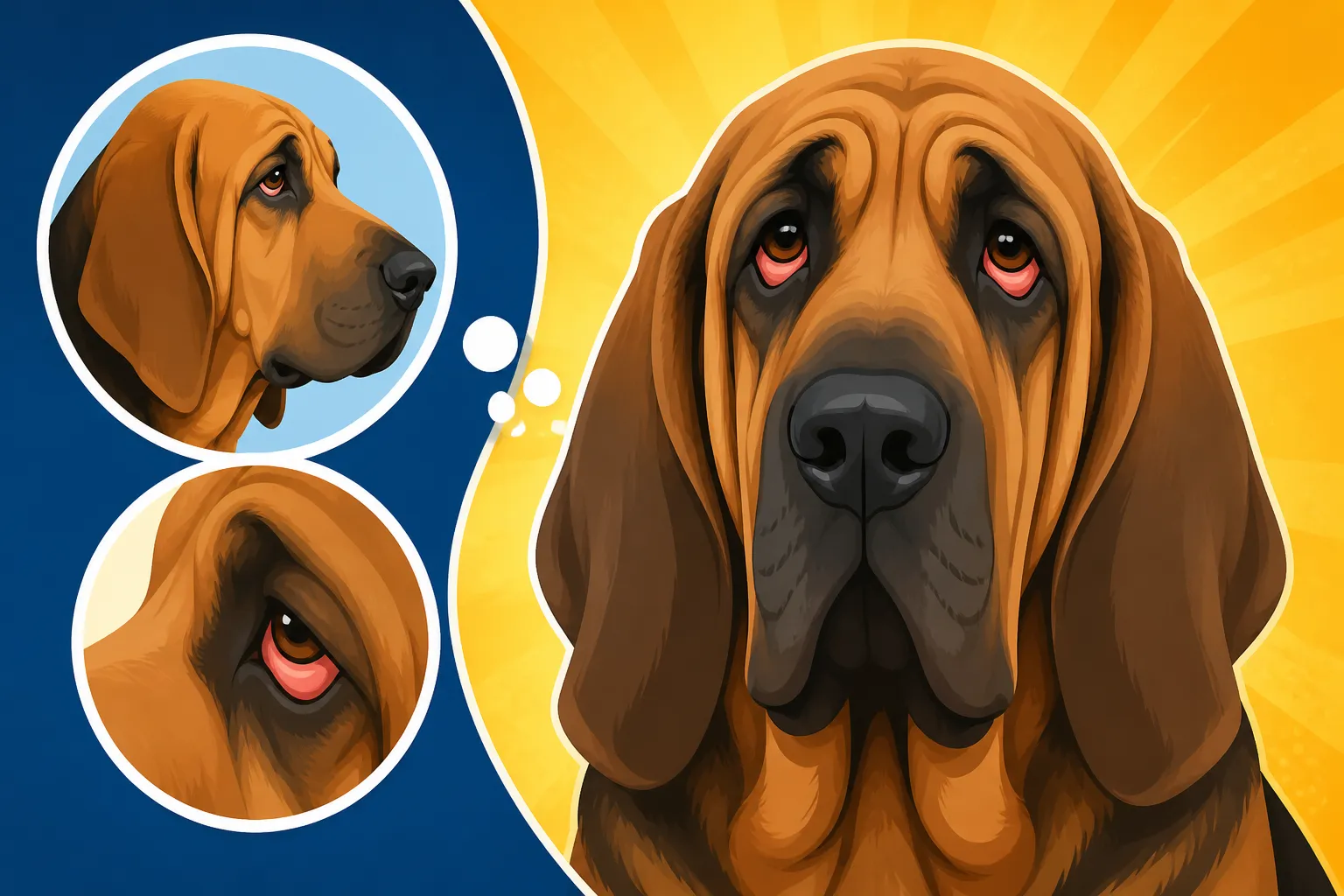
The official breed standards, such as those set by the American Kennel Club (AKC) and the American Bloodhound Club, provide a detailed blueprint for the ideal Bloodhound. When it comes to the eyes, these standards describe them as "deeply set," "diamond-shaped," and often mention that the "haws" (the red, fleshy part of the lower eyelid) are "somewhat apparent" or "visible." This isn't just an aesthetic choice; it’s part of the breed's functional design. The deep-set eyes are somewhat protected by the bony brow, and the loose skin and wrinkles around them are thought to help channel scent towards the nose, a critical adaptation for a trailing hound.
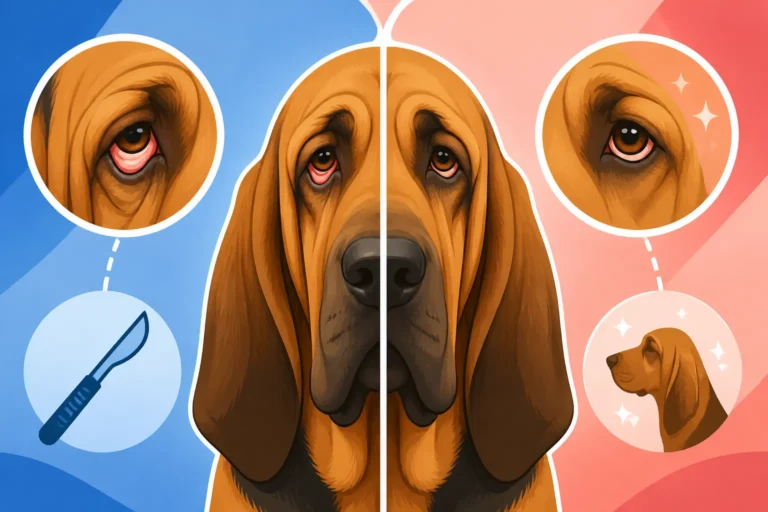
However, there's a delicate balance. While some visibility of the haw is considered characteristic, the standard also emphasizes that the eyes should not appear "weak" or "sore." The goal is for the eyelids to protect the eye adequately. This subtle distinction between "characteristic looseness" and "excessive looseness" is where the interpretation, and sometimes the trouble, begins in the show ring. A minor amount of visible haw is typical and functional, but when the lower lid hangs so far away that it constantly exposes the conjunctiva and eyeball, it crosses into a health concern rather than just a breed trait.
Functional Purpose of Loose Facial Skin
The Bloodhound's extraordinary sense of smell is legendary, capable of following trails days old, across challenging terrains. This incredible olfactory prowess isn't just about their nose; it’s an entire package of adaptations, and the loose facial skin plays a significant role. The deep wrinkles, particularly around the muzzle and face, are believed to help trap and concentrate scent particles, creating a sort of "scent pool" that allows the dog to process the trail more effectively. Imagine those wrinkles acting like miniature nets, catching microscopic evidence as the Bloodhound's head swings low to the ground.
The eyelids are part of this broader facial structure. While not directly involved in scent collection, their inherent looseness is a consequence of the overall abundant, pliable skin that defines the breed. This loose skin gives the Bloodhound its distinctive, somewhat melancholic expression, but it’s primarily an evolutionary trait honed for scent work. The deep-set eyes and droopy lids, while often captivating to look at, contribute to the image of a dog utterly devoted to its nose. Therefore, when we look at a Bloodhound's eyes, it's not just about what looks appealing, but also how it fits into the magnificent, ancient design of a working scent hound.
The Influence of Show Breeding on Bloodhound Eyelids
The world of dog shows is driven by the breed standard, with judges seeking out dogs that best exemplify their breed's ideal characteristics. For Bloodhounds, their unique facial structure, including those distinctively droopy eyes, is a significant part of that "type." The challenge often lies in how these characteristics are interpreted and sometimes exaggerated in the pursuit of perfection within the show ring, potentially leading to health compromises.
The Pursuit of "Breed Type" and Exaggeration
In any breed, show lines tend to emphasize and sometimes exaggerate traits that are considered quintessential to the breed's "type." For the Bloodhound, the loose skin, the profuse wrinkles, and the deep-set, diamond-shaped eyes with visible haws are all part of this. A Bloodhound with a tight, unwrinkled face and eyes that fit snugly would be considered atypical, failing to meet the breed's distinct appearance. As a result, breeders focused on producing competitive show dogs might inadvertently select for dogs with even more pronounced loose skin and droopier eyelids, believing this better embodies the standard's description of a "majestic" and "somewhat solemn" expression.
This drive for specific aesthetics can lead to a fine line between a desired breed trait and a potential health problem. When a judge consistently rewards a dog with increasingly exaggerated features, it sends a signal to breeders about what is considered desirable. While the intention is to preserve and enhance the breed's unique look, without careful oversight and a strong emphasis on health, this can unfortunately result in dogs whose features, while striking, predispose them to discomfort or medical issues. It’s a tension well-known across many purebred dogs, and the Bloodhound's eyes are a classic example.
Balancing Aesthetics with Ocular Health
The conversation around Whether a Bloodhound's Drooping Lid Is a Defect or the Standard is complex because the breed is designed to have a looser lower lid. The challenge arises when this looseness becomes so pronounced that it impairs the eye's natural protective functions. Conditions like ectropion, where the lower eyelid sags outward excessively, and entropion, where the eyelid rolls inward, are significantly more common in Bloodhounds than in breeds with tighter facial skin. While a slight degree of ectropion is considered characteristic, severe cases can lead to chronic irritation, infections, and even corneal damage because the eye is constantly exposed to dust, dirt, and air.
Ethical breeders are keenly aware of this tightrope walk. They strive to produce dogs that embody the breed's noble appearance while prioritizing health and functionality. This means carefully selecting breeding stock that exhibits correct eye structure according to the standard, without crossing into excessive looseness that causes discomfort or requires frequent veterinary intervention. It also involves being honest about any eye issues in their lines and actively working to mitigate them. For new owners, this means asking about parental health clearances and looking for puppies with clear, bright eyes, even if the haw is visible. Understanding these nuances is vital for anyone considering a Bloodhound, as eye care is often a lifelong commitment.
Common Eye Problems Exacerbated by Loose Eyelids
The very characteristics that give Bloodhounds their distinctive look – the abundant loose skin and droopy eyelids – unfortunately also predispose them to several specific eye conditions. These aren't just cosmetic issues; they can cause significant discomfort and, if left untreated, lead to serious health problems. Being aware of these conditions is essential for any Bloodhound owner.
Ectropion: The Outward Rolling Lid
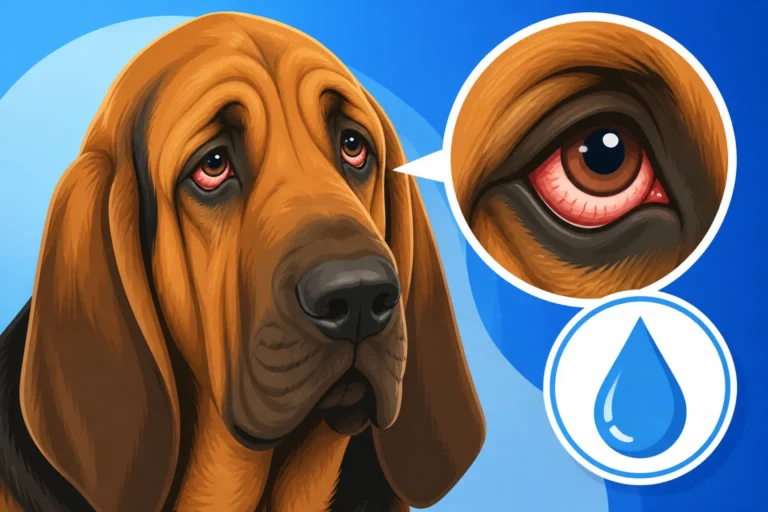
What Ectropion Looks Like on a Bloodhound is perhaps the most visible and common eye condition in the breed, characterized by the lower eyelid rolling outward, exposing the delicate pink conjunctiva and, often, the "haw" (the third eyelid). It's a direct consequence of the loose facial skin, especially prominent in breeds like the Bloodhound, and often worsens as the dog ages and skin elasticity decreases. While a slight degree of ectropion is considered normal for the breed, excessive ectropion means the eyelid cannot effectively protect the eye.
This constant exposure leads to a host of problems. The eye's surface dries out more easily, dust, debris, and allergens can irritate it, and tear drainage is often impaired, leading to a chronic, watery discharge. You might notice your Bloodhound frequently blinking, rubbing their face, or having red, irritated eyes. If untreated, chronic irritation can lead to conjunctivitis, corneal ulcers, and other secondary infections. Daily cleaning and lubricating drops are often necessary, and in severe cases, surgical correction (eyelid tacking) may be required to tighten the lid and restore its protective function. The goal of such surgery isn't to change the breed's characteristic look entirely, but to ensure the dog's comfort and long-term eye health.
Entropion: The Inward Rolling Lid
While less common than ectropion in Bloodhounds, entropion is arguably more painful and potentially damaging. This condition involves the eyelid rolling inward, causing the eyelashes and surrounding hair to constantly rub against the sensitive surface of the cornea. Imagine having a hair perpetually scratching your eyeball – that's the discomfort your Bloodhound feels. This irritation can quickly lead to corneal ulcers, which are open sores on the eye's surface, and can even result in vision impairment or blindness if not addressed promptly.
Signs of entropion are usually quite noticeable: excessive tearing, squinting, holding the affected eye shut, pawing at the face, and a discharge that might be clear or thick with pus. Unlike ectropion, which is often managed with daily care, entropion almost always requires surgical correction. The procedure involves removing a small wedge of skin and muscle from the affected eyelid to roll it back into its correct position. Early diagnosis and intervention are critical to prevent permanent damage to the cornea. While ectropion is often related to the overall looseness, entropion can sometimes be a localized issue or even appear alongside ectropion on the same dog, requiring careful veterinary assessment. The costs associated with treating these conditions, particularly surgical ones, can be substantial, which is why many owners consider pet insurance options from companies like Healthy Paws.
Dry Eye in the Bloodhound
Another significant concern related to the Bloodhound's distinctive eye structure is Dry Eye in a Bloodhound, medically known as Keratoconjunctivitis Sicca (KCS). This condition occurs when the eyes don't produce enough tears, or the quality of the tears is poor, leading to chronic dryness and inflammation of the cornea and conjunctiva. While not directly caused by loose eyelids, the exposure from ectropion can certainly exacerbate dry eye symptoms by increasing tear evaporation and the eye's susceptibility to irritation.
A Bloodhound with dry eye might have thick, tenacious discharge, red and inflamed eyes, and dull, cloudy corneas. Over time, chronic dry eye can lead to pain, corneal pigmentation (darkening of the cornea), and, in severe cases, vision loss. Diagnosis typically involves a simple tear test called a Schirmer tear test. Treatment usually involves lifelong daily medication, often in the form of cyclosporine or tacrolimus eye drops, which help stimulate tear production. Regular veterinary check-ups are vital to monitor progress and adjust medication as needed. Ensuring your Bloodhound receives consistent care for any eye issues, including regular cleaning and appropriate medication, is key to their comfort and health. The ongoing cost of these medications can add up, and having a comprehensive plan, perhaps through a provider like Healthy Paws, can certainly help manage these expenses.
Navigating Surgical Solutions and Long-Term Care
When conservative management with daily cleaning and drops isn't enough, or if the condition is severe from the outset, surgical intervention becomes necessary for conditions like severe ectropion or entropion. When a Bloodhound's Eyelids Need Surgery is a decision made in consultation with a veterinarian or a veterinary ophthalmologist. The goal of eyelid surgery isn't to completely eliminate the Bloodhound's characteristic droop, but to reposition the eyelids so they function properly, protecting the eye and alleviating discomfort.
Post-surgery care is crucial for a successful outcome, typically involving pain medication, antibiotics, and an Elizabethan collar to prevent the dog from rubbing or scratching the surgical site. Owners need to be prepared for the recovery period, which can include temporary swelling and bruising. While surgery offers significant relief and improves quality of life, it's not always a one-time fix. Some Bloodhounds, due to the extreme looseness of their skin, may require follow-up procedures later in life. Additionally, even after successful surgery, many Bloodhounds will still require diligent daily eye care, including regular cleaning and possibly lubricating drops, to keep their eyes healthy and comfortable. This ongoing commitment highlights the importance of understanding the breed's needs before bringing a Bloodhound into your home.
Responsible Breeding and Owning a Bloodhound
The challenges presented by the Bloodhound's unique eye structure underscore the critical role of responsible breeding and informed ownership. It's about finding that sweet spot where the breed's defining characteristics are celebrated without compromising the individual dog's health and well-being.
The Commitment of Ethical Breeders
Ethical Bloodhound breeders are individuals deeply devoted to the health, temperament, and preservation of the breed. They recognize that while the breed standard calls for a certain look, it should never come at the cost of the dog's comfort or quality of life. These breeders engage in rigorous health screening of their breeding stock, including comprehensive eye examinations by a board-certified veterinary ophthalmologist. They look for parents with good eye conformation that aligns with the standard without excessive looseness that would predispose their offspring to severe ectropion or entropion.
Such breeders are transparent about the health history of their dogs and their lines. They should be willing to discuss common breed-specific health issues, including The Four Eye Problems a Bloodhound Is Born Toward, and explain how they are working to minimize these risks. They won't shy away from questions about previous litters or the incidence of eye surgeries in their dogs. A reputable breeder's primary goal is to produce healthy, well-adjusted puppies that can live long, comfortable lives, and they understand that part of that means producing a Bloodhound whose eyelids, while characteristic, are functionally sound. They contribute to a healthier future for the breed by making informed breeding decisions that prioritize wellness over extreme aesthetics.
What to Look for in a Bloodhound Puppy
If you're considering bringing one of these magnificent hounds into your family, doing your homework is vital. Beyond finding a reputable breeder, pay close attention to the puppy's eyes during your visit. While puppies may not show the full extent of adult eye conformation, you can still observe signs of health. Look for eyes that are clear, bright, and free of excessive discharge. The eyelids should appear relatively clean, and while some haw might be visible, it shouldn't be so pronounced that the eye appears constantly red, irritated, or watery.
Ask the breeder about the eye health of both parents and their lineage. Inquire about any history of ectropion or entropion in their lines, and whether any of their dogs have required eyelid surgery. A good breeder will provide documentation of health clearances and be able to explain the genetic considerations for eye health. Remember that even with the best breeding practices, some degree of eyelid looseness is inherent to the breed, and daily eye care, such as regular cleaning, might still be a lifelong routine. Choosing wisely from the start can help mitigate the risk of severe problems, ensuring your Bloodhound grows up to be as comfortable as they are endearing. While some owners worry about the cost of What a Health Tested Bloodhound Puppy Costs, remember that these initial investments are often minor compared to potential veterinary bills for untreated genetic conditions later on.
Here's a quick reference table comparing desirable Bloodhound eye features with signs that might indicate excessive looseness and potential health concerns:
| Feature | Desirable Bloodhound Eye (Characteristic Looseness) | Potentially Problematic Bloodhound Eye (Excessive Looseness) |
|---|---|---|
| Eye Shape | Deep-set, diamond-shaped, generally protected by brow | Too exposed, appearing round or wide open |
| Lower Eyelid | Visible haw (third eyelid) but conjunctiva mostly covered; slight droop is normal | Significantly sagged, conjunctiva constantly exposed; eyelid hangs away from the eyeball |
| Tear Flow | Tears drain naturally into tear ducts; minimal to no excessive tearing | Excessive tearing (epiphora) that stains the face due to poor drainage |
| Cornea | Clear, bright, moist, free from irritation | Dull, dry, cloudy, or red; signs of chronic irritation or inflammation |
| Discharge | Minimal clear discharge, especially upon waking | Frequent or copious discharge (clear, milky, or thick yellow/green) |
| Comfort | Appears comfortable, no excessive blinking, rubbing, or squinting | Frequent blinking, rubbing face, squinting, holding eyes partially or fully closed |
Disclaimer
This article is for general informational purposes only and does not constitute professional advice. Laws, prices and regulations vary by location and change over time. Consult a qualified professional for guidance on your specific situation.