Dry Eye in a Bloodhound
It’s truly disheartening to see your magnificent Bloodhound, with their gentle eyes usually full of expression, start squinting, rubbing, or developing a thick, gunky discharge. When those beautiful eyes look perpetually red, irritated, and just plain uncomfortable, you might be dealing with a condition known as dry eye, or Keratoconjunctivitis Sicca (KCS). This guide aims to thoroughly explain everything you need to understand about dry eye in Bloodhounds, from spotting the early indicators to navigating the treatment options and committing to the long-term care necessary to keep your beloved hound comfortable and healthy.
What is Dry Eye (KCS) in Bloodhounds?
Keratoconjunctivitis Sicca, or KCS, is a mouthful, but it simply refers to a chronic inflammatory condition where a dog's eyes don't produce enough tears. For Bloodhounds, whose eyes are already a focal point of their distinctive appearance and often susceptible to various issues, KCS can be particularly troublesome, leading to ongoing discomfort and potential vision impairment if not properly managed.
The Role of Tears in Bloodhound Eye Health
Think of tears not just as something that happens when you're sad, but as a vital, multi-layered protective shield for the eye. A healthy tear film is actually composed of three crucial layers, each playing a distinct role in maintaining ocular health. The deepest layer, closest to the eye's surface, is the mucin layer, produced by goblet cells in the conjunctiva. This layer helps the watery part of the tear film adhere evenly to the cornea, essentially acting as a wetting agent.
Next comes the thickest part, the aqueous (watery) layer, which is primarily produced by the lacrimal glands and the glands of the third eyelid. This is the workhorse layer, responsible for flushing away debris, providing oxygen and nutrients to the cornea (which has no blood supply), and containing antibacterial enzymes to fight off infection. Without sufficient aqueous tears, the eye loses its natural cleansing and protective mechanisms, quickly becoming vulnerable.
Finally, there's the oily (lipid) layer, secreted by the meibomian glands along the eyelid margins. This outermost layer forms a protective barrier, slowing down the evaporation of the watery tears and stabilizing the entire tear film. In Bloodhounds, the sheer size and often prominent, somewhat droopy nature of their eyelids can already make tear distribution across the large corneal surface a bit more challenging than in breeds with tighter lids, making a healthy tear film even more critical.
How Tear Production Fails in KCS
In KCS, the primary failure typically lies in the aqueous layer, meaning the lacrimal glands are producing insufficient watery tears. This deficiency can arise from a variety of causes, but often, it's an immune-mediated process where the dog's own immune system mistakenly attacks and destroys the tear-producing glands. This autoimmune destruction is a common culprit in many breeds, including Bloodhounds, leading to a progressive decline in tear production.
When the watery component is lacking, the other two layers of the tear film can't function effectively. The mucin layer, without enough water to spread, can become thick and clumpy. The lipid layer, while still present, can't prevent evaporation if there's hardly any water underneath it. This cascade effect means the eye quickly loses its lubrication, protection, and ability to clear away irritants. The surface of the eye becomes dry, inflamed, and prone to damage, leading to the discomfort and visible signs that Bloodhound owners often notice first.
The Impact of Bloodhound Anatomy on Tear Film
Bloodhounds, with their distinctive deep-set eyes and often loose, pendulous lower eyelids, present a unique anatomical challenge for tear film maintenance. While these features are part of their breed standard and contribute to their endearing "sad" expression, they can also exacerbate the effects of KCS. The loose lower lids, a characteristic often referred to as "haw," can sometimes lead to a condition called What Ectropion Looks Like on a Bloodhound, where the eyelid rolls outwards. This exposes more of the conjunctiva and the eye's surface to the air, increasing tear evaporation and the risk of foreign bodies.
Even without full-blown ectropion, the sheer surface area of a Bloodhound's eye, coupled with their long, sweeping ears that can pick up dust and debris close to the ground, means their eyes are constantly at work. A healthy, robust tear film is their first line of defense. When KCS hits, these anatomical traits mean that the symptoms of dryness and irritation can become more pronounced and potentially lead to quicker deterioration than in a breed with tighter, more protective eyelids. Understanding Why a Bloodhound's Lower Lid Hangs Away From the Eye helps put into perspective the daily challenges their eyes face, even without additional health issues.
Recognizing the Signs of Dry Eye in Your Bloodhound
Identifying KCS early can make a significant difference in managing the condition and preventing long-term damage. While Bloodhounds are stoic, their eyes will usually give away their discomfort if you know what to look for.
Visible Changes Around the Eyes
One of the most common and tell-tale signs of dry eye in a Bloodhound is a persistent, thick, yellowish-green discharge. Unlike the clear, watery discharge you might see with allergies or even a minor irritation, this KCS-related discharge is often stringy, sticky, and accumulates in the corners of the eyes and along the lid margins. Owners often describe it as looking like "mucus" or "pus," and it can be quite bothersome, sometimes crusting over and even gluing the eyelids together, particularly after sleep.
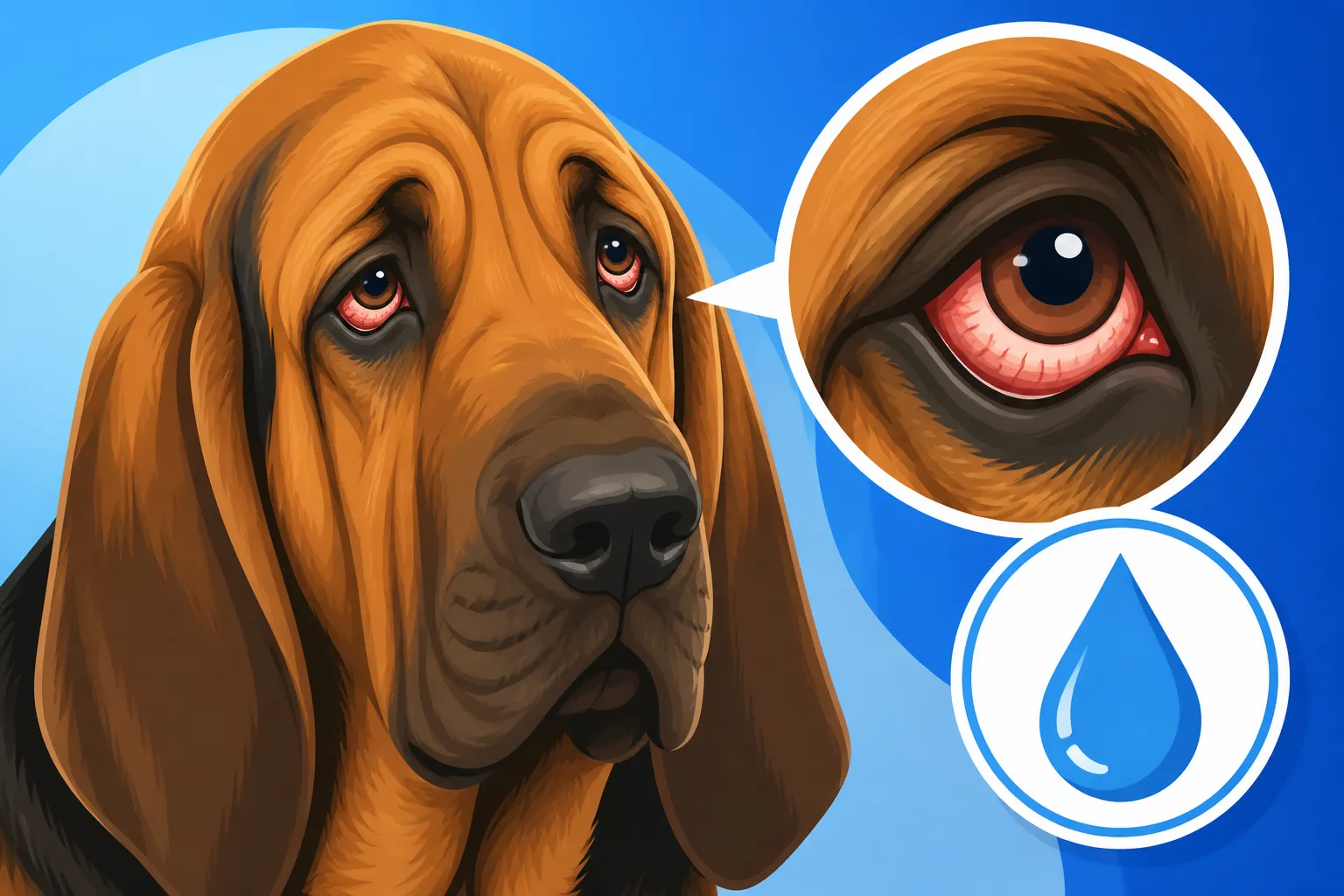
Beyond the discharge, the eyes themselves will usually appear red and inflamed. The white part of the eye, or sclera, often takes on a dull, injected, or "bloodshot" appearance. The cornea, the clear front surface of the eye, may lose its characteristic sparkle and appear dull or hazy. In more chronic cases, you might even start to see blood vessels growing into the cornea (a process called corneal vascularization) or pigmentation developing on the surface, which looks like dark spots or a brownish film. This pigmentation is the body's attempt to protect the exposed surface, but it can unfortunately interfere with vision. Recognizing these changes is a crucial part of Daily Eye Care for a Bloodhound.
Behavioral Indicators of Discomfort
Your Bloodhound's behavior can also provide strong clues about ocular discomfort. A common sign is increased blinking or squinting, especially in bright light or after prolonged periods of being awake. They might hold one or both eyes partially closed, signaling that the light is irritating their already sensitive corneas. Excessive rubbing of the face or eyes with their paws, or against furniture or your leg, is another clear indicator of irritation. While a little face-rubbing is normal, persistent or aggressive rubbing warrants a closer look.
Some Bloodhounds might become less enthusiastic about activities they once loved, particularly those involving being outdoors or in windy conditions, as these can exacerbate their dry eyes. You might also notice them shying away when you try to touch their face or clean their eyes, even if they're normally affectionate. Any sudden change in their usual demeanor, combined with the visible eye changes, should prompt a visit to your veterinarian. Remember that other conditions, like Cherry Eye in a Bloodhound or even simple conjunctivitis, can share some symptoms, so accurate diagnosis is key.
When to Seek Veterinary Attention
If you observe any of the aforementioned signs – persistent discharge, redness, squinting, or rubbing – it's always best to seek veterinary attention promptly. Eye conditions can escalate quickly, and early intervention can prevent more serious complications, including painful corneal ulcers and even vision loss. For Bloodhounds, whose eyes are already predisposed to issues like The Four Eye Problems a Bloodhound Is Born Toward, adding KCS to the mix can be particularly challenging.
Don't wait to see if it "gets better on its own." Dry eye is a chronic condition that typically requires ongoing medical management, not something that simply resolves. Your veterinarian can perform specific diagnostic tests to confirm KCS and rule out other eye problems. If your regular vet suspects a complex case or if treatment isn't yielding results, they might recommend a referral to a veterinary ophthalmologist, a specialist in eye care. While a referral can mean additional costs, perhaps mitigated by pet insurance like Healthy Paws, it ensures your Bloodhound receives the most specialized care available for their specific eye health needs.
Diagnosing and Understanding the Causes of Dry Eye
Getting a precise diagnosis for dry eye is crucial, as the treatment strategy often depends on the underlying cause. Your veterinarian will typically use a simple, non-invasive test to measure tear production, along with a thorough eye exam.
The Schirmer Tear Test Explained
The gold standard for diagnosing KCS is the Schirmer Tear Test (STT). This simple test involves placing a small strip of specialized filter paper, marked with a millimeter scale, inside your Bloodhound's lower eyelid for exactly one minute. The paper absorbs tears, and the amount of moisture wicked up the strip indicates the rate of tear production. It's a quick, painless procedure that gives immediate results.
Normal tear production for a dog is generally considered to be 15 millimeters or more per minute. If your Bloodhound measures consistently below 10 mm/minute, they are likely suffering from KCS. Results between 10-14 mm/minute are often considered borderline and might warrant further observation or a repeat test. It's important that this test is done before any eye drops or ointments are applied, as these could artificially inflate the reading. The STT is a vital tool for confirming KCS and is usually the first step your vet will take when dry eye is suspected.
Immune-Mediated vs. Other Causes
While the symptoms of dry eye might look similar, the underlying causes can vary, and understanding them helps guide treatment. The most common cause of KCS in dogs, particularly in breeds like Bloodhounds, is immune-mediated adenitis. This means the dog's own immune system attacks and damages the lacrimal glands (the tear-producing glands). This is often an idiopathic condition, meaning the exact reason for the immune system malfunction isn't known. It's thought to have a genetic component, and certain breeds are definitely predisposed.
However, KCS can also result from other factors. These include:
- Neurological damage: Damage to the nerves supplying the tear glands can impair production.
- Systemic diseases: Conditions like hypothyroidism or canine distemper can sometimes lead to KCS as a secondary symptom.
- Drug toxicity: Certain medications, particularly some sulfa-containing antibiotics, can temporarily or permanently suppress tear production.
- Trauma: Injury to the eye or tear glands can sometimes result in KCS.
- Congenital defects: Rarely, some puppies are born with underdeveloped tear glands.
- Surgical removal of the third eyelid gland: This is why veterinarians now almost always "tack" a Cherry Eye in a Bloodhound back into place rather than removing the gland entirely, as that gland contributes significantly to tear production.
Your veterinarian will consider your Bloodhound's overall health history and other symptoms to try and pinpoint the specific cause, which can sometimes involve blood tests in addition to the eye exam.
Predisposition in Bloodhounds and Other Breeds
Bloodhounds are indeed among the breeds considered predisposed to developing KCS, though they might not be as high on the list as say, Cocker Spaniels or West Highland White Terriers. Their genetic makeup and unique facial anatomy are thought to contribute to this susceptibility. The general looseness of their facial skin and the potential for conditions like ectropion mean their eyes are already navigating a more challenging environment for tear film stability.
Other breeds commonly affected include English Bulldogs, Lhasa Apsos, Shih Tzus, Pugs, Samoyeds, and Miniature Schnauzers. The predisposition in these breeds, like in Bloodhounds, often points to an underlying immune-mediated component. This genetic tendency means that if you're considering getting a Bloodhound puppy, it's wise to discuss any history of KCS in the breeding lines with the breeder. While it's not always preventable, being aware of the risk factors allows for early detection and proactive management.
Treatment Options for Managing Dry Eye in Bloodhounds
Managing dry eye in Bloodhounds is typically a lifelong commitment. The good news is that with consistent treatment, most dogs with KCS can live comfortably and maintain good vision. The goal of treatment is to stimulate natural tear production and provide lubrication to protect the eye.
Topical Medications: Lifelong Commitment
The cornerstone of KCS treatment involves topical medications designed to stimulate natural tear production. The most commonly prescribed medications are cyclosporine (e.g., Optimmune, Cyclosporine ophthalmic ointment) and tacrolimus (e.g., Tacrolimus ophthalmic solution). Both are immune-modulating drugs that work by suppressing the immune system's attack on the tear glands, allowing them to resume producing tears.
These medications are typically applied to the eyes one to three times daily, depending on the severity of the KCS and your veterinarian's recommendation. It's absolutely crucial to apply them consistently and as directed, even when your Bloodhound's eyes appear to be improving. Stopping the medication will almost always lead to a relapse of symptoms. While they might seem expensive upfront, these medications are vital. Owners often find themselves thinking about What a Bloodhound's Eye Drops Cost Each Year and how to manage the ongoing expense, which is where a robust pet insurance plan can offer real peace of mind.
In addition to tear stimulators, artificial tears or lubricating eye ointments are often prescribed, especially during the initial stages or for severe cases. These products don't stimulate tear production but provide immediate lubrication and comfort to the dry eye, helping to flush out debris and protect the cornea from damage. They are typically used several times a day, often alternating with the prescribed medications. Your vet might also prescribe topical antibiotics or anti-inflammatory drops if there's a secondary bacterial infection or significant inflammation present, especially if a corneal ulcer is suspected.
Surgical Interventions: When Medications Aren't Enough
For the vast majority of Bloodhounds with KCS, topical medications are highly effective in managing the condition. However, in some severe cases where medical management fails to adequately stimulate tear production or if the Bloodhound cannot tolerate the medications, surgical intervention might be considered.
One such procedure is a parotid duct transposition. This surgery involves redirecting a salivary gland duct from the mouth to the eye, so that saliva, rather than tears, can lubricate the eye. While this sounds like a clever solution, it's typically a last resort and comes with its own set of challenges. Saliva has a different composition than tears, and it can sometimes lead to mineral deposits on the cornea or skin irritation around the eye. Furthermore, the redirected saliva can be irritating, causing chronic wetting of the fur around the eye, which creates secondary skin issues.
Because of these potential complications and the generally good response to medical therapy, parotid duct transposition is not a common procedure for KCS and is only performed by specialized veterinary ophthalmologists. It's a complex decision that requires careful consideration of the risks and benefits for your individual Bloodhound, especially given the costs associated with specialized surgeries, which can run into the thousands and make A Bloodhound's Money Is Spent in the Operating Room a very real concern.
Holistic Approaches and Supportive Care
While conventional medications form the backbone of KCS treatment, some owners explore complementary holistic approaches and supportive care to enhance their Bloodhound's comfort. It's crucial, however, to discuss any alternative therapies with your veterinarian before implementing them, as they should never replace proven medical treatments for KCS.
Some holistic practitioners might suggest dietary supplements rich in omega-3 fatty acids, like fish oil, known for their anti-inflammatory properties, which can sometimes support overall eye health. Antioxidants, like Vitamin E and C, are also sometimes recommended to help protect ocular tissues. However, scientific evidence directly linking these supplements to improved tear production in KCS is limited.
Beyond supplements, maintaining excellent general hygiene around your Bloodhound's eyes is paramount. Regularly and gently cleaning away any discharge with a soft, damp cloth (using sterile saline solution or an approved eye wash) can prevent irritation and secondary infections. Keeping your Bloodhound out of excessively dusty or windy environments can also reduce irritation. Some owners find that using a humidifier in the house, especially during dry winter months, can add a bit of moisture to the air and provide some relief. Remember, KCS is a chronic condition, and these supportive measures are meant to complement, not replace, the prescribed medications.
Living with and Preventing Dry Eye Complications
Living with a Bloodhound diagnosed with KCS means integrating a consistent care routine into your daily life. It’s not just about applying drops; it’s about diligent observation and proactive measures to prevent secondary issues.
Maintaining a Consistent Care Routine
The single most important aspect of managing KCS is unwavering consistency with medication and hygiene. Your Bloodhound's prescribed cyclosporine or tacrolimus drops must be administered exactly as directed by your vet, every single day, for the rest of their life. Skipping doses or stopping treatment prematurely will almost certainly lead to a flare-up of symptoms and potential irreversible damage to the cornea. This daily commitment is a significant part of How Many Minutes a Day a Bloodhound's Upkeep Takes.
In addition to medication, regular cleaning of the eyes is essential. The thick, tenacious discharge characteristic of KCS can accumulate quickly, trapping bacteria and causing further irritation. Use a soft, clean cloth dampened with warm water or a veterinarian-approved saline eye wash to gently wipe away discharge from the inner corner of the eye outwards, several times a day if necessary. Avoid rubbing directly on the eyeball. Keeping the fur around the eyes trimmed can also help prevent discharge from matting and causing skin irritation. Patience and positive reinforcement are key to making this routine as stress-free as possible for your Bloodhound.
Preventing Secondary Infections and Ulcers
One of the gravest risks associated with untreated or poorly managed KCS is the development of secondary bacterial infections and painful corneal ulcers. Without the protective and antibacterial properties of a healthy tear film, the cornea is highly vulnerable to pathogens and damage. A dry cornea can also become brittle and easily scratched, leading to an ulcer. Signs of an ulcer can include sudden, intense squinting, increased discharge (potentially more pus-like), cloudiness of the cornea, or a visible defect on the eye's surface. A critical internal link for any Bloodhound owner is understanding Signs a Bloodhound Has a Corneal Ulcer so you can act quickly.
To prevent these complications, diligence with KCS medications is paramount. Your vet may also recommend regular follow-up appointments, typically every few months, to monitor tear production with the Schirmer Tear Test and to check for any early signs of infection or ulceration. They might use a fluorescein stain during these visits, which highlights any corneal abrasions or ulcers. If an ulcer does occur, it's considered an emergency and requires immediate veterinary attention, often involving topical antibiotics and pain medication to prevent vision loss.
Long-Term Outlook and Quality of Life
The long-term outlook for Bloodhounds with KCS is generally very good, provided that owners are committed to lifelong, consistent treatment. With proper medication and care, the majority of Bloodhounds can experience a significant reduction in discomfort, improved tear production, and a healthy, clear cornea. Many will regain their joyful, expressive eyes and return to their usual activities. Early diagnosis and consistent adherence to the treatment plan are the most critical factors influencing a positive outcome.
While KCS does add a layer of responsibility to Bloodhound ownership, the effort is well worth it for the comfort and well-being of your companion. Regular veterinary check-ups, even when things seem stable, are important for monitoring the condition and making any necessary adjustments to the treatment plan. It's also important to remember that conditions like KCS are exactly why many owners invest in pet insurance. A company like Healthy Paws can significantly reduce the financial burden of managing a chronic condition, covering everything from medication costs to specialist consultations, ensuring your Bloodhound receives the best care without breaking the bank. Your dedication ensures your Bloodhound can continue to enjoy a high quality of life, nose to the ground and spirit high, despite their dry eye diagnosis.
| Symptom Category | Dry Eye (KCS) Indicators | Other Potential Eye Issues (e.g., Ectropion, Entropion) |
|---|---|---|
| Discharge | Thick, stringy, yellowish-green mucus/pus | Clear, watery (allergies), purulent (severe infection), minimal (ectropion) |
| Eye Appearance | Red, inflamed sclera; dull, hazy cornea; vascularization or pigmentation on cornea | Redness, visible turning out (ectropion) or in (entropion) of eyelid margin; corneal ulcer (opacity, visible defect) |
| Behavior | Frequent blinking, squinting, rubbing eyes, light sensitivity, reluctance to go outdoors | Frequent blinking, rubbing (especially with entropion), discomfort |
| Diagnosis | Schirmer Tear Test (STT < 15 mm/min) | Visual inspection of eyelid position, fluorescein staining for ulcers, breed history |
| Treatment Focus | Stimulate tear production, lubricate eye, prevent secondary infection | Corrective surgery (for ectropion/entropion), antibiotics/anti-inflammatories (for infections/ulcers), lubrication |
Disclaimer
The information provided in this article is for educational purposes only and should not be considered a substitute for professional veterinary advice. Always consult with a qualified veterinarian for any health concerns or before making any decisions about your Bloodhound's care.