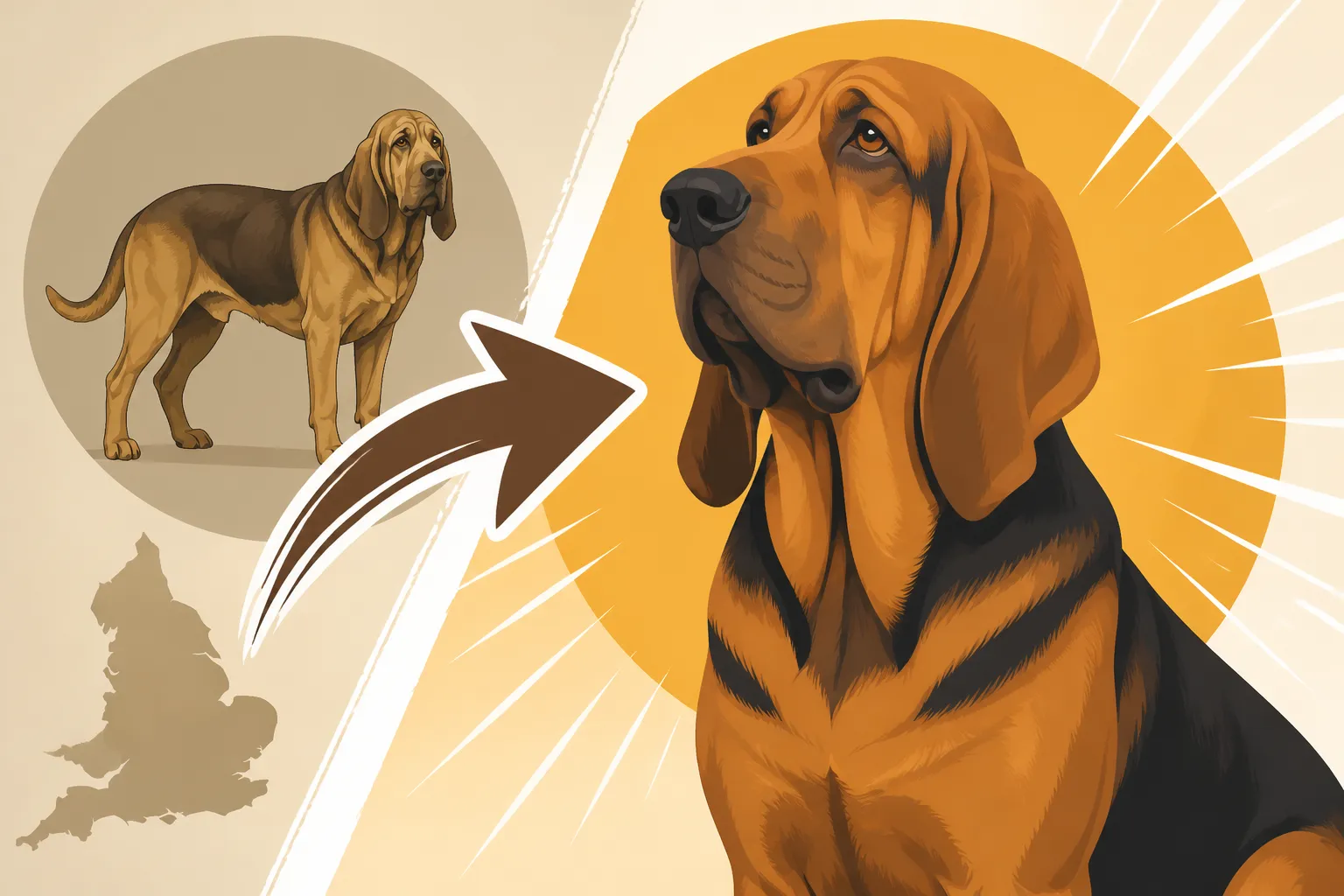
What English Breeders Changed About the Bloodhound
When the St. Hubert Hound, the direct ancestor of today's Bloodhound, made its way across the English Channel, it began a fascinating transformation. Imagine these dedicated scent hounds, originally bred by monks for tracking game through dense forests in continental Europe, arriving in a new land with slightly different hunting traditions and breeding philosophies. Over centuries, English breeders took this already impressive tracker and, through careful selection, molded it into the distinctive dog we recognize today, often exaggerating certain traits to enhance its unique abilities and appearance. This journey shaped the Bloodhound into the truly iconic and legally recognized scent dog it is.
From Continental Europe to English Shores: The St. Hubert Hound's Journey
The story of the Bloodhound's evolution in England starts long before it became the dog we know. Its origins are firmly rooted in the Ardennes region, where the monks of the Abbey of Saint Hubert painstakingly developed a line of large, black-and-tan hounds renowned for their incredible scenting prowess and unwavering persistence. These dogs, known as the Chien de Saint Hubert, were essentially the gold standard for tracking game, often deer or wild boar, and their lineage was highly prized. They weren't just utility animals; they were a symbol of status and dedication to a particular art of hunting.
The Norman Connection and Early Introduction
The arrival of the St. Hubert Hounds in England is largely attributed to the Norman Conquest in 1066. William the Conqueror and his knights brought their hunting traditions, and with them, their favored hounds. These robust, scent-driven dogs were a natural fit for the sprawling English forests and estates, where game hunting was a popular pastime for the aristocracy. Initially, these hounds were kept close to their continental roots, valued for the same traits that made them indispensable in Europe. They were big, powerful dogs, capable of following a cold trail for miles, and their reputation for accuracy quickly grew.
However, the English environment and societal structure gradually began to influence breeding goals. While the core ability to track was paramount, subtle shifts in what breeders prioritized began to emerge. The island nation, with its specific hunting estates and legal system, would slowly but surely start to put its own stamp on the St. Hubert lineage. The Abbey of Saint Hubert Bred the Bloodhound's Ancestor provides more insight into these foundational hounds.
Preservation of Purity: The "Blooded Hound"
One of the most significant early contributions of English breeders was their intense focus on maintaining what they considered a "pure blood" line. The term "Bloodhound" itself, while often misunderstood, is believed to derive from "blooded hound," meaning a hound of pure or unmixed bloodline. This wasn't about tracking blood, as many people assume, but about the aristocratic and unadulterated lineage of these dogs. In a time when many hunting dogs were cross-bred for various purposes, English breeders meticulously documented pedigrees and strove to keep the St. Hubert stock as clean as possible.
This dedication to purity meant that certain traits, rather than being diluted, were consistently reinforced. Breeders were not just looking for a good nose; they were looking for a nose from a specific, proven lineage. This strict adherence to bloodlines played a crucial role in preventing the breed from fragmenting into countless regional types and instead led to a more unified, albeit evolving, vision for the Bloodhound in England. This emphasis on lineage also indirectly reinforced many of the physical traits we associate with the breed today, as those traits were considered hallmarks of the pure strain. For a deeper understanding of the name, see What the Name Bloodhound Actually Means.
The Evolution of the Bloodhound's Signature Look
If you look at paintings or descriptions of medieval hounds, you'll notice they often appear less exaggerated than the modern Bloodhound. While still possessing keen noses and powerful builds, the extreme skin and ear features we now recognize were not as prominent. English breeders, through generations of selective breeding, deliberately accentuated these characteristics, believing they enhanced the dog's unique scenting capabilities.
Emphasizing the Loose Skin and Wrinkles
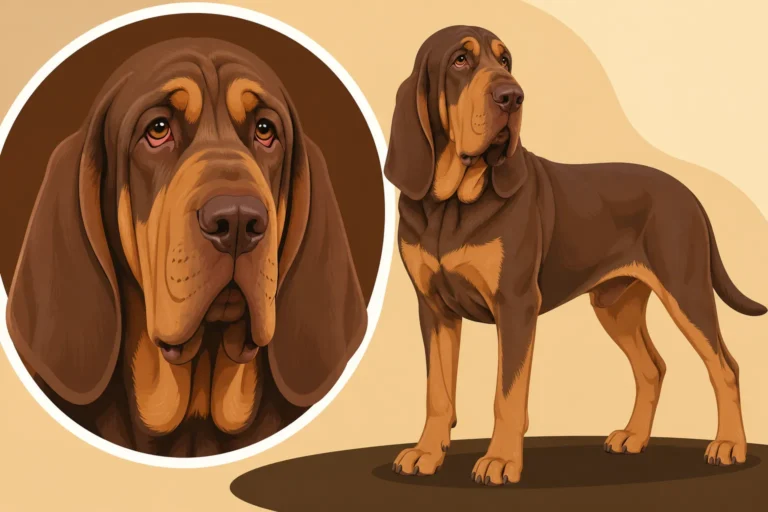
The copious loose skin, particularly around the head, neck, and throat, forming deep wrinkles and a significant dewlap, is perhaps the most striking visual change English breeders championed. While all hounds have some loose skin, the Bloodhound's is dramatically pronounced. This wasn't just for aesthetics; there was a deeply held belief that these folds, especially around the face and muzzle, helped to trap and concentrate scent particles close to the nose. Imagine the dewlap acting like a natural scent-collecting sponge, sweeping the ground and funneling olfactory information directly to the dog's incredibly sensitive nostrils.
This characteristic became so central to the breed's identity that it was actively selected for. Breeders prized dogs with abundant, soft, and elastic skin that contributed to the breed's solemn, dignified expression. This emphasis also inadvertently led to some of the specific care challenges Bloodhound owners face today, as these deep folds can trap moisture and debris, requiring diligent cleaning to prevent skin issues. Websites like Chewy offer a wide range of gentle wipes and cleansers specifically designed for sensitive skin folds, making this routine care a little easier. Explore Why a Bloodhound's Loose Skin Helps It Trail for more details on this fascinating adaptation.
The Development of Extraordinarily Long Ears
Another hallmark of the English-bred Bloodhound is its incredibly long, low-set ears, often described as "leathers." These ears are not merely long; they are thin, soft, and hang in graceful folds, often extending past the tip of the nose when drawn forward. Again, this wasn't an arbitrary choice. The theory, widely accepted by breeders, was that these pendulous ears acted as natural "sweepers" or "blinders." As the Bloodhound tracked with its head low to the ground, the long ears would sweep the scent particles upwards and inwards, directing them towards the nose.
Furthermore, these long ears might also help to "cup" the scent, preventing it from dispersing too quickly and allowing the dog to focus intensely on the trail. This modification, while enhancing the dog's scenting apparatus, also created a need for specialized care. The long, heavy ears reduce airflow to the ear canal, creating a warm, moist environment that can be a breeding ground for infections. This is why regular ear cleaning is non-negotiable for Bloodhound owners. The sheer length of their ears is a testament to this focused breeding, and you can read more about it in Why a Bloodhound's Ears Sweep Scent Toward Its Nose.
Shifting Priorities: From Game Tracking to Man Trailing
While the St. Hubert Hounds were expert game trackers, the evolving needs and legal landscape in England led to a gradual, yet profound, shift in the Bloodhound's primary working purpose. This move was crucial in solidifying the breed's unique place in canine history.
Focus on Independent Scent Work
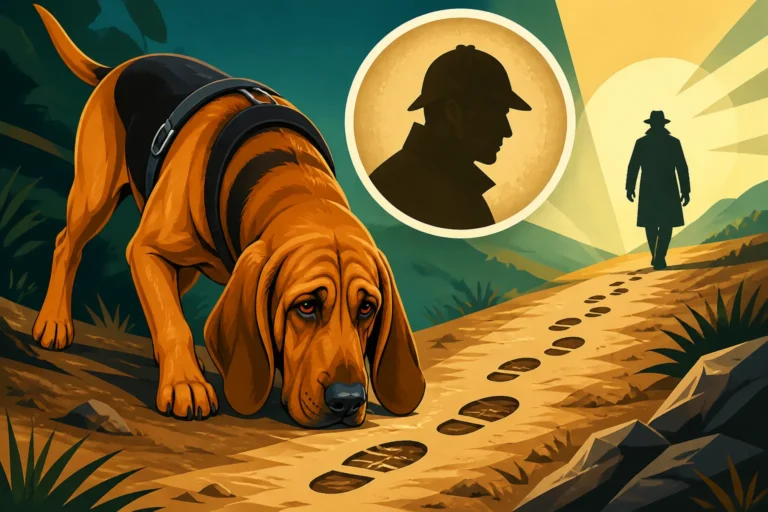
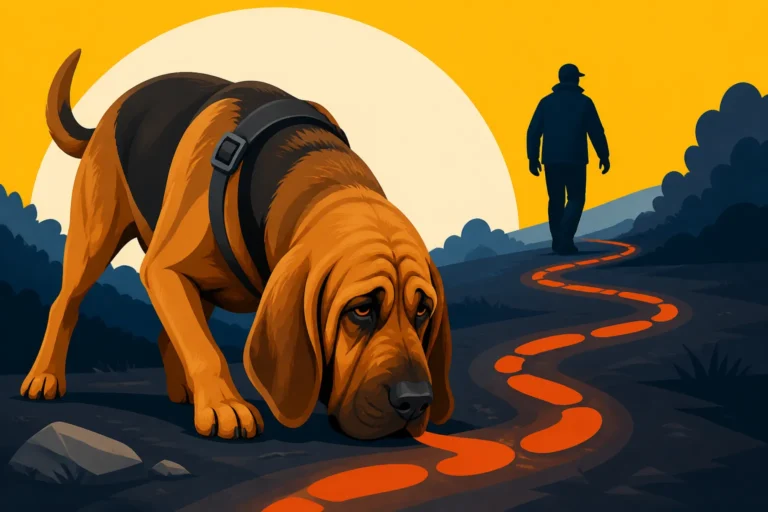
In continental Europe, hounds often worked in packs, driving game. In England, while pack hunting still existed, there was an increasing appreciation for individual dogs capable of following a trail, particularly human trails. The Bloodhound's innate ability to follow a cold trail with incredible accuracy made it invaluable for tracking poachers, escaped prisoners, and eventually, missing persons. This shift from game trailing to man trailing required a different kind of focus and independence from the dog.
Breeders began selecting for dogs that could work methodically and diligently on a single scent, without being distracted by ambient wildlife or other environmental factors. This meant reinforcing the Bloodhound's natural stubbornness and singular dedication to the task at paw. The dog's entire existence became centered around that one, specific human scent. This intense focus is why a Bloodhound, once on a trail, can be notoriously difficult to divert, and it is a trait that English breeders deliberately honed.
Cultivating a Mellow, Persistent Temperament
For a dog meant to track and eventually locate a human, aggression was not a desirable trait. Unlike some other breeds used for apprehension, the Bloodhound's role was to find, not to fight. English breeders understood this deeply and worked to cultivate a temperament that was both incredibly persistent in its work and inherently gentle with people. This combination is a hallmark of the modern Bloodhound. They are relentless on a trail but typically docile and friendly upon encountering a human.
This mellow disposition makes them excellent partners for search and rescue operations, as they are unlikely to intimidate or harm the person they locate, who may already be disoriented or injured. This gentle giant persona, coupled with its unwavering determination, is a direct result of selective breeding to create a dog perfectly suited for the nuanced and sensitive work of human trailing. It's a testament to the foresight of those early breeders that the Bloodhound became known for its gentle nature, even while possessing such immense power and drive.
Defining Traits: The Physical and Behavioral Divergence
The cumulative effect of English breeding practices led to a distinct divergence from the earlier continental types. The English Bloodhound became larger, heavier, and more imposing, all while refining its olfactory capabilities and unique vocalizations.
Increased Size and Substance
English breeders favored a more substantial dog, reinforcing the already large size of the St. Hubert Hound. The goal was a powerful, robust animal capable of enduring long, arduous trails over varied terrain, often through harsh weather conditions. This led to a dog with significant bone structure, deep chest, and well-muscled body, presenting an overall impression of strength and endurance. The sheer mass of the Bloodhound also contributed to its low center of gravity, aiding stability as it navigated complex trails.
This increased size also meant a larger capacity for scent receptors and a more powerful vocalization. While impressive, this emphasis on size also means Bloodhounds have specific dietary and joint care needs. Large breed puppy formulas and adult foods are critical for their healthy development and maintenance, and many owners turn to retailers like Chewy for their wide selection of specialized diets and supplements. Understanding The Colors a Bloodhound Comes In also speaks to some of the aesthetic choices made over generations.
| Trait | St. Hubert Hound (Ancestral) | English Bloodhound (Modern) |
|---|---|---|
| Loose Skin/Wrinkles | Present, but less pronounced | Highly exaggerated, deep folds |
| Ear Length | Long, but generally shorter | Exceptionally long, low-set |
| Build/Size | Large, muscular | Larger, heavier, more substantial |
| Primary Work | Game trailing (often in packs) | Man trailing (often individual) |
| Temperament | Persistent, driven | Persistent, methodical, gentle |
| Head Shape | Broad, powerful jaw | More domed skull, prominent occiput |
| Dewlap | Present | Very deep and extensive |
The Voice of the Bloodhound: Baying and Bellowing
The Bloodhound's distinctive voice, a deep, resonant bay that can carry for miles, is another characteristic that was refined through English breeding. While all hounds bay, the Bloodhound's bay is particularly unique – a mournful, drawn-out sound that signals its intense focus on a trail. This vocalization is not merely a bark; it's an announcement, a communication that the dog is diligently working and has found or is close to finding its quarry.
Breeders appreciated this voice as an indicator of a dog's drive and dedication. It’s part of the breed's lore and an inherent aspect of its working style. For many owners, the bay is a beloved sound, a testament to their dog's heritage. However, it's also a trait that prospective owners need to understand and be prepared for, as it's not something that can be easily trained out of a Bloodhound. It's a natural expression of their breed identity. This iconic sound is inextricably linked to their purpose and their genetic makeup, a clear example of how centuries of breeding shaped both form and function.
The Enduring Legacy of English Bloodhound Breeding
The efforts of English breeders laid the groundwork for the Bloodhound we know and cherish today. Their selective choices, driven by a combination of practicality, tradition, and a deep appreciation for the breed's unique abilities, have left an indelible mark.
Standardization and Recognition
As the breed developed and its utility for man-trailing became more widely recognized, particularly in legal contexts, there was a growing need for standardization. English kennel clubs and breed fanciers played a pivotal role in establishing breed standards that formally described the ideal Bloodhound, enshrining the very traits that breeders had worked so hard to cultivate. These standards detailed everything from the characteristic loose skin and long ears to the powerful build and specific color patterns. This formalization ensured that breeders had a clear blueprint to follow, helping to preserve the breed's integrity and unique characteristics for future generations.
This process of standardization also facilitated the breed's recognition beyond England's borders. As interest in the Bloodhound's extraordinary scenting abilities grew, these meticulously defined standards allowed other countries to understand and maintain the breed's distinct lineage. The breed’s unique traits—the sagacious expression, the deep-set eyes, the ponderous gait—all became codified, ensuring that the essence of the English-bred Bloodhound would persist globally. You can learn more about the broader context of the breed's origins in Whether the Bloodhound Is Belgian or English.
The Global Impact on the Breed
The English Bloodhound, with its exaggerated features and specialized working abilities, became the archetype for the breed around the world. Descendants of these English lines were exported globally, influencing Bloodhound populations in North America, Australia, and beyond. Every Bloodhound you see today carries the genetic legacy of those centuries of careful English breeding, making it a truly global icon of scent detection. Their legal standing in courts, where their trailing evidence is often accepted, is a direct result of the reliability and specific traits honed by these breeders.
Even though the breed has faced challenges, particularly concerning health issues related to their exaggerated features, breeders continue to strive for dogs that embody both the iconic look and the incredible working drive. The modern Bloodhound is a living testament to a long history of selective breeding, demonstrating how human intervention can refine and specialize a breed for a very particular and important purpose. From specialized bowls to keep those long ears out of food, available at stores like Chewy, to meticulous grooming routines, owning a Bloodhound is a commitment to maintaining a breed shaped by a fascinating history.
Disclaimer
This article is for general informational purposes only and does not constitute professional advice. Laws, prices and regulations vary by location and change over time. Consult a qualified professional for guidance on your specific situation.