How Many Miles Boyle’s Hound Trailed
Robert Boyle’s account is commonly associated with a Bloodhound following a human trail for about 160 miles. That remarkable figure comes from a historical anecdote, not a modern controlled trial, so it needs careful context. This guide explains what the number refers to, what Boyle recorded, and what it can—and cannot—tell us about a Bloodhound’s tracking ability.
How many miles did Boyle’s hound trail?
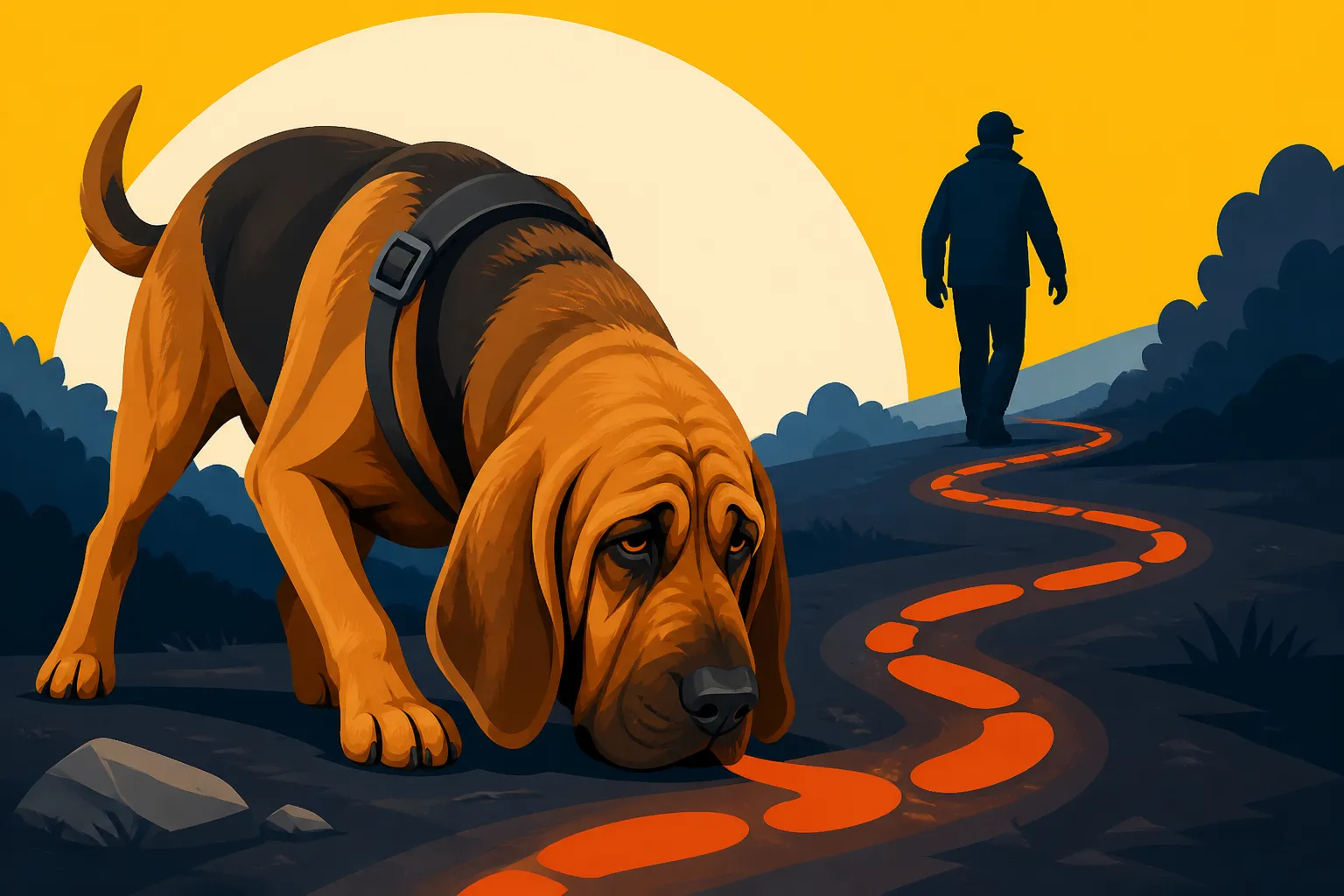
The figure most often repeated is about 160 miles. It is presented as the length of a person’s trail that a hound followed, rather than a distance measured under today’s scientific or sporting standards.
That distinction matters. “A hound trailed a person for 160 miles” does not necessarily mean the dog covered 160 miles in a straight line, followed a single uninterrupted route, or completed a precisely measured course. It describes a striking historical report whose details are not documented in the way a modern field test would be.
What the 160-mile figure refers to
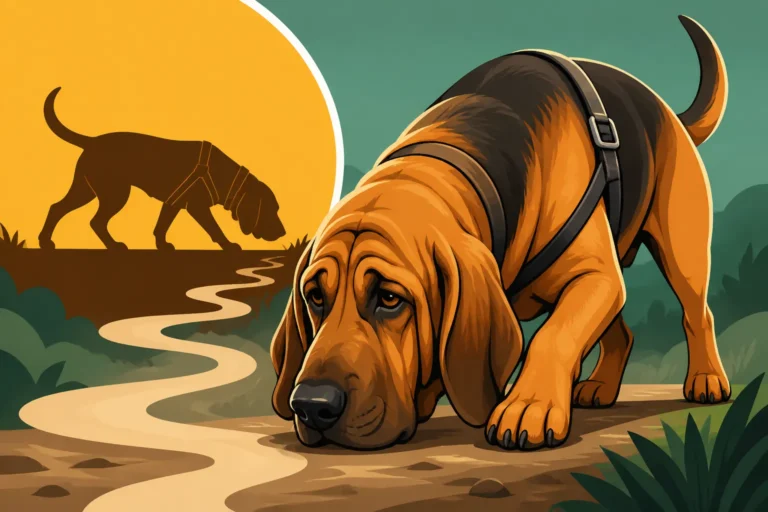
The familiar claim is that a hound followed the scent of a person over a long distance. In retellings, the figure is often shortened to “160 miles,” which can make the story sound like a stopwatch-and-mile-marker experiment. It is safer to understand it as the distance attributed to the trail in the account, not as a verified measurement of the dog’s exact path.
A scent trail follows the route a person took, and that route may twist, double back, or cross itself. The hound’s actual path could also vary as it checks scent, works out a turn, or investigates a place where the person paused. A mileage figure attached to the human route does not tell us precisely how far the dog travelled while working it.
The historical number remains memorable because it suggests endurance as well as scenting ability. But the best answer to the title question is not simply “160 miles, proven.” It is: about 160 miles is the traditional figure attributed to Boyle’s account, though the surviving report does not provide enough detail to treat it as a modern, independently verified measurement.
Why the distance is repeated with different levels of certainty
Historical anecdotes often travel farther than the original records. A short account can be retold in breed histories, books, and articles, with each version smoothing out uncertainty or dropping qualifications. Over time, “a report described a hound following a trail for around 160 miles” can become “Boyle proved that a Bloodhound can trail exactly 160 miles.”
Those are not equivalent claims. The first describes a story associated with Boyle; the second suggests a controlled test with confirmed conditions and a precise result. When reading breed history, look for whether a source explains how the distance was measured, how old the trail was, who verified the route, and whether the dog followed it continuously. If those details are missing, treat the mileage as a historical claim rather than a benchmark.
For more on the broader story, see Robert Boyle Wrote Down the First Bloodhound Trial. That history helps explain why Boyle’s name is connected with early accounts of tracking hounds, while also making clear why a brief historical report is different from a modern performance record.
What Boyle’s account can tell us about Bloodhounds
Boyle’s story is useful as an early illustration of the fascination people had with a hound’s ability to follow human scent. It is not a complete guide to how tracking works, nor does it show that every Bloodhound can follow a trail of comparable length. Individual ability, training, conditions, and the handler’s decisions all affect what a dog can do.
A trail is more than a line on a map
People leave scent as they move through an environment. That scent may be affected by the ground, weather, vegetation, buildings, traffic, and the passage of other people. A tracking dog works through those changing clues rather than simply following a visible line from point A to point B.
This is one reason that a long reported trail is hard to interpret without detail. A route through open countryside is not the same challenge as a route through a crowded town, where people cross paths and hard surfaces can make scent work more complicated. Rain, wind, heat, and the age of a trail can change what scent is available and where it collects.
A Bloodhound that pauses or circles is not necessarily lost. It may be sorting out conflicting scent, checking an intersection, or working back toward the strongest information. Understanding what a dog is smelling helps make historical claims about trail length less mysterious. See What a Bloodhound Is Actually Smelling on a Trail for more on the scent information a Bloodhound may use while working.
Endurance and scenting skill are different things
A remarkable distance does not mean the dog can work indefinitely. Tracking requires physical effort, concentration, and time. A dog may need rest, water, and a suitable pace, and a long trail can be affected by conditions that have little to do with the dog’s nose.
The historic tale is also not evidence that a Bloodhound should be expected to cover extraordinary mileage in ordinary exercise. A family dog needs activity suited to its age, health, fitness, and training. For a working dog, a handler plans the session around the dog’s condition and the task, rather than assuming that breed reputation removes practical limits.
Modern tracking also involves teamwork. The handler observes the dog, manages the line, reads changes in behavior, and makes decisions about safety and the route. A Bloodhound may lead with its nose, but responsible work is not simply a matter of releasing the dog and waiting for an answer. How a Bloodhound Separates One Person's Scent From a Crowd offers a closer look at the complexity behind following one person’s scent.
A historical anecdote is not a breed-wide promise
Bloodhounds are renowned for scent work, but no breed description can guarantee a specific outcome. A dog’s interest, early experiences, physical condition, training, and surroundings all matter. Even a capable dog can struggle when scent conditions are poor or when a trail is confusing.
That is why Boyle’s attributed mileage is better treated as a remarkable historical report than a promise about what a present-day dog will do. The story says something about the reputation of tracking hounds and the long-standing interest in their abilities. It does not tell an owner that a puppy will follow a trail for 160 miles, or that a working dog should be tested against that number.
If you are curious about real-world tracking rather than historical claims, How Old a Trail a Bloodhound Can Follow and How Far a Bloodhound Will Follow a Trail explore the factors that influence a dog’s work without turning one old anecdote into a universal rule.
Why the account is difficult to compare with modern tracking
A modern tracking test usually has defined rules and known conditions. Organizers can describe the route, the age of the scent, the surfaces, the start and finish points, and what counts as successfully completing the task. Boyle’s historical account is not generally presented with that level of detail.
Measurement methods have changed
Today, a route can be mapped and measured, and a test can record when a track was laid and how the dog performed. Historical reports were written for different purposes and may not include precise maps, timing, or independent observers. Even if a reported distance is accurate, the method behind it may be unclear to a modern reader.
Distance itself can also mean different things. It could refer to the person’s route, the dog’s path, or a rough estimate of the ground covered. If a trail doubles back or passes through a settlement, those measurements could differ substantially. Without a clear description, readers should avoid treating the figure as an exact scientific result.
| Question | What the historical claim supports | What it does not establish |
|---|---|---|
| How far was the trail said to extend? | About 160 miles is the commonly repeated figure | An exact, independently verified route length |
| What was the dog following? | A human scent trail, as described in retellings | The precise scent conditions or route details |
| Does it demonstrate tracking ability? | It reflects an early report of a hound following a person | That all Bloodhounds can match the distance |
| Can it be compared with a modern test? | Only in a broad, historical sense | A controlled performance standard |
This is not an attempt to dismiss the account. Historical records can be valuable even when they do not answer every question. The careful approach is to keep the interesting claim and its limitations together, instead of repeating the number as if every detail were settled.
The dog’s route may not match the person’s route
Imagine someone walking from a village along a winding road, crossing fields, and doubling back near a stream. The distance between the start and finish on a map could be much shorter than the person’s actual route. The dog may also search around a turn or investigate a crossing before continuing. Depending on what was measured, “miles trailed” might refer to several different distances.
This issue applies to modern tracking, too. A dog’s work is not a neat line. Handlers may see the dog cast from side to side, slow down, or return to a point where scent is stronger. That searching behavior is part of the task. A simple number cannot capture how difficult the terrain was or how the dog solved the route.
For a related look at the movement and terrain involved, read Whether a Bloodhound Can Work a Downtown Sidewalk. Urban work presents a different challenge from a long route through open country, so it is a useful reminder that mileage alone cannot describe a dog’s performance.
What Bloodhound owners should take from the story
The Boyle anecdote is a fascinating piece of breed history, but it does not need to become a standard that owners feel they must reproduce. A Bloodhound’s nose can be put to rewarding use through appropriately planned scent work, and safe, enjoyable sessions are more valuable than chasing a dramatic distance.
Start with manageable scent activities
For a pet Bloodhound, scent games can be as simple as hiding treats around a room or letting the dog investigate a safe outdoor area on a leash. The goal is to give the dog a chance to use its nose without putting it in a situation where it can wander into traffic, livestock, or unfamiliar property.
If you want to try organized tracking, look for an experienced instructor or a local scent-work group. Begin with short, simple exercises and build gradually. A long line and a well-fitted harness can help a handler maintain control while allowing the dog to work. Gear should suit the individual dog and activity; retailers such as Chewy may offer basic supplies, but fit and safe use matter more than buying a particular item.
Some owners also find it helpful to talk with a trainer before starting, especially if their dog pulls hard or becomes intensely focused once it catches a scent. Chewy may be one place to compare everyday options such as long lines, harnesses, and treat pouches, while a qualified trainer can help decide what is appropriate for the dog and training plan.
Keep historical fascination separate from practical expectations
It is easy to hear “160 miles” and imagine a Bloodhound that can follow any trail, in any weather, for as long as needed. Real tracking is more conditional. Dogs work within the limits of their bodies and the scent information available to them, and handlers must manage fatigue, hydration, footing, and nearby hazards.
If your Bloodhound is working enthusiastically, watch for signs that it needs a break. A session should not become a test of whether the dog can keep going. For outdoor work, carry water, check the ground for hazards, and use a secure line in places where a dog could reach a road or disappear into thick cover. For gear or care basics, Chewy can be a practical retail option, but your veterinarian or trainer is the right person to consult about your dog’s individual needs.
The historical account is memorable because it hints at the extraordinary work a scent hound can do. Its value lies in that glimpse—not in a demand that modern dogs repeat the feat.
Disclaimer
This article is for general informational purposes only and does not constitute professional advice. Laws, prices and regulations vary by location and change over time. Consult a qualified professional for guidance on your specific situation.