The Abbey of Saint Hubert Bred the Bloodhound’s Ancestor
For anyone delving into the fascinating world of Bloodhounds, one of the first questions that often arises is about their origins. It's easy to assume such an ancient breed simply "appeared," but the truth is far more nuanced and steeped in history, particularly involving a famous medieval abbey. This guide will take you on a journey back in time, unraveling the historical threads that lead us to the very cradle of the Bloodhound's ancestry, the Abbey of Saint Hubert, and explaining why this particular place holds such immense significance for the breed we know and love today.
Tracing the Bloodhound's Ancient Roots
Understanding the Bloodhound's lineage is like trying to piece together a very old, much-loved quilt. The fabric is rich with history, but some of the stitches have faded with time, leaving us to interpret the patterns as best we can. What we do know is that the roots of these remarkable scent hounds stretch back well over a thousand years, making them one of the most venerable canine breeds in existence.
The Mystique of the Medieval Scenthound
Imagine the dense forests of medieval Europe, where hunting was not just a sport for the nobility but often a necessity for sustenance. In such an environment, a dog with an unparalleled nose would have been invaluable, almost mystical in its ability to follow trails invisible to human eyes. Early hounds were prized possessions, their hunting prowess celebrated in songs and stories, but their breeding records, if they existed at all, were rarely systematic. This makes tracing their exact evolution a challenge, contributing to the almost legendary status that surrounds their origins.
These were not the Bloodhounds we see in the show ring today, with their characteristic deep wrinkles and pendulous ears, but rather robust, determined hunting dogs. Their value lay entirely in their ability to follow a scent, often over vast distances and varied terrain, to find lost game or even lost people. The concept of "pure blood" for these lines wasn't about appearance in the way we think of breed standards now, but about maintaining the integrity of their incredible scenting ability and tireless work ethic.
The tales of these early hounds speak to a deep respect for their capabilities, a recognition that some dogs simply possessed a gift for scent work that surpassed all others. This innate talent, passed down through generations, was the true "bloodline" that early breeders sought to preserve. It wasn't about fancy pedigrees recorded on paper, but about performance in the field, a natural skill that spoke for itself.
Beyond the "Blood" in Bloodhound
The name "Bloodhound" itself often conjures up images that might lead to misconceptions. Many people immediately think of a hound tracking a bloody trail, or perhaps even a fierce, bloodthirsty creature. However, the true origin of the name is far more nuanced and speaks to the venerated status of these dogs in their earliest days. It doesn't refer to blood in the visceral sense.
Instead, the term "blooded hound" was used to denote a hound of pure or unmixed breeding, a dog whose lineage was so carefully maintained that its bloodline was considered "pure" or "aristocratic" among dogs. This was especially significant at a time when many hounds might have been mixed for different hunting purposes. To have a "blooded" hound meant you possessed a dog whose heritage was known and meticulously preserved, ensuring its superior scenting abilities were passed down faithfully. You can learn more about What the Name Bloodhound Actually Means and dispel other common myths about the terminology.
This distinction highlights the immense value placed on these hounds. They were considered the elite of the scenting world, set apart from lesser dogs by their unbroken lines and exceptional working qualities. So, when you hear "Bloodhound," think not of gore, but of nobility, purity of lineage, and an unparalleled gift for scent that was deemed worthy of careful preservation by the most dedicated of breeders.
The Genesis at Saint Hubert Abbey
To truly understand the Bloodhound, we must journey to the Ardennes region of what is now Belgium, and specifically, to the historic Abbey of Saint Hubert. This wasn't just any monastery; it was a crucible where centuries of dedicated breeding shaped the foundations of this remarkable canine.
Who Was Saint Hubert and Why Does He Matter?
The story begins not with dogs, but with a man: Hubert, a nobleman born in the 7th century, who was passionately devoted to hunting. Legend has it that on a Good Friday, while hunting a magnificent stag, Hubert encountered a vision of a crucifix between the stag's antlers. This profound spiritual experience led to his conversion. He renounced his worldly possessions, devoted his life to God, and eventually became Bishop of Liège. He is revered as the patron saint of hunters, foresters, and trappers.
His significance to the Bloodhound breed lies in the connection established by his monastic successors. The Abbey, founded on the site of his burial, became a spiritual center, but it also inherited his legacy and passion for the hunt. The monks, rather than abandoning the hunting tradition, embraced it in a disciplined, almost scientific manner, focusing on the careful breeding of scent hounds. It was a unique blend of spiritual devotion and practical application, ensuring the preservation and improvement of a specific type of hunting dog.
This patronage and the subsequent monastic dedication to the breed gave it an aura of sanctity and importance. These were not mere curs; they were "hounds of Saint Hubert," imbued with a special lineage and purpose. This connection helped ensure their survival and development during an era when many other regional dog types simply faded into obscurity. It speaks volumes about the value placed on these dogs that they were nurtured within the hallowed walls of a religious institution.
The Monastic Breeders of the Ardennes
The Abbey of Saint Hubert, nestled in the picturesque Ardennes forest, became the epicenter of what would become the Bloodhound breed. It wasn't a casual endeavor; these monks undertook a deliberate, long-term breeding program with an almost scientific rigor for their time. They understood the importance of lineage and selecting individuals that displayed the most desirable scenting qualities. This level of focused breeding was practically unheard of outside of royal kennels during the medieval period.
For centuries, from around the 8th or 9th century, the monks of Saint Hubert meticulously cultivated their famous hounds. They aimed for purity of bloodline and unparalleled scenting ability, rather than purely aesthetic traits. The goal was to produce dogs that could follow a cold trail for extended periods, a crucial skill for tracking both game and, eventually, people. You can delve deeper into Where the Great Abbey of Saint Hubert Stands and When the Monks Began Breeding the Bloodhound's Ancestor to grasp the full scope of their historical impact.
The Abbey's location in the Ardennes, a region of dense forests and challenging terrain, further shaped the breed. The dogs needed to be hardy, tenacious, and possess incredible stamina to navigate such an environment. The monks' commitment was so profound that they would annually send their finest hounds, often six to twelve pairs, as gifts to the King of France, establishing their reputation and ensuring the breed's influence spread far beyond the monastery walls.
Characteristics of the Chien de Saint Hubert
The original "Chien de Saint Hubert," as these hounds were known, would certainly be recognizable as an ancestor of today's Bloodhound, though with some notable differences. They were large, powerful scent hounds, predominantly black and tan, though sometimes solid black or liver. Their most defining feature, of course, was their extraordinary nose and relentless trailing ability. They were renowned for their ability to follow trails that were days old, a testament to their superior olfactory senses.
Physically, they possessed the characteristic deep-set eyes, long ears, and impressive dewlaps that are still hallmarks of the modern Bloodhound. However, it's believed their skin might have been somewhat tighter than the exaggerated loose skin often seen in contemporary show lines. Their purpose was purely functional: to track. They were bred for endurance and scenting prowess above all else, making them tireless workers in the field. You can explore What the Chien de Saint Hubert Was Used For to understand their roles in greater detail.
These were dogs of immense focus and determination, traits that remain central to the Bloodhound's character today. While they may have lacked the extreme wrinkles that some modern Bloodhounds exhibit, their essence – the unparalleled nose and the unwavering drive to follow a scent – was fully present. They were the ultimate scenting machines, designed by centuries of monastic dedication to excel at their specific, vital task.
The Journey Across the English Channel
The influence of the Saint Hubert hounds was not confined to continental Europe. Their reputation for exceptional trailing ability eventually caught the attention of those across the English Channel, leading to their introduction and subsequent development in England. This cross-cultural exchange further refined the breed, shaping it into the Bloodhound we recognize today.
Norman Conquest and Canine Migration
While it's a popular theory that William the Conqueror himself brought Saint Hubert hounds to England with the Norman Conquest in 1066, the historical evidence for this direct link is a bit murky. It's certainly plausible that various hounds, including those influenced by the Saint Hubert lines, made their way across the Channel with the Normans. The Normans, being avid hunters, would undoubtedly have brought their finest dogs with them to their new lands.
However, the more documented and generally accepted view is that the Chien de Saint Hubert were regularly imported into England during the centuries following the Conquest, especially during the medieval period. English royalty and nobility, keen to improve their own hunting packs, recognized the superior scenting capabilities of the French hounds. Gifts of these prestigious dogs from the French monarchy, often originating from the Abbey of Saint Hubert itself, were a common diplomatic practice. This continuous influx ensured that the bloodline of the Saint Hubert hound became firmly established in England. You can read more about How the Bloodhound Reached England and Whether William the Conqueror Brought Bloodhounds Over to get a clearer picture of this historical migration.
These imported hounds were prized for their ability to track deer and other large game, a role that was essential for the aristocratic pursuits of the time. They provided a genetic backbone for English breeders to work with, combining the proven scenting ability of the continental dogs with existing English hunting dog types, eventually leading to the development of a distinct English "blooded hound."
English Refinement and Divergence
Once established in England, the Saint Hubert hounds began to evolve further. English breeders, while valuing the core scenting ability, started to select for certain characteristics that suited their own hunting practices and aesthetic preferences. This period saw a divergence from the purely functional monastic breeding, with more emphasis placed on refining the physical appearance that we now associate with the Bloodhound.
It's during this time that the characteristic loose skin, more pronounced wrinkles, and even longer, more pendulous ears likely became more exaggerated. While these features do have functional benefits—the loose skin can help protect against injury in dense undergrowth, and the long ears and dewlaps are thought to help sweep and concentrate scent—the extent of their development in England also reflected a growing appreciation for a certain "look." This refinement didn't diminish their working abilities; rather, it added a distinct English stamp to the breed. More details on these changes can be found in What English Breeders Changed About the Bloodhound.
The English Bloodhound became renowned in its own right, not just as an import, but as a superior tracking dog that combined the ancient purity of the Saint Hubert line with unique English characteristics. This dual heritage, deeply rooted in the Ardennes and carefully cultivated in England, created the truly unique and universally recognized Bloodhound breed.
The Bloodhound's Evolving Role and Reputation
The Bloodhound's journey didn't end with its development as a premier hunting dog. Over centuries, its role evolved dramatically, transitioning from primarily tracking game to becoming an indispensable tool in law enforcement and search and rescue. This shift brought both immense recognition and, at times, unfortunate misconceptions about the breed's true nature.
From Game Tracker to Man Trailer
Initially, the Chien de Saint Hubert and its English descendants were primarily used for hunting large game like deer and boar. Their extraordinary ability to follow a cold trail made them ideal for recovering wounded animals or tracking game over vast distances. However, as societal needs changed, so too did the application of their unique talents.
By the 16th century, there's documented evidence of "sleuth hounds" (an early term for Bloodhounds) being used in border regions of Scotland and England to track raiders, cattle thieves, and even escaped criminals. This marked a pivotal shift: the Bloodhound was no longer just a hunter's companion, but a tool for justice. This new role, tracking humans, solidified their reputation and broadened their utility. This evolution in purpose is a fascinating aspect of their history, explored further in When Bloodhounds Began Trailing People Instead of Game.
This transition wasn't without its challenges, as tracking humans often involved complex and dangerous situations. Yet, the Bloodhound's unwavering focus and incredible nose proved invaluable, saving countless hours of human effort and often leading to successful resolutions. It showcased their adaptability and the sheer power of their olfactory capabilities in a way that game tracking never quite could.
Legal Standing and Unwavering Nose
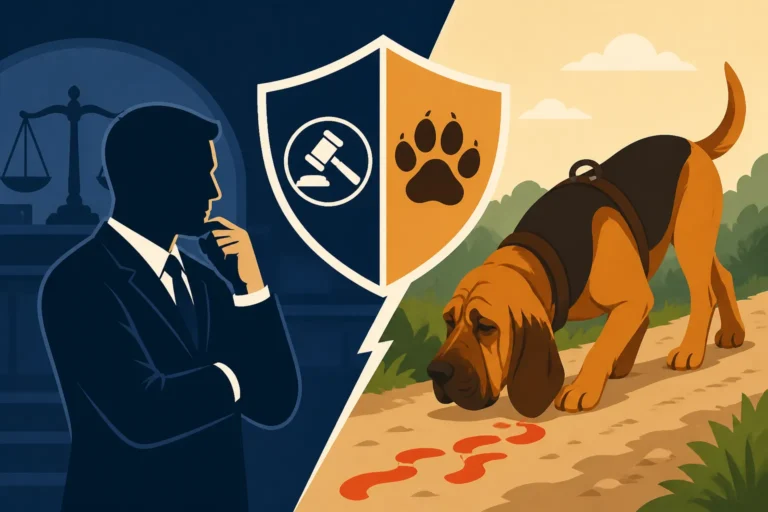
Perhaps the most remarkable aspect of the Bloodhound's evolving role is its unique legal standing. Unlike any other dog breed, the testimony of a Bloodhound's trail is admissible as evidence in courts of law in various jurisdictions. This isn't to say a Bloodhound's "testimony" is taken as gospel, but rather that properly handled and documented evidence of a Bloodhound's trail can be presented alongside other facts in a case. This legal precedent highlights the deep trust and respect society has developed for their tracking abilities.
This singular distinction didn't happen overnight; it was earned through centuries of demonstrated reliability and success in tracking individuals, whether lost children, escaped convicts, or suspected criminals. The consistent results, when paired with competent human handlers, built an irrefutable case for the Bloodhound's precision. For more on this, check out The Bloodhound Is the Only Dog Whose Evidence Stands in Court.
The Bloodhound's unwavering nose is indeed a marvel. They are capable of isolating and following a specific human scent even amidst a cacophony of other smells, over various terrains, and despite environmental challenges like rain or wind. This unparalleled skill, honed over a millennium, is what gives them their unique authority in the legal system and their enduring reputation as the ultimate tracking dog.
Modern Bloodhounds and Their Connection to the Past
While centuries have passed since the monks of Saint Hubert first meticulously bred their hounds, the modern Bloodhound remains deeply connected to its ancient lineage. The traits cherished and developed all those years ago are still very much present, albeit with some contemporary refinements and challenges.
Preserving the Legacy of Scent
Today, dedicated Bloodhound breeders and enthusiasts continue the work begun by the Abbey of Saint Hubert. Breed clubs and organizations like the American Bloodhound Club actively strive to preserve the breed's core essence: its unparalleled scenting ability and its distinctive physical characteristics. This isn't just about maintaining a "look" for the show ring, but about ensuring that the working drive and scenting prowess remain intact.
Many breeders emphasize "type," which encompasses both the physical standards that aid in scent work (like those long ears and dewlaps that help funnel scent) and the temperament suited for persistent trailing. They understand that a Bloodhound is first and foremost a working dog. To this end, many involved in the breed participate in trailing trials and scent work events, putting their dogs' noses to the test to ensure the legacy of Saint Hubert lives on in every generation. This commitment means that even though dogs are pets, their intrinsic purpose is still honored.
This focus on the breed's historical function ensures that the Bloodhound remains true to its origins. It's a continuous balancing act: maintaining health, temperament, and conformation, all while safeguarding that incredible nose that has defined the breed for over a thousand years. It’s a testament to the enduring power of selective breeding when done with a clear purpose.
The Ancestral Echo in Today's Bloodhound
When you look at a modern Bloodhound, you are essentially looking at a living echo of its medieval ancestors. The deep-set, soulful eyes, the long, velvety ears that sweep the ground, and the profuse loose skin – all these features, while perhaps more exaggerated now, are rooted in the ancient Chien de Saint Hubert. These characteristics aren't just for show; they are functional adaptations that enhance the dog's ability to track. The loose skin, particularly on the face, is thought to collect and hold scent molecules, acting like a net, while the long ears physically direct scent towards the nose.
Behaviorally, the modern Bloodhound still embodies the same tenacity and single-minded focus on scent that defined its forebears. Once that nose goes down and it locks onto a trail, the world around it fades away. This incredible drive, while challenging for owners in terms of recall, is the very essence of their ancient purpose. They are gentle giants, often calm and affectionate indoors, but utterly transformed by the scent of a trail outdoors. This duality is a direct inheritance from dogs bred to be powerful, tireless trackers yet cooperative companions.
Of course, these distinctive physical traits also bring specific care needs. Those long, pendulous ears are a standing invitation for ear infections if not regularly cleaned and dried, requiring special attention and quality cleaning solutions, easily found on sites like Chewy. Similarly, the deep skin folds can trap moisture and debris, needing daily wiping to prevent irritation. These are the small, practical ways in which the ancestral echo of the Saint Hubert hound continues to influence daily life with a modern Bloodhound.
Understanding the Bloodhound's Health Legacy
While the Bloodhound's ancient lineage speaks to a robust and hardy working dog, centuries of development, both intentional and unintentional, have also led to certain health predispositions. It's crucial for any Bloodhound owner to understand this health legacy to provide the best possible care for these beloved hounds.
Genetic Heritage and Common Health Concerns
Just as the distinctive physical traits of the Bloodhound have been passed down through generations, so too have certain genetic predispositions to health issues. The very characteristics that make a Bloodhound unique – its deep chest, long ears, and loose skin – also contribute to some of its most common health concerns. For instance, the breed's characteristic deep, narrow chest puts it at a higher risk for gastric dilatation-volvulus (GDV), commonly known as bloat, a life-threatening condition where the stomach twists. This makes preventative measures and prompt recognition of symptoms absolutely critical for Bloodhound owners.
Similarly, the beautiful, pendulous ears that are so essential for scent work also create an ideal warm, moist environment for yeast and bacterial infections to flourish. This means that regular ear cleaning isn't just a recommendation; it's a vital part of their routine care. The loose skin, while aiding in scent collection, also means Bloodhounds are prone to skin fold dermatitis, particularly in areas where moisture and friction are common, like around the lips and neck. Eye conditions such as ectropion (where the lower eyelid droops outward) and entropion (where the eyelid rolls inward) are also common due to the characteristic loose facial skin.
Understanding this genetic heritage isn't about blaming the past, but about empowering owners with knowledge. Knowing these predispositions allows for proactive care and early intervention, which can significantly improve a Bloodhound's quality of life and potentially extend its lifespan. It’s about being realistic about the vulnerabilities that come with such a specialized and ancient breed.
Proactive Care for a Deep-Rooted Breed
Given the Bloodhound's unique health profile, proactive and consistent care is paramount. This means more than just regular vet visits; it involves daily vigilance and a commitment to preventive measures. For conditions like bloat, many Bloodhound owners opt for a prophylactic gastropexy, a surgical procedure that tacks the stomach to the abdominal wall to prevent it from twisting. This decision can be a weighty one, but it offers immense peace of mind. The Gastropexy Decision Every Bloodhound Owner Faces is a critical discussion point for many.
Daily care routines are equally important. Those magnificent ears require weekly cleaning with appropriate solutions to prevent infections, a topic thoroughly explored in A Bloodhound's Ears Are a Standing Infection Risk. The deep skin folds need to be wiped clean daily to prevent moisture buildup and skin irritation. For their eyes, regular checks for redness or discharge, and gentle cleaning, are essential to manage issues related to their loose eyelids. Many owners find a good supply of specific ear cleaners and gentle skin wipes on online stores like Chewy to be invaluable.
Nutrition also plays a significant role in proactive care. Feeding high-quality dog food, often in multiple smaller meals throughout the day, and ensuring sufficient rest before and after eating, can help mitigate bloat risk. Maintaining a lean body condition is also vital for joint health, especially in a large breed prone to hip and elbow dysplasia. All these elements, from surgical decisions to daily cleaning routines and dietary choices, form a comprehensive approach to caring for a Bloodhound, ensuring their deep-rooted health challenges are managed with wisdom and dedication.
Dispelling Myths and Celebrating a Noble Hound
For a breed so ancient and unique, it's perhaps inevitable that misconceptions would accumulate over time. The Bloodhound's intimidating name and formidable appearance have unfortunately led to some unfair stereotypes, overshadowing its truly noble and gentle nature.
Challenging Misconceptions
One of the most persistent myths about Bloodhounds stems from their name and their historical use in tracking criminals: that they are fierce, aggressive, or "bloodthirsty." Nothing could be further from the truth. In reality, Bloodhounds are typically docile, gentle giants. They are known for their calm demeanor and their remarkable patience, even with rambunctious children. Their intensity is reserved for the trail, where their focus is singular; off-trail, they are often described as amiable and somewhat clumsy companions.
Another common misconception is that they are "dumb" or difficult to train because they appear to ignore commands when on a scent. This isn't a lack of intelligence, but rather an overwhelming genetic drive to follow a trail. Their brain is simply hardwired for scent work, and once engaged, it takes precedence over almost everything else. This intense focus is a testament to their purpose, not a sign of stubbornness in the conventional sense. Understanding this helps owners appreciate their unique mental landscape.
The truth is, many popular culture portrayals, from stories to films, have sometimes exaggerated or misrepresented the Bloodhound, contributing to these misconceptions. You can dive into Whether the Bloodhound's Reputation Was Damaged by Fiction for a deeper look at how media has shaped public perception. They are not guard dogs; their gentle nature means they are more likely to greet an intruder with a happy tail wag than a challenge. They are trackers, not protectors, and their loyalty lies in finding, not in fighting.
The Bloodhound's Enduring Allure
Despite, or perhaps because of, their unique quirks and demanding care requirements, the Bloodhound holds an enduring allure for those who truly understand and appreciate the breed. Their unmatched scenting ability is, of course, their most celebrated trait, making them invaluable partners in search and rescue, law enforcement, and even competitive trailing sports. There's a profound satisfaction in watching a Bloodhound work, seeing their ancient instincts come alive as they meticulously unravel a trail invisible to human senses.
Beyond their working prowess, Bloodhounds are incredibly devoted and affectionate companions. They form deep bonds with their families, often shadowing their owners from room to room with a deep, mournful gaze that belies their gentle spirit. Their distinctive bay, a deep, resonant sound, is a hallmark of the breed and, once you get used to it, becomes an endearing part of their charm. Many owners wouldn't trade that bay for anything, even if it occasionally startles the neighbors!
Owning a Bloodhound is certainly a commitment, involving dedicated care for their ears, eyes, and skin, and a firm understanding of their exercise and mental stimulation needs. Products for specialized care, from large breed specific food to ear care solutions, are readily available from retailers like Chewy. But for those willing to embrace their unique nature, the reward is an intelligent, gentle, and utterly devoted companion with a nose that continues to connect us to a remarkable, ancient past. They are truly noble hounds, deserving of our admiration and respect.
Comparing the Chien de Saint Hubert and the Modern Bloodhound
To better understand the evolution of this incredible breed, let's look at some key differences and similarities between the ancient Chien de Saint Hubert and the modern Bloodhound.
| Feature | Chien de Saint Hubert (Ancient Ancestor) | Modern Bloodhound (Contemporary Breed) |
|---|---|---|
| Origin | Abbey of Saint Hubert, Ardennes, Belgium | Evolved from Saint Hubert hounds, primarily in England and later North America |
| Primary Use | Tracking game (deer, boar), later also humans | Man trailing (search & rescue, law enforcement), competitive scent work, companion |
| Size & Build | Large, robust, powerful; built for endurance and rugged terrain | Large, heavy-boned, powerful; often slightly more exaggerated in features |
| Skin | Loose, but likely less exaggerated wrinkles and dewlaps than modern breed | Very loose, abundant skin, especially on head, neck, and body; pronounced wrinkles and dewlaps |
| Ears | Long, pendulous, velvety; effective for sweeping scent | Extremely long, low-set, pendulous, velvety; considered a hallmark of the breed |
| Coat Color | Primarily black & tan, also solid black or liver | Black & tan, liver & tan, red; sometimes with small amount of white on chest/feet |
| Temperament | Tenacious, focused, determined tracker; likely more independent due to working role | Tenacious, focused tracker; generally gentle, docile, affectionate, and patient with family |
| Health Focus | Natural hardiness; fewer documented breed-specific issues beyond general canine ailments | Prone to bloat, ear infections, eye conditions (ectropion/entropion), skin fold dermatitis, joint issues |
| Legal Status | Highly valued for tracking, but not necessarily formal court evidence | Uniquely, its trail evidence can be admissible in court in some jurisdictions |
Disclaimer
This article is for general informational purposes only and does not constitute professional advice. Laws, prices and regulations vary by location and change over time. Consult a qualified professional for guidance on your specific situation.