Which Court First Accepted a Bloodhound’s Trail
For any Bloodhound owner or enthusiast, the stories of these incredible dogs tracking lost children or bringing criminals to justice are legendary. But beyond the headlines and the romanticized image, there's a serious legal backbone to their work, a level of judicial acceptance that is quite simply unparalleled in the canine world. Many people wonder how a dog's testimony, essentially, can hold weight in a courtroom. This guide will delve into the fascinating history and precise requirements that elevate a Bloodhound's nose to the status of legal evidence, exploring the courts that first recognized their unique abilities and what that means for handlers and the justice system today.
The Unparalleled Legal Standing of the Bloodhound
When we talk about dogs in law enforcement, many breeds come to mind – German Shepherds for bite work, Beagles for detection, or even Labradors for search and rescue. But there's a distinct line drawn when it comes to the Bloodhound: their ability to follow a human scent trail is considered so reliable that, under specific conditions, it has been admitted as evidence in courts of law. This isn't just a fun fact; it's a testament to centuries of selective breeding and a profound understanding of canine olfaction.
Beyond a Pet: A Tool of Justice
A Bloodhound isn't just a really good sniffy dog; it's a living, breathing forensic tool. Imagine walking into a courtroom and hearing that the critical piece of evidence against a suspect is the trail laid by a dog. It sounds almost fantastical, yet it's a reality rooted deeply in legal tradition. Unlike other working dogs whose actions might lead to the discovery of other evidence (like a drug dog finding contraband), the Bloodhound’s actual trail itself can be part of the evidentiary chain, indicating the path an individual took. This unique role means they are viewed with a seriousness not typically afforded to even the most highly trained police K9s in other capacities.
This exceptional status means that owners and handlers of these magnificent hounds carry a significant responsibility. Their training isn't just for a job; it's for upholding justice. The diligence required in conditioning a Bloodhound for trailing work, ensuring its health, and understanding its genetic predispositions for scenting is paramount. It’s a commitment that goes far beyond typical pet ownership, extending into the public safety realm. The Bloodhound Is the Only Dog Whose Evidence Stands in Court highlights just how rare and impactful this breed's contribution is.
The Legal Precedent: Why Their Trail Is Different
So, why does a Bloodhound's trail stand apart? It comes down to a long-established legal principle, often referred to as the "Bloodhound Rule" or a similar doctrine, that acknowledges the breed's extraordinary olfactory capabilities and consistency. While other types of canine evidence, such as a dog alerting to narcotics or explosives, are admissible as probable cause for a search, the Bloodhound's trail can, in some jurisdictions, directly link a suspect to a crime scene or a missing person's last known location. This isn't just about finding something; it's about following a specific person.
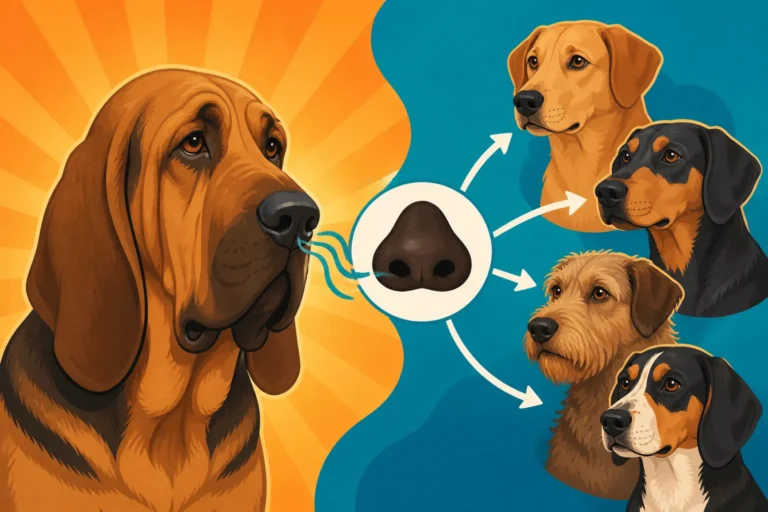
The legal system doesn't take this lightly. For a Bloodhound's trail to be admitted, strict criteria must often be met, concerning the dog's proven ability, the handler's experience, and the conditions under which the trail was followed. It's a rigorous process designed to safeguard against false accusations and ensure the integrity of the evidence. This makes the Bloodhound an incredibly specialized resource, used primarily when other investigative avenues are exhausted or when confirmation of a subject's movement is crucial. What a Bloodhound Is Actually Smelling on a Trail delves into the intricate science behind their incredible ability.
Early Historical Precedents: The Genesis of Legal Recognition
The Bloodhound's journey from a noble hunter to a legal detective spans centuries, with its origins intertwined with medieval European aristocracy and the very structure of emerging legal systems. Their reputation for relentless pursuit and accurate identification developed long before modern forensics were even a glimmer in an investigator's eye.
Medieval Beginnings: Tracing Game and Outlaws
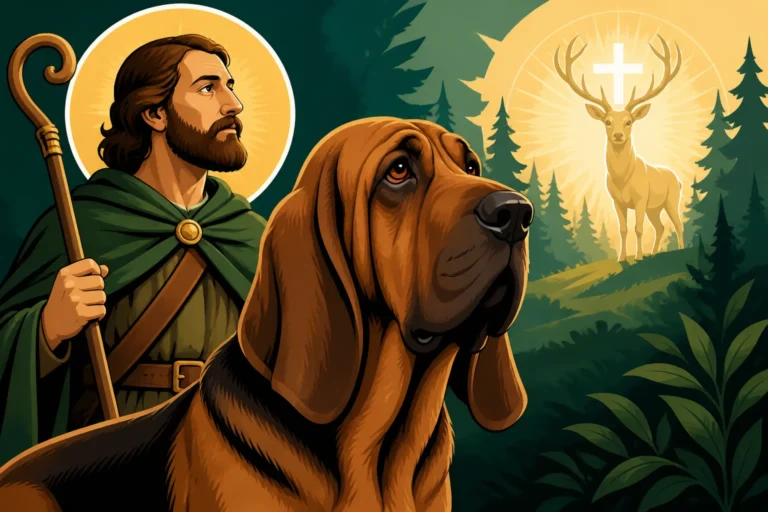
The lineage of the Bloodhound stretches back to the hounds of the Abbey of Saint Hubert in the Ardennes region, a breed known as the Chien de Saint Hubert. These dogs were primarily used for hunting deer and wild boar, celebrated for their unwavering dedication to a scent trail, even an old or cold one. This persistent tracking ability was so renowned that they were also employed to track down poachers and outlaws in dense forests and sprawling estates. It was this effectiveness in finding people, rather than just game, that began to solidify their unique status.
Over time, as these hounds made their way to England (some say with William the Conqueror himself), they continued to be used for similar purposes. The term "blooded hound" or "Bloodhound" likely emerged not from a connection to actual blood, but from their "blooded" or pure-bred lineage, signifying nobility and purity of purpose in tracking. The Abbey of Saint Hubert Bred the Bloodhound's Ancestor explains this fascinating history. Their reliability in tracking individuals, even across difficult terrain, naturally caught the attention of early law enforcers and landowners seeking to apprehend culprits.
The First Legal Recognitions: A Shift in Perception
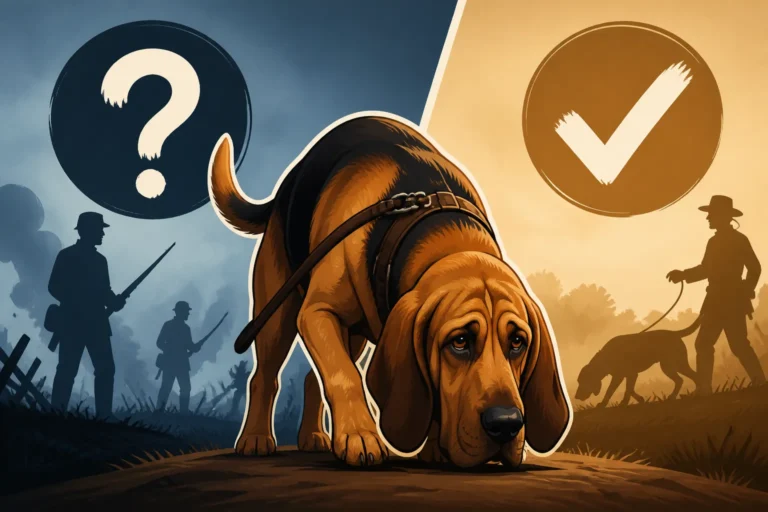
While pinning down the absolute first court to accept a Bloodhound's trail can be elusive due to historical record keeping, the foundation of their legal standing is firmly rooted in English common law. It was within this legal tradition that the concept of "sleuth hounds" (an old term often synonymous with Bloodhounds, meaning "hounds that follow a track") began to gain formal recognition. Early English legal texts and judicial decisions, particularly from the 17th and 18th centuries, made references to the use of these dogs in tracking criminals, and their evidence was, implicitly or explicitly, accepted as a component of the prosecution's case.
The shift wasn't a single, dramatic ruling, but a gradual acceptance based on observable, consistent results. If a Bloodhound consistently tracked a suspect from a crime scene to their hiding place, it became increasingly difficult for courts to dismiss this tangible, if unconventional, form of "testimony." This early acceptance paved the way for more formal rules of admissibility that would emerge centuries later, especially in the United States. It's important to remember that these were often local or regional recognitions first, slowly coalescing into a broader legal principle as the breed's reputation spread and standardized practices began to evolve. What the Name Bloodhound Actually Means provides more insight into their historical nomenclature.
English Common Law and the "Sleuth Hound"
The term "sleuth hound" itself speaks volumes about the historical perception of these dogs. Derived from the Old Norse word "slóð," meaning "track" or "trail," it underscored their primary function. English legal treatises and court records from centuries past often discussed the "sleuth hound" as a legitimate instrument for pursuing felons. This was not a tool used in isolation, but one that complemented human investigation, providing a compelling, if circumstantial, link between a suspect and their actions. The early acceptance often came with caveats, such as the trail being fresh, the dog and handler being experienced, and the trail being uninterrupted.
The legal weight attributed to the "sleuth hound's" work was particularly significant in rural areas where human witnesses might be scarce, and the trail itself was the most direct evidence of passage. This historical foundation laid the groundwork for modern interpretations of Bloodhound evidence, emphasizing the need for proven reliability and proper handling. While the direct impact of a single "first court" might be lost to time, the enduring legacy of English common law's embrace of the Bloodhound's ability is clear in the legal doctrines that persist today, ensuring that their incredible nose remains a trusted ally in the pursuit of justice.
The Mechanics of a Court-Accepted Trail
Admitting a Bloodhound's trail as evidence in court isn't as simple as bringing the dog to the stand. It involves a meticulous process, from the dog's inherent abilities and rigorous training to the handler's expertise and the scrupulous documentation of every step of the trail.
Handler Qualifications and Training: The Human Element
At the heart of any successful Bloodhound trail – and its subsequent acceptance in court – is the handler. A Bloodhound is not a machine; it is a highly sensitive animal whose performance is intimately tied to its human partner. Therefore, extensive training and certification for both the dog and the handler are absolutely non-negotiable. Handlers typically undergo hundreds, if not thousands, of hours of training, learning to "read" their dog's subtle cues, interpret changes in behavior, and understand environmental factors that might influence a trail. They must learn about scent theory, wind currents, scent pooling, and contamination, effectively becoming human extensions of their dog's powerful nose.
Furthermore, handlers often participate in formal certification programs, sometimes through organizations like the National Police Bloodhound Association or state-specific K9 associations, where their team's proficiency is tested under various conditions, including different terrains, weather, and trail ages. These certifications are crucial because they demonstrate to a court that the handler is not only experienced but has also met an objective standard of competence. Whether a Bloodhound Handler Must Be Qualified to Testify directly addresses the critical role of handler expertise in legal proceedings, underscoring that the dog's talent alone isn't sufficient. This partnership, forged through countless hours of dedicated work and mutual trust, is what elevates the Bloodhound's natural gift into reliable, admissible evidence. If a handler needs specialized gear or training manuals, they might turn to a reputable online retailer like Chewy for supplies that support this intensive regimen.
Maintaining Scent Integrity: From Scene to Courtroom
For a Bloodhound's trail to be deemed credible in a court of law, the integrity of the scent at the crime scene and on any "scent article" used to start the dog must be meticulously preserved. This often begins with securing the scene immediately to prevent further contamination by first responders, curious onlookers, or even adverse weather conditions. Any object believed to carry the suspect's scent, such as a dropped hat, a discarded cigarette butt, or even a pillow from a missing person's bed, must be handled with extreme care, typically by gloved personnel using sterile bags to avoid introducing foreign scents. This adherence to a strict "chain of custody" for scent articles is as vital as it is for any other physical evidence.
When the Bloodhound arrives, the handler will carefully present the scent article, or start the dog at the point where the suspect was last seen or known to be present. The goal is to isolate the target scent as much as possible, minimizing interference. The dog's subsequent actions, its movements, changes in direction, and ultimate conclusion of the trail are all observed and documented precisely. Any break in the trail, any point where the dog appears to lose the scent or becomes distracted by other stimuli, must be noted. This careful preservation and documented methodology ensures that when the evidence is presented in court, its reliability can be defended against challenges of contamination or improper handling. This attention to detail is why How Old a Trail a Bloodhound Can Follow is so dependent on careful scene management.
Documentation and Reporting: Building the Case
The moment a Bloodhound and its handler begin a trail, an intricate process of documentation kicks into gear. This isn't just a casual walk; it's a forensic operation. Every detail, no matter how small, is often recorded. This includes the date, time, weather conditions (temperature, humidity, wind direction and speed), terrain, and the specific starting point of the trail. The type of scent article used, if any, is also noted, along with how it was handled and presented to the dog. Crucially, the entire path the Bloodhound takes is mapped, either manually with notes and GPS coordinates, or increasingly with specialized software that tracks the handler's movements, allowing for a precise reconstruction of the trail.
During the trail, the handler will observe and record their Bloodhound's behavior – how it indicates it's on scent, when it deviates, when it makes a clear turn, and how it responds upon finding the subject or reaching the end of the trail. These observations are critical for interpreting the dog's work and explaining it to a jury. After the trail is complete, a comprehensive report is compiled, detailing all these elements, often including photographs or video footage. This report serves as the formal "testimony" of the Bloodhound's work, a factual account that judges and juries can review. The thoroughness of this documentation is paramount because it provides the objective basis for the trail's admissibility and helps to counter any potential arguments of subjectivity or error.
Challenges and Limitations to Bloodhound Evidence
Despite their impressive abilities and historical legal standing, Bloodhound evidence is not without its challenges. Courts, lawyers, and even seasoned handlers recognize that a Bloodhound's trail is a powerful tool, but one that comes with inherent limitations and requires careful scrutiny.
The "Bloodhound Rule" and Its Criticisms
The "Bloodhound Rule" is a legal doctrine, varying slightly by jurisdiction, that governs the admissibility of Bloodhound evidence. Generally, it requires certain foundational elements to be proven before a jury can hear about a Bloodhound's trail. These often include demonstrating that the dog is a purebred Bloodhound, that it has a proven track record of accurate trailing, that it was put on a fresh trail, and that the handler is experienced and competent. While intended to ensure reliability, this rule has faced significant criticism over the years. Some legal scholars argue that it grants undue weight to canine abilities, potentially leading to wrongful convictions if not corroborated by other evidence.
Critics also point out that the rule often relies on anecdotal evidence of the dog's past performance rather than scientific validation of scent tracking. The subjective nature of interpreting a dog's "alert" or "being on trail" can also be a point of contention. Juries might be overly impressed by the dog's abilities, leading to a phenomenon known as "CSI effect," where forensic evidence is given more weight than it perhaps deserves without rigorous scientific backing. This makes it crucial for defense attorneys to challenge the foundation of the Bloodhound's evidence, often questioning the handler's methods, the dog's training, and the circumstances of the trail itself.
Environmental Factors and Contamination: The Unpredictables
Even the most highly trained Bloodhound and experienced handler can be affected by a myriad of environmental factors and potential contamination at a scene. Imagine a busy urban street where hundreds of people have walked, or a scent trail laid during a heavy downpour or strong winds. These conditions can significantly degrade or disperse scent particles, making a clear, uncontaminated trail extremely difficult to follow. Hot, dry weather can cause scent to dissipate quickly, while cold, damp conditions might preserve it longer but also make it more challenging for the dog to pick up subtle nuances. Whether Rain Destroys a Bloodhound's Trail explores how environmental elements can impact a Bloodhound's work.
Contamination is another major concern. Every person who walks through a crime scene leaves their own scent, creating a complex tapestry of odors that can potentially confuse a Bloodhound. Firefighters, paramedics, police officers, and even curious neighbors can inadvertently introduce new scents or destroy existing ones. The wind can carry scent from a completely different area, creating false leads, or "ghost trails." Because Bloodhounds are trained to follow one specific scent, any cross-contamination or extreme environmental conditions can introduce doubt about the purity and accuracy of the trail, making it a key area for legal challenge. This is where the handler's expertise in reading their dog and the environment becomes critical, as they must be able to account for and mitigate these unpredictable elements.
The Human Factor: Interpretation and Bias
While Bloodhounds are remarkable, they are guided by humans, and humans are susceptible to interpretation and bias. A handler’s belief that a suspect went in a certain direction, or their knowledge of a suspect’s residence, could, however subtly, influence how they interpret their dog's behavior. This isn't necessarily intentional manipulation, but rather a subconscious confirmation bias where the handler might unintentionally reinforce a particular outcome. For example, if a dog hesitates, a handler's prior knowledge might lead them to encourage the dog down a path they expect it to take, rather than letting the dog work out the scent independently.
Moreover, the absence of a truly objective, scientific "read-out" from a Bloodhound's nose means that a significant portion of the evidence relies on the handler's subjective interpretation of the dog's body language and changes in trailing intensity. Different dogs have different styles, and different handlers have different ways of "reading" those styles. This subjectivity opens the door to challenges in court, as it can be argued that the handler's interpretation, rather than the dog's pure olfactory data, is what is being presented as evidence. This is why thorough, standardized training and meticulous documentation are paramount – to minimize the potential for human error or bias and ensure the Bloodhound's incredible gift remains a credible asset to justice. Whether a Bloodhound Can Be Wrong addresses the fallibility of even the most skilled trailing teams.
Modern Use and Continued Relevance
Despite the challenges and the advent of sophisticated forensic science, Bloodhounds continue to play a vital role in both law enforcement and humanitarian efforts. Their unique abilities still offer something that no machine or human can fully replicate: the unwavering commitment to a specific human scent.
Search and Rescue Operations: Beyond Criminal Cases
While their legal standing in criminal trials is legendary, perhaps the most heartwarming and impactful modern use of Bloodhounds is in search and rescue. They are frequently deployed to find missing children, elderly individuals with dementia who have wandered off, hikers lost in the wilderness, or victims of natural disasters. In these critical situations, time is often of the essence, and a Bloodhound's ability to pick up and follow a scent trail, even one that is days old, over vast distances and varied terrain, can be the difference between life and death.
The "testimony" of a Bloodhound in these cases isn't about conviction; it's about location and reunification. Their relentless nature means they rarely give up a trail once they're on it, working through distractions that would deter other dogs or human searchers. This dedication to the scent, combined with their generally gentle disposition, makes them ideal for finding vulnerable individuals, often bringing them home safely. Organizations often equip their search and rescue Bloodhounds with durable gear, readily available from retailers like Chewy, to ensure they are comfortable and protected during long hours on the trail. Whether a Bloodhound Can Trail a Missing Child exemplifies their indispensable role in these critical missions.
Police and Law Enforcement Today: A Specialized Tool
Many police departments, sheriff's offices, and state law enforcement agencies across the country continue to utilize Bloodhounds as a specialized K9 unit. While general-purpose patrol dogs handle a range of tasks, Bloodhounds are specifically employed for their unparalleled trailing capabilities. They are typically called in for serious cases where a suspect has fled on foot, or where a missing person's last known whereabouts needs to be established with high confidence. Their work often complements other investigative techniques, providing crucial intelligence about a subject's movements that might not be obtainable through any other means.
In these contexts, their role is often to establish a direction of travel, locate discarded evidence, or pinpoint a hiding spot. While the direct admissibility of their trail as standalone evidence in court may face modern legal hurdles and require strong corroboration, their primary value remains in their ability to find people or critical clues that lead to further evidence. Whether Police Departments Still Keep Bloodhounds confirms their continued importance in specialized police units, even as forensic science advances. They serve as an invaluable investigative tool, bridging the gap between a last known point and the next piece of the puzzle.
The Future of Bloodhound Evidence: Technology vs. Nature
The landscape of forensic science is constantly evolving, with new technologies emerging that promise to enhance our ability to detect and analyze evidence. DNA profiling, advanced chemical analysis, and digital forensics offer incredible insights. Yet, even with these advancements, the Bloodhound's unique contribution remains relevant. No technology can yet replicate the Bloodhound's ability to selectively identify and follow a specific human scent in a complex, real-world environment over long distances and varied conditions. They provide a dynamic, real-time tracking capability that static scientific tools cannot.
The future likely lies in the integration and complementary use of both natural and technological tools. A Bloodhound might quickly establish a trail and lead investigators to a crucial piece of physical evidence, which can then be collected and analyzed with advanced forensic techniques. Rather than technology replacing Bloodhounds, it's more probable that they will work hand-in-hand, with Bloodhound trails providing initial direction and confirmation, and technology offering definitive scientific validation of the physical evidence discovered. The human-canine bond, combined with rigorous training and scientific understanding, will ensure that the Bloodhound's incredible nose continues to be a trusted, if ancient, asset in the pursuit of truth and justice.
Here's a comparison of how Bloodhound evidence stands against other common types of evidence:
| Feature | Bloodhound Trail Evidence (BT) | Eyewitness Testimony (ET) | DNA Evidence (DNA) | Fingerprint Evidence (FP) |
|---|---|---|---|---|
| Origin of Evidence | Canine olfactory detection | Human memory and perception | Biological material | Ridge patterns on skin |
| Primary Purpose | Tracking, establishing path of travel | Identifying individuals, recounting events | Linking individuals to samples | Linking individuals to surfaces |
| Admissibility in Court | Varies by jurisdiction; "Bloodhound Rule" criteria often apply | Generally admissible, but subject to credibility challenges | Highly admissible; strong scientific basis | Highly admissible; strong scientific basis |
| Potential for Error | Environmental factors, handler interpretation, dog distraction | Memory distortion, suggestion, perception errors | Contamination, lab error, secondary transfer | Contamination, partial prints, human error in analysis |
| Corroboration Needed | Often requires strong corroboration for conviction | Highly recommended, especially for sole evidence | Minimal, but context and chain of custody are vital | Minimal, but context and chain of custody are vital |
| Specificity | Tracks a human scent, ideally specific individual | Specific person, specific event | Specific individual (high confidence) | Specific individual (high confidence) |
| Time Sensitivity | High (scent degrades over time) | Can be recalled long after event | Can persist for long periods | Can persist for long periods |
Disclaimer
This article is for general informational purposes only and does not constitute professional advice. Laws, prices and regulations vary by location and change over time. Consult a qualified professional for guidance on your specific situation.