Whether a Bloodhound Can Follow a Trail Thirteen Days Old
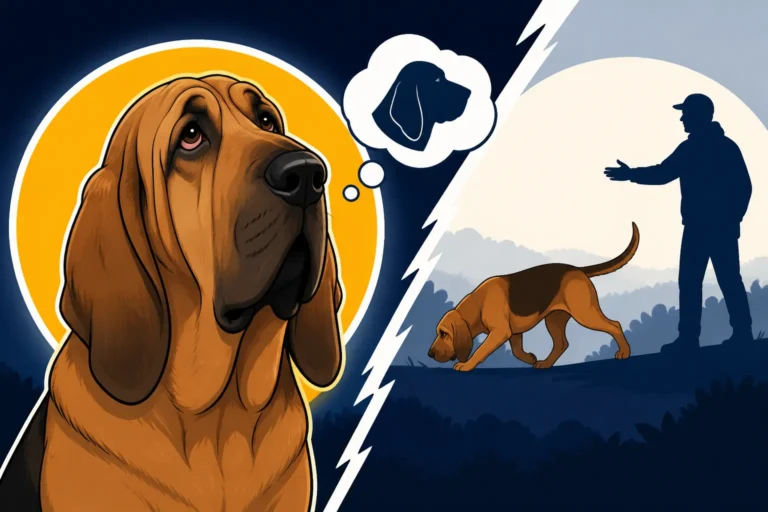
It’s a thought that crosses the mind of many Bloodhound owners, or even search and rescue professionals, when a loved one goes missing and days turn into weeks: can a Bloodhound really track a trail that old? It feels almost mythical, a story reserved for legends and Hollywood. The frustration of time passing, of scent fading, is very real, and it’s natural to wonder if these incredible dogs have a limit. This guide delves into the remarkable capabilities of the Bloodhound and the scientific factors at play, exploring whether a thirteen-day-old trail is truly beyond their legendary nose.
The Science of Scent: Why Old Trails Fade (But Don't Vanish Entirely)
To understand how a Bloodhound can work an aged trail, we first need to grasp what a "scent trail" actually is and why it appears to fade. It’s not a visible line drawn on the ground; it's a dynamic, ever-changing cloud of microscopic particles. The perception that scent simply vanishes after a few hours is a common misconception, often born from our own limited human olfactory abilities.
The Dynamic Nature of Human Scent
Every human constantly sheds a unique signature into their environment. This signature isn't just one thing; it's a complex cocktail of skin cells, sweat, oils, hormones, and the myriad of bacteria that live on our skin. When we move, we leave behind a trail of these particles, almost like a microscopic breadcrumb path. These aren't just sitting neatly on the ground. They become airborne, settle on surfaces, and get disturbed by external forces.
Consider walking through a park: with every step, you're shedding tens of thousands of skin cells, each carrying your unique bacterial and chemical profile. These particles land on the grass, the sidewalk, the leaves, and even on the air currents around you. They stick to surfaces, especially porous ones, creating a faint, invisible scent picture. Over time, these particles break down, get diluted by moisture, or are carried away by air. However, scent doesn't just disappear; it becomes more diffuse, more scattered, and much fainter. It's like trying to find a single grain of sand after a storm, but the Bloodhound has a built-in magnifying glass for those grains.
Environmental Factors and Scent Degradation
The rate at which a human scent trail degrades is heavily influenced by its environment. Imagine a trail laid on a hot, sunny afternoon versus one laid on a cool, damp morning. The difference in how long that scent persists is dramatic.
Temperature and Humidity: Heat causes scent particles to dissipate much faster, as molecules move more rapidly. Conversely, cooler temperatures can help "fix" scent to the ground, preserving it longer. High humidity can sometimes enhance scent by keeping it airborne or sticking to surfaces, but heavy rain can also wash away lighter scent particles. However, even rain doesn't completely obliterate a trail. It can press scent deeper into porous surfaces like soil or carpet, protecting it from further aerial dispersion. This is a critical point that often surprises people; sometimes, a good rain can actually help preserve a very old trail by settling it down. For more on this, you might find Whether Rain Destroys a Bloodhound's Trail to be an illuminating read.
Ground Cover: Different surfaces hold scent in different ways. Grass and soil are excellent scent traps, as their porous nature allows scent particles to adhere and even become embedded. Concrete and asphalt, while seemingly solid, also retain scent, though perhaps for a shorter duration, as the particles are more exposed to the elements. Wood, carpeting, or upholstery are also good at retaining scent for extended periods. The type of ground and vegetation plays a huge role in how much scent is left for the Bloodhound to interpret. As for hard surfaces, Whether Asphalt Holds Scent for a Bloodhound explores this in more detail.
Wind and Airflow: Wind is a double-edged sword for scent. A strong wind can quickly disperse a fresh trail, scattering particles far and wide, making it much harder to follow a direct line. However, a gentle breeze can actually carry scent for a Bloodhound, helping them pick it up from a distance. Stagnant air in enclosed spaces or sheltered areas can preserve scent for much longer periods. Understanding how air currents affect scent is crucial for a handler trying to interpret their dog's behavior. Whether Wind Moves the Scent a Bloodhound Follows delves deeper into this phenomenon.
In essence, an old trail isn't truly "gone"; it's just incredibly dilute and scattered. It requires a specialist, like a Bloodhound, to piece together those scattered fragments into a coherent story.
The Bloodhound's Unmatched Olfactory System
What makes the Bloodhound the unrivaled champion of scent work, capable of tackling trails that would baffle any other breed, let alone a human? It's a combination of incredible physical adaptations and an unwavering mental focus.
More Than Just a Nose: Anatomy for Scent Detection
When you look at a Bloodhound, you're essentially looking at a walking, breathing scent-detecting machine, purpose-built over centuries for this very task. Their distinctive features aren't just for show; they serve a vital function in amplifying their already extraordinary sense of smell.
Long, Drooping Ears: These aren't just adorable; they're ingenious scent-sweepers. As the Bloodhound moves, its long, heavy ears drag along the ground, effectively sweeping scent particles up towards its nose and preventing them from dissipating too quickly. They also create a cone-like effect, trapping scent around the muzzle and funneling it directly into their nostrils. It's like having built-in scent vacuums. You can read more about this fascinating adaptation in Why a Bloodhound's Ears Sweep Scent Toward Its Nose.
Loose Skin and Deep Flews (Wrinkles): The Bloodhound's famously wrinkled face and abundant loose skin, especially around the neck (the dewlap), also play a critical role. These folds increase the surface area for scent particles to cling to, essentially storing residual scent that the dog can then process. The deep flews of their lips can also trap scent, further aiding their ability to pick up even the most minute traces. Many believe that these wrinkles act like miniature scent sponges. For a deeper dive, check out Whether a Bloodhound's Loose Skin Helps It Trail.
The Nose Itself: Of course, the nose is the star of the show. A Bloodhound's nasal cavity is massive, housing an estimated 230 to 300 million olfactory receptors – compare that to a mere 5 million in humans! This incredible number allows them to detect and differentiate an astonishing array of scents, even at extremely low concentrations. Furthermore, their unique ability to inhale and exhale simultaneously means they can constantly sample the air for scent, never missing a beat. This continuous processing of scent information is a huge advantage when working a faint, aged trail. The sheer power of their scent receptors is explored in How Many Scent Receptors a Bloodhound Has.
It's not just the quantity of receptors, but the brain's capacity to process this information. A Bloodhound's brain dedicates a much larger proportion of its gray matter to olfactory processing than other breeds. They can literally build a three-dimensional "scent map" in their minds, identifying the direction, age, and characteristics of a trail with astonishing accuracy.
The Mental Fortitude to Work the Faintest Trails
Beyond their physical superpowers, Bloodhounds possess an unparalleled mental tenacity. While other breeds might get distracted or give up when a trail becomes too faint, a Bloodhound's drive to follow scent is almost obsessive. They are often described as having "single-minded determination," and it's no exaggeration.
This isn't just a matter of training; it's deeply ingrained in their genetic makeup. They were bred for centuries to follow a trail relentlessly, no matter how long or difficult. This means they will push through confusing cross-contamination, difficult terrain, and the sheer mental fatigue of sifting through minute scent particles. Their reward isn't necessarily finding the person (though that's certainly part of it), but the act of following the trail itself. This intrinsic motivation makes them uniquely suited for aged trail work.
A handler's job is often to simply stay out of the way, observe, and trust the dog's nose. The Bloodhound will tell you where the scent is, even if it's just a faint whisper from days gone by. This unwavering commitment to the scent is what truly sets them apart, making the impossible seem possible. They don't give up until the scent tells them the story is over, or until they physically can't go any further. It's a testament to their incredible drive that they can maintain focus over such long distances and durations, as touched upon in How Far a Bloodhound Will Follow a Trail.
Working Aged Trails: Challenges and Triumphs
So, back to the big question: can a Bloodhound truly follow a trail thirteen days old? The short answer is yes, under the right conditions, it is absolutely within the realm of their capabilities. Is it easy? Absolutely not. Is it guaranteed? Never. But it can happen, and there are documented cases to prove it.
Factors Influencing Success on a 13-Day Old Trail
Attempting to work a thirteen-day-old trail is one of the most demanding tasks for both dog and handler. The success hinges on a multitude of factors, all interacting in complex ways.
Initial Scent Deposition: A strong, concentrated scent left by the missing person at the beginning of the trail significantly increases the chances of detection later. If the person shed a lot of skin cells or sweat due to activity or anxiety, that initial "scent pool" provides a better starting point.
Weather Conditions Over 13 Days: This is perhaps the most crucial variable. A steady period of cool, damp weather with minimal wind can do wonders for scent preservation. Conversely, extreme heat, heavy winds, or repeated torrential downpours can severely degrade a trail. However, as mentioned before, even heavy rain can sometimes embed scent deeper into the ground, protecting it from further atmospheric decay. The entire 13-day weather history becomes a puzzle for the handler and dog to navigate.
Location and Ground Cover: Scent persists longer in certain environments. Indoor trails, protected from the elements, can last for weeks, sometimes months. Wilderness areas with dense vegetation, forest floors, or marshy grounds tend to hold scent better than open, exposed areas like asphalt parking lots. However, even in urban environments, scent can cling to cracks in sidewalks, porous building materials, or even drain covers. When a Bloodhound needs to cross a tough, scent-sparse area, the right equipment, like a sturdy tracking harness and a long line from a reliable supplier like Chewy, can make all the difference in keeping them on task.
Interference and Contamination: The more human and animal traffic, vehicle exhaust, and other competing scents a trail encounters, the harder it becomes to isolate the target scent. A trail through a busy city center will be more challenging than one through a quiet, remote park. This is where the Bloodhound's ability to discriminate between scents truly shines, picking out the single thread of the target scent from a tapestry of millions of others.
While a thirteen-day-old trail is exceptionally difficult, it's not outside the realm of possibility for a well-trained Bloodhound and handler team. Their ability to work such ancient scent is a testament to their biological superiority and relentless work ethic. Cases have shown Bloodhounds following trails several days old, sometimes even over a week, leading to successful outcomes or at least providing crucial information about a person's last known movements. The absolute maximum age a trail can be followed is really dependent on these environmental variables and the dog's skill, making each situation unique. How Old a Trail a Bloodhound Can Follow further emphasizes this point.
The Handler's Role in Aged Trail Success
While the Bloodhound's nose is the primary tool, the handler is the crucial interpreter and guide, especially on an aged, faint trail. This work is a true partnership, built on immense trust and understanding.
Reading the Dog: An experienced handler knows their Bloodhound intimately. They can interpret subtle changes in tail wag, ear position, head carriage, and foot placement that indicate the dog is on scent, losing it, or encountering contamination. On an old trail, the dog might not show the same strong, focused drive as on a fresh one, requiring the handler to be hyper-aware of these nuanced cues. This deep understanding allows them to encourage the dog through difficult sections or to call a break when the dog is becoming overwhelmed.
Understanding Scent Theory: A handler must have a comprehensive understanding of how scent behaves under various conditions – how it travels, how it degrades, and where it might pool or disperse. This knowledge helps them anticipate where the dog might struggle and how to support them. For example, knowing that scent might be trapped in a ravine during a hot day, or carried by a prevailing wind, helps the handler guide the dog to search strategically.
Patience and Trust: Working an old trail demands monumental patience. The dog might work slowly, backtracking, circling, and appearing to be confused. A good handler trusts the dog's process, allowing them the time and space to piece together the fragmented scent. Rushing or interfering too much can break the dog's concentration and ruin the trail. Sometimes, simply knowing What a Bloodhound Does When It Loses the Trail helps the handler respond appropriately without panicking.
The Value of Directionality: Even if a full "find" isn't made on a thirteen-day-old trail, the information a Bloodhound provides can be invaluable. Confirming that a person did not go in a certain direction, or that they were in a particular area, can significantly narrow the search parameters for other resources. The Bloodhound's work contributes a vital piece to the overall search puzzle, providing verifiable data that can stand up to scrutiny. Ultimately, whether it's a confirmed find or just directional information, What a Bloodhound Does at the End of a Trail is often a clear indication of their success, however small the pieces of the puzzle they've found.
When a Bloodhound team embarks on such a challenging task, they embody hope, relentless effort, and a profound respect for the power of scent and the dogs that follow it.
| Trailing Condition | Scent Longevity Impact | Bloodhound Strategy |
|---|---|---|
| Hot, Dry Weather | Decreases rapidly | Works faster, focuses on ground scent in shade |
| Cool, Damp Weather | Increases significantly | Slower, more deliberate, covers wider area |
| Heavy Rain | Initially disperses, then "fixes" to ground | Focuses on embedded scent, can work after rain |
| Strong Winds | Disperses widely, creates scent "corridors" | Works into the wind, reads air currents, may cast wider |
| Asphalt/Concrete | Retains less, exposed | Focuses on cracks, vertical surfaces, faster pace |
| Grass/Soil | Excellent retention | Slower, meticulous, deep scent work |
| Indoor/Sheltered | Retains longest | Meticulous search of all surfaces, air currents |
| Heavy Contamination | Harder to isolate target | Relies on discrimination, handler trust, patience |
Disclaimer
This article is for general informational purposes only and does not constitute professional advice. Laws, prices and regulations vary by location and change over time. Consult a qualified professional for guidance on your specific situation.