Whether American Bloodhounds Differ From English Ones
A Bloodhound called “American” and one called “English” are not automatically different breeds, and the labels can mean different things depending on who is using them. That can make breeder listings and show descriptions confusing. This guide explains what the terms usually refer to, where real differences may show up, and how to compare individual dogs without relying on nationality alone.
American and English Bloodhounds are the same breed
The labels usually describe location or breeding lines
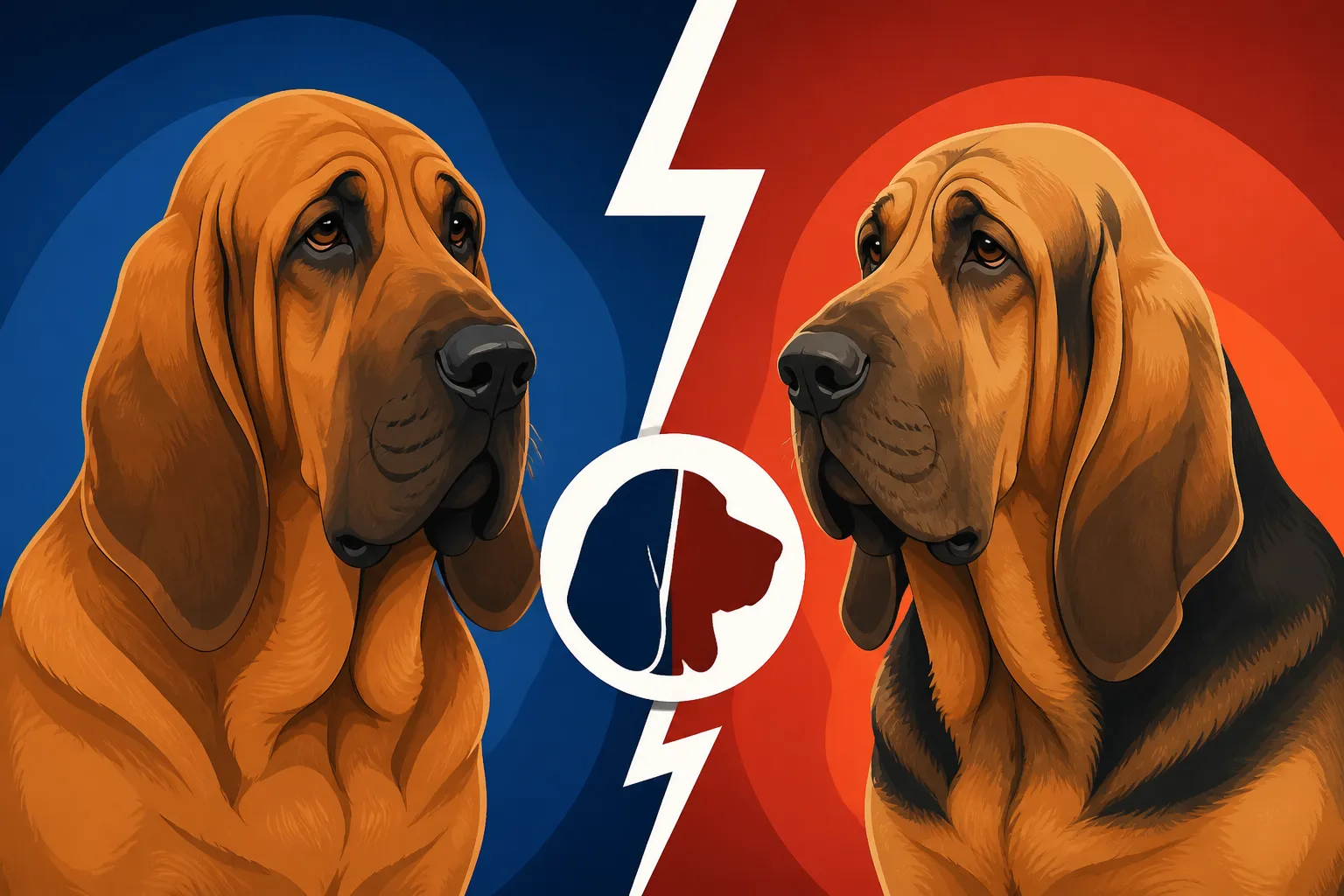
“American Bloodhound” and “English Bloodhound” are commonly informal descriptions, not names for two separate breeds. Both refer to Bloodhounds, a scent hound with a long history of being bred to follow human scent. A dog described as English may have been bred in the United Kingdom or come from British breeding lines; American often means bred in the United States or associated with American lines.
Those labels don’t guarantee that a dog has a particular build, temperament, working ability, or health profile. A breeder may use “English” to describe a dog’s ancestry, the kennel club whose standards the breeder follows, or the overall look they prefer. Another breeder might use “American” simply because the dog was born in the United States.
That distinction matters when you’re comparing listings. A puppy advertised as English isn’t necessarily a different kind of Bloodhound, and an American-bred dog isn’t necessarily more suited to search work. Ask what the breeder means by the label, then look at the dogs’ ancestry, health screening, structure, and daily lives.
For historical context, the breed’s development involved both continental European and British influence. The name and origins can be confusing, so Whether the Bloodhound Is Belgian or English and What English Breeders Changed About the Bloodhound offer useful background.
Registry standards can shape the look breeders aim for
Breed standards describe the desired features of a breed for conformation judging. They can differ in wording and emphasis among kennel clubs, and breeders may make choices based on the standard they work under. That can influence which features they prioritize across generations, but it doesn’t create a separate breed by itself.
A show-focused breeder may pay close attention to proportions, head shape, skin, movement, and overall presentation. A breeder whose dogs are selected for trailing or other practical work may give particular attention to sound movement, stamina, a suitable working temperament, and the ability to use the nose. These priorities can overlap: a well-bred dog can be both a sound example of the breed and an enthusiastic scent worker.
It’s also easy to mistake individual variation for a national difference. One American Bloodhound may be taller or more heavily built than another, just as two British-bred dogs can look quite different. The breed’s range is easier to understand by comparing actual dogs and their pedigrees than by treating “American” and “English” as fixed types. For general proportions, see What a Bloodhound Weighs and How Tall It Stands.
A dog’s purpose may explain more than its country
The words “working line” and “show line” often tell you more about a breeder’s selection goals than “American” or “English.” Even those terms need context. A dog from show lines may enjoy trailing, while a dog from working lines can still have a conventional show-ring appearance.
Ask how the parents spend their time. Do they participate in trailing, scent work, conformation events, or simply live as household companions? What are they like in a home? How do they respond to new environments, handling, and everyday training? A breeder who can describe the parents’ behavior and work in concrete terms gives you more useful information than one who relies on a national label.
Purpose doesn’t determine every dog’s personality, either. Bloodhounds are individuals, and a puppy’s early socialization, training, health, and home environment all matter. The discussion in Whether a Working Bloodhound Is Leaner Than a Show One can help separate common impressions from reliable ways to assess a particular dog.
What differences you might notice between individual dogs
Build and appearance vary within the breed
People sometimes expect English Bloodhounds to have one distinctive look and American Bloodhounds another. In practice, differences in size, substance, head, skin, and movement can occur between individual dogs and breeding programs on either side of the Atlantic. A particular line may consistently produce a certain appearance, but that’s not proof that every dog from the country shares it.
When comparing dogs, look at the whole animal rather than a single feature. Consider whether the dog moves comfortably, has a healthy body condition, and can manage ordinary activity without obvious strain. A very heavy appearance, loose skin, or pronounced facial features shouldn’t automatically be taken as evidence of superior quality. Breed identity and extreme exaggeration are not the same thing.
Photographs can be misleading because of camera angle, posture, coat condition, and the dog’s age. If you’re choosing a puppy, ask to see the parents in person or in clear, natural videos, and ask about their adult size and health. Whether Breeders Are Making Bloodhounds Heavier provides another angle on why size impressions deserve a closer look.
Temperament is shaped by the dog, not the passport
Bloodhounds are generally known for their powerful interest in scent, persistence, and independent approach to following a trail. That instinct can be strong in dogs bred in either country. An English label doesn’t mean a dog will be calmer, and an American label doesn’t mean it will be more driven or easier to train.
A dog that catches an interesting scent may become absorbed in investigating it. At home, the same dog might be affectionate and relaxed, then suddenly seem to ignore a familiar cue outdoors. This isn’t a national trait; it’s a familiar challenge of living with a scent hound. Training, safe management, and realistic expectations matter more than the dog’s country of origin. The Bloodhound Against the Other Scenthounds gives broader context for the breed’s particular strengths and quirks.
If a breeder describes a puppy as “more biddable” or “less stubborn” because it comes from a certain country, ask for examples. How do the adult dogs behave when called away from an interesting smell? What do they need to settle after activity? How are they around visitors and other animals? Specific answers help you picture daily life far better than a broad national generalization.
Health depends on breeding and care practices
Country of origin alone cannot tell you whether an individual Bloodhound is likely to be healthy. What matters more is the health of the family line, the breeder’s screening and selection practices, the puppy’s early care, and veterinary attention throughout life. Ask what conditions the breeder considers relevant, what evaluations have been completed on the parents, and whether records are available.
A responsible breeder should be able to discuss both strengths and concerns in the line without claiming that any test guarantees a problem-free dog. Ask how the breeder supports puppy buyers if a health issue appears and what their contract says. If the answers feel vague, rushed, or focused only on appearance, take time to compare other breeders.
As with any Bloodhound, plan for routine care that suits the individual dog, including attention to ears, eyes, skin folds, weight, and movement. A breed label is no substitute for a veterinary relationship and a clear record of the dog’s health. For a wider overview of selection questions, see What the American Bloodhound Club Asks Breeders to Screen.
How to compare an American and English Bloodhound
Use questions that reveal the breeder’s meaning
Before comparing two puppies or breeding programs, ask what “American” or “English” means in that specific conversation. Is the breeder referring to where the dog was born, the country of its ancestors, a kennel club standard, or a particular style of dog? The answer may be simple, but it prevents you from making assumptions based on a sales description.
Then ask about the parents’ lives and the breeder’s goals. A clear, useful conversation might cover the parents’ health evaluations, temperament, activity, training, and any work or events they participate in. Ask what the breeder hopes to preserve in the next generation and what traits they are trying to improve.
Here is a practical comparison checklist:
| What to compare | Useful question | Why it matters |
|---|---|---|
| Meaning of the label | What do you mean by American or English in this listing? | Clarifies whether it refers to location, ancestry, or breeding preference |
| Health history | What health evaluations and records are available for the parents? | Gives more relevant information than nationality |
| Temperament | How do the parents behave at home and outdoors? | Helps you anticipate day-to-day needs |
| Breeding goals | What traits are you selecting for? | Explains the program’s priorities |
| Experience and support | What guidance do you provide after a puppy goes home? | Shows whether the breeder is prepared to support owners |
| Puppy fit | How do you match puppies to homes? | Helps account for individual energy and temperament |
A good breeder should welcome thoughtful questions. They may ask you plenty in return, too, because Bloodhounds need owners who understand their size, scent drive, care needs, and tendency to follow interesting smells. If you are new to the breed, Whether a Bloodhound Suits a First Time Owner can help you think through the practical fit.
Look beyond titles and marketing language
Words such as “imported,” “European,” “English type,” or “American champion lines” can sound impressive, but they are not a substitute for records and a clear explanation. Ask what documentation supports a claim. If a dog has imported ancestors, request the pedigree and learn how those relatives fit into the breeder’s plans. If the breeder mentions show or working success, ask what the dogs actually did and what that tells you about the qualities you care about.
Be cautious of sweeping promises. No country’s dogs are automatically healthier, gentler, more intelligent, or better at trailing. Nor does a single show result or working achievement tell you everything about a puppy’s future. It may be a useful part of the picture, but it should sit alongside health information, temperament, and the breeder’s ongoing involvement.
When possible, meet adult relatives and observe them in ordinary settings. A dog standing for a photograph may look very different from one walking, exploring, settling, or meeting a stranger. If an in-person visit isn’t possible, ask for candid video and detailed descriptions rather than relying only on polished promotional material.
Make the decision around your home and goals
If you want a companion, prioritize a breeder who understands household life and can help match a puppy to your experience and routine. If you hope to do trailing or scent work, ask whether the breeder can describe the parents’ interest and experience, and seek qualified local training guidance. In either case, a country label should remain a small piece of the decision.
Think about the realities that come with the breed. Bloodhounds need secure management because a compelling scent can pull attention away from a handler. Their ears, eyes, and skin folds may need regular care, and their size can affect everything from transport to sleeping arrangements. Supplies such as suitable food, cleaning cloths, and grooming basics are routine ownership needs; some owners use retailers such as Chewy to source everyday pet-care items, while checking that any product is appropriate for their dog.
A practical preparation list can help you focus on what will matter after the puppy comes home:
- Confirm that your home and yard can be managed safely for a large scent hound.
- Choose a veterinarian and ask about preventive care and breed-specific concerns.
- Plan a positive training routine that includes leash skills and scent-based enrichment.
- Decide how you’ll handle regular ear, eye, and fold care.
- Discuss the breeder’s health records, support, and puppy-matching process before committing.
If you’re gathering supplies, Chewy may be one place to compare routine food and care options, but your veterinarian and breeder can help you choose what fits the puppy. For example, an adult dog’s needs may differ from those of a growing puppy, and a cleaner or grooming product that works for one dog may not suit another. The important point is to select for the individual dog, not to buy into a national-type stereotype.
What the American and English labels really tell you
The short answer for prospective owners
American and English Bloodhounds are not separate breeds. The terms usually point to where a dog was bred, its ancestry, or the kennel-club tradition a breeder follows. They may hint at the look a particular breeding program prefers, but they cannot reliably predict the dog’s health, temperament, working ability, or suitability for your home.
Real differences can exist between individual dogs and between breeding programs. Those differences are better understood through pedigrees, parent information, breeder priorities, and the dogs’ behavior than through a broad country label. When a listing uses “English” or “American,” ask the breeder to explain the meaning instead of assuming the words describe a guaranteed type.
The most useful choice is the dog whose needs and temperament fit your household, supported by a thoughtful breeder and a realistic care plan. If you are comparing breeders, keep notes on what each one says about health, temperament, training, and support. That will make the conversation clearer than trying to decide which nationality sounds more desirable.
Chewy can help with finding some everyday pet-care supplies, but it cannot replace tailored advice about a particular Bloodhound’s diet, health, or grooming routine. Bring questions about specific products to your veterinarian, especially when the dog has sensitive skin, recurring ear trouble, or another known condition. The label may start the conversation; the individual dog is what should guide the decision.
Disclaimer
This article is for general informational purposes only and does not constitute professional advice. Laws, prices and regulations vary by location and change over time. Consult a qualified professional for guidance on your specific situation.