Whether a Bloodhound Trails Better Than a Beagle
A Bloodhound may be the first breed people picture when they think of tracking, but that does not automatically make it better than a Beagle at every scent task. The answer depends on what “trailing” means, the conditions, and the individual dog’s training. This guide explains how the breeds compare, what each is suited to, and how to choose a sensible activity for your dog.
What trailing means for Bloodhounds and Beagles
Tracking a person is different from finding a scent
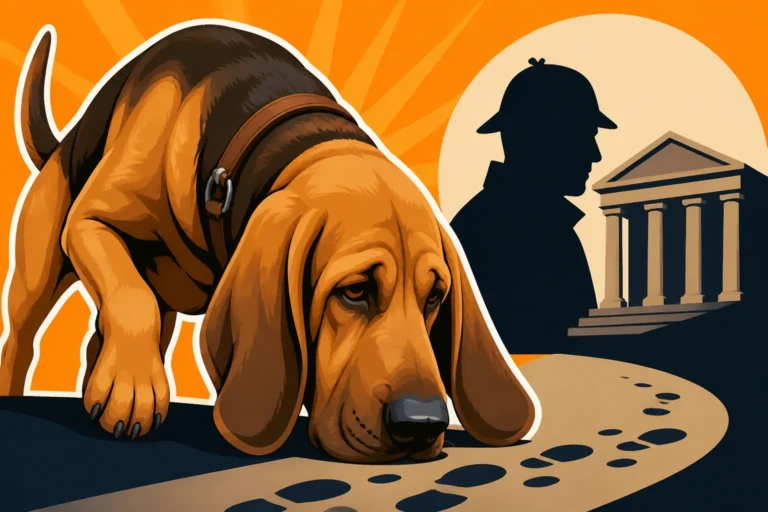
People often use tracking and trailing interchangeably, but they can describe different ways of following scent. In organized dog work, tracking commonly means following ground disturbance and scent along a route. Trailing usually means following the scent left by a particular person, even if the dog’s path does not match every footstep exactly.
A Bloodhound trained to trail is often asked to identify and follow the scent of one person from a starting article, such as a piece of clothing. The dog may work across grass, pavement, or mixed terrain, using scent carried in the environment as well as scent close to the ground. That is different from simply searching an area for any human scent.
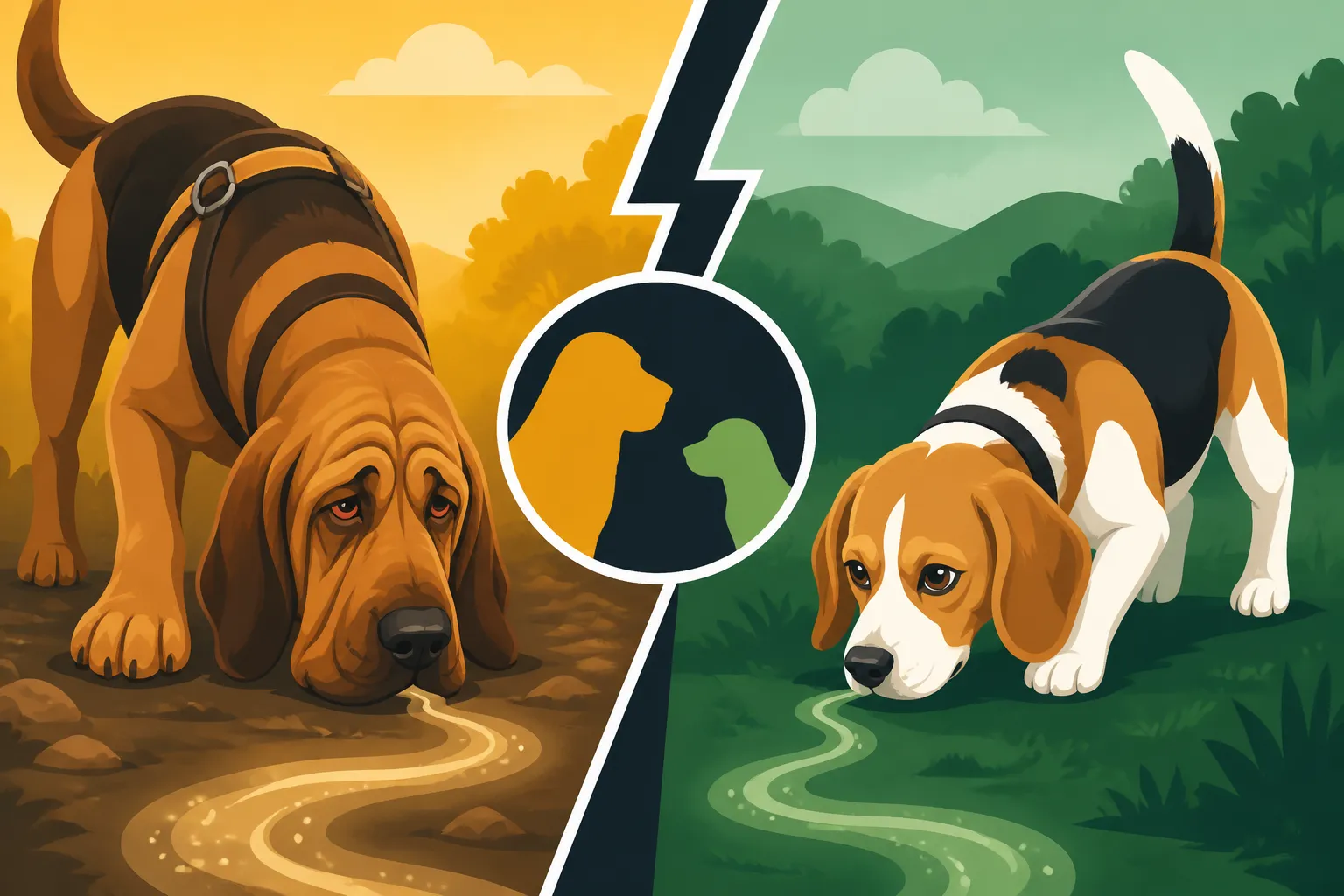
A Beagle can also use its nose to follow a scent trail. Beagles have a long history as scent hounds, particularly in work involving small game. Their style and training may suit a different kind of search from the person-specific trailing commonly associated with Bloodhounds. Neither breed’s ability is explained by breed name alone: the job, training, experience, and conditions all matter.
For a closer look at the sensory information a trailing dog uses, see What a Bloodhound Is Actually Smelling on a Trail. A dog is not following a visible line like a person following footprints in mud. Scent can move, linger, and become harder to interpret as weather, ground surface, and other activity change.
Why Bloodhounds are so closely associated with trailing
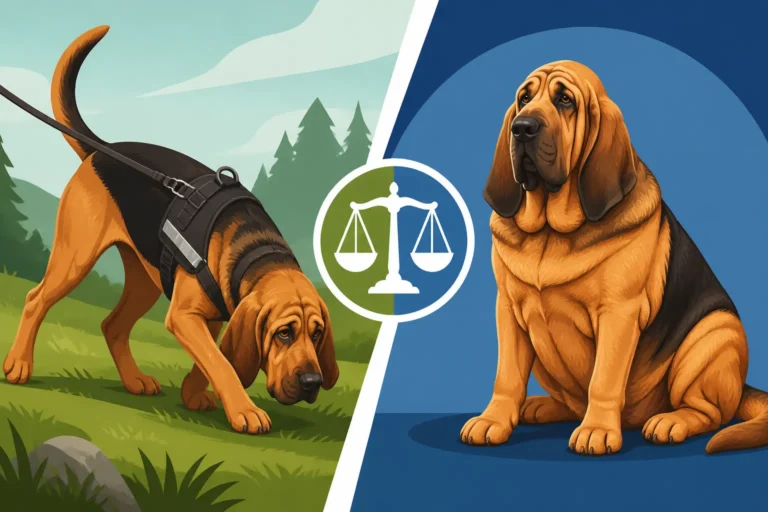
Bloodhounds are bred and known for scent work, and their physical features support their scenting style. Their long ears, loose facial skin, and substantial muzzle are often discussed in relation to scent collection and tracking. More importantly, many Bloodhounds are selected, trained, and handled for work involving people’s scent.
A trained Bloodhound may be asked to follow an individual’s scent through a complicated environment. That does not mean every Bloodhound will naturally perform a reliable trail without preparation. The dog needs to learn the routine, work with a handler, and stay engaged despite distractions. An untrained dog that follows an interesting smell on a walk is showing scent interest, not demonstrating dependable trailing ability.
The distinction between following a person and following a path is important. A Bloodhound may move away from the exact route someone walked while still working the person’s scent. More about that difference is covered in Why a Bloodhound Trails a Person Rather Than a Path. It helps explain why a handler may allow the dog to investigate rather than repeatedly pull it back toward visible footprints.
What Beagles bring to scent work
Beagles are capable scent hounds with strong motivation to investigate odors. Their compact size can make them practical in settings where a smaller dog is easier to transport or manage. Their scenting ability can be put to work in activities such as nose work, hunting-related tasks, or other searches when the dog has appropriate training.
A Beagle’s talent for scent work should not be mistaken for an automatic advantage in human trailing. A dog trained for one scent task may need different preparation for another. For example, following game scent is not the same assignment as identifying one person’s scent article and following that person through a busy public area.
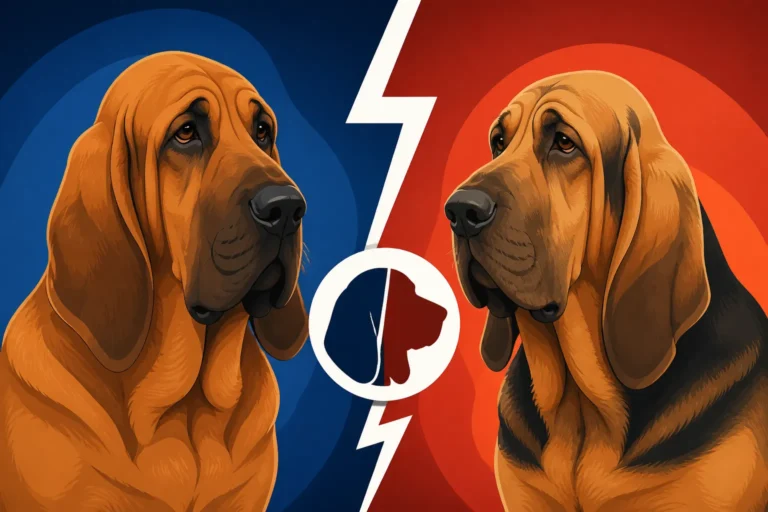
The most useful comparison is not “Which breed has the better nose?” but “Which dog is prepared for this specific job?” For more breed-to-breed context, see The Bloodhound Against the Beagle. A capable Beagle may do very well in a task that suits its training, while a Bloodhound may be a more natural fit for a program built around human-scent trailing.
Which breed trails better in real-world conditions
The answer depends on the trail and the goal
If the task is following a particular person’s scent, a well-trained Bloodhound is commonly the more expected choice. The breed has a strong association with human trailing, and its size, stamina, and working style can suit long, deliberate scent work. But “better” still depends on whether the dog has been trained for the task and whether the conditions allow it to work effectively.
A Beagle may be an excellent scent worker in other contexts, but comparing an experienced Bloodhound with a pet Beagle that has never received trailing instruction is not a fair test of breed potential. The same is true in reverse: an experienced, trained Beagle may outperform an inexperienced Bloodhound in a scent game or search that the Beagle has practiced.
The age of a trail also matters. A trail laid recently may be easier for many dogs to interpret than one that has been exposed to changing weather, traffic, people, and time. The dog’s experience with different surfaces and conditions also counts. Read How Old a Trail a Bloodhound Can Follow for more about why trail age is not a simple yes-or-no limit.
| Comparison point | Bloodhound | Beagle |
|---|---|---|
| Common association | Human-scent trailing and tracking work | Scent hound work, including hunting and scent activities |
| Typical size | Large and physically powerful | Smaller and more compact |
| Best comparison | A trained Bloodhound on a task it has practiced | A trained Beagle on a task it has practiced |
| Important limitation | Breed reputation does not replace training or handler skill | Strong scent interest does not mean every Beagle is trained to trail people |
| Practical consideration | Needs secure handling, suitable equipment, and space to work | May be easier to manage physically, but still needs a secure setup |
| Main takeaway | Often the natural choice for human trailing programs | Can excel in scent work when the task and training fit |
Scent, weather, and surroundings can change the result
Even a talented dog can struggle when scent is difficult to follow. Wind can shift scent away from the route, rain can alter the scent picture, and hard surfaces may present different challenges from grass or soil. Crowds, vehicles, other animals, and changing air currents can add competing odors.
A handler’s expectations matter, too. If the handler assumes the dog must stay on a visible path, they may interrupt useful investigation. If they assume every turn or hesitation means the dog has “lost it,” they may add pressure when the dog needs time to work. Good trailing is a partnership: the dog provides scent information, while the handler reads behavior, manages the line, and makes safe decisions.
The dog may also need to distinguish one person’s scent from the many other odors in a populated area. That ability is not simply a matter of having a sensitive nose. It depends on the dog learning to start from a scent article, focus on the intended scent, and keep working when other smells are present. For a deeper explanation, see How a Bloodhound Separates One Person's Scent From a Crowd.
A strong nose does not guarantee a successful search
A Bloodhound can follow an odor that interests it without following the scent the handler intended. A Beagle can do the same. Scent-driven behavior is not the same as a trained, controlled search, and neither breed should be expected to work reliably just because it is famous for its nose.
The dog must be physically comfortable, mentally engaged, and appropriately prepared. Heat, fatigue, paw discomfort, stress, or an unfamiliar environment can affect performance. Handlers also need to understand when to pause, reward, restart, or end a session. A dog that is pressured through every difficult moment may become less confident rather than more capable.
This is why a fair breed comparison includes training history, working conditions, health, and the dog’s individual temperament. A breed can suggest a likely starting point, but it cannot tell you exactly how one particular dog will work.
Training matters more than breed reputation
Bloodhounds need a clear, gradual introduction
A Bloodhound puppy does not need to be rushed into long or complicated trails. Early scent games can help build interest and confidence, but the work should be appropriate for the dog’s age and physical development. A simple, short trail with an easy reward at the end is more useful than a difficult setup that leaves the puppy confused or exhausted.
As the dog learns, the handler can gradually vary the trail length, age, surface, and surroundings. Change one factor at a time when possible. If the dog is suddenly asked to follow a longer, older trail through a busy area, it can be hard to know which part caused difficulty. Keeping a brief record of the setup and the dog’s response helps make progress easier to evaluate.
A Bloodhound also needs everyday management alongside scent training. A secure lead or long line is important because a dog that catches an appealing odor may be difficult to call away. Learn more about Whether an Average Owner Can Train a Bloodhound to Trail. Training for a hobby is different from preparing a dog for search work that requires formal standards, a skilled handler, and dependable teamwork.
Beagles benefit from task-specific practice too
Beagles need structured scent activities that give them a clear beginning, goal, and reward. If you want to explore human-scent trailing with a Beagle, seek guidance from an instructor who understands the activity rather than assuming that hunting instincts will translate automatically. The dog still needs to learn what scent to follow and how to work with a handler.
For either breed, reward-based training is generally a more constructive way to develop engagement than repeated corrections. A scenting dog may pause, cast around, or change direction because it is investigating. Pulling the dog continuously or reprimanding it for taking time can make the task frustrating and can obscure what the dog is communicating.
Keep sessions short enough that the dog can finish successfully. End on a manageable exercise if the dog is losing focus, and make sure the reward is worthwhile to that individual dog. The right reward may be food, play, or access to a person, depending on the training setup and the dog’s motivation.
Equipment and routine make practice safer
A well-fitting harness and an appropriate long line can give a dog room to work while keeping it connected to the handler. Avoid relying on off-leash work in an unsecured area. Even a dog with a strong recall may be difficult to interrupt when it is following scent, and roads, livestock, wildlife, and unfamiliar people create real risks.
It is worth practicing basic handling skills outside of trails: calmly putting on the harness, waiting at a gate, loading into a vehicle, and settling between exercises. These routines can make training days less chaotic. If you are assembling basic dog supplies, Chewy may be one place to look for items such as a suitable harness or washable training gear; check fit and construction carefully, especially for a large, powerful dog.
Keep a simple log of the surface, weather, trail age, distractions, and how the dog behaved. That record can help you notice patterns without turning every session into a pass-or-fail test. For Bloodhounds, trail distance varies with the dog’s age, conditioning, training, and the work itself; How Far a Bloodhound Will Follow a Trail offers more detail on why there is no single distance that applies to every dog.
Choosing the right dog for your needs
Choose for the activity you actually want to do
If your main interest is human-scent trailing, a Bloodhound may be the more direct breed to explore, particularly if you can find an experienced trainer or local group. Ask how beginners are introduced to the activity, what equipment is used, and whether the program is recreational or geared toward formal working standards. You are looking for a safe, supportive fit for both dog and handler, not a promise that a particular breed will succeed automatically.
If you already have a Beagle, there is no reason to dismiss scent work. Look for an activity suited to the dog’s interests and abilities, and get instruction before deciding that it should perform a different kind of trail. Many owners discover that a dog’s enjoyment of scent games is rewarding even when the goal is enrichment rather than search work.
Consider the household and daily routine, too. Bloodhounds are large, strong dogs with needs that go well beyond trailing practice. Beagles are smaller, but they can still be persistent, vocal, and eager to follow odors. In either case, secure handling and realistic expectations matter as much as enthusiasm.
Focus on the individual dog, not just the breed
Within either breed, dogs differ. One may be bold and persistent; another may need more encouragement or prefer a different activity. Health, age, confidence, previous experience, and the relationship with the handler can all affect a training session. A responsible instructor will watch the dog in front of them rather than making assumptions from its breed label.
If you are choosing a puppy or adult dog, ask about temperament and what kinds of work its relatives have done, but treat that information as context rather than a guarantee. A dog may inherit interest in scent and still need patient teaching. Likewise, a dog with less obvious working background may enjoy scent activities once given the chance to try them.
For most families, the best answer is simple: Bloodhounds are often the more recognizable choice for human trailing, while Beagles are highly capable scent hounds whose strengths may fit other jobs or activities. The better trail dog is ultimately the one with suitable training, a prepared handler, and a task that matches the dog’s abilities. Chewy can also be a practical place to browse for everyday supplies such as treat pouches or cleaning items for training sessions, though the right equipment depends on your dog and the activity. Above all, make the work safe, gradual, and enjoyable rather than expecting a breed reputation to do the training for you.
Disclaimer
This article is for general informational purposes only and does not constitute professional advice. Laws, prices and regulations vary by location and change over time. Consult a qualified professional for guidance on your specific situation.