Whether the Bloodhound Appears in Film and Television
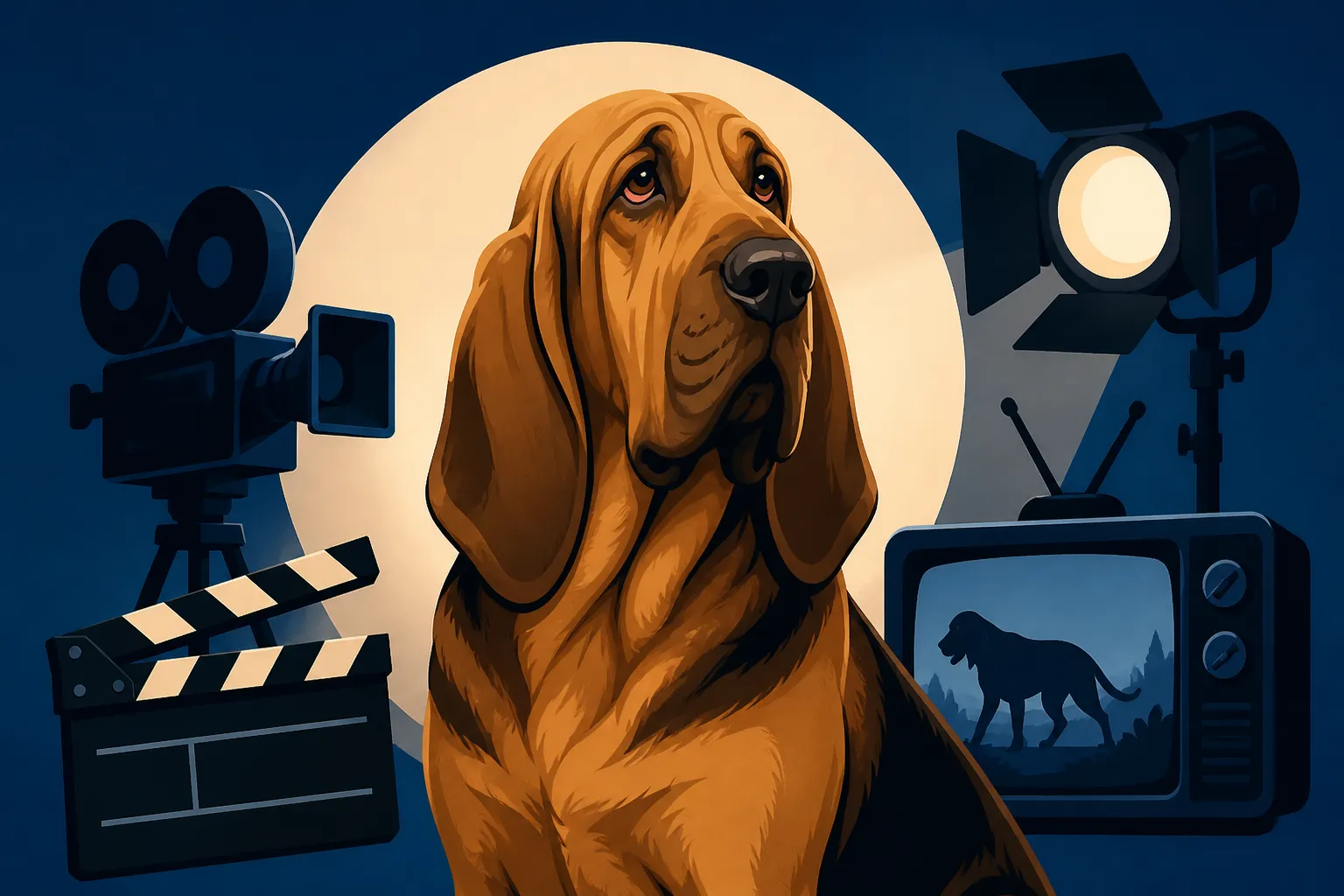
A Bloodhound on screen can look like the perfect detective: long ears, a wrinkled face, and a nose that solves the mystery. Films and television have made that image familiar, but they often simplify what the breed is really like. This guide looks at well-known Bloodhound characters, how to recognize the breed, and where screen portrayals diverge from everyday life with a real dog.
Why Bloodhounds Show Up in Film and Television
A face audiences recognize immediately
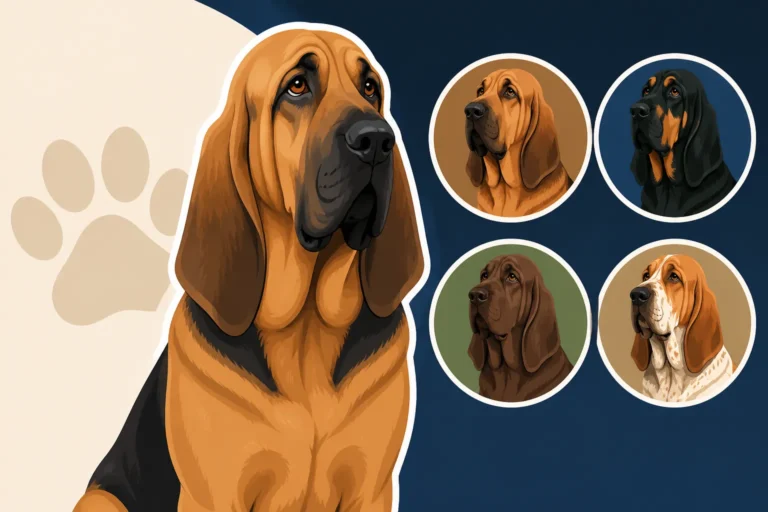
Bloodhounds have a distinctive silhouette: loose skin, long ears, drooping eyes, and a deep muzzle. Those features are easy to recognize even in a brief scene, making the breed useful when a filmmaker wants the audience to understand, at a glance, that a dog is a tracker. A Bloodhound can look serious, sleepy, comical, or quietly wise without needing much explanation.
The breed’s familiar association with tracking adds to the effect. A character who lowers its nose and follows a scent gives the story a simple visual clue: the dog is searching. That can work in a mystery, an adventure, or a family film, even if the real process of trailing is much slower and less tidy than a screen sequence suggests.
The traits that make Bloodhounds memorable on screen are also part of what makes them distinctive dogs off screen. Their build and expressive face have long been part of the breed’s identity, not just a costume choice. For more on those characteristics, see Why the Bloodhound's Head Is Shaped the Way It Is and Whether a Bloodhound's Loose Skin Helps It Trail.
The tracking-dog shortcut
In a film or television episode, a Bloodhound may appear, sniff the ground, and lead a group directly to a missing person. It is a neat storytelling shortcut: the dog’s nose moves the plot forward without requiring the characters to spend an hour searching a field, questioning witnesses, or explaining scent conditions.
Real trailing is less predictable. A dog may need to work through changing surfaces, weather, competing smells, and gaps in the trail. A handler also has to interpret the dog’s behavior and manage the search safely. The dog is not a magical locator, and a screen portrayal that makes every trail look certain can create a misleading impression of what scent work involves.
That distinction matters because the popular image can be exaggerated in both directions. Some stories treat the Bloodhound as infallible; others use the breed as a comic prop whose only job is to have a droopy face and sniff dramatically. For a closer look at scent work as a real activity, read The Bloodhound Against the Other Scenthounds and Whether a Bloodhound's Nose Is the Best of Any Breed.
Bloodhounds in Familiar Screen Stories
Trusty in Lady and the Tramp
Trusty, the older dog in Disney’s Lady and the Tramp, is one of the best-known fictional Bloodhounds. He is portrayed as a kind, loyal companion with a strong sense of history and a fondness for telling stories about his family’s tracking abilities. His character is warm and reassuring, and the film uses his breed identity to connect him with the idea of a dependable nose.
Trusty is not shown as a tireless working dog in every scene. He is also a friend, a neighbor, and a dog with age-related limitations. That makes him more than a simple “tracking machine,” even though the story still leans on the recognizable Bloodhound image. His role is a good example of how family films can use a breed’s reputation while giving the dog a personality beyond its job.
As with any animated character, Trusty should be understood as a fictional interpretation rather than a guide to breed behavior. A real Bloodhound may be affectionate and people-oriented, but individual temperament varies, and a dog’s age, training, health, and environment all matter. The broader question of temperament is covered in Whether the Bloodhound Is Actually Gentle.
Chief in The Fox and the Hound
Chief, the older hunting dog in Disney’s The Fox and the Hound, is also identified as a Bloodhound. His role is very different from Trusty’s. He is presented as experienced, protective, and connected to the world of hunting, while also taking part in the film’s family drama and action.
Chief illustrates how one breed can serve very different storytelling needs. In Lady and the Tramp, the Bloodhound character contributes warmth and comic storytelling. In The Fox and the Hound, the breed’s tracking associations and imposing appearance help establish a more serious setting. Neither character is a complete portrait of the breed, but both show how readily audiences recognize the Bloodhound’s visual and cultural shorthand.
Movies may also use a large, long-eared dog as a generic tracker without naming its breed. That can make identification uncertain, especially in older productions or stylized animation. A dog that looks like a Bloodhound is not necessarily identified in the story as one, and a character’s behavior alone is not enough to confirm its breed.
| Screen portrayal | What it communicates to viewers | What to keep in mind |
|---|---|---|
| Trusty in Lady and the Tramp | A loyal, older dog with a tracking background | A fictional personality is not a temperament guarantee |
| Chief in The Fox and the Hound | An experienced dog connected with hunting and scent | The story heightens drama and simplifies working behavior |
| An unnamed tracking hound | A dog with a strong nose and a clear job in the plot | Appearance alone may not establish the breed |
| A dog that finds someone immediately | A quick, satisfying plot resolution | Real trailing takes skill and may not produce a certain result |
What Screen Portrayals Get Right and Wrong
The nose is important, but it is not magic
Bloodhounds are strongly associated with scent work, and the link is not invented for television. Their noses and working history are central to how people understand the breed. A story that shows a Bloodhound investigating a scent is drawing on a real capability, rather than assigning a random task to a dog simply because it looks unusual.
But a talented scent dog still works within real-world limits. Scent does not behave like a bright line on the ground. Wind, rain, temperature, traffic, other people, and the age of a trail can all complicate a search. The dog may need to investigate an area, change direction, or work through uncertainty. A handler’s observations and the conditions around the trail matter, too.
This is why screen scenes can be entertaining without being literal instruction. If a character’s nose leads directly from a clue to a dramatic reveal, the film is compressing time and removing complications. For more on how fictional portrayals have shaped public expectations, see Why the Bloodhound's Reputation Was Damaged by Fiction and Whether Television Made the Bloodhound Popular.
The dog is more than its job
A recurring screen image can make it seem as if Bloodhounds exist mainly to track. In a real home, a dog’s days include sleeping, eating, play, training, grooming, and interaction with its people. Scent work may be part of life for some Bloodhounds, but it is not automatically the right activity for every dog or household.
It is also easy for films to make a working dog look instantly obedient. Real training takes patience, repetition, and a clear reward. A Bloodhound can be absorbed in a scent and may not respond as quickly as a person expects. That does not mean the dog is being spiteful or deliberately ignoring its owner; it may be focused on information that humans cannot detect. The breed’s independence is explored further in Why a Bloodhound Ignores a Cue It Knows.
Screen stories also tend to skip everyday care. Long ears, facial folds, drool, and a large body are part of the practical reality of living with many Bloodhounds. A viewer who loves Trusty or Chief may be drawn to the breed’s look, but those visual traits come with routine attention at home. A good first step is learning about the breed’s general needs, including The Household a Bloodhound Was Built For.
When a Movie or TV Show Makes You Want a Bloodhound
Separate affection for a character from readiness for a dog
It is completely understandable to fall for a fictional dog. A kind character like Trusty can make the breed seem gentle and approachable; a confident tracker can make scent work look exciting. But liking a character and being prepared for the actual breed are different things. The most useful question is not “Do I love Bloodhounds in movies?” but “Can my household meet a Bloodhound’s needs on ordinary Tuesdays?”
Think through the day-to-day details: whether you have secure outdoor space, how you will manage walks when the dog catches an interesting scent, and whether the people sharing your home are comfortable with a large, vocal, sometimes messy dog. Consider how much time you can offer for companionship and training, and whether you can make a plan for routine veterinary care. A fictional dog never needs to be taken out in the rain or have its ears checked after a muddy walk; a real one does.
If you are seriously considering the breed, speak with responsible breeders, rescue groups, and veterinarians rather than relying on a screen character as your guide. Ask about the individual dog’s temperament, health history, socialization, and needs. You can also read Whether a Bloodhound Suits a First Time Owner before making a decision.
Use the screen connection as a starting point, not a shopping list
A film can be a useful prompt for learning more, but it is not a reliable checklist of what to buy or how to care for a dog. If a Bloodhound character sparks your interest, begin with education: learn how scent hounds behave, what everyday grooming involves, and what safe handling looks like. Then talk with a veterinarian or knowledgeable breed organization about the needs of the particular dog you may adopt.
For routine supplies, people may compare local pet stores with online retailers such as Chewy, but the important thing is choosing items that fit the dog and following veterinary guidance where health is involved. A screen-inspired toy or book can be fun; it should not distract from essentials like secure equipment, appropriate food, and a safe way to manage walks. Chewy is one place shoppers may look when comparing basic pet-supply categories, while a veterinarian can help answer health-related questions that a retailer cannot.
If you are putting together a realistic household plan, list recurring needs separately from optional purchases. Food, cleaning supplies, a well-fitted harness, and veterinary care are practical considerations; character-themed accessories are extras. Comparing those needs with your budget and your routine is more useful than trying to recreate a movie dog’s life. Chewy may be part of a supply comparison, but the right choices depend on your dog’s size, health, and comfort.
Enjoy the character while seeing the real dog clearly
A Bloodhound’s appearance makes it an enduring screen presence, and the breed’s association with tracking gives writers a convenient way to move a story along. Trusty and Chief are memorable for different reasons, and their popularity reflects how readily audiences connect with the Bloodhound’s expressive face and recognizable role.
The best way to enjoy those portrayals is to appreciate them as stories, not as promises. A real Bloodhound may be a loving companion, a dedicated scent worker, or both, but it is an individual dog with ordinary needs and limitations. Learning what lies behind the familiar image makes the films more interesting—and helps anyone drawn to the breed make a thoughtful, realistic decision.
Disclaimer
This article is for general informational purposes only and does not constitute professional advice. Laws, prices and regulations vary by location and change over time. Consult a qualified professional for guidance on your specific situation.