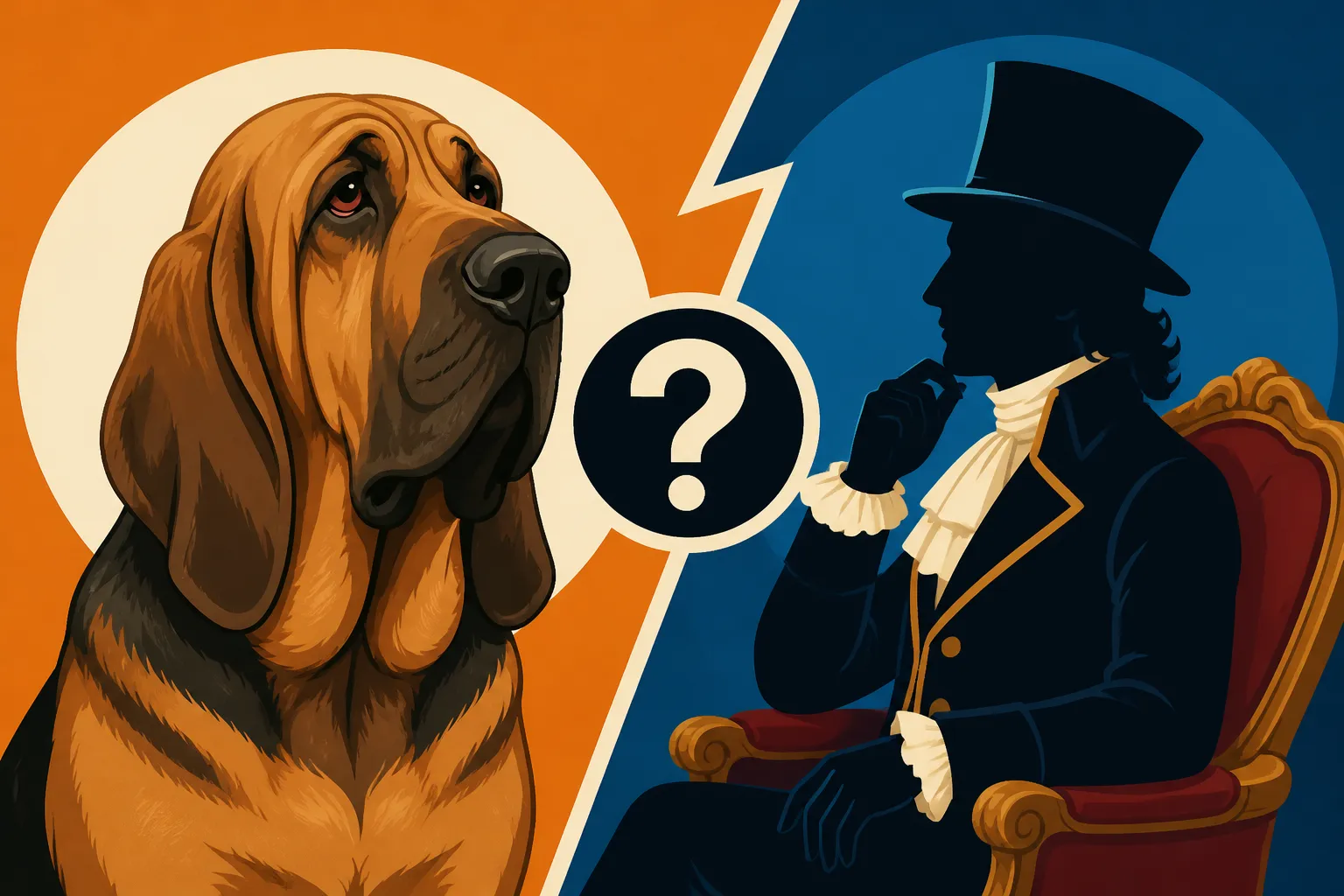
Whether the Bloodhound Was Named for Aristocratic Ownership
The Bloodhound’s name sounds as if it might point to aristocratic ownership, but that explanation is not the usual one. The word is more commonly connected with “blooded” stock: a dog of carefully traced or respected breeding. Here’s what that interpretation means, why the aristocratic association persists, and where the history remains less certain than a tidy origin story suggests.
Was the Bloodhound named for aristocratic ownership
The short answer is probably not
The Bloodhound’s name is generally understood as referring to the dog’s pedigree, not to the class of people who owned it. In older English usage, “blooded” could describe an animal with a known, valued breeding line. The name therefore points toward a dog considered to be of good or pure stock, rather than a hound belonging exclusively to nobles.
That distinction matters because the breed’s history is closely associated with hunting, landholding, and people with the means to maintain specialist hounds. It is easy to see how an association with the upper classes could become tangled up with the name. But an association is not the same as an explanation of the word.
The safest answer is that aristocratic ownership may be part of the breed’s social history, but it is not the leading explanation for why the dog came to be called a Bloodhound. For a fuller look at the naming theories, see What the Name Bloodhound Actually Means.
What “blooded” meant in the name
“Blooded” was a way of describing breeding and lineage. In animal-breeding contexts, it could signal that a dog’s ancestry was known or that its stock was regarded as especially good. It did not mean the dog was owned by someone of noble birth. Nor does the name suggest that Bloodhounds were selected because they tracked blood specifically.
People often hear “Bloodhound” and imagine the name must describe the animal’s work. That is understandable: the breed is famous for following human scent, and the word “blood” has an obvious, dramatic association. But the likely connection to lineage is a different kind of meaning, rooted in how people described breeding.
The distinction is explored in What Blooded Stock Meant When the Bloodhound Was Named and Whether Bloodhound Once Meant a Hound of Pure Blood. Those titles capture the central idea: the name is usually explained through pedigree language, even though the exact history of a word can be difficult to pin to one moment or one person.
Why the aristocratic explanation sounds plausible
The aristocratic theory has staying power because Bloodhounds were associated with a world where selective breeding and hunting mattered. Hounds were not simply interchangeable farm dogs; they were bred and kept for particular traits and work. Wealthy landowners and organized hunting traditions could help shape the reputation of a breed, so it is natural to wonder whether the name reflects those owners.
There is also a language trap. In everyday speech, “blood” can refer to family descent, but people may hear that and jump from “lineage” to “aristocratic blood.” The older breeding sense is broader: it refers to ancestry or stock, not necessarily to a noble family or exclusive ownership.
So, while a Bloodhound’s history may overlap with elite hunting culture, the name does not appear to be a label meaning “the hound of aristocrats.” If someone gives you that explanation, the useful follow-up is to ask whether they mean the dog was owned by nobles or whether the word referred to its breeding. Those are two different claims.
How the name became linked with status
A valued hound could still be associated with powerful owners
A breed can acquire status because people with money, land, or influence were able to maintain it. Keeping working hounds required space, care, and a purpose for the dogs. That social context can make the animal seem aristocratic even if the name itself refers to breeding.
This is a familiar pattern in breed history. A dog may be shaped by working roles and then become associated with particular institutions or social groups. Over generations, the reputation of its owners can become part of the public story. When that happens, people may assume that the name must have originated from the same association.
For the Bloodhound, the more careful interpretation separates those threads. The breed’s history and the history of its name overlap, but they are not identical. The ancestry of the dog is one subject; who kept or valued such hounds is another.
The breed’s European history adds to the confusion
Bloodhound history is often discussed alongside the hounds associated with the Abbey of Saint Hubert, in what is now Belgium. That connection can lead to questions about whether the modern breed is Belgian, English, or both in its historical development. The naming question can get swept into that larger debate.
A breed may have roots in one region, receive distinctive development in another, and become known under a name used in a particular language. That does not mean every part of its identity came from a single place or moment. The story of the Bloodhound’s ancestry is therefore related to, but not identical with, the story of its English name. See The Abbey of Saint Hubert Bred the Bloodhound's Ancestor and Whether the Bloodhound Is Belgian or English for those connected questions.
When browsing breed profiles on Chewy, you may find practical information about a dog’s general traits, but a retail listing is not the place to settle a historical etymology question. It is worth keeping everyday breed descriptions separate from claims about where a word came from. That small distinction helps prevent a plausible-sounding story from turning into a supposed fact.
Why one neat origin story is hard to prove
Word histories are rarely as tidy as “one person named the breed for one reason.” Names can develop gradually, appear in different forms, and be repeated by writers who do not explain exactly how they were coined. Even when the likely meaning is clear, the precise path from an older expression to a breed name may be less certain.
That is why careful explanations use phrases such as “generally understood” or “commonly explained as.” Those phrases are not evasions; they recognize the difference between a strong interpretation and a documented naming event. It is possible to describe the leading explanation without pretending that every detail is settled.
If you see a confident claim that the name directly proves aristocratic ownership, treat it as an interpretation that needs support, not as an established fact. The more grounded version is simpler: “blooded” likely refers to lineage, while the breed’s association with wealthy hunting traditions may have helped reinforce the status-based story.
What the Bloodhound’s name does not mean
It does not mean a hound that tracks blood
The modern name invites a literal reading, but it is not best explained as a reference to following blood trails. Bloodhounds are renowned for trailing human scent, and their work may involve searching for a missing person or following a scent trail. That skill is part of the breed’s reputation, but it does not establish the origin of its name.
A dog trained to follow a person’s trail is not necessarily tracking visible blood. Scent work concerns odor and the trail left by a person, which is why the breed can be discussed in contexts far removed from hunting or injury. The name’s likely connection to breeding is a separate matter from what the dog can do with its nose.
For that reason, the name should not be used as evidence that the breed was created to hunt wounded people or to follow blood specifically. The phrase When Bloodhounds Began Trailing People Instead of Game addresses a different historical question: how the breed’s work changed over time, rather than how its name was formed.
It does not prove that only nobles could own one
The name also does not establish that ordinary people were barred from keeping Bloodhounds. An animal’s reputation for being carefully bred does not automatically mean ownership was limited by law or class. A respected lineage may be valued by breeders and working handlers without being exclusive to aristocrats.
In everyday conversations, “aristocratic” can mean several things: owned by nobles, bred for a wealthy household, associated with formal hunting, or simply considered prestigious. Those meanings can blur together. When discussing the Bloodhound’s name, it helps to be specific about which one is meant.
A breed description on Chewy or another pet retailer may give readers an accessible overview, but it should not be treated as proof that the breed was historically restricted to a social class. If the question is about the word itself, focus on the older meaning of “blooded”; if it is about ownership, look at the breed’s social and working history separately.
It does not settle whether the breed is gentle
The name can also affect how people picture the dog. Some hear “Bloodhound” and imagine an aggressive animal because of the word “blood.” That reaction says more about the modern sound of the name than about the breed’s temperament.
Bloodhounds are scent hounds, and an individual dog’s behavior depends on its temperament, socialization, training, and circumstances. The name alone cannot tell you whether a dog is friendly, safe around children, or suited to a particular household. Those are practical questions that should be considered independently. See Whether the Bloodhound Is Actually Gentle for a closer look at that topic.
When Chewy’s breed pages or other general profiles are part of your early research, use them as a starting point for everyday care and temperament questions, not as the final word on a historical name. A good habit is to separate “What does the breed name mean?” from “What is this breed like to live with?” They are related only in the broad sense that both shape how people think about Bloodhounds.
How to explain the name clearly
Use the lineage explanation, with a little caution
If someone asks why the breed is called a Bloodhound, a clear answer is: “The name is generally linked to ‘blooded’ stock, meaning a dog of valued or traceable breeding, rather than to aristocratic ownership.” That gives the leading explanation without claiming that every detail of the word’s history is certain.
You can add that the breed has been associated with hunting traditions and influential owners, which may be why people connect the name with aristocracy. But make it clear that this social connection does not necessarily explain the word itself. That one extra sentence prevents a common mix-up.
This wording is also useful when a conversation starts with the breed’s dramatic name. It acknowledges why the aristocratic theory seems reasonable, then distinguishes it from the more common explanation based on pedigree.
A quick comparison of the explanations
| Interpretation | What it suggests | How well it fits the usual explanation |
|---|---|---|
| The name refers to aristocratic owners | The breed was named for the social class that kept it | Possible as an association, but not the leading explanation of the word |
| The name refers to “blooded” stock | The name points to lineage or valued breeding | The commonly accepted explanation |
| The name means a dog that tracks blood | The name describes a specific kind of scent work | A literal reading, but not the usual etymology |
| The name proves ownership was exclusive | Only nobles or wealthy people could keep the breed | Not established by the name alone |
The table is not meant to make the history look more settled than it is. It simply separates claims that are often bundled together. “The breed had social prestige” and “the word refers to pedigree” can both be true without making the same point.
Keep the broader breed story in view
Names influence first impressions, but they cannot explain a whole breed. The Bloodhound’s identity includes its ancestry, its scenting ability, its working history, and the way people have interpreted it over time. The name is one piece of that story—not proof of a single social origin.
That is especially helpful when comparing historical claims found in casual conversation, breed profiles, or online discussions. A short explanation may omit the difference between a word’s literal sound and its older meaning. Asking “Does this explain the name, or just the people associated with the breed?” often gets to the heart of the disagreement.
The most balanced conclusion is that the Bloodhound was probably not named because aristocrats owned it. The name is more commonly connected to “blooded” breeding stock, while the breed’s association with traditional hunting culture may have encouraged the aristocratic interpretation. For another angle on how names shape public perception, see Whether the Name Puts People Off the Breed.
Disclaimer
This article is for general informational purposes only and does not constitute professional advice. Laws, prices and regulations vary by location and change over time. Consult a qualified professional for guidance on your specific situation.