How Far a Bloodhound Will Follow a Trail
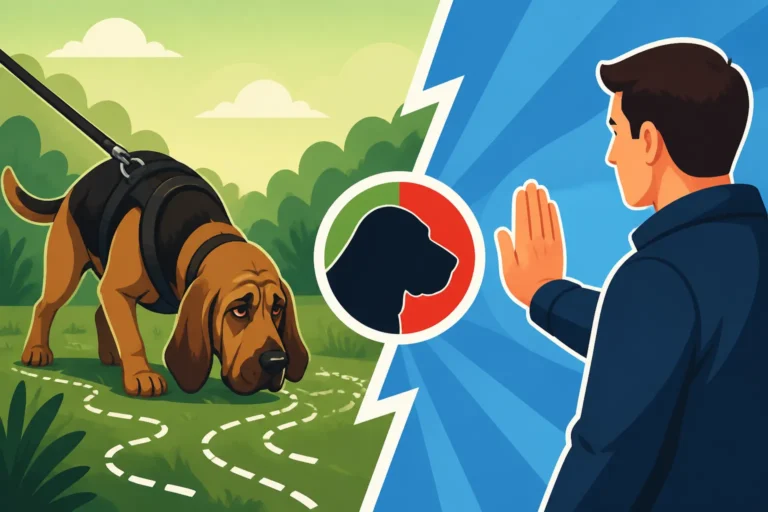
Many Bloodhound owners find themselves utterly captivated by their dog's legendary nose, often wondering just how far those incredible sniffers can actually lead them. It's easy to get swept up in tales of working Bloodhounds tracking for miles, and then feel a bit discouraged when your own beloved hound seems to lose interest or tire out after a shorter distance. The truth is, while a Bloodhound's potential is immense, several factors play into how far they'll truly follow a trail. This guide aims to demystify the art and science behind a Bloodhound's trailing distance, helping you understand their capabilities and how to support them.
The Astonishing Range of a Bloodhound's Nose
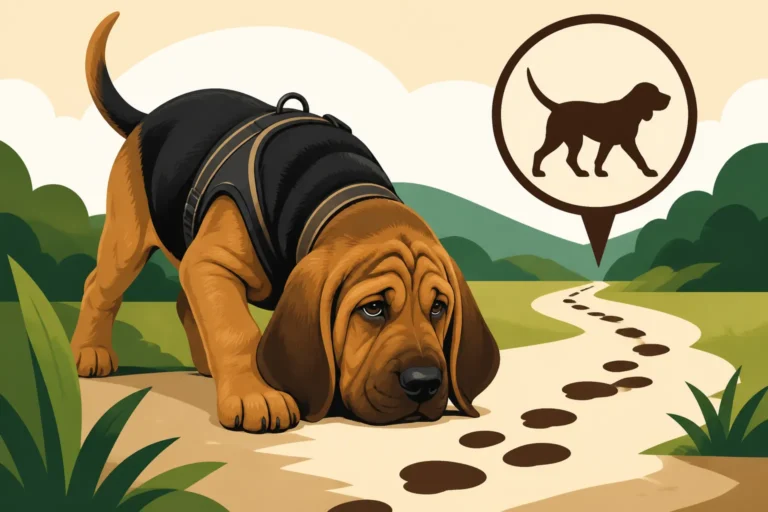
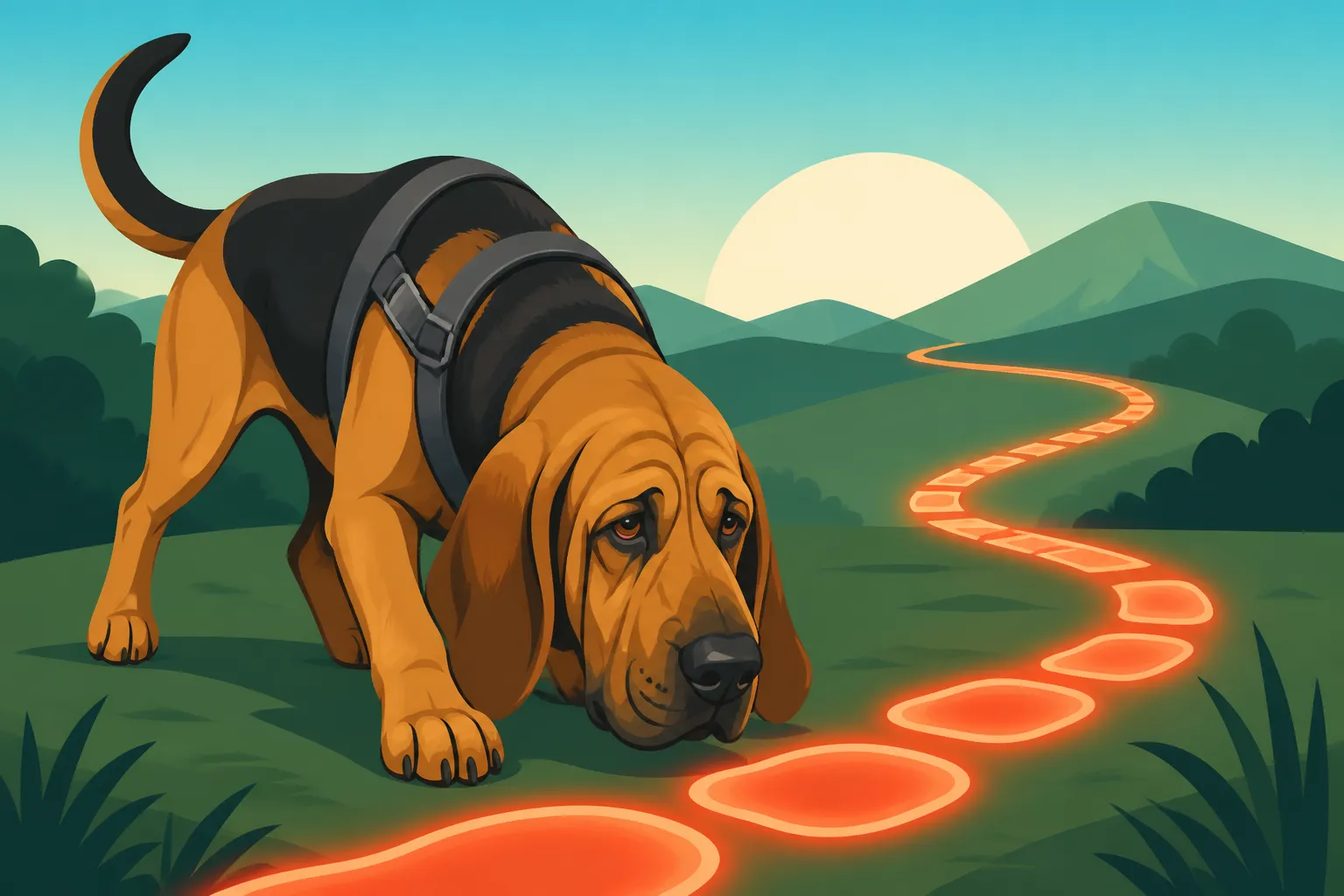
When we talk about a Bloodhound's ability to follow a trail, we're really talking about something almost beyond human comprehension. Their olfactory sense is so profoundly developed that it's often said they can essentially "see" in scent. This isn't just a superpower for finding missing persons; it's a fundamental part of who they are, driving their every outdoor adventure.
Imagine walking into a bustling park. While you might notice the smell of popcorn or freshly cut grass, your Bloodhound is meticulously dissecting every individual scent molecule left behind by every person, every dog, every squirrel, and every leaf that has ever been there. They're processing layers upon layers of information, which allows them to isolate and follow a specific scent, even hours or days after it was laid. This innate ability is why they are so revered in tracking and why they become our companions in the first place.
Understanding Scent Persistence and Bloodhound Sensitivity
A Bloodhound's nose is designed to detect incredibly faint concentrations of scent. A human leaves behind a unique "scent signature" made up of dead skin cells (rafts), sweat, oils, and bacteria. This signature doesn't just vanish into thin air; it settles on surfaces, drifts with air currents, and becomes embedded in the environment. Even after days, tiny particles of this scent can remain.
This persistence is what allows a Bloodhound to work trails that are seemingly "cold" to any other creature. Their long, pendulous ears, often considered a breed hallmark, actually serve a practical purpose: they sweep scent from the ground towards their nose, enhancing their ability to pick up these faint traces. The loose skin on their face also helps to trap and concentrate scent particles around their nostrils. It's a marvel of natural engineering, all dedicated to processing and interpreting the invisible world of odor. For more on this, you might be interested in What a Bloodhound Is Actually Smelling on a Trail.
The Difference Between Theoretical and Practical Distance
In theory, a Bloodhound could follow a trail for many, many miles, given optimal conditions and an unflagging scent. There are stories, well-documented ones, of Bloodhounds trailing for dozens of miles over multiple days. These extraordinary feats are what fuel their reputation and the fascination many of us have with the breed.
However, practical trailing distance in everyday life, or even in typical working scenarios, often differs. While the ability to detect scent might stretch indefinitely, the act of actively following that scent is limited by numerous real-world factors. Think of it like a marathon runner: they can run 26 miles, but they won't do it every day, nor will they do it in every type of weather or on every kind of terrain without proper training and support. The same applies to our scenting athletes.
Factors That Influence a Bloodhound's Trailing Distance
It's tempting to think of a Bloodhound's trailing ability as a fixed, unchangeable skill, but it's far from it. Just like any other athlete, their performance on a trail is a dynamic interplay of environmental conditions, the quality of the scent, and their own physical and mental state. These variables can dramatically alter how far and how effectively a Bloodhound can follow a trail.
Understanding these factors is key to setting realistic expectations for your dog, whether you're working towards a trailing title or simply enjoying a recreational scent walk. Ignoring them can lead to frustration for both you and your hound, especially when they seem to be "giving up" on a trail that you know should be there.
Environmental Conditions and Scent Degradation
The environment is arguably the biggest external factor in how long a scent lasts and how far a Bloodhound can follow it. Think about a delicate perfume: it lasts longer in a cool, still room than it does on a windy, hot day. Scent is no different.
- Temperature and Humidity: Warm, dry conditions cause scent molecules to evaporate and disperse more quickly, making trails fainter and harder to follow over distance. Conversely, cool, humid air tends to hold scent closer to the ground, allowing for longer, more persistent trails. Imagine a dewy morning versus a scorching afternoon – the scent will be far more vibrant in the former. Whether Rain Destroys a Bloodhound's Trail is a common concern, but often rain helps by cooling the ground and increasing humidity, though heavy downpours can wash away lighter scent particles.
- Wind: Wind is a double-edged sword. A light, consistent breeze can help carry scent, making it easier for the Bloodhound to "air scent" a general direction. However, strong, gusty winds can scatter scent in multiple directions, creating a chaotic and confusing trail that breaks up quickly, making it harder for the dog to stay focused on a specific path. Whether Wind Moves the Scent a Bloodhound Follows is definitely something handlers have to contend with.
- Terrain and Surface Type: The surface a person walks on plays a huge role. Soft, porous surfaces like grass, soil, or forest litter absorb and hold scent much better than hard, non-porous surfaces like asphalt or concrete. A trail laid on a muddy path might last for days, while the same trail on a hot, sunny sidewalk might be gone in hours. Urban environments with lots of foot traffic and hard surfaces are significantly more challenging for sustained long-distance trailing. Whether Asphalt Holds Scent for a Bloodhound can be a major limiting factor.
The Age and Intensity of the Scent
A Bloodhound's ability to follow an "old" trail is legendary, but there's a limit, and the older a trail gets, the fainter the scent becomes. While some Bloodhounds have been reported to follow trails many days old, these are typically under ideal conditions and by highly experienced dogs.
- Freshness: A fresh trail, laid within minutes or a few hours, offers a strong, continuous scent cone that is relatively easy for a Bloodhound to follow at a good pace. The dog will be confident, pulling steadily, and less prone to losing the trail.
- Degradation Over Time: As hours and days pass, the scent particles dissipate, break down, and get covered by other environmental odors. The trail becomes "patchy," requiring the Bloodhound to work harder, slow down, and meticulously cast back and forth to locate the diminishing scent. This increased effort naturally reduces the overall distance they can cover before fatiguing. How Old a Trail a Bloodhound Can Follow can surprise many, but it still has its limits.
- The Scent Article: The strength and uniqueness of the initial scent article—a piece of clothing, a personal item—can also impact the start of the trail. A strong, uncontaminated scent article gives the Bloodhound a clear reference point to begin their work, which can sometimes help them push through more difficult or older sections of a trail.
Dog-Specific Factors: Fitness, Focus, and Training
Beyond the external world, your individual Bloodhound's internal state and history significantly impact their trailing distance. Not all Bloodhounds are built or trained for the same level of endurance.
- Physical Conditioning: Trailing, especially over uneven terrain, is physically demanding. A Bloodhound needs strong muscles, good cardiovascular health, and healthy joints. An overweight or out-of-shape Bloodhound will tire much faster than a lean, conditioned one. Regular exercise, beyond just casual walks, is crucial for building stamina. Consider how much exercise your Bloodhound actually needs, as well as The Exercise Limit on a Growing Bloodhound for puppies.
- Mental Focus and Drive: Trailing isn't just physical; it's mentally exhausting. A Bloodhound must maintain intense focus, filtering out countless distractions (other animal scents, interesting sounds, visual stimuli) to stay locked onto the target scent. A dog that is easily distracted, anxious, or not deeply invested in the "game" of trailing will break off sooner. Some dogs simply have a higher natural drive for scent work.
- Training and Experience: A well-trained Bloodhound has learned how to problem-solve when scent becomes weak or disappears momentarily. They know how to "cast" (search in a widening pattern) to pick up the trail again, and they trust their handler to guide them. An inexperienced dog or one with inconsistent training might get frustrated or simply give up when the trail gets tough. Structured training, possibly through online resources like BAXTER & Bella that focus on foundational obedience and engagement, can build a dog's confidence and problem-solving skills, even if it's not directly scent work. This foundation can carry over into their ability to work through challenging trails. Whether a Pet Bloodhound Should Do Scent Work Classes is something many owners consider to harness this natural talent.
Managing and Maximizing Your Bloodhound's Trailing Endurance
Understanding the variables that impact trailing distance is the first step; the next is actively managing and training your Bloodhound to help them achieve their full potential. It's about working with their incredible nose, not against it, and recognizing that they have good days and bad days, just like us. You want to foster a partnership where your dog feels confident and supported, allowing them to focus entirely on their job.
For anyone serious about scent work, whether for fun or more serious applications, preparing your Bloodhound means more than just showing up at the start of a trail. It involves consistent conditioning, thoughtful training, and a deep understanding of their needs before, during, and after a trail.
Building Stamina and Focus Through Training
Just as a human athlete trains for a specific sport, a Bloodhound needs conditioning tailored to trailing. This isn't just about walks around the block; it's about building endurance and the mental fortitude to work for sustained periods.
- Progressive Conditioning: Start with shorter, easier trails in varied environments and gradually increase the length and complexity. Incorporate different terrains – grassy fields, light woods, sidewalks – to expose them to various scent-holding properties. Regular, consistent exercise, including vigorous play sessions, will build the physical stamina needed for longer trails. Think about adding activities that strengthen their core and hindquarters, which are crucial for navigating challenging landscapes.
- Mental Toughness: Trailing is mentally demanding. Training sessions should focus on building your Bloodhound's problem-solving skills when scent becomes intermittent. Encourage them to cast and search rather than giving up. Positive reinforcement is key; celebrate every successful segment of a trail, no matter how small. Teaching a strong "re-find" cue can be invaluable when they lose the scent momentarily. This mental resilience is often what allows a Bloodhound to push past perceived limits. How Long a Bloodhound Can Work Before It Tires isn't just physical; it's mental too.
- Structured Scent Work: Engaging in dedicated scent work classes or training with experienced handlers can significantly improve your Bloodhound's technique and endurance. These environments provide controlled scenarios where your dog can learn to handle distractions, interpret subtle scent changes, and develop a methodical approach to trailing. Programs like those offered by various scent work organizations, or even online resources that teach foundational dog sports, can be incredibly beneficial.
Essential Gear for Extended Trailing
Having the right equipment isn't just about comfort; it's about safety, efficiency, and clear communication between you and your Bloodhound. When you're asking your dog to work for extended periods, their gear becomes even more critical.
- Tracking Harness: A well-fitting tracking harness is non-negotiable. It distributes pressure evenly across your Bloodhound's chest and shoulders, preventing discomfort or injury to their neck, which can happen with a collar, especially when they're pulling hard on a strong scent. Look for harnesses designed specifically for working dogs, with durable materials and multiple adjustment points. Many excellent options can be found on platforms like Amazon, offering a wide range of styles and sizes for your large hound. What a Tracking Harness Costs for a Bloodhound is an investment that pays dividends in comfort and safety.
- Long Line: Forget the short leash for serious trailing. A long line (typically 15-30 feet, or even longer for advanced work) allows your Bloodhound to work a scent without feeling constantly constrained. It provides them the freedom to cast and investigate scent pools while still keeping them safely connected to you. A good quality long line should be durable, easy to grip, and free from knots that can snag. Remember that even the best-trained Bloodhound should never be off-leash in an uncontrolled environment due to their extreme scent drive. How Long a Line a Bloodhound Handler Buys often depends on the type of trailing and environment.
- Hydration and Supplies: For any extended trail, especially in warmer weather, carry plenty of water for both you and your Bloodhound. A portable water bowl is essential. Don't forget treats for reinforcement, a small first-aid kit, and your phone for emergencies. Planning for contingencies is a hallmark of responsible trailing.
| Factor | Impact on Trailing Distance | Mitigation/Enhancement Strategies |
|---|---|---|
| Scent Age | Older trails are fainter, harder to follow. | Start with fresh trails, gradually increase age. |
| Environmental Heat | Dissipates scent, dehydrates dog. | Trail during cooler parts of the day, ensure hydration. |
| Humidity | High humidity helps scent persist. | Utilize morning dew or post-rain conditions for training. |
| Wind | Strong winds scatter scent, light winds can help. | Train in varied wind conditions; learn to read scent changes. |
| Surface Type | Hard surfaces lose scent faster than soft. | Vary training surfaces; expect shorter distances on pavement. |
| Dog's Fitness | Poor fitness leads to early fatigue. | Consistent physical conditioning, varied exercise. |
| Dog's Focus/Distraction | Easily distracted dogs quit sooner. | Build mental toughness, reward focus, train in distracting environments. |
| Handler Skill | Poor handling can hinder dog's work. | Learn to read your dog, trust their nose, provide clear support. |
Handler Support and Reading Your Bloodhound
Your role as a Bloodhound handler is paramount. You're not just holding the leash; you're your dog's partner, guide, and advocate. Learning to read your Bloodhound's body language is a critical skill that directly impacts how far they can successfully trail.
- Trust the Nose: This is the golden rule of Bloodhound handling. Your dog's nose is infinitely superior to your eyes. When they indicate scent, believe them, even if you see nothing. Resist the urge to pull them back to where you think the trail should be. Allow them the space on the long line to work.
- Reading Fatigue and Frustration: Watch for subtle signs of fatigue: a slowing pace, less enthusiastic tail wags, more frequent stops, or head carriage dropping lower than usual. Signs of frustration might include casting more widely with less purpose, excessive sniffing of irrelevant items, or even looking back at you with a questioning gaze. When you see these, it might be time for a break, a change of scenery, or to call it a day. Pushing a tired or frustrated Bloodhound rarely results in a successful trail and can sour them on the work.
- Hydration and Breaks: Offer water regularly, especially on longer trails. Plan for breaks in shaded areas where your dog can rest and recover. Just like humans, a Bloodhound needs to refuel and recharge to maintain performance. A brief pause can often re-energize a dog, allowing them to confidently pick up the trail again.
Real-World Expectations for Bloodhound Trailing Distances
It's easy to get caught up in the sensational stories of Bloodhounds trailing for dozens of miles and feel like your own dog isn't living up to the breed's legendary reputation. But the reality for most pet Bloodhounds, and even many working ones, is more nuanced. While their potential is incredible, their actual working distance is a blend of their inherent ability and the specific circumstances of each trail.
Rather than fixating on an arbitrary number of miles, focus on quality over quantity. A shorter, successful trail where your Bloodhound works confidently and with purpose is far more valuable for their development and your bond than a long, frustrating trek where they're constantly faltering.
Average Distances for Pet vs. Working Bloodhounds
The trailing distances you can expect will vary significantly depending on whether your Bloodhound is a trained working dog or a beloved pet enjoying scent games. There's no "average" in the sense of a concrete number, but rather a range of realistic outcomes.
- Pet Bloodhounds in Recreational Scent Work: For a well-trained pet Bloodhound engaging in recreational scent work, a successful trail might range from a few hundred yards to a couple of miles. This often depends on how long the scent has been down, the complexity of the environment, and the dog's personal stamina and interest on that particular day. These dogs are doing it for fun and engagement, not necessarily for hours on end, though some dedicated pet owners and their Bloodhounds can certainly achieve impressive distances. Even a short, engaging trail is immensely enriching for a Bloodhound. Whether Nose Work Tires a Bloodhound More Than Walking is a good question because mental effort is a huge component.
- Professional Search and Rescue (SAR) Bloodhounds: For professional SAR Bloodhounds, trained for real-world missing person cases, distances can be much greater. These dogs are typically highly conditioned athletes, with extensive training in various environments and under different conditions. They might routinely work trails of 3-5 miles, and in exceptional cases, much further, even over multiple days. These dogs are part of a team, with handlers who are also highly trained in reading environmental factors and supporting their dog's every move. Their success isn't just about the dog, but the entire human-dog partnership operating at an elite level.
Understanding Success Beyond Miles
Defining "success" solely by the number of miles covered can be misleading and unfair to your Bloodhound. Sometimes, a "successful" trail isn't about the distance at all, but about a difficult find, navigating a challenging environment, or demonstrating consistent, focused work.
- The "Find" is the Goal: In actual trailing, the ultimate goal is to find the person or object. Whether that takes a quarter mile or five miles, the success lies in reaching the target. A dog that trails confidently for a mile and makes a clear "find" is incredibly successful.
- Problem-Solving Skills: Sometimes, a short trail that requires complex problem-solving—like navigating multiple cross-contamination points or a sharp turn on a hard surface—is a greater achievement than a long, straight trail on easy terrain. The mental work involved in deciphering faint scent can be more taxing than covering ground. When your Bloodhound works through these puzzles, it showcases their intelligence and tenacity. What a Bloodhound Does When It Loses the Trail is a perfect example of problem-solving.
- Building the Bond: For pet owners, trailing is an incredible way to build a deep bond with your Bloodhound. It allows them to engage in their most natural, instinctual behavior, and it fosters immense trust between dog and handler. The joy and satisfaction your Bloodhound derives from using their nose, and the sense of accomplishment you share, far outweigh any focus on arbitrary distances. Consider trying out Mantrailing Is the Answer to a Bloodhound, Not Obedience for fulfilling their natural drives.
When to Call it a Day
Knowing when to end a trail is a crucial handler skill, demonstrating empathy and respect for your Bloodhound. It’s always better to end a session on a positive note, even if you haven't covered the maximum possible distance, than to push your dog past their limits.
- Physical Fatigue: If your Bloodhound's pace slows dramatically, they start panting excessively (beyond normal exertion), show signs of lameness, or seem generally lethargic, it's time to stop. Overheating can be a serious concern, especially with large, dark-coated dogs.
- Mental Fatigue or Frustration: As mentioned earlier, if your dog is clearly losing focus, becoming easily distracted, or showing signs of stress or disinterest, ending the trail preserves their enjoyment of the work. Forcing them to continue when they're mentally checked out is counterproductive.
- Environmental Deterioration: If weather conditions suddenly worsen (e.g., a strong thunderstorm rolls in, or the temperature skyrockets), it's wise to prioritize safety and call off the trail. Continuing in unsafe conditions puts both you and your dog at risk.
Ultimately, your Bloodhound will follow a trail as far as their incredible nose, physical endurance, mental focus, and the environmental conditions allow. By understanding these dynamics and fostering a supportive partnership, you can help your Bloodhound unlock their remarkable scenting potential, whether that leads to a few blocks or many miles.
Disclaimer
This article is for general informational purposes only and does not constitute professional advice. Laws, prices and regulations vary by location and change over time. Consult a qualified professional for guidance on your specific situation.