How a Bloodhound Is Certified for Search Work
Becoming a certified search dog handler with a Bloodhound isn't just about owning a dog with a legendary nose; it's a dedicated journey requiring immense commitment, specialized training, and a deep understanding of your dog's unique abilities and quirks. This guide will walk you through the comprehensive process of getting your Bloodhound certified for legitimate search work, helping you understand the pathways, challenges, and immense rewards.
Understanding the Bloodhound's Role in Search Work
When most people think of "search work," they might picture dogs sniffing out drugs or explosives, or even wilderness search and rescue. While Bloodhounds have an incredible nose, their primary role in formal search and rescue is highly specialized: trailing a specific human scent. It's not about finding just any person, but the person whose scent was provided. This distinction is crucial for understanding their training and certification.
Distinguishing Mantrailing from Other Scent Work
Mantrailing, often referred to simply as "trailing" or "live find" (though "live find" can also encompass air scenting), is the Bloodhound's unparalleled domain. In mantrailing, the dog is given a specific scent article – a piece of clothing, a personal item – belonging to the missing person. The dog then follows that individual's unique scent signature, often over various terrains, through urban environments, or across old trails. This is different from "air scenting," where a dog casts about, looking for any human scent in a given area, or "HRD" (Human Remains Detection), which focuses on deceased human scent. A Bloodhound’s physiological design, with its long ears sweeping scent towards its massive nose, and its deep scent receptors, makes it exceptionally good at discerning and following a specific ground-borne human trail. The dog's entire body language, its head low to the ground, is geared towards this one task.
A truly successful trailing Bloodhound isn't just sniffing; it's working through layers of environmental odors, distractions, and time, focusing on that one, singular scent. Imagine trying to pick out one person's perfume in a crowded shopping mall, hours after they left – that's the level of discrimination a trained Bloodhound performs daily. This requires a dog that understands its job and a handler who can read every subtle shift in its behavior, indicating changes in the trail. What a Bloodhound Is Actually Smelling on a Trail goes into more depth on this incredible ability.
The Bloodhound's Unique Physiology for Scent Work
There's a reason why the Bloodhound is often called the "nose on four legs." Their anatomy is perfectly engineered for trailing. Those long, pendulous ears, known as "leathers," don't just look distinctive; they serve a practical purpose, sweeping scent from the ground towards the nose, helping to concentrate and direct the odor molecules. The abundance of loose skin, especially around the face and neck, creates folds that can trap and hold scent particles, further enhancing their ability to process odors. Why a Bloodhound's Ears Sweep Scent Toward Its Nose offers more insight into this fascinating adaptation.
Beyond the external features, it's what's inside that truly sets them apart. Bloodhounds possess an astonishing number of olfactory receptors – estimated to be around 300 million, compared to humans' mere 5 million. Their olfactory bulb, the part of the brain that processes smell, is disproportionately large. This incredible biological advantage means they can detect and differentiate scents at concentrations far below what other breeds, or even other scenthounds, might struggle with. They can famously follow trails that are days old, making them invaluable in scenarios where time is of the essence or when a person has been missing for an extended period. This physiological marvel forms the bedrock of their entire certification process; without this natural gift, the specialized training would be impossible.
Building Blocks: Essential Skills and Early Training
Before any formal certification can even be considered, a Bloodhound needs a strong foundation of basic skills and specialized training geared towards their innate talents. This isn't just about turning them into a search dog; it's about developing a well-adjusted, confident, and focused individual who can thrive in challenging environments.
Obedience and Control: More Than Just Sit and Stay
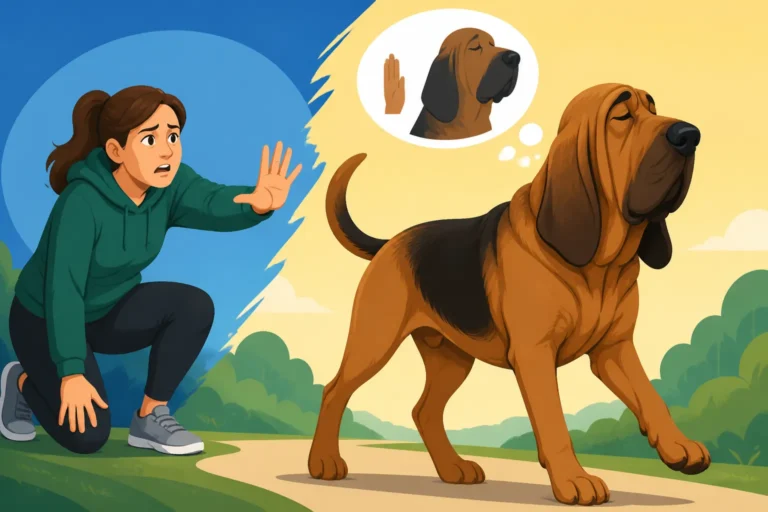
While Bloodhounds are known for their independent nature, often described as "stubborn" when a good scent is in play, foundational obedience is absolutely non-negotiable for a search dog. This isn't about perfectly heeling at a show ring; it's about reliable control in high-stress, distracting environments. A Bloodhound working a trail needs to understand and respond to cues like "stop," "wait," "leave it," and "let's go" even when its nose is glued to the ground and its brain is screaming "follow!" Imagine tracking a missing child near a busy road – the ability to call your dog away from potential danger, even for a moment, could save its life or prevent an accident.
This type of obedience goes beyond typical pet training. It often means training in extremely distracting environments: around other dogs, livestock, loud noises, and even tantalizing food dropped on the ground. Reliability is key, and it's built through consistent, positive reinforcement. A bloodhound won't respond well to harsh corrections, which can shut down their natural drive. Instead, finding what truly motivates your Bloodhound – often a favorite high-value treat or a specific toy – and using that as a reward for compliance is crucial. Many handlers find that online training platforms, such as those offered by BAXTER & Bella, can provide a great starting point for building this foundational obedience in a way that respects the dog's nature, offering structured courses that can be adapted to a Bloodhound's unique learning style.
Socialization and Environmental Acclimation
A certified search Bloodhound is expected to work in a dizzying array of environments: bustling urban streets, quiet rural trails, dense forests, abandoned buildings, and even through water. For a dog to perform effectively, it must be completely comfortable and unfazed by these diverse settings. This comfort doesn't happen by accident; it requires extensive and thoughtful socialization from a young age. A puppy needs to be exposed positively to different sights, sounds, smells, textures underfoot, and people of all ages and appearances. Think about how many different types of people your Bloodhound might encounter on a search: police officers in uniform, paramedics, distraught family members, curious bystanders, or even media. Your dog needs to be neutral and focused on its task, not reacting fearfully or aggressively.
Environmental acclimation also means systematically introducing your Bloodhound to surfaces like grates, slippery floors, stairs, crowded areas, and confined spaces. For instance, a Bloodhound that has never walked on an open metal grate might freeze in fear during a search in a factory. A dog unaccustomed to loud sirens might become agitated and lose the trail. Starting these exposures early and making them positive experiences is paramount. This might involve short, controlled visits to busy parks, construction sites (from a safe distance), or even just taking elevator rides. The goal is to build a dog that is confident and adaptable, able to switch focus from external stimuli to the intricate world of scent.
Developing the Drive: Encouraging the "Game"
For a Bloodhound, trailing is often seen as the ultimate "game" or "puzzle." Developing and nurturing this drive is fundamental to successful search work. It begins by tapping into their natural instinct to follow a scent and making it the most rewarding activity imaginable. For puppies, this often starts with simple "runaway" games, where a familiar person walks a short distance and hides, leaving a clear scent trail for the puppy to follow. When the puppy finds the person, there's a huge celebration, a favorite toy, or high-value treats. This builds a positive association: following scent leads to the best reward. Starting a Bloodhound Puppy on a Trail provides excellent advice on getting your young hound hooked on the scent game.
As training progresses, the trails become longer, older, more complex, and introduce minor distractions. The goal is to consistently reinforce the idea that staying on the scent and finding the "quarry" is the most amazing thing they could possibly do. This means celebrating every "find" enthusiastically, even if it's just a training exercise. Different Bloodhounds will have different motivators – some live for a squeaky toy, others for a particular treat, and some just for the sheer joy of the find and handler praise. Identifying and utilizing your dog's primary motivators is key to sustaining their drive and focus over long, challenging trails. Without this inherent drive, working through difficult conditions or long searches becomes nearly impossible, as the dog simply won't have the internal motivation to push through.
The Road to Certification: Organizations and Standards
Getting your Bloodhound certified for search work isn't a casual endeavor; it's a formal process overseen by recognized organizations that set rigorous standards. These standards ensure that certified teams are reliable, effective, and safe in real-world scenarios. Understanding these groups and their requirements is the first step on your certification journey.
Key Certifying Organizations and Their Roles
Several organizations in the United States offer certification for search and rescue dogs, and many have specific pathways or tests for trailing Bloodhounds. The specific organization you pursue might depend on your geographic location, your team's affiliations (e.g., local sheriff's department, volunteer SAR team), and the type of work you intend to do.
- National Search and Rescue Association (NASAR): NASAR is one of the most widely recognized organizations. They offer various certifications, including for canine teams. Their "SARTECH K9" certifications have different levels and disciplines, including trailing. NASAR emphasizes a broad range of skills, not just the dog's nose, but also the handler's navigation, wilderness first aid, and incident command knowledge.
- Specialty K9 (SK9): SK9 is another prominent certifying body that provides a range of K9 certifications, often utilized by law enforcement and volunteer SAR teams. They have specific standards for trailing dogs that can involve urban, rural, and wilderness environments, as well as varying trail ages.
- American Bloodhound Club (ABC): While primarily a breed club, the ABC does offer its own trailing titles and certifications, focusing specifically on the Bloodhound's capabilities. These titles are highly respected within the Bloodhound community and demonstrate a high level of proficiency in mantrailing. Earning an What an American Bloodhound Club Trailing Title Requires is a significant achievement and often a prerequisite or excellent preparation for other SAR certifications.
- Local and State Agencies: Many local or state law enforcement agencies (e.g., Sheriff's K9 units) or volunteer Search and Rescue teams develop their own internal certification standards or use a combination of national standards and local operational requirements. If you plan to join a specific team, you'll need to understand their preferred certification path.
Each organization will have its own detailed requirements, often covering both the dog's trailing ability and the handler's competency in areas like mapping, GPS use, crime scene preservation, and radio communication. It’s crucial to research the specific standards of the organization you plan to certify with.
Defining Different Levels and Specialties
Certification isn't a one-and-done event; it often involves progressive levels and sometimes specialized disciplines.
- Entry-Level Certification: These initial certifications typically assess a dog's ability to follow a relatively fresh trail (e.g., 30 minutes to a few hours old) over a moderate distance (e.g., 0.5 to 1 mile) in a relatively straightforward environment. The trail layers might be minimal, and distractions might be controlled. This level proves the dog's fundamental ability to stick to the scent and the handler's basic competence in reading the dog.
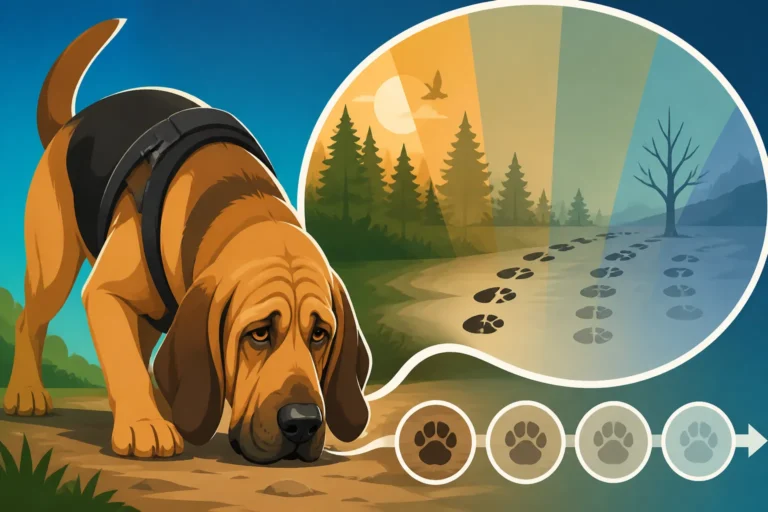
- Advanced Certification: As teams gain experience, they can pursue advanced certifications. These tests will demand longer trails (e.g., 2-5 miles), older trails (e.g., 12-24 hours old or more), and increasingly complex environments. This could include trails crossing busy roads, through water features, or over diverse terrain, involving more scent layers and significant distractions. At these levels, the handler's ability to navigate, problem-solve, and maintain situational awareness becomes even more critical. How Old a Trail a Bloodhound Can Follow speaks to the incredible feats of scent detection at these advanced stages.
- Specialty Endorsements: Some certifications might offer specialties beyond basic trailing. For example:
- Cadaver/HRD Trailing: While most Bloodhounds are live-find trailing dogs, some exceptional ones might also be trained and certified to follow scent trails of deceased individuals.
- Disaster Trailing: Working in rubble or complex disaster zones requires specific skills and acclimation to hazardous environments, often with different types of scent dispersal.
- Water Trailing: Following a scent that moves into or across water bodies is a unique challenge, requiring specialized training and understanding of how scent behaves in aquatic environments.
These levels and specialties are designed to ensure that a certified Bloodhound team is truly prepared for the diverse and often unpredictable challenges of real-world search missions. The progression not only validates the team's skills but also builds the handler's confidence and expertise.
The Certification Process: What to Expect
You've done the training, put in the hours, and your Bloodhound is performing consistently. Now it's time to put your skills to the test. The certification process itself is a rigorous evaluation, designed to push both dog and handler to their limits under simulated real-world conditions.
Prerequisites and Application
Before you can even sign up for a certification test, there are usually several prerequisites that both you and your Bloodhound must meet. These vary by organization but commonly include:
- Handler Requirements:
- Age and Physical Fitness: Handlers must typically be at least 18 years old and capable of physically keeping up with their dog over various terrains and for extended periods. Search work can be incredibly demanding.
- First Aid/CPR: Many organizations require handlers to be certified in human first aid and CPR, as well as canine first aid.
- Navigation Skills: Proficiency with maps, compass, and GPS is often mandatory. You'll need to prove you can navigate effectively in unfamiliar territory.
- Incident Command System (ICS): Understanding the basics of ICS is crucial for working effectively within a larger search and rescue operation.
- Radio Communication: Familiarity with two-way radios and proper communication protocols is usually expected.
- Experience: While not always a hard prerequisite, having attended training seminars, workshops, and accumulated many hours of documented training runs with your dog is implicitly required. Organizations like BAXTER & Bella might offer workshops or courses that help handlers prepare for the comprehensive demands of certification.
- Dog Requirements:
- Age: Dogs typically need to be at least 18-24 months old to ensure physical and mental maturity.
- Veterinary Clearance: Proof of good health, up-to-date vaccinations, and a clean bill of health is essential. The dog must be able to withstand the physical demands of search work.
- Proof of Training: While not always a formal "prerequisite," handlers usually submit a log of their training runs, demonstrating consistency and a wide range of simulated scenarios the dog has worked.
- Equipment: Proper and functional equipment, such as a well-fitting tracking harness (often a Y-front style that doesn't restrict movement or breathing), a long line (typically 15-30 feet), and a scent article kit, must be on hand and ready. You can find robust options for a Which Harness a Bloodhound Trails In and How Long a Line a Bloodhound Handler Buys on platforms like Amazon.
The application process usually involves submitting documentation, paying a fee, and then scheduling your test date. It’s vital to ensure all prerequisites are met well in advance to avoid last-minute stress or disqualification.
The Actual Test Day: What Happens?
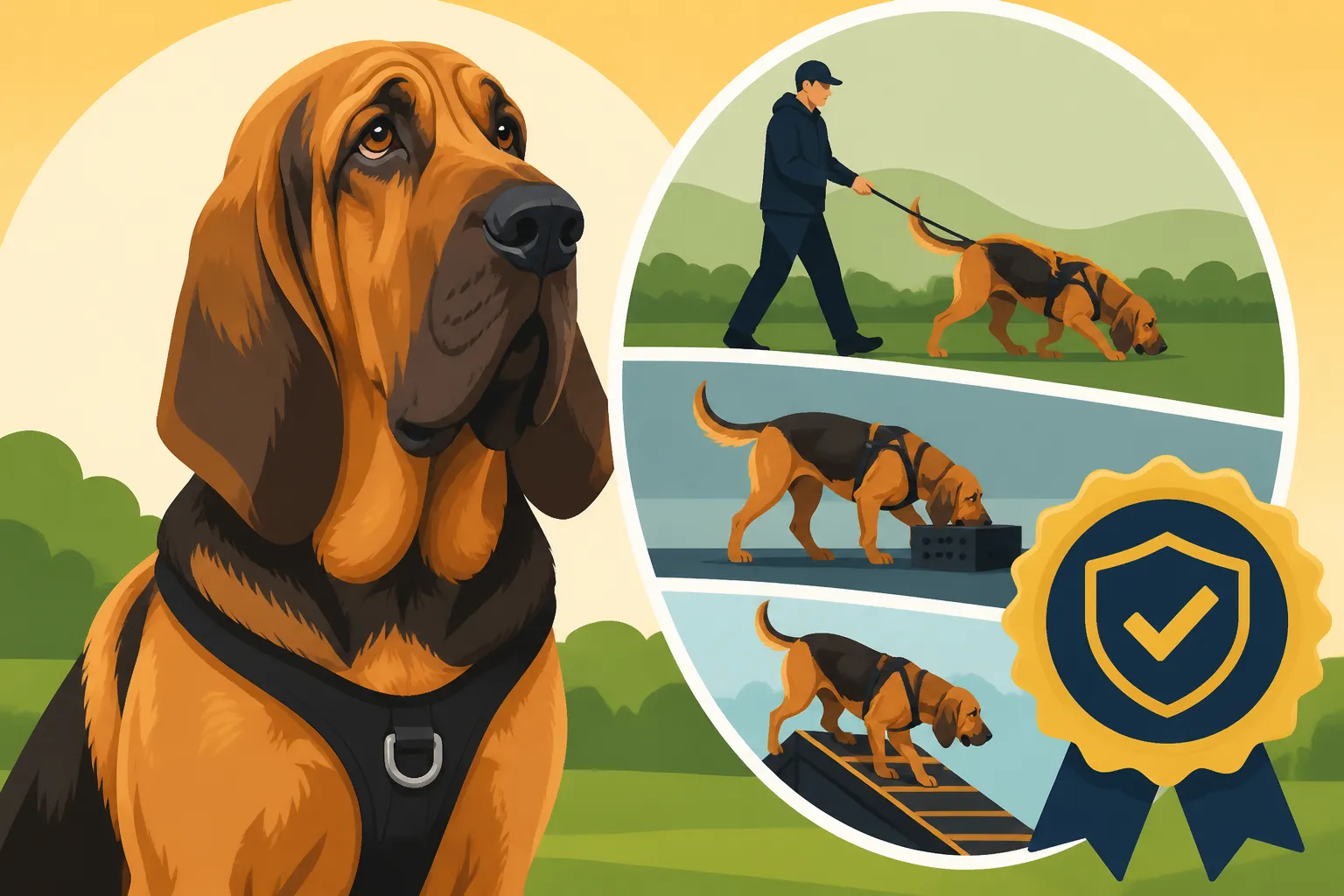
Test day is often nerve-wracking, designed to simulate the pressures of a real search. Assessors, who are experienced handlers or K9 professionals, observe every aspect of your team's performance. While specifics vary, a typical Bloodhound trailing certification test might involve:
- Handler Briefing: You'll receive a scenario, possibly including details about the missing person, last known location, and environmental factors. You'll be expected to ask pertinent questions, demonstrating your understanding of search strategy.
- Scent Article Presentation: The scent article (e.g., a shirt worn by a stranger, provided by the assessor) will be presented to your Bloodhound. The dog's immediate reaction and focus are observed.
- The Trail: You'll be directed to the "start" of the trail, which could be anywhere from a grassy field to a busy parking lot. The trail itself will have been laid by a "quarry" (another person) some hours before, and its complexity will match the certification level. Expect obstacles like street crossings, turns, changes in terrain, and potentially areas with multiple "distraction" scents. The assessors will be looking for:
- Dog's Commitment: Does the Bloodhound stay focused on the track, even through distractions?
- Accurate Trailing: Does the dog follow the exact path of the quarry, indicating turns and changes in direction correctly?
- Handler's Reading Ability: Can you accurately interpret your dog's signals (e.g., head up, sniffing air; head down, strong pull) and communicate effectively with the assessors about what your dog is telling you?
- Control and Safety: Can you maintain control of your dog, preventing it from interacting inappropriately with bystanders or entering unsafe areas?
- Stamina: Can the dog maintain its focus and drive for the duration of the trail? How Long a Bloodhound Can Work Before It Tires is an important consideration.
- The Find: The ultimate goal is for your Bloodhound to confidently lead you to the quarry. The dog's behavior upon finding the person (e.g., "alert" behavior like jumping, baying, or sitting) will be evaluated. What a Bloodhound Does at the End of a Trail is a crucial part of the process.
- Post-Trail Debrief: After the trail, you'll likely have a debrief with the assessors, discussing your performance, areas for improvement, and if you passed.
It's a comprehensive evaluation, and passing isn't just about the dog finding the person; it's about the entire team operating safely, efficiently, and effectively under realistic conditions.
Common Pitfalls and How to Prepare
The certification process is designed to be challenging, and many teams don't pass on their first attempt. Understanding common pitfalls can help you prepare more effectively:
- Handler Errors: This is often where teams falter. Handlers might misread their dog, anticipate turns, or interfere with the dog's natural trailing process. Lack of confidence, poor navigation skills, or ineffective communication can also lead to failure. The key is to trust your dog and your training. Practice reading your dog in various scenarios and resist the urge to "help" unless absolutely necessary.
- Distraction Management: A Bloodhound's nose is a powerful tool, but it can also be its biggest distraction if not properly trained. An untracked rabbit, a dropped hamburger, or a friendly passerby can pull an unprepared dog off the trail. Consistent training in increasingly distracting environments is crucial.
- Stamina and Conditioning: A long trail can be physically demanding for both handler and dog. Ensure your Bloodhound is in peak physical condition and that you are fit enough to keep up, especially in challenging weather or terrain.
- Insufficient Trail Variety: If your training has only involved similar terrains or short, fresh trails, your dog might struggle with varied conditions, older trails, or complex urban environments. Mix up your training locations, trail layers, and ages.
- Lack of Proofing: "Proofing" means practicing skills under increasing difficulty and distraction until they are bulletproof. Many teams practice in ideal conditions, but fail when conditions are less than perfect. Don't shy away from difficult training scenarios.
- Over-Reliance on Food/Toy Reward: While motivation is key, your Bloodhound must be driven by the hunt itself and the successful find, not solely by the promise of a treat at the end. The reward should reinforce the behavior, not be the sole reason for it.
To prepare, attend as many seminars and workshops as possible, train with experienced mentors, and seek out practice tests from respected evaluators. Document your training meticulously, and review your successes and failures to learn from them. Remember, Whether an Average Owner Can Train a Bloodhound to Trail is a question of dedication, not just skill.
Maintaining Certification and Continued Development
Earning that certification patch is a fantastic accomplishment, but it's not the end of the journey. To remain a valuable and deployable asset, a Bloodhound search team must continuously train, maintain their skills, and often re-certify.
Ongoing Training and Practice
Just like any athlete, a certified search dog needs regular practice to stay sharp. This isn't about training "new" things all the time, but about maintaining proficiency in existing skills and exposing the team to a wide variety of scenarios. Here’s what ongoing training often entails:
- Regular Trail Laying: Consistency is key. Teams should aim for several training trails per week, varying the length, age, terrain, and number of scent layers. This prevents the dog from becoming accustomed to predictable patterns.
- Introducing New Challenges: Regularly incorporate new elements that might be encountered on a real search, such as crossing bodies of water, navigating through dense brush, working around construction noise, or trailing through areas with strong animal scents.
- Working with Different Quarries: Your dog should be comfortable trailing different individuals. If your Bloodhound only trails your family members, it might struggle with a new scent article from a stranger.
- Advanced Scenario Training: Practice complex scenarios like contaminated scent articles, trails with multiple missing persons, or trails that go cold and then pick up again.
- Physical Conditioning: Ensure your Bloodhound stays physically fit. Long walks, varied terrain hikes, and controlled play sessions contribute to their stamina.
This continuous training is not just for the dog; it’s for the handler too. It refines your ability to read your dog, improves your navigation skills, and enhances your confidence in real-time decision-making.
Re-certification Requirements
Most certifying organizations understand that skills can dull over time, and new challenges emerge. Therefore, re-certification is typically required every 1-3 years, depending on the organization and certification level. This process is similar to the initial certification, often involving:
- Submission of Training Logs: You'll need to demonstrate consistent, documented training hours since your last certification.
- Updated Handler Prerequisites: Ensure your first aid, CPR, and other handler-specific certifications are current.
- Performance Evaluation: You'll undergo another performance test, which might be a full re-test or a more focused evaluation, to prove that your team still meets the required standards. These tests often become more challenging with each re-certification, pushing the team to greater levels of proficiency.
Failing to re-certify means your team is no longer considered deployable by that organization. This ensures that only the most prepared and capable teams are sent out on critical missions. This regular review process is vital for maintaining high standards within the search and rescue community.
Advanced Training and Specializations
Once a team is consistently certified at an advanced level, they might choose to pursue further specialization or advanced training to expand their capabilities.
- Specific Terrain Training: Some teams specialize in mountain searches, urban trailing, or water searches. This involves intensive training tailored to the unique challenges of those environments.
- Long-Term Trailing: Pushing the limits of trail age and complexity, training for scenarios where a person has been missing for several days or even weeks. Whether a Bloodhound Can Follow a Trail Thirteen Days Old highlights the incredible potential.
- Evidence Detection: While primarily trailing, some Bloodhounds can be cross-trained to detect specific items left behind by a missing person.
- Instructor or Evaluator Training: Experienced handlers might pursue training to become instructors or evaluators themselves, helping to mentor new teams and maintain the quality of the K9 SAR community.
- Disaster Response: This specialized field often requires unique certifications and equipment, preparing teams to work in collapsed structures or other high-risk, complex environments.
These advanced pursuits contribute to the overall strength and versatility of the search and rescue community, allowing Bloodhound teams to offer highly specialized and critical services in a wider range of emergencies.
Challenges and Realities for Bloodhound Search Teams
The image of a Bloodhound successfully finding a missing person is powerful and inspiring. However, the path to achieving and maintaining this capability is fraught with significant challenges that aspiring handlers must fully grasp. It’s a commitment that impacts every aspect of a handler's life.
Time and Financial Commitment
Let's not sugarcoat it: owning and training a certified search Bloodhound is an enormous investment of both time and money. It's often far more demanding than people initially realize.
- Time: Daily care for a Bloodhound, including its unique grooming needs for its ears and skin folds, is already substantial. Add to that 3-5 dedicated training sessions per week, each lasting several hours (including travel to varied training locations, trail laying, the actual trail, and debriefs). Many weekends are consumed by training seminars, workshops, or team practices. A handler might easily spend 20-40 hours a week on their dog, equivalent to a part-time job. This doesn't even count the time spent networking, researching, or managing paperwork. The Weekly Routine a Bloodhound Owner Cannot Skip highlights the everyday demands that precede specialized training.
- Financial: The costs quickly add up. Consider:
- High-Quality Puppy: A well-bred Bloodhound from health-tested lines is an investment itself.
- Training Fees: Seminars, workshops, and private coaching sessions can be expensive.
- Equipment: Multiple harnesses, long lines, scent article kits, tracking collars with GPS, specific training aids, appropriate footwear for the handler, and high-quality rain gear for both can be a significant upfront cost. Platforms like Amazon are great for sourcing durable, reliable equipment. What a Mantrailing Harness and Long Line Cost can give you an idea of these initial expenses.
- Travel: Driving to training locations, out-of-state seminars, and actual call-outs incurs fuel, lodging, and sometimes plane ticket costs.
- Veterinary Care: Regular check-ups, preventive care, and potential emergency care (Bloodhounds are prone to certain health issues) are essential.
- Food and Supplements: High-quality food for a large, active working dog.
- Certification Fees: Each certification attempt comes with a fee.
- Lost Wages: If you are a volunteer SAR handler, call-outs often mean taking time off work without pay.
- Insurance: Specialized pet insurance that covers working dog activities might be more expensive. What It Costs to Put a Bloodhound on a Trail delves into these financial realities.
Many search and rescue teams are volunteer-based, meaning handlers bear the brunt of these costs themselves. While some teams might help with equipment or travel for official deployments, the day-to-day financial responsibility rests squarely on the handler's shoulders.
Emotional Toll and Handler Dedication
Beyond the practical demands, becoming a certified Bloodhound handler carries a significant emotional weight. Search work isn't always successful, and the outcomes can be heartbreaking.
- The Stress of Deployment: Real-world searches are high-stakes, high-pressure situations. The handler carries the immense responsibility of finding a missing person, often knowing that lives hang in the balance. The emotional strain of working through a tragedy, or being unable to find someone, can be profound.
- Witnessing Trauma: Handlers and their dogs might encounter difficult scenes, injured individuals, or even deceased persons. Processing these experiences requires resilience and access to peer support.
- Setbacks in Training: Not every training run will be perfect. Dogs make mistakes, handlers make mistakes. It can be frustrating when progress feels slow or when your dog has an "off day." Maintaining a positive attitude, patience, and unwavering belief in your dog's abilities is crucial.
- Deep Bond: The intense training and shared experiences forge an incredibly deep bond between handler and Bloodhound. This bond is a powerful asset in the field, but it also means the handler experiences the dog's eventual retirement or passing with a unique depth of grief.
This isn't a hobby; it's a lifestyle and a profound dedication to service. It requires mental toughness, emotional fortitude, and a deep, unwavering commitment to your Bloodhound and the mission.
The Limitations and Legalities of a Certified Bloodhound
While a certified Bloodhound is an incredible asset, it's important to understand their limitations and the legal framework within which they operate. This knowledge is crucial for managing expectations and ensuring responsible deployment.
- Not a Guarantee: Even a certified Bloodhound isn't a magic bullet. Environmental factors (weather, terrain), trail age, and contamination can all impact success. A "dry run" (not finding the person) is always a possibility. Handlers must be prepared for this and not let it diminish their faith in their dog.
- Scent Degradation: While Bloodhounds are renowned for old trails, scent does degrade over time. After a certain point, even the best Bloodhound may struggle, especially in adverse conditions. How Old a Trail a Bloodhound Can Follow discusses these incredible capabilities, but also implies their limits.
- Legal Admissibility: The legal standing of Bloodhound evidence varies by jurisdiction. While historically unique in having its evidence accepted in court, rules surrounding handler qualifications, chain of custody for scent articles, and specific protocols must be followed meticulously for a Bloodhound's trail to be considered in legal proceedings. The Bloodhound Is the Only Dog Whose Evidence Stands in Court is a powerful statement, but it comes with strict requirements.
- Deployment Protocols: Certified teams operate under strict protocols. They don't just "show up" to a scene; they are deployed by an authority (police, sheriff, SAR coordinator) and work within an established incident command structure. Handlers must adhere to these rules, including maintaining crime scene integrity, accurate documentation, and proper communication.
- Public Perception: Bloodhounds often come with a heroic, almost mythical, reputation. While flattering, this can also lead to unrealistic expectations from the public or even other first responders. Handlers often have to educate others on their dog's capabilities and limitations.
Understanding these realities isn't meant to discourage, but to provide a clear, grounded perspective. A certified Bloodhound team is an invaluable resource, but they are part of a larger system, working within defined parameters, relying on exceptional training, and profound dedication.
Table: Overview of Common K9 Trailing Certifications
To help you visualize the different demands, here's a simplified overview of what you might expect from common certification levels. Please note that specific criteria, distances, and ages vary significantly between organizations and can change, so always consult the official guidelines of your chosen certifying body.
| Certification Level | Typical Trail Age Range (Hours) | Typical Trail Length Range (Miles) | Environment Examples | Key Focus Areas | Re-certification Frequency |
|---|---|---|---|---|---|
| Basic/Entry-Level | 0.5 – 4 hours | 0.5 – 1.5 miles | Rural, Parks, Light Urban | Dog's ability to follow clear trail, Handler's basic control & reading | 1-2 Years |
| Intermediate/Advanced | 4 – 24 hours (or more) | 1.5 – 3 miles | Urban, Wilderness, Varied Terrain, Moderate Contamination | Dog's focus in distractions, Handler's navigation & problem-solving | 1-3 Years |
| Expert/Master | 24+ hours (often multi-day) | 3 – 5+ miles | Highly Complex Urban, Dense Wilderness, Extreme Contamination | Dog's sustained drive, Handler's advanced tactics, incident management | 2-3 Years |
| Specialty (e.g., Water) | Varies | Varies | Aquatic Environments, Shorelines | Dog's ability to interpret scent in/around water, Handler's safety | Varies |
Disclaimer
This article is for general informational purposes only and does not constitute professional advice. Laws, prices and regulations vary by location and change over time. Consult a qualified professional for guidance on your specific situation.