Whether Burrs Catch in a Bloodhound’s Ear Leather
Ah, the majestic, sweeping ears of a Bloodhound! They're absolutely iconic, aren't they? They're part of what makes our hounds so unique and so incredibly good at what they do. But if you've ever walked through a field in late summer or early autumn with your Bloodhound, you know the absolute dread that sets in when you see those little prickly hitchhikers called burrs. Those long, velvety ears are practically burr magnets, and dealing with them is a common, frustrating reality for almost every Bloodhound owner. This guide is all about navigating that sticky situation, from prevention to pain-free removal.
The Irresistible Allure of a Bloodhound's Ear for Burrs
There's a reason those pesky burrs seem to have a special affinity for your Bloodhound's ears. It's not just bad luck; it's a combination of nature's design and your hound's natural instincts. Understanding why they catch can help you prepare.
The Length, Texture, and Scent-Sweeping Design
Think about those glorious Bloodhound ears – they're not just long; they're massive. They often extend well past the nose when pulled forward, creating a natural sweep that helps funnel scent particles towards that incredible nose. This design, while brilliant for trailing, essentially turns your dog's ears into highly effective natural brooms, sweeping up not just scent but also whatever else happens to be on the ground.
Beyond their sheer length, the texture of a Bloodhound's ear leather is incredibly soft and fine. It's not dense, wiry fur that might repel burrs; it's a luxurious, velvety surface that offers countless tiny anchor points for the microscopic hooks of a burr. When those ears swing as your hound moves, especially when their head is down in full tracking mode, they're constantly brushing against tall grass, undergrowth, and fallen leaves – prime territory for burrs. It’s a design paradox: what makes them exceptional scent hounds also makes them burr magnets. We know How Deep a Bloodhound's Ear Canal Runs, and that deep canal is protected by this sweeping action, but the outer ear itself pays the price.
How Burrs Are Designed to Attach
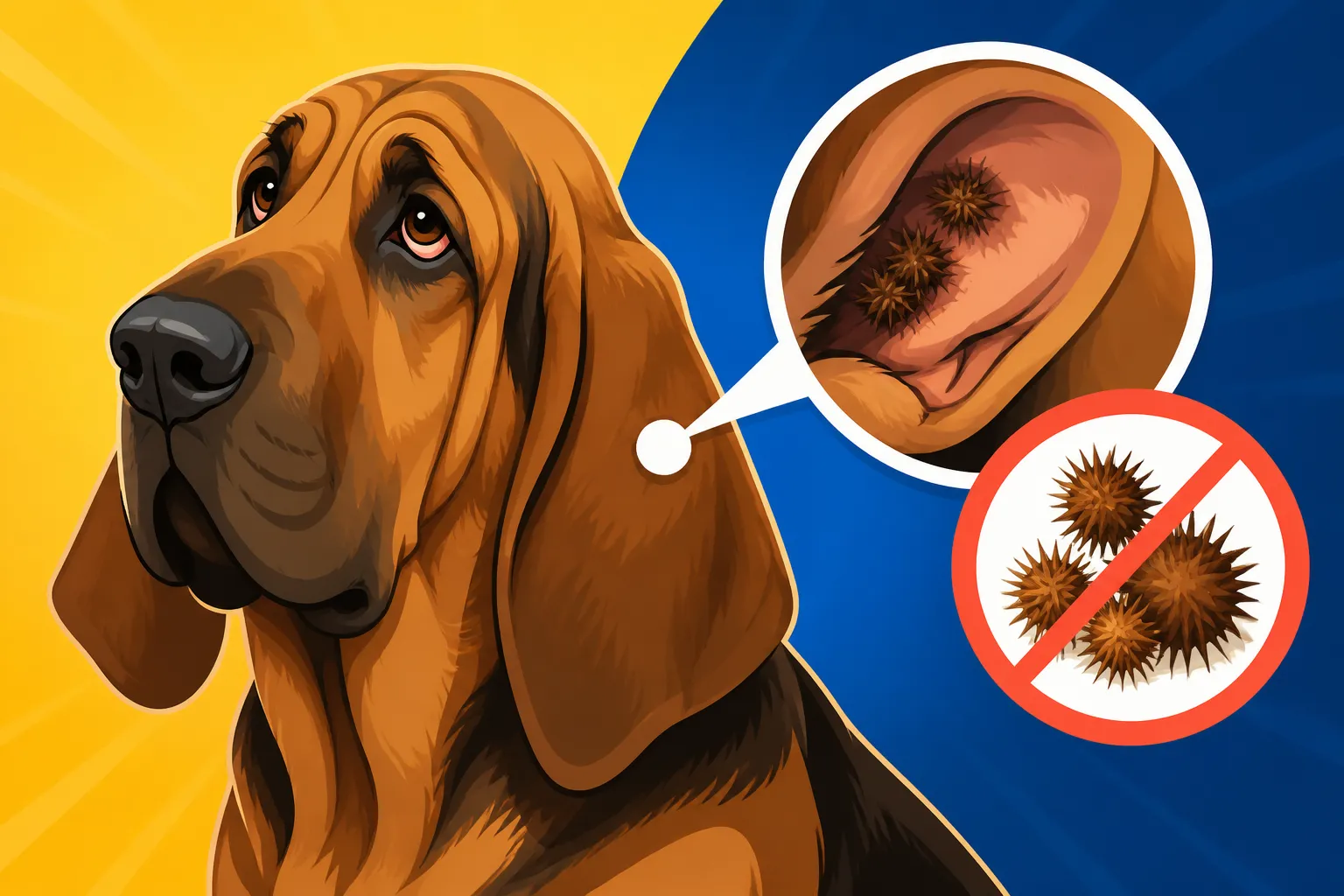
Burrs are nature's tiny, tenacious travelers. They aren't just thorns; they're seeds designed with ingenious methods to attach themselves to passing animals (or your pants!) for dispersal. They come in many varieties – cockleburs, burdock, beggar's-ticks, and sticktights are just a few you might encounter. Each type has its own unique hooking mechanism, but they all share the common goal of latching on.
The surface of a burr is covered in tiny, stiff, often barbed hooks that interlock with the individual hairs on your dog's ear. Once embedded, they cling with surprising strength. A single burr isn't usually a huge issue, but these seeds often grow in clusters. Your Bloodhound's ear might pick up dozens, or even hundreds, in a single walk through an overgrown patch. They become tangled with each other and the ear hair, creating a dense, prickly mass that can be incredibly difficult to remove without causing discomfort. It's a testament to their evolutionary design, but a nightmare for us Bloodhound parents!
The Unpleasant Consequences of Burrs on Bloodhound Ears
It might seem like a minor annoyance, but ignoring burrs on your Bloodhound's ears can lead to a cascade of problems, ranging from simple discomfort to serious health issues.
Pain, Irritation, and Skin Damage
Imagine having dozens of tiny, barbed hooks tugging at your skin with every movement. That's essentially what your Bloodhound experiences with a burr infestation. The constant pulling and pricking can be incredibly painful, leading your hound to scratch, paw, or shake their head excessively. This scratching and shaking only makes the problem worse, driving the burrs deeper into the fur and potentially causing abrasions, cuts, or even open wounds on the delicate ear leather.
If a burr gets caught in a sensitive area, like the very tip of the ear, it can lead to swelling and extreme tenderness. Over time, the sustained irritation can make the skin red, inflamed, and prone to breaking open, which then creates an entry point for bacteria and yeast. Your dog's natural inclination to relieve the itch can inflict more damage than the burrs themselves.
The Risk of Infection and Chronic Issues
Beyond surface irritation, burrs pose a significant risk for infections. If burrs migrate deeper into the ear canal, they can cause serious inflammation and irritation. The ear canal of a Bloodhound is already a dark, warm, and often damp environment, making it a perfect breeding ground for bacteria and yeast. Add a foreign body like a burr, and you're practically inviting an infection. A Bloodhound's Ears Are a Standing Infection Risk in the best of times, so adding burrs to the mix only compounds the problem.
A burr that punctures the skin, even slightly, can introduce bacteria. If left unchecked, these infections can become severe, requiring extensive veterinary treatment, including antibiotics and specialized ear cleaners. In some cases, chronic irritation and repeated infections from foreign bodies can even lead to more permanent issues, such as thickening of the ear canal or calcification, which can eventually require surgical intervention. It's why early and thorough removal is so critical to prevent long-term complications, potentially leading to a situation When a Bloodhound's Ear Infection Becomes Permanent.
Matting and Grooming Challenges
Burrs don't just cling to individual hairs; they cause the surrounding fur to mat together into dense, hard clumps. On the fine, longer hair of a Bloodhound's ears, this matting can happen remarkably quickly. Once a mat forms around a cluster of burrs, it becomes a solid, uncomfortable mass that pulls tightly on the skin.
Removing these matted burrs is a major grooming challenge. Brushing them out dry is often impossible and extremely painful for your dog. It requires patience, special tools, and sometimes, the unfortunate necessity of carefully cutting the matted section out. This means losing some of that beautiful ear fringe, or worse, accidentally nicking the skin underneath the mat. The longer the burrs are left in, the tighter the mats become, and the more difficult and potentially traumatic the removal process will be for your sensitive hound.
Prevention is Better Than Cure: Keeping Burrs at Bay
While it might seem like an uphill battle, preventing burrs from clinging to your Bloodhound's ears is far easier and less painful than removing them. A little proactive planning goes a long way.
Strategic Trail Selection and Avoidance
The simplest way to prevent burrs is to avoid the places where they thrive. Burrs are typically found in overgrown, weedy areas – think tall grasses, fields with thorny bushes, unkempt edges of trails, and woodland undergrowth, especially in late summer and autumn when they're ripe for dispersal.
Of course, telling a Bloodhound to "avoid the exciting sniffy places" is easier said than done. Their entire world revolves around putting that magnificent nose to the ground, and often, the most interesting scents are found precisely in those burr-laden areas. However, you can make conscious choices. If you know a particular route is a burr minefield, perhaps opt for paved paths or more manicured parks during peak burr season. If you must venture into wilder areas, try to stick to wider paths and discourage your Bloodhound from diving head-first into dense foliage. This might require more active leash handling and redirection, but it's worth it for their comfort.
Employing Protective Gear: The Snood
One of the best tools in a Bloodhound owner's arsenal against burrs (and messy eating, for that matter!) is a snood. A snood is essentially a fabric tube that you slip over your dog's head, covering their ears and holding them close to their head, out of the way of potential hazards.
When heading out for a walk in an area that might have burrs, slipping a snood on your Bloodhound's head can provide an excellent physical barrier. It keeps those long ears from sweeping the ground and collecting unwanted debris. You can find snoods made from various materials, from lightweight mesh for warmer weather to thicker fleece for colder days, and they're readily available online through retailers like Chewy or Amazon. Make sure to get one that fits snugly enough to stay on but isn't too tight around the neck or ears. Some Bloodhounds take a little time to get used to wearing a snood, but many tolerate it well, especially if introduced with positive reinforcement. It's truly amazing What a Snood Does for a Bloodhound to protect those precious ears.
Diligent Post-Walk Checks and Grooming
Even with the best intentions and protective gear, some burrs are bound to find their way onto those ears. This is where a strict post-walk routine becomes invaluable. After every outing, no matter how short or seemingly "clean" the environment, perform a thorough inspection of your Bloodhound's ears.
Make it a habit. As soon as you get home, before they settle down, gently run your hands over the entire length of each ear, from base to tip, feeling for any bumps or foreign objects. Use your fingers to separate the hair and visually inspect the surface. A fine-toothed comb can help you systematically work through the fur and identify any hidden burrs before they have a chance to work their way in or create mats. The sooner you find them, the easier they are to remove. This daily diligence goes hand-in-hand with How Often a Bloodhound's Ears Need Cleaning, ensuring their overall ear health.
Safely Removing Burrs from Your Bloodhound's Ears
Finding a burr is one thing; removing it without causing pain or damage is another. Patience and the right technique are key to making this a positive, or at least neutral, experience for your Bloodhound.
Essential Tools for Burr Extraction
Before you even approach your hound, gather your supplies. Trying to find things mid-process will only prolong the ordeal and increase your dog's anxiety. Here's what you'll need:
- Detangling Spray: Look for a dog-specific detangling or conditioning spray. Many excellent options exist that help lubricate the hair, making burrs much easier to slide out. Avoid human products that might contain ingredients harmful to dogs.
- Wide-toothed Comb and Slicker Brush: A wide-toothed comb is great for starting to gently pull burrs away from the skin, while a slicker brush can help finish the job on the outer ear fur.
- Blunt-Nosed Scissors: Use with extreme caution. These are for cutting mats if absolutely necessary, not for cutting burrs out directly from the fur. The blunt tips help prevent accidental nicks.
- Treats: Lots of high-value treats! You want your Bloodhound to associate this process with positive reinforcement.
- A Calm Space: Choose a quiet area where your dog feels comfortable and you have good lighting.
- Optional: A Helper: An extra set of hands to hold your dog or offer treats can be incredibly useful, especially if your Bloodhound is squirmy. Remember to practice How to Hold a Bloodhound Still for Ear Cleaning as a similar technique applies here.
A Step-by-Step Guide to Burr Removal
- Secure and Reassure: Have your Bloodhound lie down or stand comfortably. Speak in a calm, soothing voice. Offer a few treats to set a positive tone.
- Isolate the Ear: Gently lay one ear flat in your lap or across a table, exposing the affected area. Hold the ear securely but without tension.
- Spray Generously: Liberally apply the detangling spray directly onto the burrs and the surrounding matted fur. Allow it to sit for a minute or two to work its magic.
- Work from the Outside In: Do NOT try to yank the burr out from the middle. Instead, use your fingers to gently pull apart the hair around the edges of the burr cluster. Often, you can work individual burrs loose with your fingers first.
- Comb Gently: Once you've loosened some of the burrs with your fingers, use your wide-toothed comb. Start combing from the tip of the hair away from the burr, working towards the burr very slowly and carefully. This helps to detangle the surrounding hair and tease the burrs out.
- Patience is Key: This isn't a race. If you encounter resistance, stop pulling. Apply more detangling spray, use your fingers to work at the edges, and try again. For really stubborn burrs, you might need to try to crush the burr with a pair of pliers (away from the dog's ear!) to break its structure and release its grip.
- When to Cut (Carefully!): If a burr has created an impenetrable mat that simply won't budge with combing and spray, cutting might be necessary.
- Always use blunt-nosed scissors.
- Always slide a comb between the mat and the skin before you cut, so you can see where the skin ends and the mat begins. This acts as a protective barrier.
- Cut away from the skin, parallel to the ear leather. Cut small sections at a time. Never cut straight down into a mat, as you risk severely injuring your dog.
- Once the main mat is cut, you can often then comb out the remaining smaller pieces of burr.
- Check for Residuals: After removing all visible burrs, run your fingers and a fine-toothed comb through the entire ear again to ensure no tiny pieces or overlooked burrs remain. Also, check the base of the ear, under the jowls, and even around the neck roll – burrs can travel! Whether a Bloodhound's Neck Roll Needs Daily Attention for general care, but it's also a common spot for burrs.
- Reward! Lavish your Bloodhound with praise and treats for their cooperation. The more positive the experience, the easier the next time will be.
Post-Removal Care and Ongoing Vigilance
Once all the burrs are gone, take a moment to inspect the skin underneath. Look for any redness, scratches, or irritated patches. If the skin is a bit red, you can gently apply a dog-safe soothing balm or aloe vera gel (make sure it's pure and doesn't contain additives that could be toxic). If you notice any deep cuts, punctures, or signs of infection (swelling, discharge, foul odor), it's time for a call to your vet. You might need antibiotics or anti-inflammatory medication. Sometimes, even if you clean the external ear perfectly, a tiny burr could have made its way into the canal, necessitating a vet visit, which could include Whether a Bloodhound Needs a Culture Before Ear Drops.
The fight against burrs is an ongoing one for Bloodhound owners. By combining prevention, protection, and a calm approach to removal, you can keep those magnificent ears healthy and comfortable, allowing your Bloodhound to continue their joyous, scent-driven explorations without unnecessary discomfort. It’s all part of the unique adventure of sharing your life with these incredible dogs.
Burr Management Comparison Table for Bloodhounds
| Method | Description | Pros | Cons | Best Use Case |
|---|---|---|---|---|
| Trail Avoidance | Choosing paved or manicured routes over overgrown areas |
|
|
High-risk seasons (late summer/fall), areas known for dense burrs |
| Snood/Ear Wrap | Fabric covering worn over ears during outings or feeding |
|
|
Regular walks, meals, light brush, or short periods in burr-prone areas |
| Post-Walk Inspection | Thorough check of ears (and coat) after every outdoor adventure |
|
|
Essential for all Bloodhound owners, especially after any outdoor activity |
| Detangling Spray & Comb | Using specialized products to lubricate hair for burr removal |
|
|
Freshly acquired burrs, small clusters, light tangles |
| Professional Grooming | Regular visits to a professional for ear care and detangling |
|
|
Severe matting, recurring issues, general preventive maintenance |
Disclaimer
This article is for general informational purposes only and does not constitute professional advice. Laws, prices and regulations vary by location and change over time. Consult a qualified professional for guidance on your specific situation.