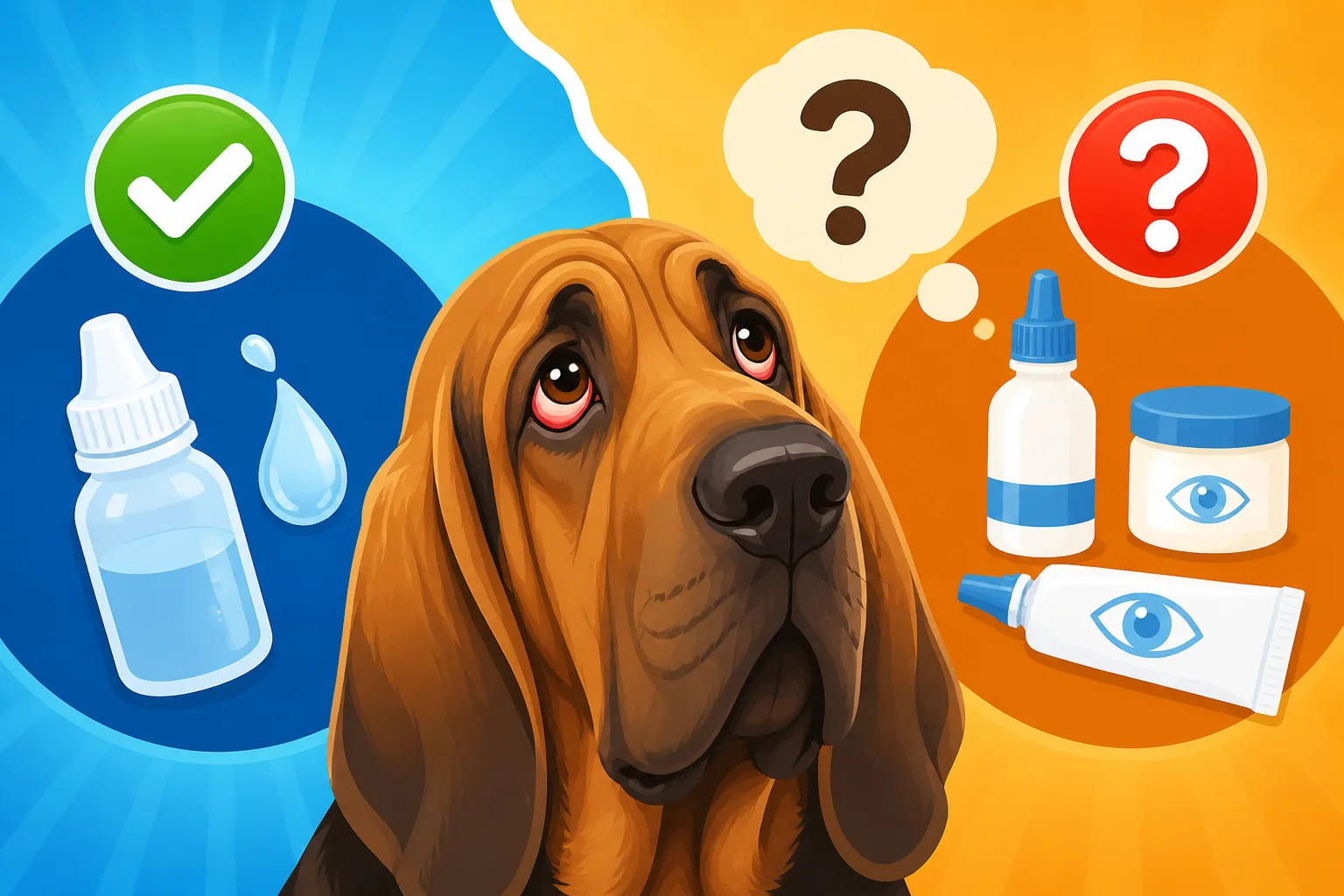
Whether Saline Is Enough for a Bloodhound’s Eyes
If you're a Bloodhound parent, you know those soulful, droopy eyes are a hallmark of the breed, full of character and expression. But you also know they come with their own set of unique care challenges, from accumulating dust to developing tear stains. This guide will dive deep into whether a simple saline solution is truly enough for your Bloodhound's eye care, or if there are times you need to reach for something more.
Understanding the Unique Challenges of a Bloodhound's Eyes
Owning a Bloodhound means being intimately familiar with their glorious, pendulous features. While their long ears and wrinkled faces are iconic, these very traits, especially around their eyes, can make them prone to certain issues that other breeds might not experience. It’s not just about looking charmingly mournful; it’s about a design that requires proactive attention.
The Anatomy That Makes Them Prone to Issues
The Bloodhound's distinctive head features an abundance of loose skin, particularly around the eyes, which often results in a condition called ectropion. This isn't usually a flaw; it's part of their breed standard, meaning the lower eyelids naturally droop and roll outward. While it contributes to that classic Bloodhound expression, it also means the delicate conjunctiva and the eye itself are more exposed to the elements than in breeds with tighter eyelids. Imagine walking around with your eyelids slightly pulled down all the time – that's what your Bloodhound experiences. This exposure can make their eyes particularly vulnerable to environmental irritants.
Because of this anatomical reality, your Bloodhound's eyes are practically a magnet for dust, dirt, pollen, and even tiny bits of grass or leaf litter. When their head is down, diligently following a scent trail, those droopy lower lids and loose facial skin act like little scoops, gathering everything in their path. The exposed conjunctiva can dry out more easily, and the natural protective mechanisms, like blinking and tear film spreading, aren't quite as efficient as they would be with a tightly fitting eyelid. It's a constant battle against gravity and the environment, and it's why regular vigilance is so important for their comfort and long-term eye health. Why a Bloodhound's Lower Lid Hangs Away From the Eye is a really helpful read if you want to understand the mechanics behind this unique trait more fully.
Common Bloodhound Eye Irritations
Beyond the constant influx of environmental debris, Bloodhounds are also prone to certain types of irritation you'll likely encounter. Tear staining is incredibly common, appearing as reddish-brown streaks beneath their eyes. This usually isn't a sign of pain, but rather a cosmetic issue caused by tears overflowing from the eye, often due to poor drainage or, again, that loose eyelid structure. The moisture then becomes a breeding ground for yeast and bacteria, which causes the discoloration. It's an ongoing management task for many Bloodhound owners.
More concerning are actual foreign bodies that get trapped. A fleck of dirt might cause a momentary blink and then clear, but a stubborn piece of grit or a grass awn can lodge itself under the eyelid or even scratch the cornea. This can quickly escalate from mild irritation to significant pain, redness, and squinting. Keeping an eye out for changes in discharge – from clear to yellow or green – or any persistent redness that doesn't resolve with a simple flush, are critical warning signs. Sometimes, what looks like simple redness from a dusty walk can actually be the early stages of a more serious issue that saline alone won't be able to address.
Saline Solution: What It Is and How It Helps (and Doesn't)
When it comes to basic eye care for your Bloodhound, saline solution often comes to mind. It seems like a simple, harmless option, and in many cases, it absolutely is. But understanding its capabilities and, more importantly, its limitations, is key to providing truly effective care.
The Basics of Saline and Its Role in Eye Care
At its core, saline solution is just sterile salt water, formulated to be isotonic with your dog's natural tears. This means it has a similar salt concentration, so it won't sting or irritate the delicate tissues of the eye. Its primary job is mechanical: to gently flush away irritants, dust, pollen, and any superficial debris that might have landed in your Bloodhound's eyes. Think of it like a mini shower for their eyeballs. It's excellent for providing immediate relief from minor environmental annoyances and helping to keep the eye hydrated, especially in dry or windy conditions.
When choosing a saline solution, always look for one labeled as "sterile ophthalmic saline solution" or specifically for "eye wash" or "contact lens rinsing." Crucially, it should be preservative-free if you plan to use it regularly, as some preservatives can be irritating over time, especially for sensitive Bloodhound eyes. You can often find these at your local pharmacy or even on pet-focused platforms like Chewy or Amazon. It's a fantastic, safe option to have on hand for those everyday "got something in my eye" moments, or after a particularly adventurous romp in the woods. It's essentially a first line of defense, a gentle cleanser without any medicinal properties.
When Saline Is Sufficient (and How to Use It)
Saline truly shines as a preventive and mild irritant cleanser. If your Bloodhound has been out on a dusty trail, sniffing through tall grass, or just experienced a particularly windy day at the park, a gentle saline flush can work wonders. It helps to rinse away any particulate matter before it has a chance to cause real irritation or get lodged deeper. Regular, daily rinsing, especially for Bloodhounds prone to excessive tear production or visible debris, can significantly reduce the build-up of gunk and minimize tear staining. This proactive approach is a cornerstone of Daily Eye Care for a Bloodhound.
To use it effectively, gently hold your Bloodhound's head steady. You might need a second person to help, especially if they’re not used to it. Carefully pull down the lower lid to create a small pocket and apply several drops or a steady stream of the sterile saline solution directly into the eye, starting from the inner corner and letting it run out towards the outer corner. Don't touch the dropper or nozzle to their eye to avoid contamination. After flushing, you can gently wipe away any excess liquid and dislodged debris from around the eye with a clean, soft cloth or a sterile cotton ball. The key is gentleness and consistency; making it a positive, calm experience will make future cleanings much easier for both of you.
Limitations of Saline for Bloodhound Eyes
While saline is a wonderful tool for routine care and mild irritations, it's absolutely vital to understand what it cannot do. Saline is not a medication. This means it has no antibacterial, antiviral, or anti-inflammatory properties. If your Bloodhound has an actual eye infection (bacterial or viral conjunctivitis), a corneal ulcer, or severe allergic inflammation, saline will only flush, not treat. Continuing to use only saline in these situations will delay proper treatment, potentially leading to a worsening condition and even permanent damage. It's crucial not to mistake a simple flush for a cure.
Furthermore, saline cannot correct underlying anatomical issues like severe ectropion (where the eyelid hangs too low) or entropion (where the eyelid rolls inward, scratching the cornea). These conditions often require veterinary intervention, possibly even surgery, to resolve. Nor will saline stop excessive tear production if the cause is something other than simple irritation, such as a blocked tear duct or an allergic reaction. Lastly, if a foreign object is deeply embedded or has already caused a scratch or ulcer, saline might help clean the surface, but it won't remove the object or heal the damage. You really need to see your vet in these scenarios, and perhaps consult What Entropion Does to a Bloodhound's Eye if you suspect that particular issue.
Beyond Saline: When to Seek Veterinary Help
Knowing when to switch from a home care routine to professional veterinary intervention is perhaps the most important part of Bloodhound eye care. Their eyes are too precious and their potential for problems too high to risk a "wait and see" approach when serious symptoms arise.
Signs That Your Bloodhound Needs More Than Saline
Your Bloodhound's eyes communicate a lot, and you need to be tuned into their signals. If you observe any of the following, it's a clear sign that saline is no longer sufficient, and a veterinary visit is immediately warranted:
- Persistent Redness or Swelling: If the whites of the eyes (sclera) are very red, or the eyelids themselves are swollen and puffy, especially if it doesn't resolve within a few hours of a saline flush.
- Excessive or Abnormal Discharge: While some clear discharge is normal, if it becomes yellow, green, thick, pus-like, or excessively watery and persistent, it often indicates an infection or inflammation.
- Squinting, Pawing, or Light Sensitivity: These are signs of pain or discomfort. Your Bloodhound might be trying to protect their eye from light or rubbing it to alleviate an irritation, which can make things worse. Signs a Bloodhound Has a Corneal Ulcer often include these painful indicators.
- Cloudy Appearance or Visible Injury: Any cloudiness in the cornea (the clear front surface of the eye), a visible scratch, ulcer, or an obvious foreign object that you can't easily flush out, requires immediate professional attention.
- Changes in Eye Structure: If you notice one eyelid suddenly appears more droopy, or one eye seems smaller due to swelling, these are significant changes. What Ectropion Looks Like on a Bloodhound can give you a visual reference for normal vs. abnormal droop.
Don't hesitate if you see these signs. Eye problems can escalate rapidly, and early intervention can prevent severe complications, including vision loss.
Other Eye Care Products and When They're Appropriate
Once your veterinarian has diagnosed the specific issue, they may prescribe a range of other eye care products that go beyond simple saline. These are usually medicated and targeted to address specific problems:
- Antibiotic Eye Drops or Ointments: Used to treat bacterial infections, such as bacterial conjunctivitis. These require a prescription and a proper diagnosis to ensure the right antibiotic is chosen.
- Anti-inflammatory Eye Drops: For conditions like severe allergies or non-infectious inflammation. Sometimes, topical steroids are used, but only after a vet has ruled out a corneal ulcer, as steroids can worsen ulcers significantly.
- Artificial Tears: If your Bloodhound is diagnosed with "dry eye" (keratoconjunctivitis sicca or KCS), they may need artificial tear supplements to keep their eyes lubricated. These can be purchased over-the-counter, but your vet will recommend the best type, often preservative-free. Dry Eye in a Bloodhound is a condition that definitely needs specific, ongoing treatment. You can find many reputable artificial tear brands on Chewy or even through your vet's office.
- Specialized Tear Stain Wipes or Washes: For managing stubborn tear stains, there are products available that contain mild cleansing agents or even very low-dose antibiotics (sometimes in prescription form). Be extremely cautious with over-the-counter tear stain removers, especially those containing harsh chemicals or oxidizers, as they can irritate your Bloodhound's sensitive eyes. Always read ingredients carefully and choose gentle, pet-safe options. Your vet might even suggest specific brands available on Amazon that are safe for regular use.
Never self-diagnose and start using medicated eye drops without a vet's guidance. What looks like a simple infection could be an ulcer, and the wrong treatment could cause severe harm.
The Role of a Veterinarian and Ophthalmologist
Given the Bloodhound's predisposition to eye issues, regular veterinary check-ups are incredibly important. Your general practitioner vet is your first and most frequent point of contact for eye health. They can diagnose common issues, prescribe initial treatments, and provide guidance on routine care. They'll also perform basic eye exams during your Bloodhound's annual visits, looking for early signs of problems. The Four Eye Problems a Bloodhound Is Born Toward are exactly what your vet will be keeping an eye out for.
However, there are times when your general vet might recommend a referral to a veterinary ophthalmologist – a specialist in animal eye conditions. This is usually the case for complex or persistent issues, surgical interventions (like for severe ectropion or entropion, or advanced corneal ulcers), or conditions that aren't responding to standard treatment. An ophthalmologist has specialized equipment and expertise to perform advanced diagnostics, such as detailed examinations with a slit lamp, advanced tear tests, or even ultrasound of the eye. While the cost of specialized care can be a concern, it's often the best path to saving your Bloodhound's vision and ensuring their comfort. You can learn more about this in Eyelid Surgery Is the Bill Bloodhound Owners Do Not Expect.
Proactive Eye Health for Your Bloodhound
Being proactive about your Bloodhound's eye health can save you a lot of worry, discomfort for your dog, and potentially costly vet bills down the line. It's about building consistent habits and making informed choices about their environment and overall well-being.
Environmental Management and Prevention
One of the biggest factors in a Bloodhound's eye health is their environment. Because their eyes are naturally more exposed, minimizing irritants is paramount. Try to keep your home as dust-free as possible, especially in areas where your Bloodhound spends a lot of time resting their head. Regular vacuuming and dusting can make a surprising difference. Outdoors, be mindful of where your Bloodhound is sniffing and playing. If you know you're headed to a very dusty field or a place with lots of tall, seed-heavy grass, a quick rinse with saline immediately afterward can prevent problems.
Something many owners don't consider is the car ride. While it's tempting to let your Bloodhound enjoy the wind with their head out the window, the force of the wind, dust, and debris can cause significant irritation and even dry out their eyes. It's much safer to keep the windows up or only cracked slightly to allow airflow without direct blast. For those long, trailing practice sessions or walks in challenging terrain, consider specialized dog goggles to offer protection – yes, really! It might look a little silly, but it can save their eyes. Whether Dust Should Keep a Bloodhound Indoors highlights just how impactful environmental factors can be.
Consistent Daily Routine
Incorporating gentle eye checks into your Bloodhound's daily routine is one of the most effective preventive measures you can take. This doesn't have to be an ordeal; it can be part of their morning cuddle or evening groom. Take a moment to gently lift their eyelids, check the whites of their eyes for excessive redness, and look for any unusual discharge or foreign objects. If you spot anything concerning, a quick, sterile saline flush is your go-to.
Regular wiping of the facial folds, especially around the eyes and muzzle, is also crucial. These deep wrinkles are notorious for trapping moisture, food debris, and tears, creating a warm, damp environment that's perfect for bacterial and yeast infections. Use a soft, clean cloth or a pet-specific wipe (like those gentle, fragrance-free options you can find on Ollie or Chewy) to keep these areas dry and clean. This helps prevent secondary skin fold dermatitis, which can indirectly affect eye health if infections become widespread. Wiping a Bloodhound's Folds Before They Sour is a must-read for managing this particular aspect of their care. Consistency truly is key here; a few minutes each day can prevent hours of discomfort and vet visits.
Nutrition and Overall Health Impact
While diet doesn't directly cause or cure most Bloodhound eye problems, a well-balanced, high-quality diet contributes significantly to their overall health, which in turn supports a strong immune system and healthy tissues throughout the body, including the eyes. Ensure your Bloodhound is getting all the essential vitamins and minerals they need. Some owners discuss supplementing with things like omega-3 fatty acids, which can support skin and coat health, and potentially have some anti-inflammatory benefits, though you should always consult your vet before adding any supplements.
Proper hydration is also crucial. Adequate water intake ensures that their tear glands can produce enough quality tears to keep the eyes moist and flush away minor irritants naturally. Always have fresh, clean water available. Keeping your Bloodhound at a healthy weight is another general health principle that can indirectly benefit their eyes. Obesity can sometimes exacerbate skin fold issues, making hygiene more challenging. A fit, healthy Bloodhound is better equipped to fight off infections and heal from minor irritations, creating a more resilient foundation for their unique eye anatomy.
Here’s a quick overview of different eye care approaches:
| Product Type | Primary Use | When It's Sufficient | When to Consult a Vet |
|---|---|---|---|
| Saline Solution | Flushing debris, mild irritation, hydration | Daily rinse, after dusty walks, minor tear staining prevention | Persistent redness, pain, discharge, cloudiness, visible injury, non-healing issues |
| Medicated Drops | Treating infections (bacterial/viral), severe inflammation, dry eye | ONLY with a vet's diagnosis and prescription | Always, as medicated drops are specific to a condition and can be harmful if misused |
| Eye Wipes | Cleaning tear stains, general debris around eyes | Routine cleaning, managing cosmetic tear staining | Wipes don't solve underlying issues; if problems persist, see a vet |
| Artificial Tears | Lubricating dry eyes (e.g., KCS) | After KCS diagnosis, as part of long-term management | If dry eye symptoms worsen, or if other eye issues develop alongside dry eye |
Disclaimer
This article is for general informational purposes only and does not constitute professional advice. Laws, prices and regulations vary by location and change over time. Consult a qualified professional for guidance on your specific situation.