The Coat Is the Easy Part of a Bloodhound
First-time owners often look at a Bloodhound and think they are getting an easy-care dog because there is no long, flowing coat to brush or professional grooming haircut to schedule. They quickly learn that the sleek, short jacket is a complete illusion. The real maintenance of this breed takes place beneath the surface, hidden inside massive, airless ear canals, deep within heavy skin folds, and across a perpetually damp jawline. Managing these complex physical traits requires daily vigilance, specialized supplies, and an understanding of hound anatomy that goes far beyond a simple rubber curry brush.
The Short Coat Delusion: Why Brushing Is the Easiest Part of Bloodhound Grooming
When you bring a hound into your life, people will tell you how lucky you are to avoid groomer visits and expensive haircuts. What they do not realize is that the hound coat is merely the wrapping on a very complex, high-maintenance package. The short, smooth hair coat of a Bloodhound does indeed shed, but it does not mat or tangle like a poodle or a setter. Because of this, it is easy to assume that groom time is a breeze. The reality is that grooming a hound is less about aesthetics and much more about preventative healthcare and hygiene.
The coat itself is tight, dense, and slightly coarse to the touch along the back, while softening into a velvety texture across the skull and ears. It is designed by centuries of breeding to shed burrs, briars, and water while the dog tracks game or human scent through punishing thickets. Because the fur is self-cleaning to a certain extent, mud and dirt dry up and flake off naturally once the hound rests. However, the oil that keeps this coat water-resistant is the exact same substance that traps odor and dander against the skin, creating an environment where bacteria can flourish if left unchecked.
If you only focus on brushing, you miss ninety percent of what keeps a hound healthy. Brushing takes five minutes, but the systemic care required for the rest of the body takes dedicated effort every single day. True hound care requires looking past the glossy exterior and focusing on the areas where sweat, sebum, drool, and ambient dirt collect. Once you reframe your perspective to view grooming as an internal and structural cleaning routine, managing your hound becomes far more predictable and effective.
The Sleek Appearance That Fools First-Time Owners
It is extraordinarily common for new hound parents to fall into a false sense of security during the first few weeks of ownership. A young hound coat looks tidy, smells relatively clean, and requires almost zero effort to look presentable. You run a quick brush over their back, admire their glossy finish, and think you have struck gold. Unfortunately, this brief grace period ends as soon as the pup reaches adolescence and their skin loosens, their flews drop, and their ear canals mature into deep, dark moisture traps.
The smooth coat hides a massive surface area of skin. Because a Bloodhound has so much excess hide—designed to drop down over its eyes and sweep scent toward its nose—the actual square footage of skin on this dog is vastly larger than that of a tight-skinned dog like a Labrador or a Boxer. Every square inch of that skin produces natural oils that require management. When prospective owners fail to realize how much skin is hiding underneath that sleek coat, they are quickly overwhelmed by the sudden onset of hound smell, sour folds, and damp ears.
Understanding that the coat is merely a cover for an intricate web of skin folds is the first step toward master-level hound ownership. The grooming routine you establish cannot simply be about making the hair look nice for a stroll in the park. It must be structured around removing trapped moisture, ventilating dark crevices, and balancing the skin’s natural biome so that microscopic yeast and bacteria do not take over your home and your dog’s health.
Choosing the Right Tools for Short-Haired Hound Coats
Because you are dealing with a dense, short coat, traditional slicker brushes and metal combs are completely useless and can actually scrape or damage the delicate skin under the fur. Instead, your primary weapon for the topcoat is a heavy-duty rubber curry brush or a hound glove. These tools use flexible rubber nubs to grab loose hair, massage the skin, and pull natural oils down the hair shaft to maintain a healthy sheen without scratching the dog.
When shopping for grooming gear on platforms like Chewy or Amazon, look specifically for grooming mitts with firm rubber ridges or classic oval rubber curries designed for horses. Using these tools in a firm, circular motion across the shoulders, back, and hips loosens dead hair that would otherwise end up embedded in your furniture. The rubber friction also stimulates blood flow to the skin, which encourages healthy coat growth and helps distribute natural protective lipids evenly across the body.
In addition to rubber curries, keeping a soft microfiber towel and a chamois cloth on hand is essential. After brushing out the dead hair, running a damp microfiber towel over the coat removes fine dust, pollen, and outdoor dander that the hound picked up while trailing through the brush. Finishing with a quick polish using a dry chamois brings out that classic, deep luster that makes a well-cared-for hound look absolutely magnificent.
Managing Seasonal Shedding and Dander
While Bloodhounds do not drop giant tufts of undercoat like a Nordic breed, they do go through significant seasonal coat blows in the spring and autumn. During these transitions, the short, stiff hairs shed continuously. These small, needle-like hairs have a knack for weaving themselves straight into woven upholstery, car carpets, and clothing, making them notoriously difficult to vacuum away once they settle.
During shedding season, daily brushing sessions outdoors become mandatory. Using a rubber grooming tool for ten minutes every morning will remove the vast majority of dead hair before it drops inside your living room. Following up the brushing session with an all-over wipe-down using a damp cloth captures loose dander that can trigger human allergies or leave a dusty residue on your hands when you pet the dog.
| Grooming Zone | Task Frequency | Preferred Tool | Primary Health Risk If Neglected |
|---|---|---|---|
| Outer Short Coat | 2-3 Times Weekly | Rubber Curry Brush | Excess Dander & Dull Fur |
| Facial Folds & Flews | Daily | Soft Microfiber Cloth | Fold Dermatitis & Bacterial Odor |
| Deep Ear Canals | 1-2 Times Weekly | Vet-Approved Drying Wash | Chronic Otitis Externa & Hematoma |
| Exposed Eye Haws | Daily | Sterile Saline Wipe | Corneal Ulcers & Conjunctivitis |
| Interdigital Paw Pads | Weekly | Moisture-Wiping Towel | Interdigital Cysts & Fungal Growth |
Managing dander also involves supporting the skin from the inside out. A hound shedding excessively or producing dry, flaky dander often suffers from a lack of essential fatty acids in their diet. Adding high-quality omega-3 marine oils or switching to a fresh food routine can dramatically reduce dander production, making the outer coat far easier to maintain throughout the changing seasons.
Deep Dive into Wrinkle and Skin Fold Maintenance
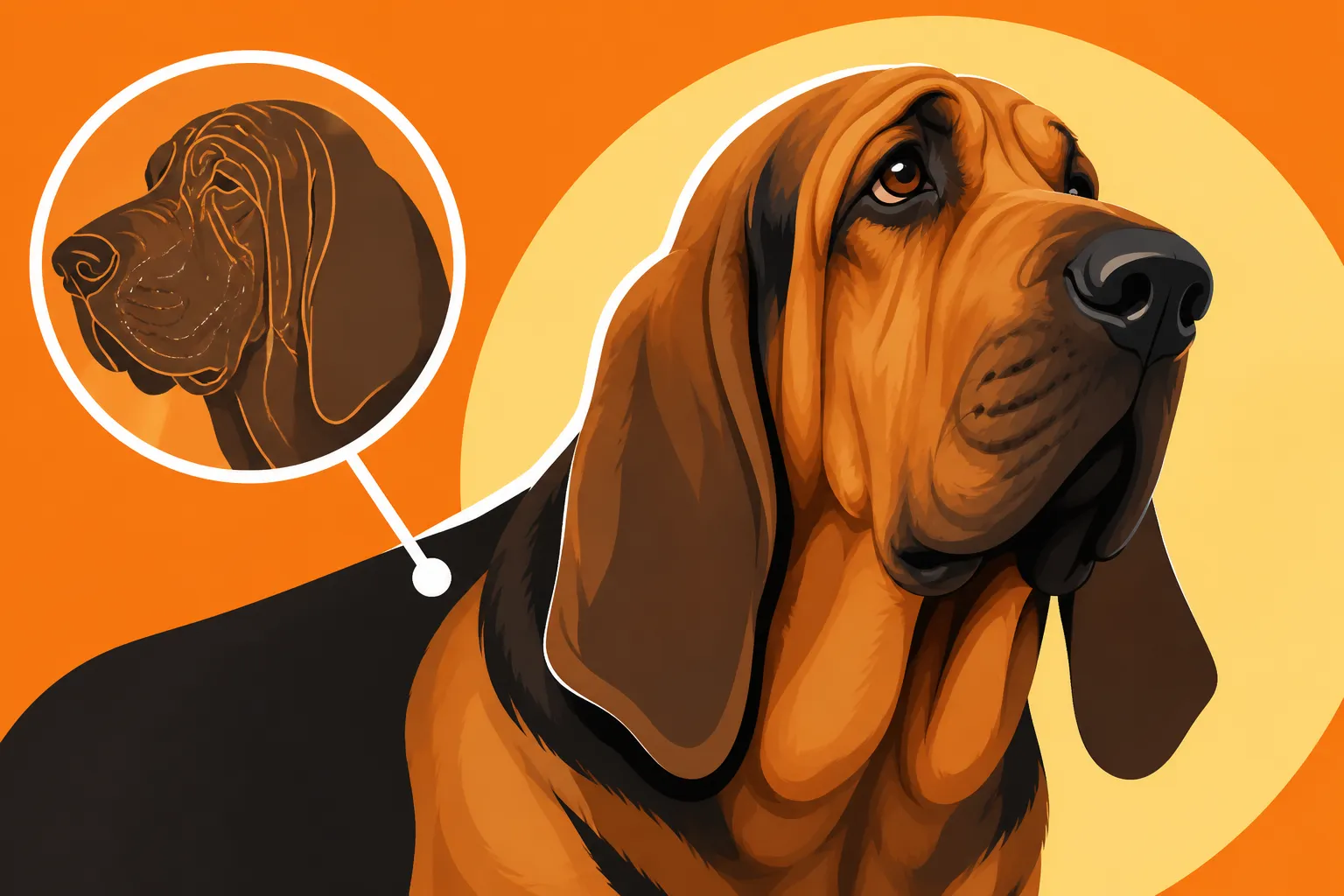
The deep, dramatic facial wrinkles and heavy neck dewlaps are defining characteristics of the breed, giving them their soulful, ancient expression. However, those magnificent folds are essentially warm, dark, humid pockets where air rarely circulates. If you do not actively maintain these crevices, they quickly turn into breeding grounds for yeast and bacterial infections that cause intense itching, foul odors, and severe discomfort for your hound.
Proper fold care is not something you do once a month when the dog gets a bath; it is an unforgiving daily commitment. Every time your dog drinks water, sticks their nose in the dirt, or drools after a nap, moisture and organic debris settle deep into the skin rolls. If left unaddressed, the friction of skin rubbing against skin combined with trapped moisture creates micro-tears in the tissue, opening the door for painful skin fold dermatitis.
Learning how to properly clean and dry these areas takes patience and a gentle touch. Many hounds are sensitive about their faces being handled, especially if they have ever experienced a painful skin infection in the past. Establishing a calm, rewarding routine from early puppyhood ensures that your dog sits quietly while you work through every deep wrinkle on their forehead, muzzle, and neck.
Where Moisture Traps First: Face, Neck, and Lip Folds
The most vulnerable moisture traps on a hound are the lip folds (the deep pockets created by the heavy upper flews hanging over the lower jaw) and the prominent neck dewlap. Every time a hound drinks, their entire lower jaw and neck dive straight into the bowl. Water saturates the fur, pools in the folds, and remains trapped there for hours unless you manually dry the area.
Another critical zone is the bridge of the nose and the heavy brow wrinkles above the eyes. Dust and airborne pollen settle into these upper folds during daily walks, mixing with natural skin oils to form a greasy, dark buildup. If you gently separate the wrinkles on an uncleaned hound, you will often find red, irritated skin covered in a sour-smelling residue. Recognizing Where a Bloodhound’s Folds Trap Moisture First allows you to target your daily care effectively before inflammation sets in.
The neck dewlap presents its own unique challenge because it collects both external water and dripping drool. Because the skin folds over on itself when the dog sits or sleeps, air access is almost entirely cut off. Owners must make a habit of lifting the heavy skin flaps under the chin daily to inspect the skin beneath, ensuring that the hide remains pale, dry, and free from any unpleasant sour smell.
Wiping Routines and Preventing Yeast Infections
To maintain healthy skin folds, you need to establish a consistent wiping protocol. For daily upkeep, soft cotton pads or dedicated pet wipes soaked in an antiseptic, anti-fungal solution work best. Never use harsh alcohol-based wipes or heavily fragranced baby wipes, as these can strip the skin’s natural barriers and cause severe burning or drying on sensitive facial tissues.
When wiping down the face, hold the wrinkle open with one hand and gently pull the cleaning pad through the trough of the fold with the other. Make sure to clear out all trapped debris, grease, and dried discharge. It is crucial to remember that wiping is only half the job—the area must be thoroughly dried afterward. Use a dry, soft microfiber cloth to wipe away any residual moisture left behind by the cleaning pad.
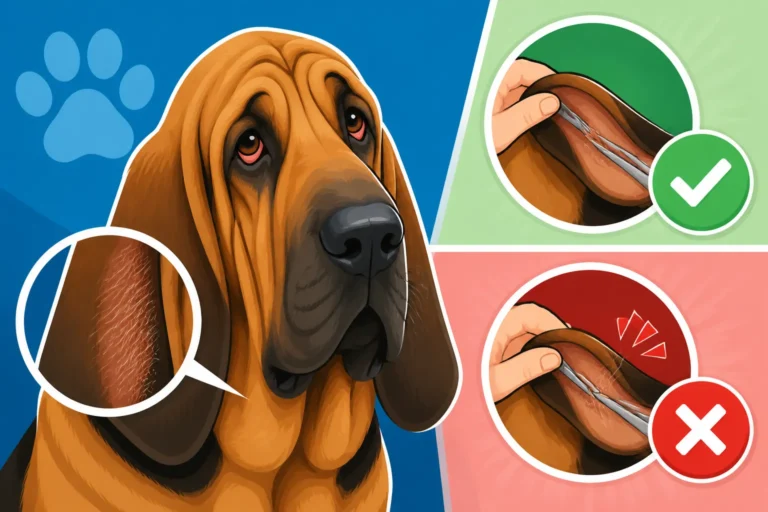
If you notice early signs of redness or a mild yeast smell, applying a thin layer of zinc-oxide-free barrier cream or specialized skin fold powder can help reduce friction and absorb ambient moisture. However, if the skin becomes bright red, raw, or begins oozing, you are likely dealing with an active case of fold dermatitis. In these situations, understanding Signs a Bloodhound’s Fold Has Become Infected is vital so you can seek prescription topical medications from your veterinarian before the infection spreads deeper into the tissue.
Bathing Frequency and Skin Hygiene
Contrary to popular belief, bathing a hound too frequently with harsh shampoos can actually make skin problems significantly worse. Frequent bathing strips the skin of its essential lipids, causing the body to overproduce oil in an attempt to rehydrate itself. This surge in oil production creates even more food for yeast and bacteria, leading to a vicious cycle of bathing, drying, and worsening body odor.
A healthy hound only needs a full-body bath every six to eight weeks, unless they have rolled in something notoriously foul. When you do bathe your hound, always select a soap-free, oatmeal-based or hypoallergenic shampoo designed to preserve the skin’s natural pH balance. Make sure to spend extra time rinsing the dog thoroughly; soap residue trapped deep inside skin folds will cause severe contact dermatitis and intense itching once dry.
After bathing, drying the dog completely is an absolute requirement. A wet hound left to air-dry naturally will retain dampness deep inside their wrinkles and under their ears for half a day, setting the stage for a massive fungal flare-up overnight. Use a high-velocity dog dryer to blow moisture out from deep within the coat and folds, keeping the nozzle moving constantly so you do not overheat the dog’s sensitive skin.
The Heavy Lifters: Managing the Pendulous Ears
If the coat is the easy part of a hound, the ears are undisputedly the hardest. A Bloodhound’s ears are engineering marvels—long, velvet-soft leathers that reach well past the tip of the nose. In the field, these ears act as natural funnels, sweeping scent molecules off the ground and directing them up toward the nose as the dog moves. But off the trail, those exact same ears present one of the most difficult chronic health challenges in the entire canine world.
Because the ear leathers are so long and heavy, they hang flat against the side of the head, completely sealing off the ear canal from fresh air and sunlight. This dark, warm, and airless space creates a perfect incubator for yeast, anaerobic bacteria, and ear mites. Without strict, lifelong maintenance, a hound will suffer from recurring, painful ear infections that can eventually lead to permanent damage to the ear canal structure.
Many prospective owners underestimate the sheer volume of time and expense associated with hound ear care. From buying specialized drying cleansers on Amazon to spending hours wiping and drying ear flaps, managing these pendulous ears is an unyielding duty. Understanding the unique anatomy of your dog’s ears is essential for keeping them pain-free and healthy throughout their life.
Why the Bloodhound’s Ear Anatomy Invites Trouble
To effectively clean a hound’s ear, you must first understand how deep and convoluted the ear canal actually is. Unlike a human ear canal, which goes straight inward, a dog’s ear canal forms an “L” shape. It runs vertically down the side of the head before taking a sharp ninety-degree turn horizontally toward the eardrum. In a giant hound, this canal is remarkably long and wide, providing ample space for fluid, wax, and debris to collect at the bottom of the “L”.
Because the heavy ear flap acts like a thick trapdoor over the canal opening, any moisture that enters the ear—whether from swimming, bathing, or simple humidity—has zero opportunity to evaporate. This explains Why a Bloodhound’s Ear Canal Stays Damp even days after exposure to water. When trapped moisture mixes with warm body heat and natural earwax, yeast organisms multiply rapidly, leading to the dark, painful, gunky discharge characteristic of a severe ear infection.
Furthermore, the delicate skin lining the ear canal is highly sensitive to systemic allergies. If a hound has an environmental or dietary allergy, the ear lining inflames and swells shut, trapping existing wax and moisture deep inside. This structural swelling makes manual ventilation and cleaning even more critical to prevent long-term calcification of the ear canal walls.
Step-by-Step Ear Cleaning Protocol
Cleaning a hound’s ears should be performed on a strict weekly schedule. Start by filling the ear canal entirely with a vet-approved, alcohol-free ear cleanser that includes a dedicated drying agent. Do not be shy with the fluid; you need enough liquid to fill the deep vertical canal completely so it can float dirt and hardened wax up to the surface.
Once the fluid is in place, hold the base of the ear closed and massage it firmly for thirty to forty-five seconds. You should hear a distinct squishing sound as the cleanser breaks up debris deep in the horizontal canal. After massaging, step back and allow your hound to shake its head vigorously. This shaking action is vital because the centrifugal force pulls loosened wax and fluid up out of the deep canal where you can safely reach it.
After the dog shakes, use soft cotton balls or large square gauze pads to wipe away the fluid and wax from the outer canal and the inner ear flap. Never insert cotton swabs (Q-tips) down into the ear canal; doing so acts like a ramrod, compacting wax against the delicate eardrum and potentially causing a traumatic puncture. For a comprehensive, lifelong strategy on maintaining this routine, refer to our guide on Cleaning a Bloodhound’s Ears Every Week for Life.
Keeping Ears Out of Food Bowls and Water Dishes
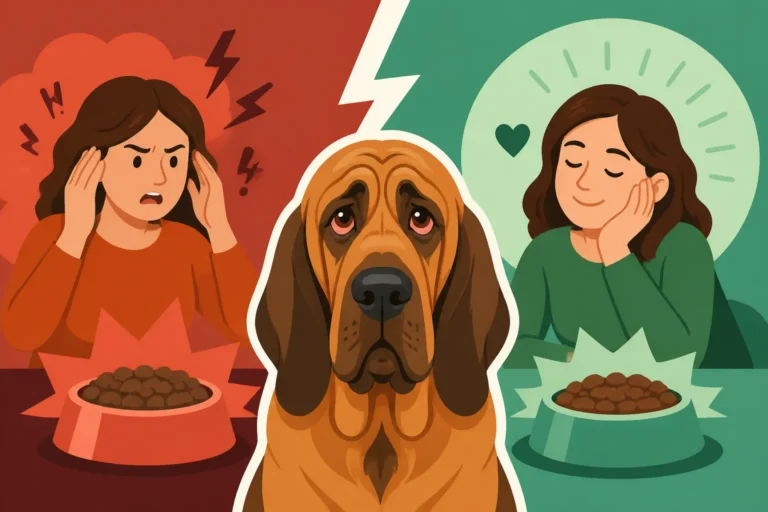
One of the most persistent everyday frustrations for hound owners is managing long ears during mealtime. When a hound lowers its head into a food or water bowl, the heavy ear leathers fall straight forward, dipping directly into kibble, canned food, or water. Wet, food-crusted ear tips not only create a messy kitchen floor, but they also lead to skin breakdown and painful cracking along the edges of the ear leather.
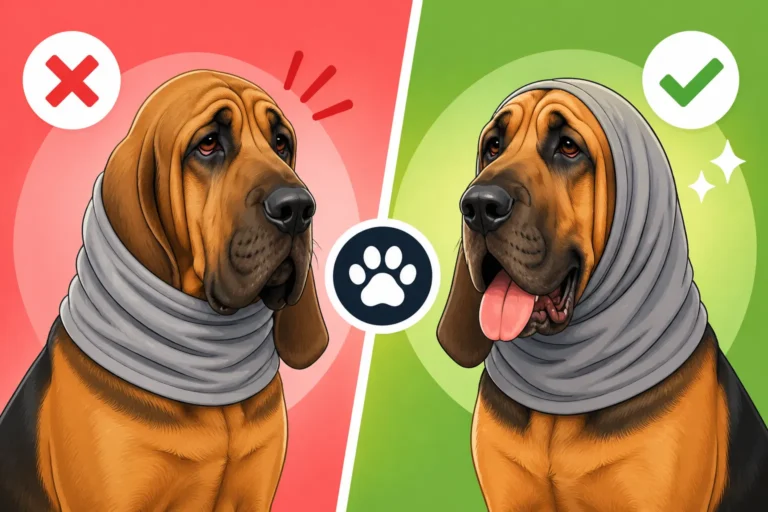
To solve this issue, smart hound owners utilize two primary strategies: specialized narrow-topped bowl designs and fabric head coverings known as snoods. A snood is a soft, elasticized fabric tube that slips over the dog’s head and neck, gently pinning the ear leathers back against the sides of the neck while leaving the face free to eat and drink cleanly.
| Strategy for Ear Protection | Operational Benefit & Maintenance Effect |
|---|---|
| Utilizing a Fitted Snood | Holds ears back completely; keeps tips dry and |
| free from food debris during all feeding times. | |
| Using Spaniel-Style Conical Bowls | Narrow top opening prevents ears from dropping |
| inside while allowing muzzle access to water. | |
| Post-Meal Tip Inspection | Ensures no residual moisture remains on ear edges, |
| preventing tip cracking and localized sores. |
Investing in a proper feeding setup saves hours of cleanup time every single week. Understanding What a Snood Does for a Bloodhound and introducing your puppy to wearing one right from their very first meal makes feeding clean, effortless, and stress-free for both you and your hound.
Drool, Eyes, and Everyday Cleanup Realities
Living with a hound means accepting that liquid will be a constant element of your home decor. The same loose, pendulous skin structure that makes the breed so effective at capturing scent also makes them world-class droolers. When a hound drinks water, smells something delicious, or simply shakes their massive head, excess saliva is flung far and wide, landing on walls, ceilings, furniture, and family members alike.
In addition to managing drool, daily eye care is a non-negotiable aspect of hound ownership. Because the breed standard calls for loose facial skin, the lower eyelids drop away from the eye socket, exposing the pink haw (nictitating membrane). This open eye structure leaves the delicate ocular tissues exposed to dust, dirt, wind, and debris every time the dog goes outdoors.
Keeping up with drool and eye discharge requires routine care, realistic expectations, and a well-stocked cleaning kit. Rather than fighting against your hound’s natural anatomy, setting up smart daily habits makes managing these unique features second nature, keeping your home fresh and your dog completely comfortable.
Managing the Inevitable Slingers and Hound Drool
Drool is an absolute reality of hound ownership, and there is no magic trick or training exercise that will stop a hound from producing it. The upper lips (flews) drop far below the lower jawline, creating a pocket where saliva collects continuously. When the dog shakes its head, force propels this collected saliva out in long, sticky strands affectionately known by owners as “slingers.”
To manage drool effectively, you must keep absorbent hand towels stationed strategically throughout your home. Keep a towel near the front door, next to the water bowl, by the couch, and in your vehicle. Wiping your dog’s mouth immediately after they drink or wake up from a nap drastically reduces the amount of moisture that gets slung onto your walls and furniture. Understanding Where a Bloodhound Puts Its Drool quickly teaches you to anticipate the splash zone before it happens.
For home cleanup, specialized enzymatic cleaners are required to break down dried saliva spots on walls, baseboards, and windows. Plain water or standard household cleaners often leave a smeared, cloudy residue on painted surfaces. Spraying an enzymatic wash on dried drool softens the protein bonds, allowing you to wipe away hardened slingers without stripping the paint off your walls.
Daily Eye Care for Exposed Haws and Drooping Lids
Because the lower lids sag outward—a condition known as ectropion—a hound’s eyes lack the natural sealed protection that tighter-skinned breeds enjoy. Dirt, floating seed heads, dust, and airborne allergens fall directly into the lower eye pocket throughout the day, causing irritation, tearing, and sticky discharge.
Daily eye maintenance should be performed every morning and evening. Use a clean, lint-free cotton pad soaked in sterile saline solution to gently wipe away accumulated mucous and crust from the inner corner of the eye. Never use the same pad for both eyes, as doing so can easily transfer a localized eye infection from one side to the other. For a detailed routine on preserving ocular health, see our full guide on Daily Eye Care for a Bloodhound.
If you notice your dog rubbing their eyes against furniture, excessive squinting, or a sudden change in discharge color from clear/white to bright green or yellow, consult your veterinarian immediately. Exposed eyes are highly vulnerable to corneal scratches and ulcers, which can escalate into serious optical emergencies if left untreated.
Home Cleanup and Odor Control Strategies
The distinct “hound smell” is a common talking point among dog owners, but a well-cared-for hound should never smell foul or offensive. The characteristic scent comes from the natural oils produced by the skin to waterproof the coat. However, when these oils accumulate on dog beds, carpets, and couch covers, they oxidation-decay and absorb ambient moisture, creating a heavy, lingering odor throughout the house.
Controlling home odor requires focusing on washable textiles. Use thick, washable fleece blankets to cover dog beds, couch cushions, and car seats, laundering them weekly in hot water with an odor-eliminating laundry additive. Avoid dog beds filled with loose foam that cannot be washed, as oil and drool will seep deep into the core where no cleaner can reach.
Air quality management is equally important. Running high-efficiency particulate air (HEPA) filters in the rooms where your hound sleeps traps floating dander and dried oil particles before they settle into your home’s soft furnishings. Regularly wiping down walls and hard floors with a pet-safe disinfectant maintains a fresh living environment without subjecting your hound to harsh synthetic fragrances that can trigger skin allergies.
Feeding the Heavy Hound: Nutrition, Bloat, and Weight
Nutrition for a massive, deep-chested hound is far more complex than simply dumping a scoop of commercial kibble into a bowl twice a day. Bloodhounds are rapid-growth giant breeds built with exceptionally deep, narrow chest cavities. This specific anatomical structure puts them at extreme risk for Gastric Dilation-Volvulus (GDV), commonly known as bloat—a rapid, life-threatening emergency where the stomach fills with gas and twists on its axis.
Because bloat can kill a healthy hound in less than an hour, every feeding decision you make must be structured around safety and risk reduction. How much you feed, when you feed, and how your dog behaves before and after meals directly impacts their digestive health and longevity. Proper nutritional management is quite literally a matter of life and death for this breed.
In addition to mitigating bloat risk, controlling your hound’s growth rate and adult weight is critical for preserving their heavy skeletal structure. Carrying excess weight puts tremendous strain on their massive joints, accelerating the onset of debilitating hip and elbow dysplasia. Keeping your hound lean throughout their life is the single best gift you can give their mobility and long-term health.
Designing a Safe Feeding Schedule to Prevent Bloat
To minimize the risk of GDV, a hound should never be fed a single large meal once a day. Consuming a massive volume of food at one time expands the stomach, stretching the supporting ligaments and making it far easier for the organ to rotate inside the deep chest cavity. Instead, divide your dog’s daily caloric intake into two or three smaller, equal meals spread evenly throughout the day.
Strict rest periods surrounding mealtime are non-negotiable. Do not allow your hound to run, play, jump, or engage in rigorous scent work for at least one hour before eating and two hours after completing a meal. Exercise accelerates gastric motility and causes gas buildup, drastically increasing the likelihood of stomach twisting. For an in-depth exploration of digestive safety protocols, review our comprehensive resource on Feeding a Bloodhound So It Does Not Bloat.
| Feeding Protocol Rule | Practical Implementation & Rationale |
|---|---|
| Split Meals (2-3x Daily) | Prevents stomach over-distension and reduces gas; |
| keeps volumetric pressure low inside deep chest. | |
| Mandatory Post-Meal Rest Period | Crating or quiet confinement for 120 minutes post- |
| meal stops physical tumbling and stomach rotation. | |
| Controlled Hydration Around Meals | Prevents massive water gulping directly after |
| eating dry kibble, which causes rapid swelling. |
Water intake must also be monitored closely during mealtime. Allowing a hound to gulp vast quantities of water immediately after consuming dry kibble causes the food to swell rapidly in the stomach, producing excess gas. Keep water bowls moderately filled and encourage quiet, steady drinking rather than frantic gulping.
Portions, Caloric Intake, and Growth Rates
Bloodhound puppies grow at an astonishing rate, transforming from small ten-pound infants into ninety-pound adolescents in a matter of months. However, rapid growth is the enemy of healthy joint development. If a puppy gains weight too quickly, their soft growth plates and developing cartilage are subjected to excessive mechanical stress, leading to permanent structural joint defects.
Puppies should be fed a high-quality large-breed or giant-breed puppy formula designed with controlled calcium and phosphorus ratios. These specialized formulas slow down the physical growth curve, allowing bones and joints to mature at a safe, steady pace without sacrificing overall muscular development. Avoid high-calorie, high-protein working dog foods during the puppy’s first eighteen months of life.
Determining the correct daily portion requires looking at your dog’s body condition score rather than strictly following the feeding chart on the bag. You should always be able to easily feel your hound’s ribs under a light layer of muscle, and they should maintain a visible waistline when viewed from above. If your hound starts losing their waist or develops a soft fat pad over their hips, reduce their daily intake immediately.
Special Diets, Toppers, and Fresh Food Considerations
Many hound owners choose to enhance traditional dry kibble with fresh food toppers, wet canned foods, or gently cooked meals from fresh-food subscription services like Ollie. Adding fresh, nutrient-dense ingredients provides essential moisture, live enzymes, and unadulterated omega fatty acids that support healthy skin and a shiny coat.
When introducing canned or fresh toppers, always subtract an equivalent caloric amount of dry kibble from the meal to prevent unintentional weight gain. Fresh toppers containing real meat proteins, highly digestible pumpkin, and anti-inflammatory berries can also make meals far more palatable for picky eaters while promoting healthy stool consistency and gut health.
If you choose to feed a raw or home-cooked diet, work directly with a veterinary nutritionist to ensure the meal plan meets all macro and micronutrient requirements for giant breeds. Imbalanced home-cooked diets can quickly lead to severe calcium deficiencies, skeletal deformities, and metabolic imbalances that jeopardize your dog’s long-term health.
Feet, Nails, and Joint Care for Large Scenthounds
A hound is only as good as their feet. Built to track scent over punishing terrain for hours on end, a Bloodhound’s paws are massive, thick-padded, and tight-toed. Supporting this immense weight—often ranging between eighty and one hundred and thirty pounds—requires exceptionally strong pasterns, sound joint alignment, and pristine foot hygiene.
Neglecting paw and joint care quickly leads to a cascade of physical issues. Long nails alter the angle at which the foot strikes the ground, putting unnatural stress on the toes, wrists, and elbows. Over time, this misaligned weight distribution accelerates arthritic changes in the limbs, turning a once-powerful tracking hound into a stiff, painful senior dog.
Because hounds carry so much skin and weight, maintaining sound feet involves a combination of regular nail trimming, paw pad inspection, proper exercise conditioning, and supportive home environment modifications. By actively managing their foundation, you ensure your hound stays mobile, active, and comfortable throughout their life.
Conditioning Heavy Paws for Long Trails and Walks
The thick skin on a hound’s paw pads acts as a natural shock absorber, protecting joints from impact and resisting sharp rocks, thorns, and rough pavement. However, soft house dogs that spend most of their time on soft carpets can easily develop tender, unconditioned pads that tear or blister when suddenly taken on long outdoor hikes or scent trails.
Conditioning paws requires gradual exposure to varied surfaces. Regular walks on clean asphalt, gravel paths, and firm dirt trails build up a tough, leathery calloused layer on the paw pads over time. After every walk, inspect the spaces between the toes (the interdigital webbing) for trapped seeds, burrs, mud balls, or ticks that can cause painful abscesses if left embedded in the tissue.
In wet or freezing weather, protect paw pads from road salt and de-icing chemicals that can cause severe chemical burns and drying. Applying a protective paw wax before outdoor excursions creates a safe moisture barrier. After coming inside, thoroughly wash and dry the feet to remove any toxic environmental chemicals before the dog has a chance to lick them off.
Nail Trimming without the Struggle
Trimming a hound’s nails is a task that strikes dread into the hearts of many owners, but it is an absolute necessity. Because giant hounds are physically powerful and notoriously stubborn when forced into uncomfortable positions, desensitizing your pup to nail care must begin on their very first week at home.
Black hound nails make seeing the inner live blood vessel (the quick) extremely challenging. Using a rotary grinding tool (like a Dremel) is far safer and more effective than traditional guillotine clippers. Rotary grinders allow you to shave off tiny layers of nail gradually, rounding off sharp edges without applying crushing pressure to the sensitive nail bed.
| Nail Care Milestone | Practical Execution & Behavioral Target |
|---|---|
| Early Desensitization (Puppyhood) | Daily handling of toes; pairing vibration tools |
| with high-value treats to build positive value. | |
| Weekly Maintenance Grinding | Grinding tips short enough so nails never touch |
| hard flooring when standing completely upright. | |
| Quick-Retraction Protocol | Frequent micro-grinds every 4 days to push back |
| overgrown blood vessels on long, neglected nails. |
Keep the nails short enough so they never click against hard flooring when the dog stands naturally. If you hear clicking when your hound walks across the kitchen, the nails are too long and are forcing the toes to splay backward, straining the ligaments in the feet and wrists.
Supporting Joints Through Proper Exercise and Bedding
Heavy giant breeds require thoughtful joint support throughout every stage of life. During growth phases, avoid high-impact activities like agility jumping, repetitive frisbee catch, or long runs on concrete. Instead, focus on low-impact, muscle-building activities like controlled leash walks, swimming, and natural scent trailing over soft, rolling grass fields.
In the home, providing high-density orthopedic memory foam bedding is essential for protecting heavy pressure points like elbows and hips from bursitis and calluses. Standard poly-fill dog beds crush flat under a hound’s weight within weeks, leaving their heavy bones resting directly against the hard floor. Look for medical-grade orthopedic beds with removable, washable covers.
To prevent sudden joint slips and tears, place non-slip runner rugs over slippery hardwood or tile hallways. A giant hound taking a hard spill on slick flooring can easily suffer a catastrophic cruciate ligament tear or hip dislocation, requiring expensive surgical intervention and months of strict crate confinement.
Bloodhound Care Overview and Weekly Routine
To tie all these care elements together successfully, you must transition from treating grooming as a sporadic task to running a smooth, predictable weekly maintenance schedule. When you break these responsibilities down into daily micro-habits, managing a giant hound stops feeling like an overwhelming chore and becomes a calm, bonding routine that you and your dog look forward to every single day.
Establishing a set schedule also ensures that you spot subtle health changes long before they turn into full-blown veterinary emergencies. Catching a slightly pink ear canal or a minor facial scratch on Monday morning allows you to treat it topically at home, saving you from a weekend trip to the emergency clinic later in the week.
Here is how a balanced, highly effective care schedule breaks down across a typical week for a healthy adult hound:
Creating an Unbreakable Weekly Schedule
Consistency is the secret to successful hound care. Set aside fifteen minutes every evening right after your dog’s final walk for basic daily hygiene, and dedicate thirty minutes on Saturday or Sunday morning for deeper physical maintenance.
- Daily Care Routine (10-15 Minutes):
- Wipe facial folds, lip creases, and neck dewlap with an antiseptic pad; dry thoroughly.
- Inspect exposed eye haws and clear away accumulated mucous using sterile saline wipes.
- Perform a quick mouth wipe after drinking to control drool accumulation.
- Conduct a quick body scan for burrs, ticks, or skin hot spots after outdoor walks.
- Weekly Maintenance Routine (30 Minutes):
- Perform deep ear cleaning using a vet-approved drying solution; wipe outer flaps clean.
- Grind nail tips using a rotary tool to maintain proper foot alignment.
- Brush the entire coat thoroughly with a rubber curry tool to remove loose hair and dander.
- Inspect paw pads and interdigital webbing for redness or inflammation.
- Wash feeding snoods, ear towels, and dog bed covers in hot water.
By committing to The Weekly Routine a Bloodhound Owner Cannot Skip, you protect your financial investment, preserve your home’s cleanliness, and ensure your hound lives a long, comfortable, and healthy life by your side.
Knowing When Skin and Ear Issues Require a Vet
While regular home care prevents the vast majority of routine hygiene issues, you must know when a problem exceeds home treatment and requires professional veterinary care. Attempting to home-treat an advanced, deeply entrenched infection with over-the-counter wipes can delay necessary medical care and cause your hound unnecessary pain.
Schedule a veterinary visit immediately if you observe any of the following red flag symptoms:
* Strong, foul, sweet, or rotting odors emanating from the ears or facial folds that persist after cleaning.
* Thick yellow, dark brown, or black discharge coming from deep inside the ear canal.
* Intense pain reactions when you touch the face or ears, including whining, head tilting, or snapping.
* Skin folds that are bright red, raw, bleeding, oozing pus, or hot to the touch.
* Cloudiness on the surface of the eye, squinting, or bright green ocular discharge.
Partnering with a trusted veterinarian who understands giant scenthound anatomy guarantees that your hound receives the precise diagnostic tests, prescription ear drops, and oral medications required to resolve complex health challenges quickly and safely.
Disclaimer
This article is for general informational purposes only and does not constitute professional advice. Laws, prices and regulations vary by location and change over time. Consult a qualified professional for guidance on your specific situation.