How Long a Bloodhound’s Attention Lasts in a Session
Anyone who has tried to teach a Bloodhound to "sit" or "stay" for more than a few minutes knows the unique challenge this incredible breed presents. It's not that they aren't intelligent; it's that their definition of what's important to pay attention to is fundamentally different from ours. This guide will help you understand your Bloodhound's attention span, especially during training sessions, and offer strategies to make those sessions productive and enjoyable for both of you.
The Bloodhound's Unique Definition of "Attention"
When we talk about a dog's "attention span," we often mean their ability to focus on human-directed tasks, like obedience commands, in a variety of environments. For a Bloodhound, however, "attention" is almost exclusively, and profoundly, tied to scent. Their entire being is engineered to process odors, making anything else secondary. This isn't stubbornness; it's instinct.
Scent as the Primary Driver
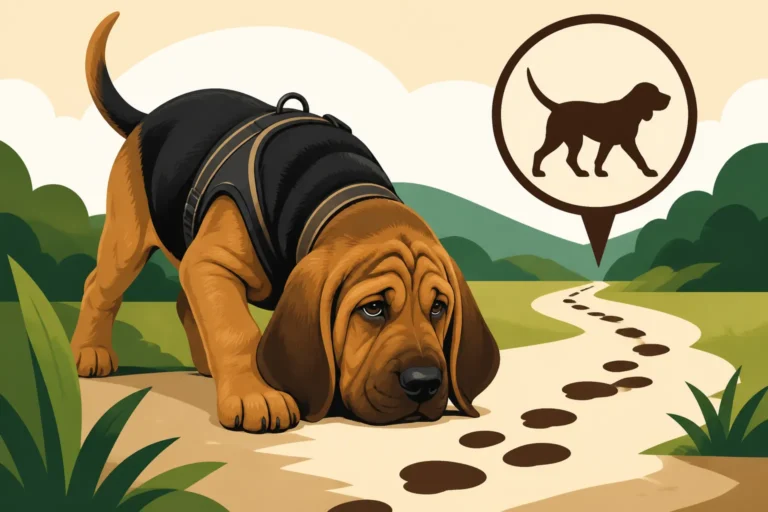
Imagine having a superpower where every single molecule of scent around you tells a vivid story. That's a Bloodhound's reality. Their massive olfactory bulb, incredible number of scent receptors, and long, droopy ears that sweep scents into their nose mean they are constantly "reading" their environment through smell. Every training session, whether indoors or out, is happening amidst an overwhelming symphony of odors: the squirrel that ran across the yard an hour ago, the neighbor's cat, the faint trace of your lunch on your clothing, the dust mites under the rug. All of these are legitimate, compelling information to a Bloodhound.
This hyper-awareness of scent means that while you might be asking for a "stay," your Bloodhound might be trying to discern if the mail carrier wore a different deodorant today, or if a new dog recently walked past the window. Their brain is always processing, always working, but often not on the task you've set. It's crucial for us, as their handlers, to acknowledge that their "distraction" is actually a very deep level of engagement with their primary sense. This makes traditional obedience training a different ballgame altogether. You might think they're ignoring a cue they know, but often, their nose has simply outvoted you. A Bloodhound's Nose Outvotes Its Handler
Single-Minded Focus vs. General Obedience
One of the biggest misconceptions about Bloodhounds is that if they can follow a complex trail for miles, they must have incredible focus. And they do! But this is a single-minded focus on one specific task: trailing. When a Bloodhound is on a trail, their attention span for that particular job is almost boundless. They can work for hours, ignoring hunger, thirst, and discomfort, because their drive to follow that scent is all-consuming. This is their purpose, what they were literally bred for over centuries.
However, translating that intense, innate drive into sitting politely for five minutes in a busy park is like asking a world-class marathon runner to be a champion chess player. Both require focus, but vastly different kinds. The cues and rewards in traditional obedience often pale in comparison to the intrinsic reward of a compelling scent. This distinction is vital for setting realistic training expectations. If you're looking for a dog that will heel perfectly in a distracting environment, you're likely setting yourself up for frustration with a Bloodhound. Instead, embrace what they do excel at. Mantrailing Is the Answer to a Bloodhound, Not Obedience
Environmental Awareness and Distractions
The world is a constantly unfolding scent-map for a Bloodhound. Every gust of wind, every change in humidity, every new person or animal that passes by, adds layers to this map. For most dogs, a new smell might be a fleeting curiosity. For a Bloodhound, it's an urgent, complex puzzle that demands to be solved. This means that a "distraction" for us is often a legitimate "task" for them.
Consider training outdoors. A patch of grass might look innocuous to you, but to your Bloodhound, it's a bustling information highway where countless creatures have passed. Every sniff is a data point. Trying to pull them away from this rich sensory input for a "down-stay" can feel like interrupting a detective in the middle of a crucial investigation. It's not about them being naughty; it's about their priorities being hardwired differently. Understanding this helps you reframe their behavior and adjust your training methods to work with their nature, rather than against it.
Typical Attention Spans for Bloodhounds in Training
So, if their nose is always on, how long can you actually expect a Bloodhound to "pay attention" in a traditional training setting? The answer, as with most things Bloodhound, depends heavily on the context, the individual dog, and your approach.
Puppyhood vs. Adulthood
Just like human children, Bloodhound puppies have even shorter attention spans than adults. A young Bloodhound puppy (under 6 months) might give you focused attention for a minute or two, maybe three, before their curiosity about the world around them completely overtakes their ability to concentrate on a "sit." It’s an exciting, scent-filled world out there! These early sessions should be extremely brief, fun, and high-reward. Pushing them too long will only lead to frustration for both of you and can sour them on training altogether.
As they mature into adolescence and adulthood, their capacity for sustained focus in obedience tasks might extend to 5-10 minutes. However, this is heavily dependent on the environment, the novelty of the task, and the value of the reward. An adult Bloodhound deeply engrossed in a novel scent in an unfamiliar place might offer only seconds of attention to your cues, whereas the same dog in a familiar, low-distraction environment, working for a favorite treat, might manage a solid 5-7 minutes. It's about working with their natural rhythm and understanding that they are not robots. You can introduce a Bloodhound puppy to a lot of new things, like traffic, but expecting sustained focus in those busy environments is a big ask. Whether a Bloodhound Puppy Should Be Socialized to Traffic Early
The "Magic Number" for Basic Obedience
There isn't a single "magic number" that applies to every Bloodhound, but generally, for basic obedience commands (like sit, stay, come, down) in a controlled environment, aim for 5-10 minute sessions. These sessions should be intense, rewarding, and end before your Bloodhound completely loses interest. It's better to have several short, successful sessions throughout the day than one long, frustrating one.
Think of it like this: would you rather do ten 5-minute workouts a day where you feel great, or one 50-minute workout where you burn out halfway through and dread the rest? Our Bloodhounds feel the same way about mental effort. Keeping sessions short and sweet builds their confidence, keeps them engaged, and prevents them from associating training with boredom or punishment. Remember, they are highly intelligent, but their intelligence is channeled differently. How Long a Bloodhound Takes to Learn Something New
Attention for Scent Work
This is where the Bloodhound truly shines, and where their attention span becomes legendary. When engaged in scent work, whether it's tracking a person, playing nose work games, or following a trail for a title, their focus is dramatically different. They can maintain intense concentration for much longer periods, often 20-30 minutes or even an hour or more, depending on their conditioning, the difficulty of the trail, and the weather.
The key difference here is that scent work is intrinsically motivating for them. They are literally doing what they were born to do. The reward isn't just a treat from you at the end; the process of following the scent is the reward itself. This is why many Bloodhound owners find that dedicated scent work, even for a short twenty-minute session, is incredibly effective at tiring their Bloodhound mentally and physically, far more so than a long walk around the block. Whether Twenty Minutes of Scent Work Settles a Bloodhound When you ask them to work with their nose, their attention span shifts from minutes to potentially hours. This is the activity that truly speaks to their soul.
Strategies for Maximizing a Bloodhound's Training Focus
Since we can't fundamentally change a Bloodhound's deep-seated scent drive, our best approach is to adapt our training methods to work with it. This means being smart, creative, and endlessly patient.
Short, Frequent Sessions
Instead of trying to force a 30-minute obedience lesson, break it down into several 5-minute bursts throughout the day. This keeps your Bloodhound from getting bored or overwhelmed, and it allows them to process information in smaller, more digestible chunks. Think about it: a child learning to read doesn't sit for hours; they have short, focused lessons interspersed with play. Your Bloodhound thrives on the same principle.
These short sessions can be integrated into your daily routine: a quick "sit" and "stay" before dinner, a "down" while you're making coffee, a little recall practice in the living room. The goal is to accumulate successful repetitions without ever pushing them to the point of mental fatigue or disengagement. Ending each session on a high note, even if it's just after a single successful command, is critical for building a positive association with training.
High-Value Rewards
A piece of dry kibble might motivate some dogs, but for a Bloodhound, especially when competing with a fascinating scent, you need to bring out the big guns. Think cooked chicken, cheese, hot dogs, or commercially prepared high-value training treats. The more appealing the reward, the more likely your Bloodhound is to temporarily divert their attention from that phantom squirrel trail to your outstretched hand.
The reward isn't just about food, though. It's also about praise, play, and genuine enthusiasm from you. For some Bloodhounds, a quick game of tug or a favorite squeaky toy can be just as motivating as a treat, especially if they're food-satiated. The key is to find what your individual Bloodhound considers irresistible. This might involve some experimentation, but once you find their "currency," your training effectiveness will dramatically improve. What a Bloodhound Will Work For
Managing the Training Environment
This is one of the most critical strategies. To get and hold a Bloodhound's attention, you need to reduce competing distractions as much as possible, especially in the early stages of learning a new command.
- Start Indoors: Begin training in a quiet room in your home with no other people, pets, or open windows to external scents. As they master a command there, gradually introduce minor distractions.
- Gradual Exposure: Don't jump from your living room to a bustling dog park. Move from indoors to your quiet backyard, then perhaps a quiet cul-de-sac, and then maybe a quiet corner of a park during off-peak hours. Each step should introduce a slightly higher level of distraction, allowing your Bloodhound to build their focus incrementally.
- Time of Day: Consider when you train. Early morning or late evening might have fewer external scents and human/animal activities, making it easier for your Bloodhound to concentrate.
- Use Tools: A good quality, comfortable harness and a long line are essential for safety and control, especially if working outdoors. You can find durable long lines and training harnesses easily on platforms like Amazon.
Incorporating Scent Work into General Training
This is perhaps the most effective way to engage a Bloodhound's mind and leverage their natural talents. Instead of fighting their nose, embrace it! Scent work can be integrated into nearly every aspect of your life together.
- Scent-Based Recall: Instead of just calling their name, teach a recall cue that involves a highly desirable scent or a game of "find me" where you hide a favorite toy or treat.
- "Find It" Games: Hide treats around the house or yard and have your Bloodhound use their nose to find them. This is mentally stimulating and incredibly rewarding for them.
- Formal Mantrailing: If you want to dive deep, consider formal mantrailing or tracking. This structured scent work directly taps into their primal drive and offers an incredible outlet for their energy. Many online training programs, like those offered by BAXTER & Bella, can guide you through the basics of scent work from the comfort of your home. This is where you'll see their "attention span" truly extend because they are doing what they were born for. How Often a Bloodhound Needs to Work to Stay Sharp
Recognizing When Your Bloodhound Has "Checked Out"
One of the most important skills a Bloodhound owner can develop is the ability to read their dog and recognize when their attention has waned. Pushing past this point is rarely productive and can even damage your training relationship.
Subtle Signs of Disengagement
Bloodhounds aren't always overtly dramatic when they're done. Here are some subtle cues that your Bloodhound has probably "checked out" of the training session:
- Excessive Sniffing: While some sniffing is normal, if your Bloodhound's nose is glued to the ground or constantly sweeping side-to-side, ignoring your cues, they're likely more interested in the ground report than your request.
- Head Turns/Body Orientation: Their body language will shift away from you. They might turn their head sharply to listen to something you can't hear, or reorient their entire body towards a distant scent.
- Yawning or Lip Licking (Not Hunger-Related): These can be "calming signals" indicating stress, anxiety, or simply boredom and a desire to disengage.
- Slow or Delayed Responses: If a command that usually gets a quick response now earns you a slow, drawn-out, or hesitant one, their focus is likely elsewhere.
- Lack of Eye Contact: While Bloodhounds don't always maintain intense eye contact, a complete refusal to even glance your way is a clear sign.
- Increased Scratching or Self-Grooming: Similar to yawning, these can be displacement behaviors when they are stressed or trying to avoid a task.
- Sudden Increase in Energy/Frustration: Some Bloodhounds, when bored or overwhelmed, might start acting "zoomie" or become mouthy/nippy out of frustration.
Learning to spot these signs early allows you to end the session positively before either of you gets frustrated.
The Futility of Pushing Too Hard
It's tempting to think that if you just keep repeating the command or physically guide them, they'll "get it." With a Bloodhound, this usually backfires. Pushing a Bloodhound beyond their attention limit or through disengagement is like trying to push a rope. It's ineffective, creates resistance, and can make them resent training. They don't learn when they're not mentally present.
Instead, continuing when they've checked out can:
- Create Negative Associations: They start to view training as boring, annoying, or even aversive.
- Lead to Learned Helplessness: They might simply shut down, offering no response because they've learned that you'll just keep pushing anyway.
- Damage Your Bond: Frustration on your end can translate into harshness, which a sensitive Bloodhound will remember.
- Make Future Sessions Harder: A negative experience makes them less enthusiastic to start the next session.
Ending on a High Note
This is perhaps the most crucial takeaway for training a Bloodhound. Always, always, always try to end your training session on a positive note. As soon as you see signs of disengagement, or after a successful few repetitions (whichever comes first), give one last easy command you know they'll nail, reward them generously, and then immediately end the session with cheerful praise and a clear release cue like "All done!" or "Free dog!"
This leaves your Bloodhound feeling successful and eager for the next session. They learn that training is fun, rewarding, and doesn't last forever. Even if the rest of the session was a bit rocky, ending positively imprints that good feeling. Consistency in ending on a high note will, over time, actually extend their willingness to engage with you because they know it will be a good experience. Whether Food Is the Right Reward for a Trailing Bloodhound
Remember, a Bloodhound's unique brain is a gift, not a flaw. By understanding and adapting to their natural inclinations, you can build an incredibly strong bond and have a wonderfully engaged, if uniquely focused, training partner.
Disclaimer
This article is for general informational purposes only and does not constitute professional advice. Laws, prices and regulations vary by location and change over time. Consult a qualified professional for guidance on your specific situation.