Whether a Bloodhound Knows When It Has Found the Person
It’s a question every Bloodhound owner or enthusiast wonders: when your incredible hound is hot on a trail, nose to the ground, pulling relentlessly, do they know they're about to find the person they’re tracking? It’s natural to imagine them having a Eureka moment, a flash of recognition just before the big reunion. The truth, however, is a fascinating blend of instinct, training, and the sheer joy of the work itself. This guide will delve into the Bloodhound's trailing mindset, what constitutes a "find," and how we, as their handlers, interpret their remarkable abilities.
Decoding the Bloodhound's Mind: Instinct vs. Intent
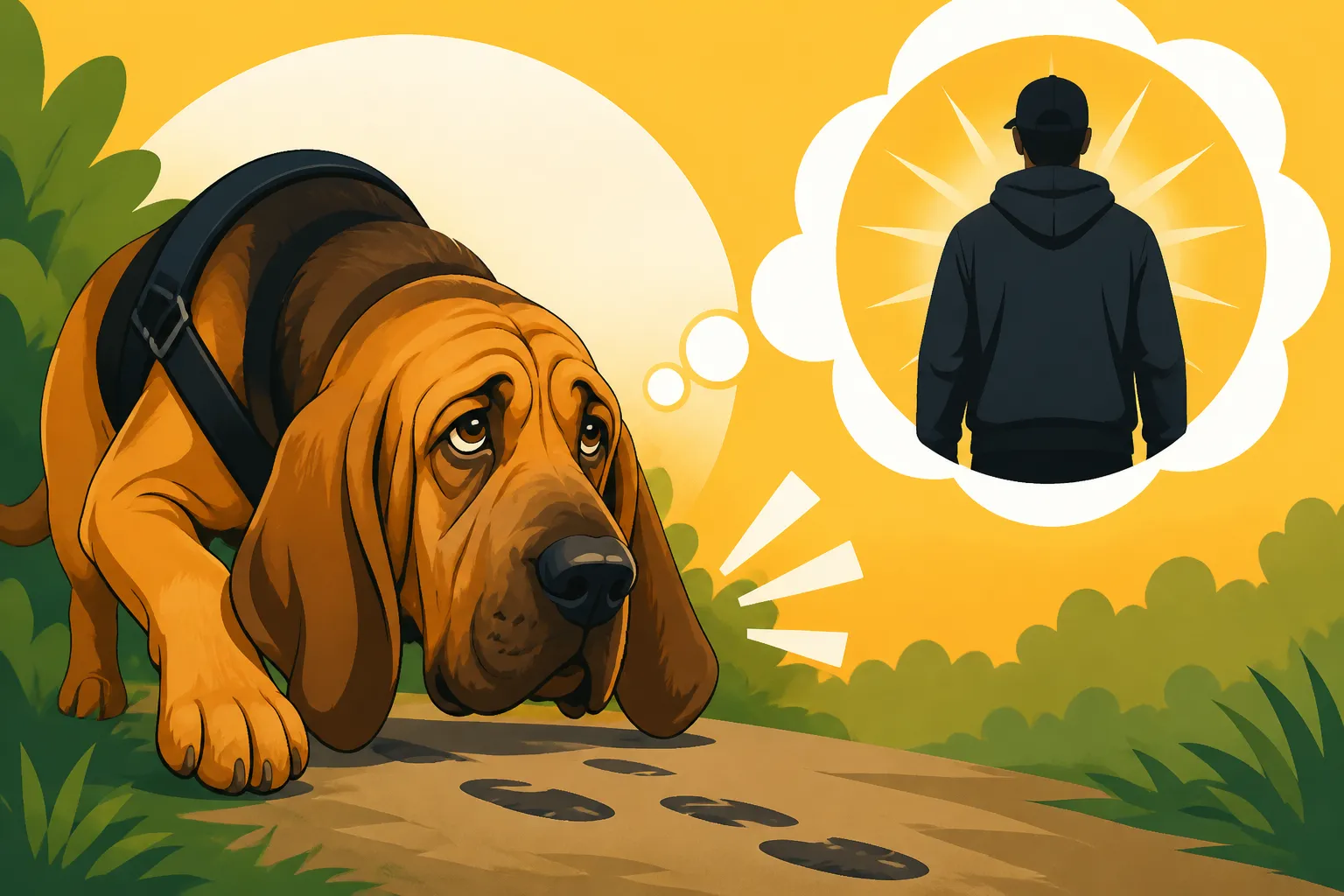
We humans tend to project our own thoughts and intentions onto our dogs, especially when they're performing such complex tasks. It's easy to imagine a Bloodhound thinking, "Ah, yes, the missing camper! I remember their scent from the shirt!" But a Bloodhound's internal world operates a little differently. Their understanding of "finding the person" is rooted deeply in their primal drive and the training that channels it, rather than a conscious, cognitive recognition in the human sense.
The Pure Drive of the Scent
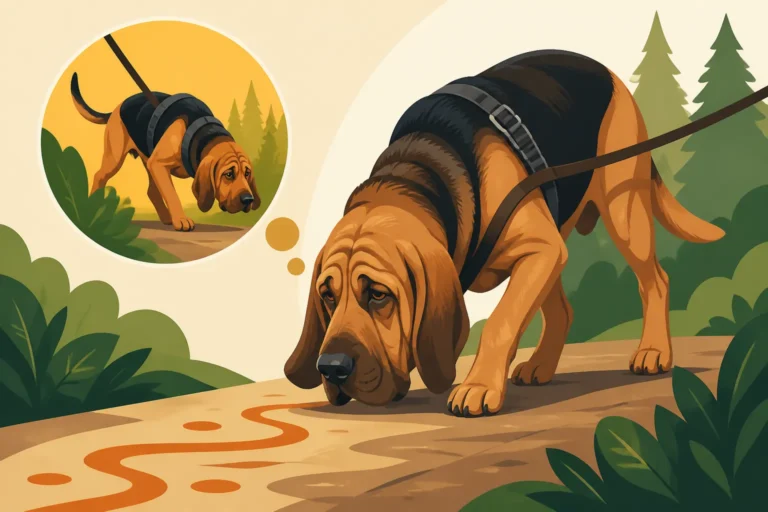
At its core, a Bloodhound is driven by scent. Not just a scent, but the scent – the specific human odor they were given to follow. For a Bloodhound, trailing is less about solving a mystery and more about engaging an incredibly powerful instinct. Think of it like a game of follow-the-leader, but the leader is an invisible trail of human skin cells, sweat, and breath. Their entire being is focused on processing that olfactory data, distinguishing it from countless other environmental smells, and moving in the direction of increasing concentration. This intense focus is why you'll often hear that A Bloodhound's Nose Outvotes Its Handler – once they're locked onto that scent, very little else matters.
This isn't to say they don't experience a thrill. The act of trailing itself is profoundly rewarding for a Bloodhound. Each successful step, each shift in wind direction that still allows them to maintain the line, is intrinsically satisfying. They are fulfilling their deepest genetic purpose. It's a continuous, dynamic process of problem-solving for them: "Where did that particular smell go next?" The end of the trail, the "find," is merely the culmination of this intensely gratifying journey. They aren't necessarily conceptualizing the person as "missing" or "in danger," but rather as the source of the irresistible trail.
What "Knowing" Really Implies for a Dog
When we ask if a Bloodhound "knows," we're usually thinking about human-level awareness. Dogs, while incredibly intelligent and emotionally rich, likely don't think in terms of complex narratives or abstract concepts like "missing." For a Bloodhound, "knowing" in the context of a find is probably more akin to reaching the end of a very compelling puzzle. They've followed the scent, and now they've arrived at the source. The excitement isn't necessarily about understanding the implications of the find, but rather the triumphant completion of their task and the anticipation of the reward that follows.
This is a crucial distinction, especially for handlers. If we expect human-like cognition, we might misinterpret our dog's cues or become frustrated when they don't act as we anticipate. Instead, understanding their instinctual drive allows us to better support them. They "know" they've found the scent source because their nose tells them, loud and clear, that this is it. The trail stops here. The intense concentration gives way to an immediate shift in focus, often directed towards the handler for recognition and reward. It’s a moment of pure canine satisfaction, a culmination of effort rather than a sudden intellectual breakthrough.
The Bloodhound's Trailing Process and the "End Game"
The process of trailing is a meticulous dance between dog, handler, and the environment. It's not a straight line, and the "end game" isn't always as dramatic as Hollywood portrays it. Understanding what actually happens when a Bloodhound reaches the end of a scent line helps clarify their perception of the "find."
Following the Scent, Not the Outcome
From the moment a Bloodhound is given a scent article, their world narrows to that specific odor. They aren't thinking about the person's identity, their predicament, or the ultimate destination. Their brain is processing an intricate tapestry of olfactory information, discriminating between the target scent and all the other smells in the environment. This relentless focus is what makes them so extraordinary. What a Bloodhound Is Actually Smelling on a Trail is far more complex than just "person smell"; it's a unique blend of individual volatile organic compounds, and the hound is literally reconstructing a path through time and space.
Imagine navigating a labyrinth where only one specific type of light guides you, and you must ignore all other lights. That's a bit like what a Bloodhound does. They follow the strongest and freshest concentration of that particular light source. When they reach the person, they don't necessarily "recognize" them as the individual whose shirt they smelled earlier. Instead, they recognize that the scent source is now immediate and overwhelming. The trail, as they perceive it, has reached its conclusion. This is why a Bloodhound can successfully trail someone they've never met before, based solely on the scent article provided.
The Role of the Handler in the Find
While the Bloodhound is the incredible nose, the handler is the brain and the bridge to the human world. The handler observes subtle changes in the dog's body language, pace, and nose work to confirm they are still on scent or if they've lost it. When the Bloodhound does reach the person, it's the handler who interprets this moment. For the dog, the "find" is primarily about the cessation of the trail and the expectation of reward. For the handler, it's the critical confirmation that the mission is accomplished.
Many experienced handlers will tell you that the Bloodhound's immediate reaction upon finding the person is usually to look back at the handler. It's a "I did it! Now where's my treat/praise/toy?" moment. This feedback loop is essential. The dog performs the task, signals completion, and receives reinforcement. It solidifies the understanding that "arriving at the source of the scent = good things happen." This handler interaction is crucial for formal search work. Whether a Bloodhound Handler Must Be Qualified to Testify in court often hinges on their ability to accurately interpret their dog's find and present it reliably. This partnership is what truly makes the Bloodhound's work actionable and valuable.
Training a Clear "Find" Indication
Since a Bloodhound's natural inclination is to simply arrive at the scent source, a clear "find" indication is something we teach them. This formal behavior allows handlers and others to unequivocally know the dog has completed its task.
Why a Specific Indication Matters
Without a trained indication, a Bloodhound might just casually sniff the person, perhaps give a gentle nudge, and then look around expectantly. While that might be clear to an experienced handler in a training scenario, it's not always precise enough for real-world applications, especially in search and rescue where legal implications can be involved, or in situations where the person found might be unresponsive or even hostile. A clear, unambiguous indication removes all doubt.
Imagine a scenario where a Bloodhound is trailing a missing person in a dense forest. They finally reach someone, but the person is unconscious. If the Bloodhound just nudges them and then sits, it might be missed by other team members. A strong, trained indication, like lying down with a paw on the person, or returning to the handler and barking, provides undeniable confirmation. It streamlines communication and ensures the vital information the dog provides is understood by everyone involved. This is especially important for public perception and the legal standing of the Bloodhound's work.
Shaping the "Find" Behavior
Training a "find" indication starts early and relies heavily on positive reinforcement. When Starting a Bloodhound Puppy on a Trail, we begin by making the "find" an incredibly exciting event. The basic principle is simple: every time the puppy reaches the "runaway" (the person they are trailing), a huge party ensues. This party often involves high-value treats, exuberant praise, and maybe a favorite toy.
Over time, you start to shape a specific behavior. For example, if you want your Bloodhound to sit or lie down next to the person, you might wait for that natural pause, reward it, and then gradually only reward more specific versions of that behavior. Many handlers encourage a "re-find" or "re-engagement" behavior where the dog physically interacts with the person. This is often done by having the person found offer the primary reward. Whether a Bloodhound Should Be Rewarded by the Person Found is a common strategy to build that strong association between the person and the positive reinforcement.
It's about consistent repetition and making the "find" the absolute best part of the entire trailing experience. You can use tools like a specific "find" command or a unique reward to mark that moment. Some handlers use a specific tug toy only for finds, or a special treat pouch. Websites like BAXTER & Bella offer online training programs that can guide new handlers through these steps, providing structured lessons on shaping desirable behaviors for scent work and general obedience. Finding the right tools is also important; you might find specialized training leashes or harnesses on Amazon that aid in clear communication during the trailing process.
Reinforcing the Success
Consistent and immediate reinforcement is key to solidifying the "find" indication. This means that every time your Bloodhound successfully performs the trained "find" behavior, they get their jackpot reward immediately. This isn't just a casual pat on the head; it should be something truly motivating for your dog. For some, it's a game of tug with their favorite toy; for others, it's a handful of delectable, stinky treats. Whether Food Is the Right Reward for a Trailing Bloodhound often depends on the individual dog, but it's a very common and effective motivator.
The excitement of the reward directly after the "find" is what tells the Bloodhound, "Yes! This is what I was supposed to do." It's a clear signal that they've correctly identified the end of the scent and communicated it to their handler. Over time, this consistent reinforcement builds a powerful association, transforming an instinctual arrival at a scent source into a reliable, observable, and reportable "find" indication. This strong reinforcement is also vital because the trail itself is so intrinsically rewarding; the "find" needs to be even more rewarding to elicit that specific, trained behavior consistently. This creates a clear signal of accomplishment, not just for the dog, but for the entire team or family waiting for news.
The Emotional Aspect: Does Your Bloodhound Feel the "Aha!" Moment?
While we've discussed the technical and instinctual aspects, it's impossible to ignore the emotional connection we have with our dogs. Does a Bloodhound experience a moment of triumph or satisfaction that aligns with our human understanding of an "Aha!" moment?
The Joy of the Chase and the Reward
A Bloodhound's life is largely governed by its nose. The world is a canvas of scent, and for them, following a trail is like reading an epic novel. The "chase" — the actual act of trailing — is deeply engaging and stimulating. It's exercise for their mind and body, and it's something they are profoundly good at. There's a visible transformation in a Bloodhound when it hits a scent and begins to work: its focus intensifies, its tail often comes up, and its gait becomes purposeful. This state, often called "working mode," is a deeply satisfying experience for the dog.
When they finally reach the person, and that intense focus shifts, there's a release of energy and a clear anticipation of the reward. This moment, when they look to their handler with bright eyes and a wagging tail, is certainly one of joy and accomplishment. It's the joy of having successfully completed a challenging task, of having worked in partnership with their human, and of receiving well-earned praise and treats. While it might not be a conscious "I saved the day!" thought, it's undoubtedly a profound sense of "I did it, and it feels good." The handler's reaction plays a huge part in amplifying this feeling, making the "find" a shared moment of triumph.
Connecting With the Person Found
For many Bloodhounds, especially those trained in search and rescue or as therapy dogs, there's also an element of connection with the person found. Bloodhounds are generally gentle, affectionate dogs, and after the intense focus of the trail, interacting with a human can be another form of reward. This is often where the "meet and greet" aspect of a find comes in, particularly if the person found is able to participate.
If the person found offers praise, a gentle pet, or even the reward, it can further enhance the Bloodhound's positive association with the "find." This interaction, especially if the person is responsive and friendly, can be very gratifying for the dog, adding another layer to their understanding of the event. It reinforces the idea that the end of the scent line leads not just to a reward from the handler, but also to positive human interaction. This is why some handlers train their Bloodhounds to engage gently with the person, perhaps licking their hand or leaning into them, further cementing that bond.
Here’s a simple table summarizing how a Bloodhound's "knowing" differs from a human's:
| Aspect | Human Perception of "Knowing" | Bloodhound's Reality of "Knowing" |
|---|---|---|
| Cognitive Level | Conscious understanding, problem-solving, abstract thought | Instinctual drive, pattern recognition, sensory processing |
| Motivation | Purpose, duty, empathy, intellectual satisfaction | Scent drive, intrinsic reward of trailing, expectation of reward |
| "Aha!" Moment | Sudden realization, mental breakthrough | Completion of task, arrival at scent source, release of focus |
| Outcome Focus | Saving a life, solving a mystery, finding a specific person | Reaching the end of the specific scent trail |
| Communication | Verbal announcement, explanation | Trained indication (sit, lie down, return), body language |
Ultimately, whether a Bloodhound "knows" it has found the person is a nuanced question. They don't conceptualize it in human terms, but they absolutely know they've reached the end of the specific scent line they were asked to follow. Their immense satisfaction comes from the work itself and the reward for completing it, a simple yet powerful truth that underlies their incredible abilities. This understanding allows us to appreciate their innate genius without projecting our own complexities onto them, celebrating them for the pure, driven scent hounds they are.
Disclaimer
This article is for general informational purposes only and does not constitute professional advice. Laws, prices and regulations vary by location and change over time. Consult a qualified professional for guidance on your specific situation.