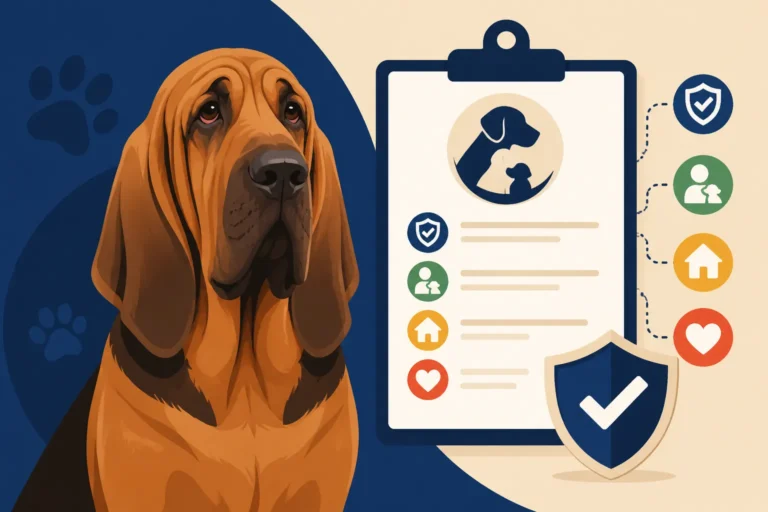
Whether a Bloodhound Breeder Places Puppies by Nose Drive
It’s a common misconception, when you’re looking for a Bloodhound puppy, to think that breeders are trying to sort out puppies based on some kind of "nose drive meter." You might imagine them holding a little gizmo up to each puppy's nose, or watching them trail a crumpled sock, and then labeling them "high drive," "medium drive," or "pet quality." The truth is a little more nuanced, and probably more reassuring, than that.
The idea that a breeder is simply categorizing puppies solely by their "nose drive" to place them in homes, whether for working or pet purposes, isn't quite how it works in the real world. While every Bloodhound is born with an incredible nose, and that instinct will manifest, reputable breeders are actually looking at a much broader picture of each puppy's temperament, health, and overall suitability for a family, not just a single, isolated trait like "nose drive intensity." They're trying to make the best match for a lifetime, and that means considering the whole dog and the whole prospective family.
Understanding "Nose Drive" in the Bloodhound Puppy
When we talk about "nose drive" in a Bloodhound, we're really talking about their innate, powerful instinct to follow a scent trail. It's not just a hobby for them; it's a profound, almost obsessive compulsion. This isn't a trait that's optional for a Bloodhound; it's fundamental to their very being. You can no more take the nose drive out of a Bloodhound than you can take the "bark" out of a Beagle. They were bred for centuries to do one thing exceptionally well: follow a trail, sometimes for miles, over varied terrain, ignoring every other distraction.
This incredible drive is precisely what makes them legendary as trailing dogs, capable of following trails days old, distinguishing individual human scent in a crowd, and even having their work accepted as evidence in court. For a Bloodhound, the world is a tapestry of smells, and following a particularly interesting thread is the highest calling. This is why you'll often hear that A Bloodhound's Nose Outvotes Its Handler – because when they're locked onto a scent, little else matters.
So, when we consider a Bloodhound puppy, it's not a question of if it has nose drive, but rather how that drive integrates with its overall personality and energy levels. Some puppies might be bolder in their explorations, others more methodical. Some might be easily distracted by their littermates but quickly return to a scent, while others might focus intensely from the get-go. These nuances are what a breeder observes, rather than a simple on/off switch for "nose drive."
For the average pet owner, "nose drive" doesn't mean you need to be a professional search and rescue handler. It means understanding that your Bloodhound will be driven by scent and planning your life and training around that fact. It means secure fencing, long lines, and a commitment to safe, structured exercise. It doesn't necessarily dictate whether they're "too much dog" for you, but rather how you adapt your lifestyle to meet their fundamental needs. You can explore activities like Mantrailing Is the Answer to a Bloodhound, Not Obedience to fulfill this instinct.
How Breeders Assess Puppies for Placement
Reputable Bloodhound breeders don't just randomly assign puppies. They invest a tremendous amount of time in observing and interacting with each puppy from birth. Their goal is to find the most suitable home for each individual dog, ensuring both the puppy and the new family will thrive together. This is a complex puzzle, not a simple matching game based on one trait.
Beyond the Nose: Temperament Testing and Observation
While a breeder certainly notices a puppy's keen interest in scent, they're looking at a holistic picture of temperament. This often includes formal or informal "puppy tests" around 7-8 weeks of age, which assess various aspects of their personality. These tests might evaluate:
- Social Attraction: How readily the puppy approaches a stranger.
- Following: Whether the puppy follows when walked away from.
- Restraint: How the puppy reacts to being gently restrained.
- Social Dominance: How the puppy reacts to being gently rolled onto its back.
- Elevation: How the puppy reacts to being picked up.
- Retrieving: The puppy's willingness to retrieve a toy.
- Sound Sensitivity: How the puppy reacts to a sudden, loud noise.
- Sight Sensitivity: How the puppy reacts to a strange, moving object.
- Stability: Their reaction to an unstable surface.
These tests, combined with daily observations of how the puppies interact with their littermates, their mother, and humans, give the breeder a well-rounded understanding of each puppy's confidence, independence, playfulness, and general energy level. They're looking for the quiet observer, the playful instigator, the bold adventurer, and the sensitive soul. A puppy that's confident and independent might be a great candidate for a working home, whereas a more reserved puppy might do best in a calmer pet environment.
Matching to Lifestyle, Not Just Trailing Potential
The breeder's primary aim isn't just to identify "the best tracker." For pet homes, their goal is to match a puppy with a family whose lifestyle, experience, and expectations align with that particular puppy's temperament. For example, a family that wants a quiet couch potato will be steered away from a rambunctious, high-energy puppy, regardless of its nose drive. Similarly, a first-time dog owner might do better with a more laid-back, adaptable puppy.
A breeder will consider many factors from your application and conversations:
- Your experience with dogs, especially large breeds or hounds: Are you prepared for the unique challenges of a Bloodhound?
- Your living situation: Do you have a securely fenced yard? What kind of neighborhood do you live in?
- Your family dynamics: Do you have young children or other pets?
- Your activity level: Are you an active family who enjoys long walks and outdoor adventures, or are you looking for a more sedentary companion? How Much Exercise a Bloodhound Actually Needs might surprise you.
- Your goals for the dog: Are you looking for a family pet, a potential show dog, or do you have aspirations for search and rescue or mantrailing?
They are essentially trying to predict how well a specific puppy's entire personality will integrate into your home. They understand that a puppy with an incredibly strong "nose drive" but a highly sensitive personality might be overwhelmed in a chaotic, busy household, even if the family wants to do scent work.
The Breeder's Matching Process: Finding the Right Fit
The process of matching a Bloodhound puppy to its forever home is less about a scientific measurement of "nose drive" and more about art, experience, and intuition. Breeders spend countless hours with their litters, getting to know each individual puppy's quirks and personality. They combine this deep understanding with the information gathered from prospective owners to make the best possible recommendations.
Holistic Assessment for a Lifetime Match
Think of it this way: all Bloodhounds have an incredible nose, but just like people, they have different personalities. Some might be more boisterous and confident, others more thoughtful and gentle. A breeder wants to ensure that the puppy's inherent tendencies align with the family's ability to provide a suitable environment and training.
For instance, a breeder might have a puppy who consistently shows incredible focus on scent, a real "working prospect." If a family has applied specifically for search and rescue work, and they have the experience and facilities to foster that drive, that puppy might be an ideal match. But if that same puppy is also extremely independent and needs a firm, consistent hand, they wouldn't place it with a first-time owner looking for a mellow companion, even if that owner expressed vague interest in "nose work." Similarly, a puppy who is generally calmer and more interested in human interaction than always having its nose to the ground might be perfect for a family seeking a loving, albeit still scent-driven, pet.
Breeders understand that even the most "nose-driven" Bloodhound needs to be a well-adjusted, happy member of a family. They are looking for a complete picture, not just a single trait. They know that Why a Bloodhound Ignores a Cue It Knows often comes down to conflicting drives and priorities, and they want to set both puppy and owner up for success.
Working with Your Breeder: Communication is Key
This is where your honesty and openness with the breeder become paramount. Don't tell them what you think they want to hear. Instead, be completely transparent about your lifestyle, your experience, your expectations, and any concerns you might have. If you dream of doing professional search and rescue, say so. If you just want a loving companion who might enjoy some fun scent games in the backyard, communicate that too.
A good breeder will guide you, providing insights into the breed and their specific puppies. They will often ask follow-up questions to clarify your home environment, how much time you can dedicate to training and exercise, and your understanding of common Bloodhound traits like baying and drooling. They might even suggest resources for training or warn you about potential health considerations common to the breed, such as Bloat Is What Kills Most Bloodhounds or The Four Eye Problems a Bloodhound Is Born Toward.
Here’s a simplified look at what a breeder considers and how it might influence placement:
| Puppy Trait/Behavior | Potential Indicator For | Considerations for Placement |
|---|---|---|
| Highly independent, persistent on scent | Strong working potential | Best for experienced owners dedicated to formal scent work (e.g., Starting a Bloodhound Puppy on a Trail), requires consistent boundaries. |
| People-oriented, easily distracted from scent | Great family pet, less intense working potential | Good for homes wanting a companion first, may still enjoy casual scent games. |
| Confident, bold, resilient to novelty | Good for public work, adaptable to different environments | Suited for active, outgoing families, potentially therapy or education work. |
| Reserved, sensitive to loud noises/new situations | Needs calm, predictable environment | Ideal for quieter homes, single-person households, less busy family dynamics. |
| High energy, boisterous play | Needs active family, lots of exercise opportunities | Requires owners committed to daily physical and mental stimulation (e.g., How Much Walking a Bloodhound Needs Daily). |
| Mellow, easygoing, enjoys lounging | More laid-back pet, may still enjoy walks | Suited for less active families, but still needs structured outings. |
This table illustrates that while nose drive is inherent, it's the combination of traits that helps a breeder make an informed decision. They want to ensure the specific puppy's temperament matches what you can realistically offer and manage.
The Role of Contextual Brands in Your Puppy Journey
As you prepare for a Bloodhound puppy, you'll inevitably consider how to support their unique needs. Many owners find value in pet insurance for peace of mind, especially with a breed prone to specific health issues. Companies like Healthy Paws offer various plans that can help manage unexpected veterinary costs, which, let's be honest, can be significant for a large breed with potential health challenges. It’s always smart to have a plan for the unexpected.
For daily essentials, online retailers like Chewy are fantastic resources. You can stock up on large breed puppy food, sturdy leashes and harnesses (remember, Why Off Leash Is Not a Goal With a Bloodhound means you'll need reliable gear), and plenty of puzzle toys to engage that amazing nose. They'll also have a range of supplies for keeping those long ears clean, which is a constant task with a Bloodhound.
Some owners even choose to explore different food options. While traditional kibble is fine for many, others opt for fresh food delivery services like Ollie. These can provide tailored nutrition, and for a growing Bloodhound puppy, ensuring they get all the right nutrients without over-supplementing is crucial, especially concerning issues like proper bone development where Whether a Bloodhound Puppy Needs Restricted Calcium is an important consideration. Ultimately, the best choice depends on your budget and your dog's individual needs, but having options is always a plus.
Why a Breeder Might Not Prioritize "Nose Drive" Alone
It’s tempting to think that the "best" Bloodhound puppy is the one with the strongest nose drive, especially if you're drawn to the breed's legendary trailing abilities. However, a responsible breeder understands that even for a working prospect, nose drive is only one piece of a much larger puzzle. For pet homes, other factors often outweigh a singular focus on scenting prowess.
Health and Longevity Come First
No matter how talented a Bloodhound's nose, it's meaningless if the dog isn't healthy. Reputable breeders prioritize health above all else. They perform extensive health screenings on their breeding stock for conditions common in Bloodhounds, such as hip and elbow dysplasia, eye issues, and certain heart conditions. They want to produce dogs that live long, healthy lives. A puppy with the most incredible nose drive but a predisposition to debilitating genetic conditions is not a desirable outcome for any responsible breeder or owner.
This is why, when looking for a puppy, you should always inquire about the health testing of the parents. This foundational health is more critical than pinpointing the "most driven" puppy, especially if your goal is a beloved family member. What a Health Tested Bloodhound Puppy Costs reflects this investment in future health.
Temperament and Compatibility for a Pet Home
For the vast majority of Bloodhound puppies, their future lies as cherished family pets. In these homes, temperament, stability, and compatibility with the family's lifestyle are far more important than raw nose drive intensity. A dog that is fearful, overly anxious, or has significant behavioral issues, even if it could follow a scent to the ends of the earth, would not make a good pet.
Breeders strive to produce Bloodhounds with sound temperaments – dogs that are gentle, affectionate, and resilient. They are looking for puppies that will adapt well to a home environment, interact positively with children (if applicable, consider A Bloodhound in a House With Small Children), and be a joy to live with. They know that a Bloodhound needs to be more than just a nose; it needs to be a companion.
The Realistic Demands of Trailing Work
Even for those truly dedicated to serious trailing work, simply having a "high drive" puppy isn't enough. Professional trailing requires extensive training, dedication, and a deep understanding of scent work principles. A puppy might show incredible potential, but it needs an equally dedicated handler to nurture that potential. The breeder’s role is to identify potential, but the owner’s role is to develop it.
Furthermore, many aspects of a Bloodhound's personality are equally important for working homes: trainability, focus, ability to work under pressure, social skills, and resilience to various environments. A dog that is too easily stressed or lacks confidence might not excel in search and rescue, regardless of its nose drive. How Long a Bloodhound's Attention Lasts in a Session is a key factor here.
In conclusion, while every Bloodhound breeder acknowledges and respects the breed's incredible nose drive, placing puppies is a nuanced process that prioritizes health, overall temperament, and the best possible match for a lifetime. They're not just sorting noses; they're matching hearts and souls to homes.
Disclaimer
This article is for general informational purposes only and does not constitute professional advice. Laws, prices and regulations vary by location and change over time. Consult a qualified professional for guidance on your specific situation.