Whether a Bloodhound Insurer Excludes Eyelids as Congenital
One of the biggest worries for any Bloodhound owner is ensuring their beloved hound stays healthy, and that means being prepared for potential health challenges. When it comes to those soulful, droopy eyes Bloodhounds are famous for, there's a particular concern that often surfaces: will pet insurance cover the common eyelid issues our hounds are prone to, or will they be excluded as "congenital"? It's a question that keeps many of us up at night, wondering if we're truly protected. This guide is here to shed light on how pet insurance companies typically view these conditions, what terms like "congenital" and "hereditary" really mean in policy language, and how you can best prepare for your Bloodhound's eye health needs.
Understanding Bloodhound Eyelid Conditions and Their Genetic Link
Bloodhounds are distinct, and much of that distinctiveness comes from their famously loose skin and characteristic "haw," the visible lower eyelid. While these traits are part of their charm and critical for their scenting abilities, they also unfortunately predispose them to a range of eye conditions that can be both painful and costly to treat. It's not just cosmetic; these conditions can severely impact their vision and comfort.
Common Eyelid Issues in Bloodhounds
Bloodhounds frequently encounter several specific eye conditions due to their unique facial structure. These aren't random occurrences; they are often deeply rooted in the breed's genetics and physical conformation. Understanding them is the first step to advocating for your dog and navigating insurance.
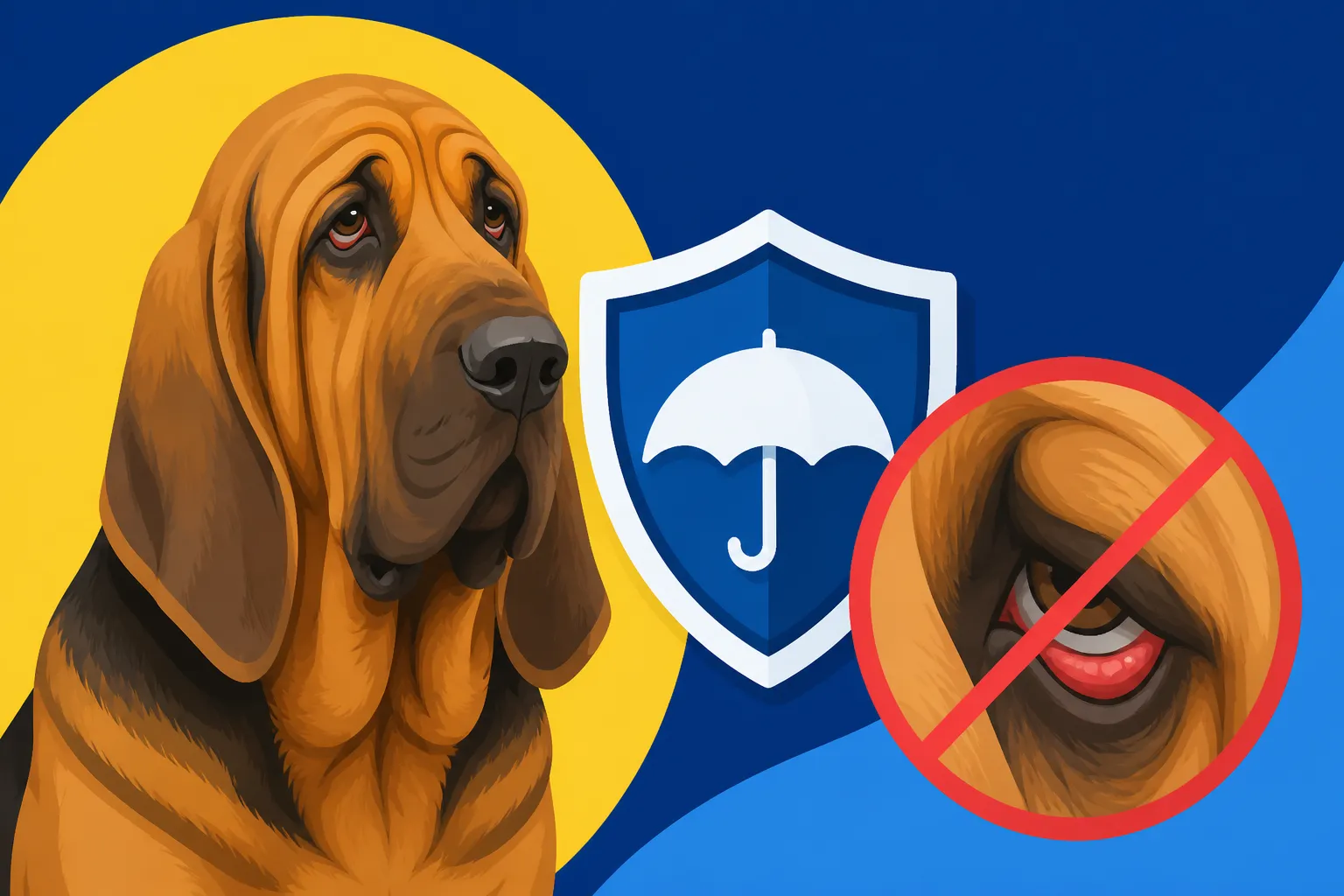
Ectropion is perhaps the most commonly recognized issue. It's when the lower eyelid rolls outward, exposing the delicate conjunctiva and the haw. This isn't just about the "sad dog" look; it leaves the eye vulnerable to dust, debris, and infection. Imagine walking through a dusty field with your eyes constantly open, unable to fully blink or protect them. That's a daily reality for a Bloodhound with significant ectropion. Left untreated, it can lead to chronic irritation, infection, and even corneal damage. If you've ever seen a Bloodhound with excessive tearing and red, irritated lower lids, chances are you're looking at ectropion. What Ectropion Looks Like on a Bloodhound gives a clear visual of this.
Then there's entropion, which is almost the opposite problem but equally, if not more, painful. With entropion, the eyelid rolls inward, causing the eyelashes and fur to rub directly against the cornea. Every blink becomes an abrasive action. Think of having an eyelash permanently poking your eye – now imagine dozens of them. This constant rubbing can lead to corneal ulcers, scarring, and even blindness if not corrected promptly. You might notice your Bloodhound squinting, tearing excessively, or trying to rub their face a lot. This condition is usually present from a young age, and severe cases in puppies are heartbreaking to witness. Learn more about its effects in What Entropion Does to a Bloodhound's Eye.
Cherry eye is another condition that can pop up. This happens when the gland of the third eyelid prolapses, appearing as a red, swollen mass in the inner corner of the eye, resembling a cherry. While not as painful as entropion, it's certainly uncomfortable and can obstruct vision. It's a visible disruption to their eye, and while it might seem alarming, it's a common issue across many breeds with specific facial structures. Cherry Eye in a Bloodhound goes into more detail about this particular problem.
Finally, dry eye, or Keratoconjunctivitis Sicca (KCS), can affect Bloodhounds. This is when the tear glands don't produce enough tears to keep the eyes moist, leading to dry, irritated eyes. It might seem less dramatic than a prolapsed gland or an inverted eyelid, but chronic dryness can be debilitating, causing discomfort, recurring infections, and ultimately, damage to the cornea. Dogs with dry eye often have thick, ropey discharge and very red eyes. Dry Eye in a Bloodhound explains the condition further.
Why Bloodhounds Are Prone to These Conditions
It's not bad luck that so many Bloodhounds develop these eye problems; it's by design, or rather, by breed standard. Their distinctive features, while beautiful and functional for trailing, directly contribute to their vulnerability.
The loose skin that gives a Bloodhound its magnificent wrinkles and characteristic expression is a double-edged sword. This abundance of skin, especially around the face and head, means there's less tension holding the eyelids snugly against the eyeball. For centuries, breeders selected for these traits because the long, pendulous ears and deeply wrinkled skin help to "cup" scent particles towards their incredibly sensitive noses. This facial structure is intrinsically linked to their legendary scenting abilities. However, the same features lead directly to problems like ectropion and entropion. The weight and looseness of the skin just pull the eyelids out or allow them to roll in. It's not a flaw in an individual dog, but rather an inherent predisposition of the breed itself. This is why these are often considered hereditary conditions, even if not strictly congenital (present at birth) in every case.
The deep-set eyes, combined with the characteristic "haw" that often shows, also means that the delicate ocular surface is more exposed to the elements. Their eyes aren't as protected as breeds with tighter eyelids. Think about how exposed Why a Bloodhound's Lower Lid Hangs Away From the Eye makes their eyes. This constant exposure naturally increases the risk of irritation, foreign bodies, and subsequent infection, especially in an active dog that loves to stick its nose to the ground. Essentially, the very features that make a Bloodhound a Bloodhound are also the source of some of their most frequent health woes. This reality is why early detection and proactive care, often including surgery, are so important for these dogs. When a Bloodhound's Eyelids Need Surgery details why intervention is often necessary.
Decoding Pet Insurance: Congenital vs. Hereditary
This is where things can get confusing, and understandably frustrating, for pet owners. The terms "congenital" and "hereditary" are often used interchangeably in everyday conversation, but for pet insurance companies, they carry distinct legal and financial meanings that directly impact your coverage. It's not just semantics; it's about whether you'll be paying out of pocket for a major surgery or if your policy will step in.
What "Congenital" Truly Means to Insurers
In the world of pet insurance, a "congenital" condition is one that is present at birth, regardless of whether it manifests symptoms immediately. It's a structural or functional anomaly that the animal was born with. Think of a heart defect that a puppy has from day one, even if it's not diagnosed until later in life. That defect was congenital.
For many insurance policies, congenital conditions are treated similarly to pre-existing conditions if they are diagnosed before or during the waiting period of your policy. If a Bloodhound puppy has a visible ectropion at 8 weeks old when you get them, and you then enroll them in insurance, that ectropion is almost certainly going to be considered a pre-existing condition, even if you hadn't formally diagnosed it yet. Why? Because the signs were evident.
However, some very specific and often more expensive "wellness" or "enhanced" plans might offer limited coverage for some congenital conditions if diagnosed after the waiting period and if it's not considered a pre-existing condition. This is rare and highly specific. Most standard accident and illness policies will exclude conditions that are identified as congenital and were present before or during the waiting period. It really boils down to WHEN the condition was first observed or diagnosed, not when it originated genetically. This distinction is crucial for Bloodhound owners, as conditions like ectropion can be evident quite early.
The Nuance of Hereditary Conditions
Hereditary conditions, on the other hand, are genetically transmitted from parents to offspring. They are inherited. Not all hereditary conditions are congenital. For instance, hip dysplasia is hereditary in many breeds, including Bloodhounds, but a puppy isn't born with diagnosable hip dysplasia; it develops over time due to genetic predisposition and environmental factors. Another example is certain cancers or thyroid issues that might not appear until a dog is middle-aged or senior. Hip and Elbow Dysplasia in the Bloodhound are prime examples of hereditary conditions that develop over time.
This is a key area where pet insurance companies differentiate themselves. Many comprehensive pet insurance providers, such as Healthy Paws, do cover hereditary conditions, provided they are not pre-existing conditions (meaning no symptoms or diagnosis before enrollment or during the waiting period). This is a significant benefit for Bloodhound owners, as many of the breed's common health issues, including those eye conditions, fall under the hereditary umbrella. The key takeaway here is timing. If you enroll your Bloodhound puppy in a good policy before any signs of ectropion or entropion emerge, and these conditions later manifest, a policy that covers hereditary conditions should provide coverage.
Pre-existing Conditions: The Biggest Hurdle
Regardless of whether a condition is classified as congenital or hereditary, the true gatekeeper to insurance coverage is often the "pre-existing condition" clause. This is the biggest hurdle pet owners face. A pre-existing condition is generally defined as any illness or injury that your pet showed signs of, or was diagnosed with, before the enrollment date of your policy or during its waiting period.
For Bloodhounds and their expressive, often problematic, eyes, this means if your puppy has tear staining and redness that's clearly indicative of ectropion, or if they are squinting because of entropion before your policy's waiting period is over, then any treatment for those specific eye conditions will likely be excluded. Even if a vet hasn't officially diagnosed it, if there were "clinical signs," it can be denied.
This is why getting pet insurance when your Bloodhound is a young puppy, with no observable health issues, is so vital. It’s a proactive step to ensure that any hereditary conditions that crop up later in life – including those troublesome eyelid issues – will be covered, provided your policy includes hereditary conditions. This is a common point of frustration for owners who purchase insurance after their dog starts showing symptoms, only to find themselves paying out of pocket. Whether a Bloodhound's Ectropion Counts as Pre Existing directly addresses this concern, highlighting the importance of understanding the fine print.
Navigating Insurance Coverage for Your Bloodhound's Eyes
Understanding the definitions is one thing; successfully navigating the actual policies and making informed choices is another. It can feel like a maze, but with a bit of foresight and careful reading, you can significantly improve the chances of your Bloodhound's eye conditions being covered.
The Timing of Your Policy Purchase
This cannot be stressed enough: the single most important factor in securing coverage for your Bloodhound's hereditary eye conditions is enrolling them in pet insurance before any symptoms appear. Ideally, this means insuring your Bloodhound puppy as soon as you bring them home, often around 8-10 weeks old, or even earlier if the policy allows.
Most pet insurance policies have waiting periods – a period of time (typically 14-30 days for illnesses) after you enroll before coverage for certain conditions begins. If your Bloodhound shows any signs of an eye condition during this waiting period, even if it wasn't present when you first signed up, it can still be deemed pre-existing. This waiting period varies by insurer, and it's something you absolutely need to clarify upfront.
Imagine you get your 10-week-old Bloodhound puppy, "Barnaby." He looks perfectly healthy. You sign him up for insurance, and there's a 14-day waiting period for illnesses. On day 10 of that waiting period, you notice Barnaby's lower lids are starting to sag a bit more than you thought, and his eyes are a little red. You take him to the vet on day 15, and the vet diagnoses early ectropion. Because the signs appeared during the waiting period, even if the diagnosis was just outside it, the insurance company might still consider it pre-existing. This scenario is why enrolling as early as possible and understanding those waiting periods is paramount. Providers like Healthy Paws are known for their comprehensive coverage, but even they have waiting periods that need to be respected. It’s always best to get coverage when your pup is young and healthy.
What to Look for in a Policy's Terms and Conditions
Reading the fine print of any insurance policy is usually tedious, but with a Bloodhound, it's absolutely essential. Don't just skim over the brochure; dive into the actual policy documents. Here are specific things to pay close attention to:
- Definition of Congenital and Hereditary Conditions: How does the policy define these? Are hereditary conditions covered? Most reputable companies will cover hereditary conditions as long as they aren't pre-existing. Confirm this explicitly.
- Waiting Periods: Understand the waiting periods for accidents, illnesses, and especially for orthopedic conditions, as sometimes eye issues can be linked to other structural concerns.
- Exclusions: Are there specific breed exclusions? While rare for common conditions, some policies might have unexpected carve-outs. Are cosmetic procedures excluded? Eyelid surgeries are often deemed medically necessary, but it's worth checking.
- Bilateral Conditions Clause: Some policies will state that if one eye develops a condition (e.g., entropion) that is known to be bilateral (meaning it commonly affects both eyes), and the other eye develops it later, the second eye's treatment might be considered pre-existing if it occurs before or during the waiting period. This is particularly relevant for Bloodhounds' eye conditions.
- Reimbursement Method and Deductible: This affects your out-of-pocket costs. Do they reimburse based on the actual vet bill or a "usual and customary" rate? What's your deductible, and is it per incident or annual?
- Direct-to-Vet Pay Options: While less common, some insurers or platforms might offer direct payment to vets, reducing your upfront cost. Companies that partner with pet insurance providers, like Chewy, can often give you access to a range of plans, so it's worth exploring the specifics they offer.
Don't be afraid to call the insurance provider directly and ask very specific questions about Bloodhound eye conditions before you sign up. Provide hypothetical scenarios: "If my 12-week-old Bloodhound puppy shows no signs of ectropion now, but develops it at 6 months, will it be covered?" Get clarity in writing if possible.
When a Condition Might Be Covered (and When It Won't Be)
Let's break down some typical scenarios for coverage:
Likely to be Covered:
- Your Bloodhound puppy is enrolled in a comprehensive policy at a young age, well before any clinical signs of ectropion, entropion, cherry eye, or dry eye are noted by a vet or by you.
- The policy specifically states it covers hereditary and breed-specific conditions, provided they are not pre-existing.
- The condition develops after all waiting periods have been fully satisfied, and no clinical signs were recorded before or during that period.
- The necessary surgery or medication (like eye drops for dry eye) is considered medically necessary by your veterinarian.
Unlikely to be Covered:
- You enroll your Bloodhound after they have already been diagnosed with an eye condition.
- Your Bloodhound shows clear clinical signs (e.g., constant squinting, obvious sagging eyelids, red "cherry" in the eye, excessive discharge) before or during the policy's waiting period, even if a formal diagnosis isn't made until later.
- The policy explicitly excludes hereditary or breed-specific conditions, which is rare for reputable insurers but possible with cheaper, more basic plans.
- The procedure is deemed purely cosmetic, though most ectropion/entropion surgeries are considered medically necessary.
- You try to insure an older Bloodhound that has already had these conditions or exhibited their symptoms for a while. Whether a Bloodhound Owner Can Insure After a Bloat explores a similar challenge with a different condition, showing how difficult it is to get coverage for pre-existing issues.
It's a delicate balance, and the exact language of your chosen policy is paramount.
| Eyelid Condition | Is it Congenital? | Is it Hereditary? | Insurance Coverage Likelihood (if policy in place early) |
|---|---|---|---|
| Ectropion | Often present at birth, but can worsen. | Yes, strongly breed-linked. | High, if no pre-existing signs & policy covers hereditary. |
| Entropion | Often present at birth (sometimes mild, then worsens). | Yes, strongly breed-linked. | High, if no pre-existing signs & policy covers hereditary. |
| Cherry Eye | Not strictly congenital, but predisposition is hereditary. | Yes, breed-specific predisposition. | High, if no pre-existing signs & policy covers hereditary. |
| Dry Eye (KCS) | Rarely congenital, but predisposition can be hereditary. | Yes, some breeds have genetic link. | High, if no pre-existing signs & policy covers hereditary. |
Note: "Congenital" in this table refers to being physically present at birth. Insurance policies often treat any visible signs prior to enrollment as "pre-existing," regardless of whether the underlying condition was technically "congenital."
Proactive Steps for Bloodhound Eye Health and Insurance Planning
As a Bloodhound owner, you're signing up for a lifetime of dedicated care, and that includes being incredibly proactive about their health. Their unique anatomy demands it, and smart planning can save you a lot of heartache and money down the road.
Early Screening and Breeder Responsibility
The journey to healthy eyes for your Bloodhound often begins even before you bring them home. A responsible Bloodhound breeder will be keenly aware of the breed's predisposition to eye issues and should be taking steps to minimize these risks.
- Parental Health Clearances: While there isn't a universally recognized "eye clearance" that guarantees a puppy won't develop ectropion or entropion, ethical breeders will select breeding stock that have sound conformation and no history of severe eye issues themselves. They should be able to show you the parents' lineage and discuss any known eye problems in their lines. They are working to breed away from extreme features that lead to poor health.
- Puppy Evaluation: When you visit the puppies, carefully observe their eyes. Are they red, watery, or squinting? Do the lower eyelids droop excessively, or do the lashes appear to roll inward? A good breeder will be transparent about any mild signs and should have their vet check the puppies thoroughly. Sometimes, very young puppies might have mild ectropion that improves as they grow, but a responsible breeder will monitor this.
- Breeder Contracts and Health Guarantees: Reputable breeders often include health guarantees in their contracts. Understand what these cover regarding congenital and hereditary conditions. While they might not cover 100% of future vet bills, they often guarantee against severe genetic conditions that make a dog unlivable, and sometimes offer partial refunds or replacement puppies for certain hereditary problems that manifest early. This is an important part of What a Health Tested Bloodhound Puppy Costs – you're paying for that due diligence.
Early intervention is key. If your puppy does show signs of an eye condition, early diagnosis and treatment can prevent more severe complications down the line. Even if it means eyelid tacking (a temporary stitching procedure to hold the eyelids in place) as a puppy, it can make a big difference.
Choosing the Right Insurance Provider
This isn't a one-size-fits-all decision, especially with a breed like the Bloodhound. You need a provider that understands and caters to the specific needs of large, purebred dogs with known predispositions.
- Research Comprehensive Plans: Look for plans that are specifically known for covering hereditary and breed-specific conditions. Providers like Healthy Paws are often highly rated for their comprehensive coverage, which typically includes hereditary conditions as long as they aren't pre-existing. They tend to have straightforward policies regarding what's covered.
- Compare Policy Details: Don't just look at the premium. Compare deductibles (annual vs. per incident), reimbursement percentages (70%, 80%, 90%), and annual limits. A higher premium might mean better coverage and lower out-of-pocket costs when a big bill comes in, which is often the case with Bloodhound surgeries.
- Read Reviews and Talk to Other Bloodhound Owners: Fellow Bloodhound enthusiasts are often the best resource. They can share their experiences with different insurance providers and their handling of specific breed issues. Online communities and breed clubs are great places to gather this kind of real-world feedback.
- Consider What's Not Covered: While this article focuses on eye issues, remember that Bloodhounds have other significant health concerns, particularly Bloat Is What Kills Most Bloodhounds. Ensure your chosen policy also provides good coverage for emergency situations like bloat surgery. What Emergency Bloat Surgery Costs on a Bloodhound is a sobering read that underlines the necessity of comprehensive coverage.
- Explore Options Through Retailers: Many online pet retailers, like Chewy, partner with various pet insurance companies to offer a range of plans. This can be a convenient way to compare multiple providers in one place and find a policy that fits your budget and your Bloodhound's needs.
Don't settle for the cheapest plan if it means sacrificing coverage for the very issues your Bloodhound is likely to face. The cost of a few years of higher premiums pales in comparison to the Eyelid Surgery Is the Bill Bloodhound Owners Do Not Expect if it's not covered.
Daily Care to Mitigate Risks
While insurance is about financial protection, daily care is about prevention and comfort. You can't change your Bloodhound's genetics, but you can actively manage their environment and hygiene to reduce the severity and frequency of eye problems.
- Regular Eye Cleaning: Because their eyes are more exposed and prone to tearing, daily or every-other-day cleaning is vital. Use a soft, damp cloth or a veterinarian-approved eye-cleaning solution to gently wipe away any discharge or debris. This helps prevent irritation and infection. Daily Eye Care for a Bloodhound is a must-read for all owners.
- Keep Folds Clean and Dry: The loose skin around their eyes and muzzle can trap moisture, dirt, and bacteria, leading to skin fold dermatitis, which can exacerbate eye issues. Regularly wipe and dry their facial folds.
- Monitor for Signs of Irritation: Be vigilant. Watch for redness, excessive tearing, squinting, rubbing at the face, or any changes in their eye appearance. Early detection means earlier treatment and potentially less severe outcomes.
- Protect Eyes During Activity: If your Bloodhound is out trailing in dense brush or dusty areas, consider if temporary eye protection (like doggles) might be appropriate, especially if they already have mild ectropion.
- Balanced Nutrition: While nutrition won't prevent genetic eye conditions, a high-quality, balanced diet supports overall health and a strong immune system, which can help your dog better cope with and recover from any health challenges. Companies like Ollie offer fresh, customized meal plans that contribute to your dog's general well-being. A healthy dog is often better equipped to handle medical interventions and recovery.
By combining proactive insurance planning with diligent daily care and working with a responsible breeder, you can give your Bloodhound the best possible chance at a comfortable, healthy life, ensuring those beautiful, expressive eyes remain as bright as their spirit.
Disclaimer
This article is for general informational purposes only and does not constitute professional advice. Laws, prices and regulations vary by location and change over time. Consult a qualified professional for guidance on your specific situation.