Feeding and Handling an Old Bloodhound
Senior Bloodhounds face unique physical changes starting at age six. Learn proper feeding and handling methods for older dogs.
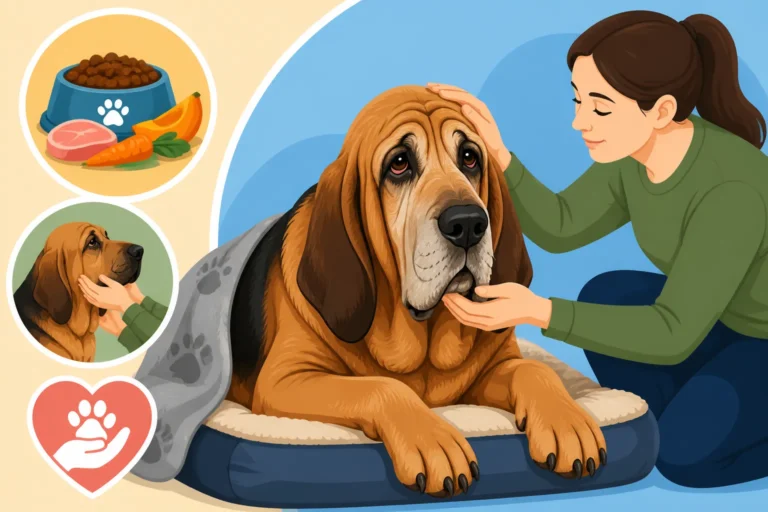
Senior Bloodhounds face unique physical changes starting at age six. Learn proper feeding and handling methods for older dogs.

Bloodhound daily eye care prevents dust and debris buildup in droopy lower eyelids and exposed pink membranes caused by ectropion.
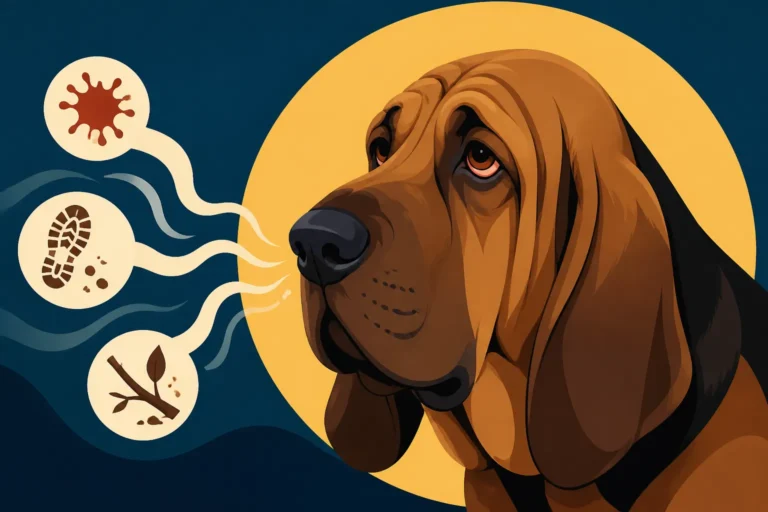
Bloodhound skin folds, loose flews, and long pendulous ears trap moisture and microbes, producing a distinct musky odor.

Bloodhound grooming requirements include daily ear care, skin fold cleaning, and management of oils beneath the short coat.
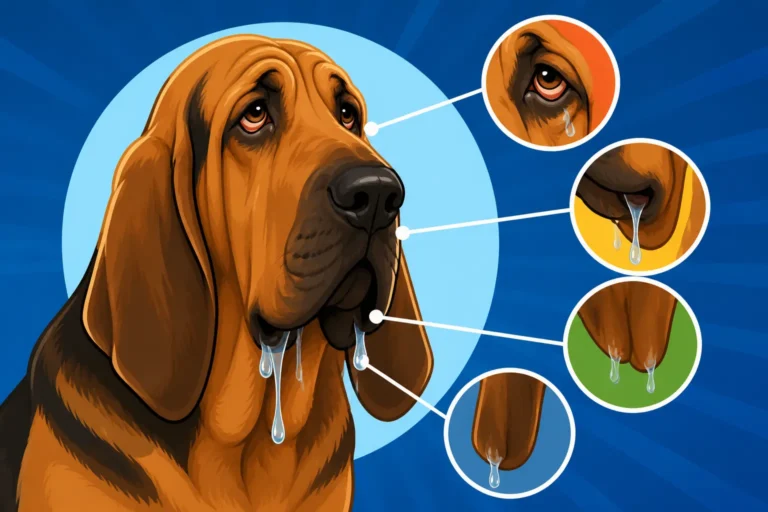
Bloodhound saliva accumulation and dispersion explains how loose jowls and head shakes spread drool across home surfaces.
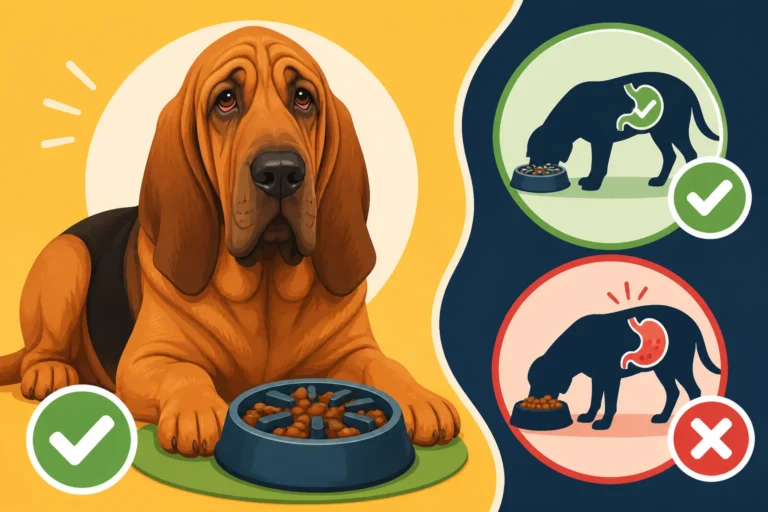
Bloodhound feeding strategies and daily habits help prevent gastric dilatation volvulus, a life-threatening deep chest emergency.
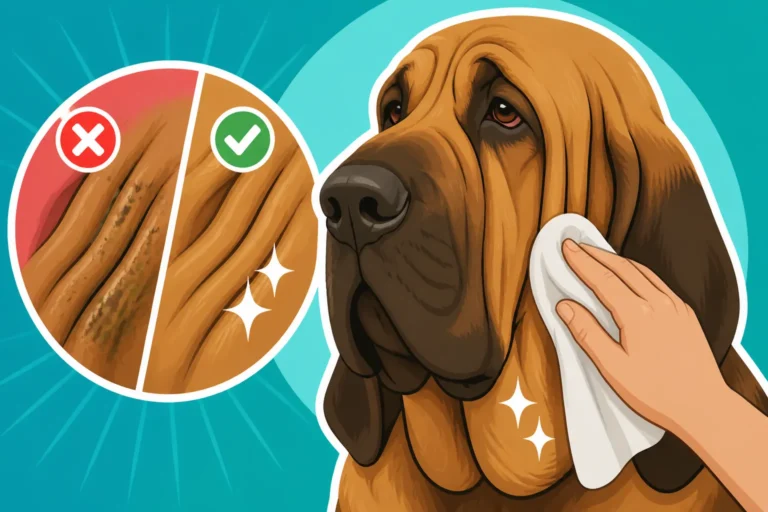
Bloodhound skin folds trap moisture and dirt, causing sour odors, irritation, and painful infections if owners do not clean them.

Bloodhound ear anatomy causes messy feeding and health risks, explaining practical cleaning solutions and fabric snoods to prevent infections.
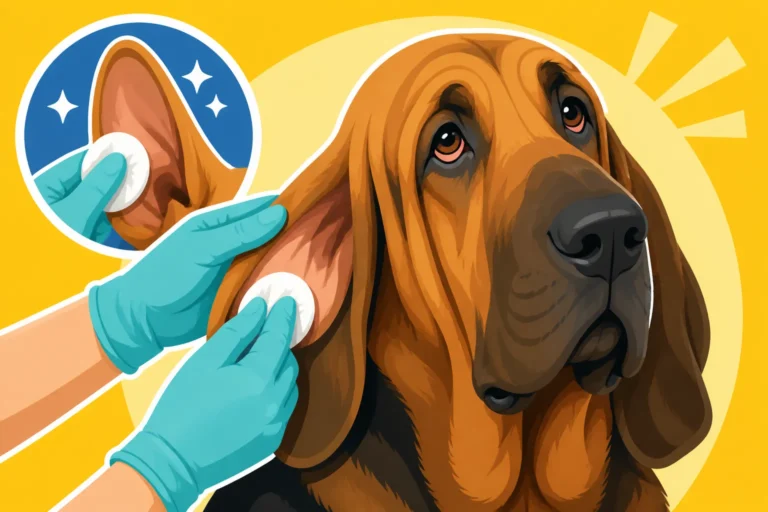
Weekly cleaning of a Bloodhound’s long, heavy ears prevents trapped moisture, bacteria, yeast infections, and chronic inflammation.
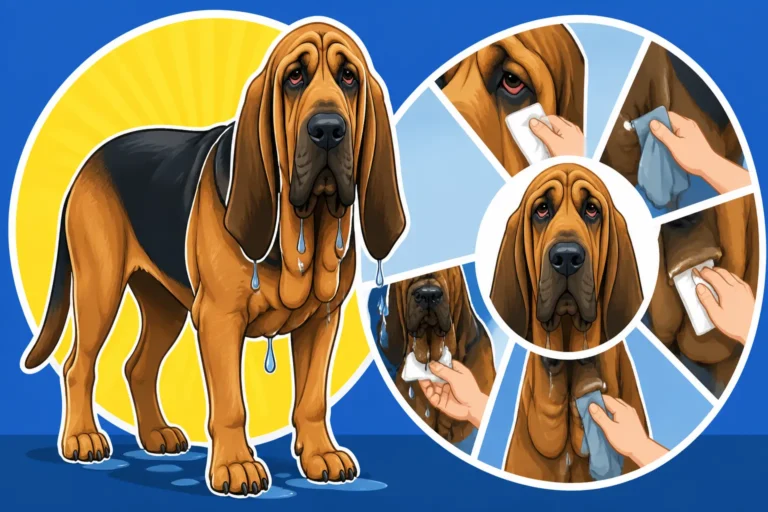
Bloodhound anatomy features heavy ears, wrinkles, and jowls that trap dirt, requiring daily cleaning to prevent infections.