Whether a Young Bloodhound Learns to Trail Faster Than an Adult
Young Bloodhound trailing speed depends on age, comparing puppy scent training advantages with adult canine tracking capabilities.

Young Bloodhound trailing speed depends on age, comparing puppy scent training advantages with adult canine tracking capabilities.

Bloodhound puppy traffic socialization helps prevent severe urban anxiety during the critical three to sixteen week developmental window.
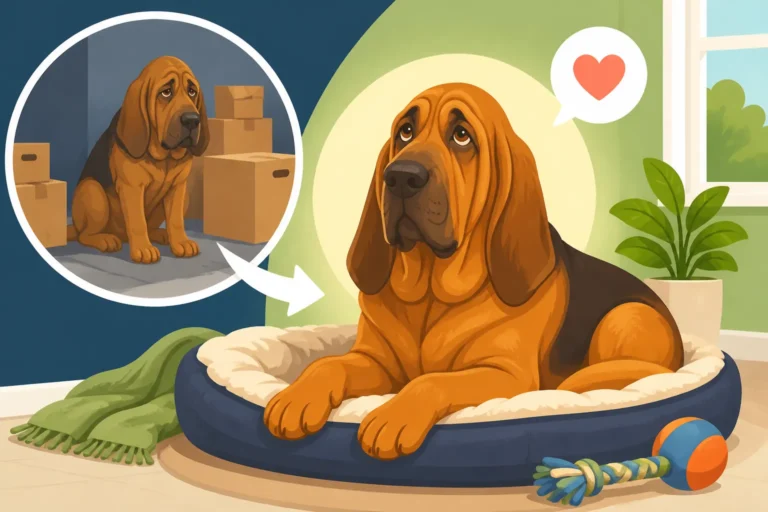
Rehomed Bloodhounds need three days to decompress, three weeks to learn routines, and months of patience to settle safely.

Bloodhound neutering and spaying changes testosterone and estrogen levels, reducing roaming, marking, and heat cycles over time.
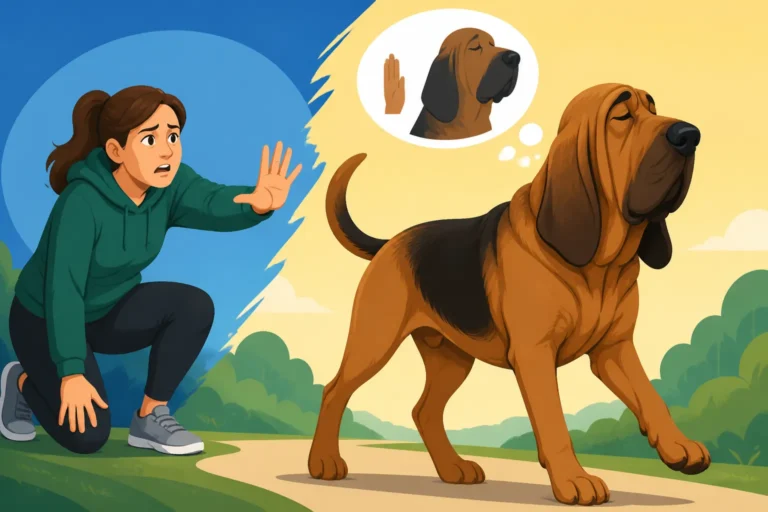
Adolescent Bloodhound selective hearing stems from biological development and a maturing scent drive between six and eighteen months.

Bloodhound puppy mouthing stems from scent hound instincts, teething needs, and exploration rather than aggression or behavioral flaws.

House training a Bloodhound puppy typically takes between four and six months, influenced by bladder capacity and scent-driven instincts.

Bloodhound puppy crate training provides a safe haven, helps manage house training challenges, and prevents unsupervised chewing.

Bloodhound daily routine management, scent work requirements, and exercise needs during a standard 9-to-5 workday schedule.
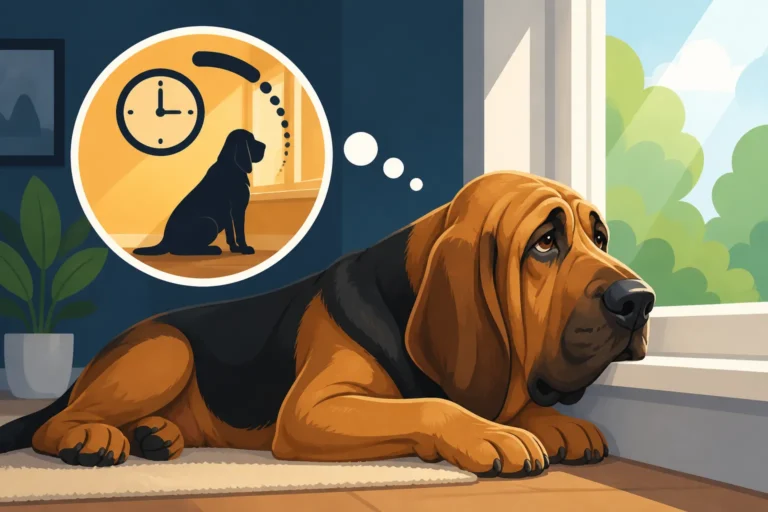
Bloodhound alone time management strategies help owners handle separation anxiety, vocalization, and boredom during workdays.