Settling a Bloodhound That Has Changed Homes
Bringing a new Bloodhound into your home, especially one that has already lived a life elsewhere, can feel like you're trying to solve a complex puzzle with missing pieces. You want to give them the best, most stable environment, but they might be reserved, anxious, or exhibiting behaviors you didn't anticipate, leaving you feeling frustrated and wondering if you're doing something wrong. This guide aims to walk you through the process of settling a Bloodhound into a new home, focusing on patience, understanding their unique needs, and building a foundation of trust that will help both of you thrive.
Understanding Your Rehomed Bloodhound's Perspective
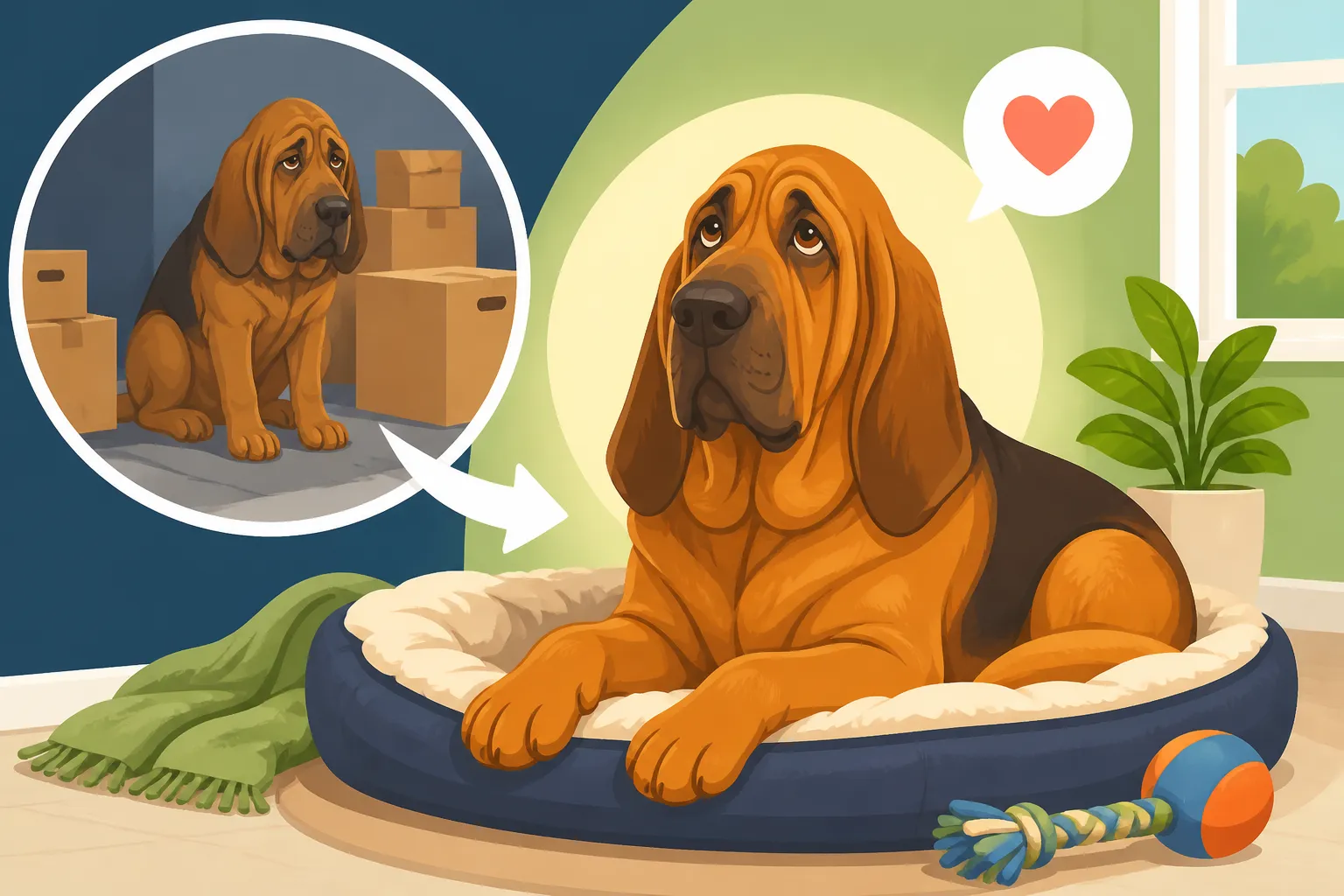
Imagine suddenly being uprooted from everything familiar – your routine, your people, your smells, your favorite napping spot. That's precisely what a rehomed Bloodhound experiences. They are incredibly sensitive creatures, often forming deep attachments, and a change of environment can be profoundly unsettling for them. It's not about being "stubborn" or "difficult"; it's about processing a massive life change without the ability to understand why it happened. Their world has been turned upside down, and they're looking to you to help them right it again.
The Weight of Previous Experiences
Every Bloodhound comes with a history, whether you know the details or not. Maybe they were loved and well-cared for but their previous owner fell ill. Perhaps they were neglected, or their needs for scent work weren't met, leading to destructive behaviors or chronic anxiety. This past will undoubtedly shape their initial reactions to your home and your family. A dog that was previously crated extensively might resist a crate, while one that never learned to be alone might develop separation anxiety quickly. You might find that your new companion "ignores a cue it knows" because in their new environment, everything feels different, and the old associations aren't holding up, or their stress levels are too high to process them effectively.
The Power of Scent and Routine Disruption
For a Bloodhound, scent is everything. Their world is mapped through their nose, and when they move homes, all their familiar scent markers vanish, replaced by a bewildering array of new ones. This sensory overload, combined with a shattered routine, can heighten anxiety and make them feel lost. They might pace, fail to settle, or even have house-training accidents as they try to navigate this unfamiliar territory. Their deep love for routine means that consistency is paramount when they are trying to adjust.
The Critical First Weeks: Creating a Secure Foundation
The initial days and weeks with a rehomed Bloodhound are crucial for building trust and helping them feel safe. Many experienced dog owners refer to the "Rule of Threes," suggesting it takes roughly three days to decompress, three weeks to start understanding routines, and three months to truly feel settled. Patience is your most important tool during this period.
Establishing a Safe and Predictable Environment
When your Bloodhound first arrives, they need a quiet, secure space of their own. A crate can be an invaluable tool, providing a den-like retreat where they can feel safe and undisturbed. Even if your Bloodhound isn't a puppy, the principles of Crate Training Suits a Bloodhound Puppy still apply to establishing a secure space. Make it comfortable with soft bedding, a water bowl, and a chew toy. Placing an item with your scent, or even a blanket from their previous home if available, can offer comfort. For a week or two, limit visitors and keep interactions calm and low-key. Too much excitement can be overwhelming for a dog already experiencing stress.
The Power of Routine
Bloodhounds thrive on predictability. From day one, establish a consistent daily routine for feeding, potty breaks, walks, and rest. This structure provides a sense of security and helps them understand what to expect.
| Time Slot | Activity | Importance |
|---|---|---|
| Early Morning | Potty Break & Breakfast | Establishes first elimination and feeding schedule; prevents accidents and builds routine. |
| Mid-Morning | Short Walk / Playtime | Controlled exercise helps burn off nervous energy; bonding opportunity. |
| Midday | Potty Break & Quiet Time | Reinforces house-training; allows for decompression and rest. |
| Late Afternoon | Potty Break & Enrichment | Prevents accidents; mental stimulation (e.g., puzzle toy). |
| Evening | Dinner & Longer Walk | Second main meal; more substantial exercise before bedtime. |
| Before Bed | Final Potty Break | Critical for preventing overnight accidents. |
Stick to this schedule as closely as possible, even on weekends. This consistency is a language your Bloodhound will quickly learn to understand, signaling safety and stability. For feeding, consider using a slow-feeder bowl (easily found on Amazon) to prevent them from gulping their food, which can be a particular concern for deep-chested breeds.
Controlled Introductions
If you have other pets or children, introductions should be slow and supervised. For dogs, start with parallel walks on neutral territory before bringing them into the home. Keep initial interactions short and positive, ending before anyone gets overwhelmed. For cats, use gates or separate rooms to allow them to gradually get used to each other's scent without direct contact. Children should be taught how to interact gently and respectfully with the new dog, understanding that the Bloodhound needs space and quiet time.
Navigating Common Settling Issues and Building Trust
Even with the best preparation, you might encounter some common challenges when settling a rehomed Bloodhound. These aren't necessarily signs of a "bad dog," but rather indicators of stress, past trauma, or simply needing to learn new house rules.
House Training Regressions
It's incredibly common for rehomed Bloodhounds to have accidents, even if they were previously house-trained. This isn't usually spite; it's often a combination of stress, unfamiliarity with new potty spots, and a broken routine. Go back to basics as if they were a puppy. Take them out frequently, praise and reward lavishly for success, and clean any indoor accidents thoroughly with an enzymatic cleaner to eliminate odors that might encourage repeat marking. Understanding How Long House Training a Bloodhound Puppy Takes can give you a realistic timeline, even for an adult dog learning a new system.
Separation Anxiety and Vocalization
Bloodhounds are pack animals, and many can be prone to separation anxiety, especially after being rehomed. They might bay, whine, or become destructive when left alone. Remember, The Baying a Bloodhound Cannot Be Trained Out Of completely, as it's a natural breed characteristic, but excessive vocalization due to anxiety can be managed. Start with very short absences, literally a minute or two, gradually increasing the time. Make departures and arrivals low-key; no big goodbyes or excited greetings. Provide engaging, safe chew toys or puzzle feeders before you leave. Consulting a professional trainer or behaviorist can be invaluable here. Using resources like BAXTER & Bella's online training programs can give you structured guidance for this sensitive period, providing positive reinforcement methods to build your Bloodhound's confidence.
Leash Reactivity and Scent Obsession
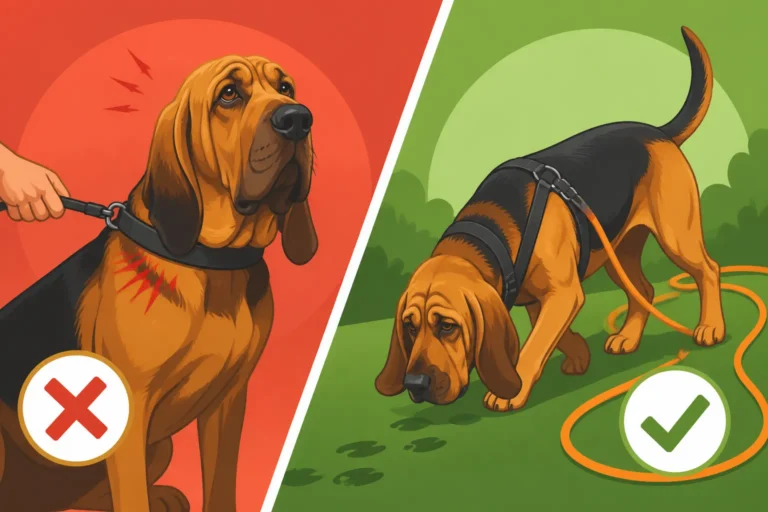
Your Bloodhound's incredible nose is their superpower, but it can also be a challenge on walks. They are hardwired to follow a scent trail, and a new environment means a myriad of exciting, new smells. You might find that Why Recall Fails on a Bloodhound Outdoors is a brutal reality; once their nose hits a hot trail, their ears effectively turn off. Invest in a sturdy, well-fitting harness and a long line (many excellent options are available on Amazon) that allows them some freedom to explore scents safely while keeping them secure. Focus on management and teaching them to check in with you, rather than trying to suppress their natural drives entirely.
Fear, Shyness, or Reactivity to New Stimuli
Some rehomed Bloodhounds might be initially fearful of new people, dogs, or environments. This can manifest as shyness, retreat, or even reactivity (barking, lunging). Give them space and time. Don't force interactions. Use positive reinforcement to create positive associations with new experiences. For instance, if they're nervous about other dogs, create distance, reward them for calm behavior when another dog is in sight, and gradually decrease the distance. For dogs with severe fear or reactivity, professional guidance is essential to ensure safety and build confidence. It’s important to remember that What Harsh Handling Does to a Bloodhound can be incredibly detrimental, leading to a breakdown of trust and exacerbating fearful behaviors.
Long-Term Strategies for a Secure and Happy Bloodhound
Settling a Bloodhound isn't a race; it's a marathon. The initial weeks lay the groundwork, but long-term happiness and security come from ongoing commitment to their physical and mental well-being.
Embracing Their Inner Scent Hound
The single most powerful thing you can do for a Bloodhound is to engage their incredible nose. This is their purpose, their joy, and their mental workout. Mantrailing Is the Answer to a Bloodhound, Not Obedience when it comes to truly fulfilling their needs. Even if you're not interested in competitive trailing, incorporating scent games into your daily life can dramatically improve their confidence and reduce anxiety. Simple sniff walks, hiding treats around the house, or enrolling in beginner nose work classes can provide immense mental stimulation. A mentally stimulated Bloodhound is a happier, more settled Bloodhound.
Consistent Positive Reinforcement Training
Beyond specific scent work, continued positive reinforcement training is vital. Bloodhounds respond beautifully to motivation, whether it's high-value treats, a favorite toy, or even just enthusiastic praise. Understanding What a Bloodhound Will Work For is key to successful training. Consistency with basic cues, recall (in safe, fenced areas), and polite leash manners will strengthen your bond and integrate them more fully into your life. Short, fun training sessions every day are far more effective than long, infrequent ones.
Continued Socialization and Exposure
Even after they've settled, continued, positive exposure to new sights, sounds, people, and appropriate dogs is important. This doesn't mean forcing them into situations they find overwhelming. It means controlled, positive experiences that build their confidence. For example, taking them on walks in different neighborhoods, visiting pet-friendly stores (if they're comfortable), or arranging playdates with known, calm dogs. It’s a continuation of the same principles you’d apply to a puppy, such as Whether a Bloodhound Puppy Should Be Socialized to Traffic Early, ensuring they build positive associations throughout their lives. Consider if your lifestyle allows for their unique needs, pondering How Long a Bloodhound Copes Alone or Whether a Bloodhound Fits Around a Working Day.
The Unwavering Power of Patience and Empathy
Ultimately, settling a rehomed Bloodhound is a testament to your patience and empathy. There will be good days and challenging days. There will be moments of triumph and moments of frustration. Remember that every small step forward is a victory. Celebrate the quiet moments where they choose to rest near you, the eager tail wags, and the successful house-training days. With consistent effort, understanding, and a whole lot of love, your rehomed Bloodhound will blossom into a secure, loyal, and cherished member of your family. It's a journey, not a destination, and it's one of the most rewarding experiences a dog owner can have.
Disclaimer
This article is for general informational purposes only and does not constitute professional advice. Laws, prices and regulations vary by location and change over time. Consult a qualified professional for guidance on your specific situation.