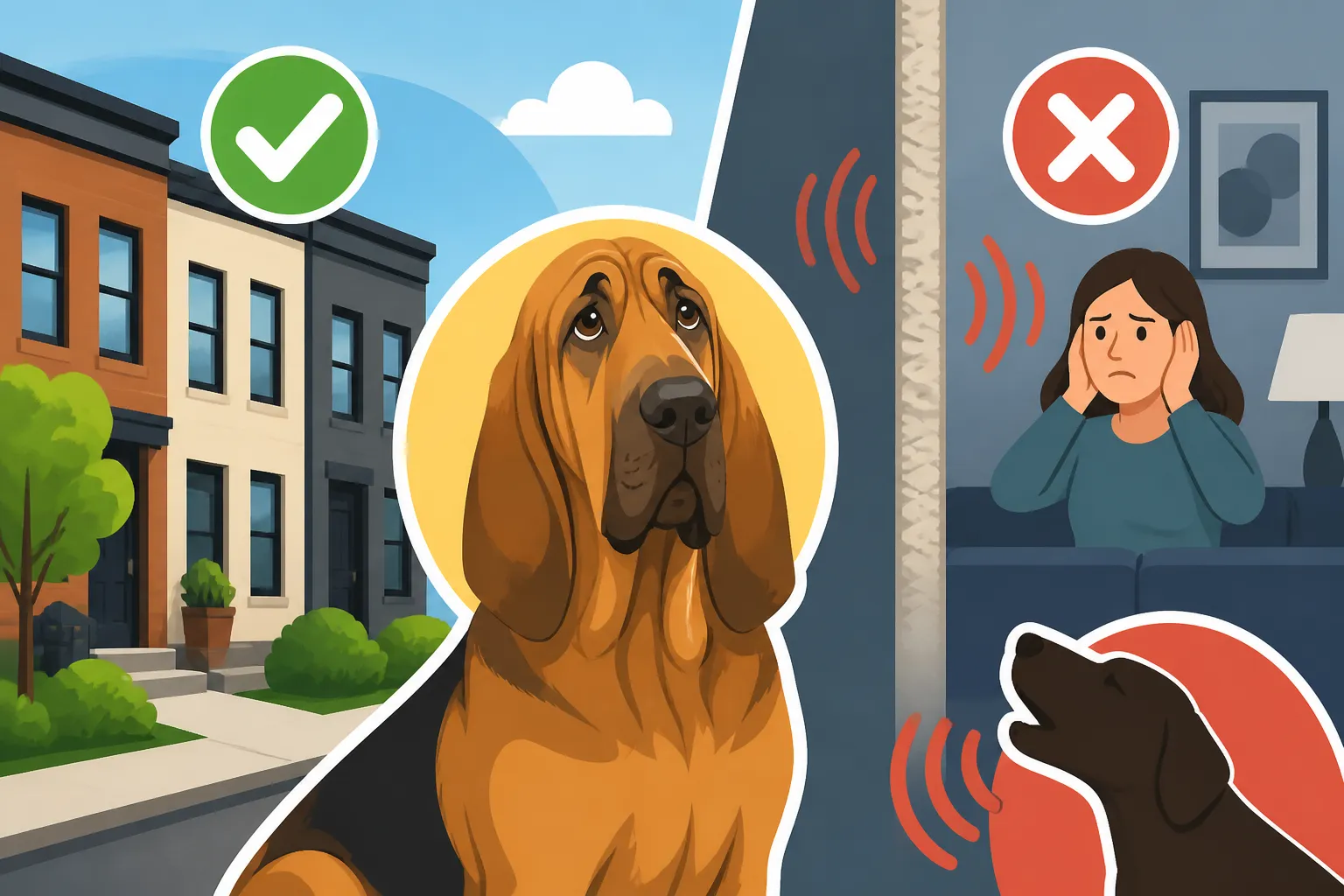
Whether a Bloodhound Suits a Townhouse With Shared Walls
One common dream for Bloodhound owners is a sprawling yard where their magnificent hound can stretch its legs and follow its nose. But for many, especially those drawn to the breed's unique qualities in urban or suburban areas, a townhouse with shared walls is the reality. The truth is, owning a Bloodhound in such a setting presents a distinct set of challenges, particularly when it comes to noise, space, and managing that incredible scent drive, and this guide will walk you through what to expect and how to navigate these complexities.
The Bloodhound's Vocal Nature and Shared Walls
If there's one thing almost guaranteed to test neighborly patience, it's a dog that bays, and Bloodhounds are masters of the art. Their vocalizations are not just barks; they are deep, resonant, and carry far, a characteristic deeply ingrained in their genetic makeup as scent hounds. Living in a townhouse means those sounds will be easily transmitted through shared walls, making careful management an absolute necessity from day one.
The Loud Reality of a Bloodhound's Bay
A Bloodhound's bay isn't just a casual "woof." It's a full-bodied, mournful, and incredibly loud sound that can vibrate through floors and walls, truly living up to the description of How Loud a Bloodhound's Bay Is. This isn't something they do out of spite or because they're necessarily unhappy in the way a bored or anxious dog might constantly bark. Often, a Bloodhound bays because it's detected an interesting scent, heard a distant siren, or simply because it's expressing itself. Imagine a leaf blowing by outside the window, carrying a fascinating aroma of squirrel that passed by hours ago. To your Bloodhound, that's a whole narrative unfolding, and a bay might be its way of saying, "Did you smell that?!"
This inherent vocal tendency means that while you can certainly work on curbing excessive or inappropriate baying, you'll never truly train the bay out of a Bloodhound. It's like asking a bird not to sing. This reality needs to be deeply understood by anyone considering a Bloodhound in a townhouse. Your neighbors will hear it, and unless they are exceptionally tolerant, this could lead to serious issues. Consider if your neighbors work from home, have young children, or simply value peace and quiet. Their tolerance levels will directly impact your ability to successfully integrate your Bloodhound into your shared-wall community.
Managing Baying and Neighborly Relations
So, what can you do when your Bloodhound decides to serenade the block? Proactive management is key. First, ensure your Bloodhound's mental and physical needs are being met, as boredom and pent-up energy can exacerbate vocalizations. More on that in the next section. Beyond that, soundproofing measures for shared walls, even minor ones like heavy drapes, bookshelves against walls, or white noise machines, can offer some relief, though they won't fully mute a true Bloodhound bay. Communication with your neighbors is also paramount. Let them know you're aware of the breed's tendencies and are actively working on management. Sometimes, just knowing you're trying makes a huge difference.
Training plays a role, but it's more about teaching your Bloodhound when it's appropriate to be quiet, rather than never baying at all. Focusing on a "quiet" cue and rewarding silence can be effective, but it takes consistency and patience. Remember, Why a Bark Collar Is the Wrong Answer for a Bloodhound, as these tools often cause more anxiety and can damage the bond you have with your dog, especially a sensitive hound. Instead, consider enrichment toys, puzzle feeders, and plenty of stimulating activities that engage their powerful nose, diverting their attention from external triggers. For example, a KONG toy stuffed with frozen peanut butter or a snuffle mat can keep them happily occupied and quiet for a significant stretch.
Other Vocalizations to Consider
Beyond the iconic bay, Bloodhounds have a repertoire of other vocalizations. They can whine, groan, sigh, and, yes, bark occasionally. The whining often comes from a place of seeking attention or expressing a desire, like wanting to go outside or for you to share your snack. Their groans and sighs, while less disruptive to neighbors, can still be quite dramatic and noticeable within shared living spaces.
The challenge in a townhouse isn't just the sheer volume but the context. A bark from a small terrier might be annoying, but a deep, mournful bay carries a different, often more unsettling, quality to those unfamiliar with the breed. It can sound like distress, even when it's just a Bloodhound being a Bloodhound. Think about how Why a Bloodhound Bays – it's often a response to scent or a way to communicate, not necessarily a sign of aggression or deep unhappiness. Educating your neighbors about the breed's nature, if they're open to it, can sometimes help manage perceptions. Ultimately, however, you have to be prepared for the fact that a Bloodhound's voice is a constant presence, and in a shared-wall situation, it's a factor you'll be managing daily.
Scent Drive, Exercise, and Confined Spaces
The Bloodhound's reason for being is its nose. This incredible faculty, which makes them unparalleled trackers, also dictates much of their behavior and exercise needs. In a townhouse, managing this intense drive without the luxury of vast open spaces presents significant challenges, both inside and out.
The Unrelenting Scent Drive Indoors and Out
A Bloodhound lives nose-first, constantly processing a world of odors that we humans can't even begin to comprehend. Inside a townhouse, this means every dust bunny, every dropped crumb, and every lingering cooking smell is a potential investigation. While this might sound endearing, it can lead to constant sniffing, counter-surfing, and an insatiable desire to explore every nook and cranny. They are notorious for opening doors and cabinets, not out of mischief, but because their nose tells them something interesting might be behind it.
Outdoors, even a short walk around the block becomes a deeply immersive scent experience for your Bloodhound. They aren't just going for a walk; they're reading the neighborhood's daily newspaper through their nose. This intense focus makes traditional leash walking a slow, meandering affair, pulling them from one fascinating scent to the next. You simply cannot expect a Bloodhound to ignore a trail. Their brain is hardwired for it, and trying to force them to bypass a particularly compelling scent is like asking you to ignore a siren. This means that quick potty breaks in a small, shared yard or on a leash become prolonged sniffing expeditions, a detail that takes up precious time in a busy townhouse schedule.
Meeting Exercise Needs in a Townhouse Setting
While Bloodhounds aren't hyperactive dogs that need to run for miles, they do require consistent, quality exercise to keep them mentally and physically sound. The conventional wisdom that a large yard is enough simply isn't true for a Bloodhound. A fenced yard, while helpful for potty breaks, quickly becomes boring unless it's huge and constantly changing. What a Bloodhound truly needs is mental stimulation, and that primarily comes from engaging their nose.
This is where dedicated scent work, often called mantrailing or tracking, becomes not just a hobby, but a necessity. Simply walking around the block won't cut it. You'll need to seek out parks, open fields, or even participate in organized scent work classes. Consider How Much Walking a Bloodhound Needs Daily – it's less about raw distance and more about mental engagement. Without this outlet, a Bloodhound can become bored, destructive, and more prone to baying. This means you, the owner, need to be committed to driving to suitable locations regularly, often several times a week, to provide this essential enrichment. A short line walk in a small urban space won't provide the mental workout a Bloodhound thrives on, and without it, their powerful drive will manifest in less desirable ways within the confines of a townhouse.
The Need for Secure Containment Beyond the Walls
One of the biggest misconceptions about Bloodhounds is that they can be reliably off-leash. The truth is, Why Off Leash Is Not a Goal With a Bloodhound. Once that nose hits a compelling scent, all bets are off. Their focus narrows, their hearing seems to vanish, and they will follow that trail with single-minded determination. In a townhouse, this means any outdoor access must be impeccably secure.
A small, fenced patio or yard might seem sufficient, but Bloodhounds are surprisingly adept at testing boundaries. How High a Fence a Bloodhound Needs is often underestimated; they can be opportunistic climbers or persistent diggers. Even a momentarily open gate can lead to a lost Bloodhound, capable of following a trail for miles. This is not a breed that will "come back when it's ready." Their instinct to trail overrides any learned recall, no matter how solid it seems in a low-distraction environment. Furthermore, Whether an Invisible Fence Stops a Bloodhound is a firm no; the pain of a shock collar is rarely enough to override the primal pull of an exciting scent. So, if your townhouse has a small, inadequately fenced area, or if you share a yard that's not fully secure, it presents a constant escape risk. This means every outdoor excursion will require a secure harness and a long lead, with you always at the other end.
The Bloodhound's Physical Presence and Lifestyle Fit
Beyond noise and nose, a Bloodhound's sheer size, unique physical traits, and the associated mess are major considerations for townhouse living. These are large dogs with significant needs when it comes to space and cleanliness, impacting your daily routine and the wear and tear on your home.
Size, Drool, and Indoor Living Space
Bloodhounds are big dogs. An adult male can easily weigh over a hundred pounds, and even females are substantial. They take up a lot of floor space, not just when they're lying down, but also when they're ambling through a room. A townhouse, by definition, often has narrower hallways, smaller rooms, and tighter turns than a detached house. This means your Bloodhound will constantly be bumping into furniture, walls, and people. Navigating stairs can also be a challenge, especially for a puppy or an older Bloodhound with joint issues.
Then there's the drool. Oh, the drool. Bloodhounds have loose jowls designed to help them funnel scent, but these same jowls are fantastic drool reservoirs. They drool when they drink, when they're excited, when they're anticipating food, and sometimes, it seems, just because. And when they shake their head, that drool flies. It gets on walls, ceilings, furniture, and any unfortunate person standing nearby. In a smaller townhouse, there's less space to escape the drool zone. You'll find yourself constantly wiping surfaces, and your walls might develop a permanent, slightly slimy sheen unless you're diligent. This isn't a minor detail; it's a significant aspect of Bloodhound ownership that can feel magnified in a compact living space.
Maintaining Cleanliness in a Smaller Footprint
The Bloodhound's physical attributes, combined with their propensity for tracking scents, mean that maintaining a clean home in a townhouse is an ongoing battle. Their long, pendulous ears, while magnificent, drag through everything – water bowls, food bowls, mud, and whatever interesting things they sniff on the ground. This means wet, dirty ears are a constant reality, and these ears will then brush against your furniture and walls, leaving streaks. Investing in a good snood, like those readily available on Amazon, can help keep their ears out of their food bowl, but it won't prevent all the outdoor grime. You'll want to read about What a Snood Does for a Bloodhound to understand its full utility.
Beyond the ears, their skin folds, while charming, can trap moisture, dirt, and food, making them prone to skin fold dermatitis. These areas require daily wiping and cleaning to prevent odors and infections. Add to this their short, dense coat which sheds year-round, and you'll find dog hair becomes an integral part of your décor. All of these factors combined mean that a Bloodhound in a townhouse requires a significant commitment to cleaning. You'll be going through What a Bloodhound Owner Spends on Towels and Cleaner at an astonishing rate. If you're someone who values an immaculate, pristine home, a Bloodhound in a townhouse might prove to be a source of constant frustration.
| Aspect of Living | Townhouse Challenge | Bloodhound Impact | Management Strategy |
|---|---|---|---|
| Noise | Shared walls transmit sound easily | Deep, resonant baying | Soundproofing, proactive mental stimulation, neighbor communication |
| Space | Smaller rooms, narrow hallways | Large size, prone to bumping things | Designated dog zones, careful furniture placement |
| Scent Drive | Limited secure outdoor access | Requires extensive mental engagement through scent work | Regular trips to open spaces for tracking, indoor puzzle toys |
| Cleanliness | Less room to contain mess | Drooling, shedding, ear/fold dirt | Frequent cleaning, snoods, washable furniture covers, durable flooring |
| Exercise | Reliance on private outdoor space | Needs dedicated scent work, not just walks | Structured outings to parks/trails, professional training |
Socialization and Community Interactions
Living in close quarters also means more frequent interactions with neighbors and their pets. While Bloodhounds are generally good-natured, their size alone can be intimidating to some, and their scent drive means they can be incredibly focused on other animals or people, often to the exclusion of polite greetings. Early and consistent socialization is vital for a Bloodhound in a townhouse environment. They need to learn how to calmly pass other dogs and people on walks without lunging or baying excessively, and how to greet strangers politely.
Consider how A Bloodhound in a House With Small Children would interact – generally gentle, but their sheer size can lead to accidental bumps or knocks. Similarly, when passing neighbors with small children or delicate flowerbeds, managing your Bloodhound's enthusiasm and single-mindedness requires constant vigilance. Being a responsible Bloodhound owner in a townhouse means being acutely aware of your dog's presence and its impact on the community around you. It often involves more active management of greetings and interactions than might be necessary with a smaller, less scent-driven breed.
Realistic Expectations for Townhouse Ownership
Ultimately, successfully owning a Bloodhound in a townhouse comes down to realistic expectations, a profound commitment to meeting their unique needs, and understanding that you'll be making certain lifestyle adjustments. It's not impossible, but it demands more from you than many other breeds might in a similar living situation.
Committing to the Time and Training Investment
The truth is, a Bloodhound is a lot of dog, and a Bloodhound in a townhouse is an even bigger commitment. This isn't a breed you can leave alone for long stretches in a small space and expect to thrive. They require significant time investment, not just for basic care, but for dedicated mental and physical exercise that satisfies their powerful nose. If your schedule means your Bloodhound will be home alone for eight or nine hours a day in a townhouse, with only a quick walk before and after, you are setting yourself, and your dog, up for failure. Whether a Bloodhound Fits Around a Working Day truly depends on your flexibility and dedication to enrichment activities.
Training isn't just about obedience cues; it's about managing their environment and channeling their natural instincts constructively. For new puppy owners, a comprehensive online training program like BAXTER & Bella can be invaluable, providing structured guidance on everything from house-training to leash manners, tailored to help you navigate the unique challenges of raising a scent hound in a smaller space. They often have resources that help you focus on enrichment activities that satisfy that powerful nose, which is crucial for preventing boredom and destructive behaviors in a townhouse. You'll need to be creative with indoor games that engage their nose, like hiding treats or playing 'find it,' and consistently carve out time for outdoor scent adventures.
Financial Considerations for Townhouse Bloodhounds
Beyond the initial purchase price and standard vet care, Bloodhound ownership comes with specific financial considerations that can be amplified in a townhouse setting. For instance, the constant cleaning supplies for drool and dirt will add up. More importantly, the need for professional training or specialized scent work classes to properly channel their instincts is almost a given. These aren't cheap. You might also find yourself investing in more durable furniture or easily washable covers, or even professional cleaning services more often, all of which contribute to Where a Bloodhound Owner's Money Actually Goes.
Emergency veterinary care, particularly for issues like bloat (GDV), is a significant concern for the breed, and the costs associated with it are substantial. Bloat Is What Kills Most Bloodhounds, and a preventive gastropexy, which tacks the stomach to the abdominal wall, is strongly recommended by many veterinarians for Bloodhounds. This procedure, which can be done preventatively, adds to the financial outlay but can save lives and prevent far higher emergency bills down the line. While not directly related to townhouse living, the breed's health predispositions are a factor in overall ownership cost, and these large, lanky dogs often have joint issues too, requiring potential long-term care.
When a Townhouse Just Isn't the Right Fit
After considering all these factors, it's possible that a townhouse, despite your best intentions, might simply not be the ideal environment for a Bloodhound. There's no shame in admitting that a particular living situation might not be suitable for a specific breed. If the thought of constant noise complaints, relentless drool cleanup, or the logistical gymnastics required to provide adequate mental and physical stimulation feels overwhelming, it's worth re-evaluating.
Whether a Bloodhound Is Too Much Dog for Most People is a question many ponder, and the answer often leans towards "yes" without the right circumstances and dedication. A Bloodhound thrives when its natural abilities are honored and exercised, and when its family understands and accommodates its unique traits. If your townhouse constraints mean you simply cannot provide the necessary outlets for its nose, the space for its size, or tolerate its vocalizations without significant stress, then it might be a kinder decision for both you and the dog to consider a different breed or a different living situation. The goal is a happy, well-adjusted dog and a harmonious home, and sometimes, that means recognizing limitations before a problem even begins.
Disclaimer
This article is for general informational purposes only and does not constitute professional advice. Laws, prices and regulations vary by location and change over time. Consult a qualified professional for guidance on your specific situation.