Whether a Bloodhound Should Be Rewarded by the Person Found
It’s a common scenario for Bloodhound owners who are delving into the world of scent work: you’ve diligently trained your hound, watched them follow a trail with incredible focus, and then, at the glorious moment they locate their “person,” a natural question arises – who should deliver the reward? It feels intuitive for the person found to praise and treat the dog, but with a Bloodhound’s unique drive and purpose, the answer isn’t always as simple as it seems. This guide will walk you through the nuances of rewarding your Bloodhound at the culmination of a trail, helping you understand how to maintain motivation and clarity for your scent-tracking superstar.
Understanding the Bloodhound's Intrinsic Motivation
Bloodhounds are, by their very nature, scent-driven machines. Their entire being is geared towards following a trail, and this isn't just a hobby for them; it's an ingrained, powerful instinct. When we talk about rewarding a Bloodhound at the "find," we need to remember what truly motivates them, which goes beyond a simple piece of kibble.
The Instinctive Nature of Trailing
For a Bloodhound, the act of trailing itself is incredibly rewarding. Their world is defined by scent, and the thrill of picking up a faint odor, deciphering its path, and meticulously following it is deeply satisfying. They aren't tracking a person because they want a treat from that person; they're tracking because their nose tells them to, and the completion of that intricate puzzle is a primary driver. Think of it like a human detective solving a complex case – the discovery itself is a huge payoff, often more so than any external recognition.
This intrinsic motivation means that while external rewards are certainly helpful in shaping and reinforcing behavior, they aren't the sole reason your Bloodhound works. They're wired for this job, and nurturing that instinct is key to successful training. It’s also why you often hear that Mantrailing Is the Answer to a Bloodhound, Not Obedience, because it taps directly into their core nature. You'll observe their focus, the way their ears sweep the ground, and their methodical pace – these are all signs of a dog utterly immersed in their work.
What Constitutes a "Reward" for a Bloodhound
While many dogs are thrilled by a piece of chicken, a squeaky toy, or a vigorous game of tug, what truly constitutes a "reward" for a Bloodhound at the end of a trail can be multifaceted. Yes, high-value food treats are almost always a hit, especially when they're working hard, but it's not the only currency. For many Bloodhounds, the biggest reward is simply the opportunity to trail again.
Consider the different types of positive reinforcement:
- Food: This is often the go-to. Small, high-value, easily digestible treats like cheese, cooked meat, or commercial soft treats work wonderfully. The faster they can consume it and get back to attention, the better.
- Play: A quick game of tug with a favorite toy, a brief toss of a ball, or a few moments of rough-and-tumble play with their handler can be incredibly motivating. This uses up some of their physical energy and connects the "find" with an enjoyable physical release.
- Praise and Affection: A calm, happy voice, enthusiastic petting, and genuine adoration from their handler reinforces the positive experience. For a dog that thrives on connection, this can be just as potent as food.
- The "Discovery" Itself: As mentioned, the act of finding the person, confirming the scent, and reaching the end of the line is a powerful intrinsic reward. Your reaction as the handler amplifies this.
Understanding What a Bloodhound Will Work For is crucial. It's often a combination of these things, tailored to the individual dog. Some Bloodhounds live for a tennis ball, others for a bite of hot dog. The consistency and predictability of the reward system are often more important than the specific item itself.
The Pros and Cons of "Find" Rewards from the Subject
The idea of the "found person" giving the reward seems logical on the surface, especially in training scenarios where the subject is typically a friend or family member. However, there are significant considerations, both positive and negative, that Bloodhound owners need to weigh carefully.
Potential Benefits: Reinforcing the "Find" with the Source
In some very specific training contexts, having the found person deliver a reward can appear beneficial. It directly links the positive reinforcement with the target of the search. For a young dog just learning, or in very controlled training environments, it might seem to solidify the idea that "this person is the goal."
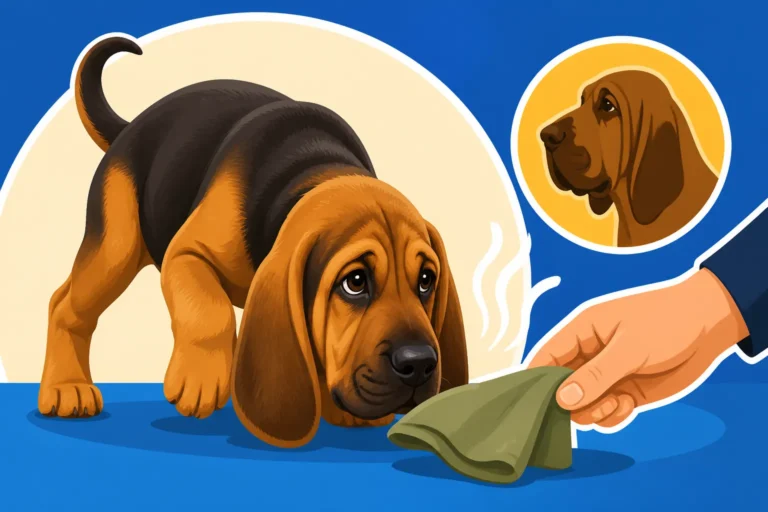
For instance, when you're doing Starting a Bloodhound Puppy on a Trail, a familiar "runaway" person might kneel down and offer a happy greeting and a treat the moment the puppy reaches them. This immediate positive association can help build that initial understanding of the "find." It can also make the "find" even more exciting for a dog that genuinely loves people. The warmth of human contact, combined with a tasty treat, can make a memorable experience.
However, even in these scenarios, it's paramount that the primary reinforcement and direction always come from the handler. If the "found person" becomes the main source of all good things, it can easily lead to confusion in a real-world scenario.
Potential Drawbacks and Confusion
This is where the real complexities arise. Relying on the found person for rewards can introduce several significant problems, particularly as your Bloodhound progresses beyond basic training.
- Inconsistency: In real-world trailing, the found person might be a lost child, an injured adult, or even someone who is scared or uncooperative. They might not have treats, or they might react in a way that is confusing or even frightening to the dog. If your Bloodhound learns to expect a reward from the person they find, and then doesn't receive one, it could diminish their enthusiasm for future finds or create confusion about their job.
- Safety Concerns: In a true search and rescue scenario, you can't guarantee the demeanor or health of the person found. They might be disoriented, aggressive, or have injuries that prevent them from interacting safely with a large, enthusiastic dog. Training your Bloodhound to expect interaction and reward from a stranger puts them, and potentially the subject, at risk. The priority is always the safety of all involved.
- Diluting the Handler's Role: Your Bloodhound works for you, their handler. You are their trusted partner, their guide, and their source of consistency and reward. If the "found person" consistently takes on the role of primary rewarder, it can undermine your authority and the strong working relationship you've built. The dog needs to understand that you are the one who orchestrates the entire process, including the ultimate payoff. This consistency is vital for a dog that performs difficult tasks like tracking.
- Stranger Danger vs. "Friend" Expectation: We spend so much time teaching our dogs not to take food from strangers. Conditioning them to take a reward from the specific stranger they just found creates a dangerous paradox. It blurs the lines and can make them more susceptible to approaching unfamiliar people for treats in other contexts.
- Distraction at the "Find": The moment of "find" can be chaotic. Your Bloodhound needs to maintain focus on you for the next steps – identifying the subject, perhaps waiting for confirmation, and then being directed away. If they are busy trying to get a treat from the subject, it pulls their attention away from the handler and the immediate operational needs. It's important that What a Bloodhound Does at the End of a Trail is a controlled, handler-led conclusion.
| Reward Source | Potential Benefits | Potential Drawbacks | Best Use Case |
|---|---|---|---|
| Handler | Consistent reinforcement; maintains handler authority; safety; clear communication; builds handler-dog bond. | Requires handler to be present and prepared; may not be as "novel" as a reward from the subject initially. | All stages of training, real-world deployments. |
| Found Person | Can provide an initial, exciting link to the "target" in early training. | Inconsistent rewards in real scenarios; safety risks; dilutes handler's role; confuses "stranger danger"; leads to distraction at the find. | Very early, controlled training with trusted, prepared subjects. |
| Environment/Intrinsic | High motivation for the work itself; self-reinforcing. | Not always sufficient for shaping complex behaviors or maintaining motivation in challenging conditions. | Baseline motivation, enhances other reward methods. |
Best Practices for Rewarding a Trailing Bloodhound
Given the potential pitfalls, the best approach for rewarding a trailing Bloodhound almost always involves the handler taking the lead. This ensures consistency, safety, and strengthens the vital bond between you and your working dog.
Handler as the Primary Reward Source
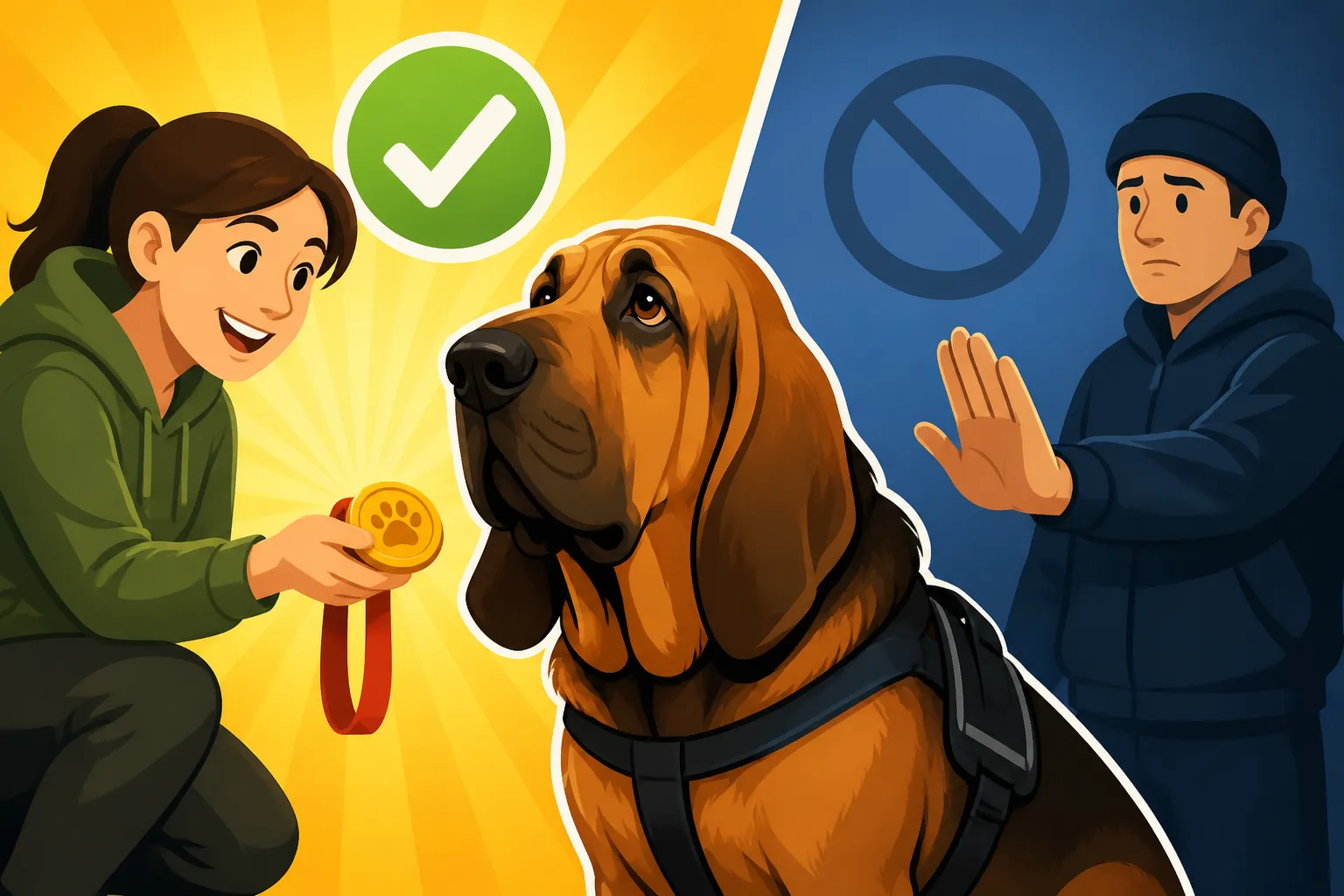
You are your Bloodhound's world, especially when they are working. When your Bloodhound successfully completes a trail and locates the subject, you should be the primary source of praise and reward. This reinforces that their work is for you, and that you are the one who provides the ultimate satisfaction.
Imagine your Bloodhound, tail wagging, nose finally touching the found person. At that exact moment, you step in with enthusiastic praise, a delicious treat, and perhaps their favorite tug toy. This creates a clear association: "I worked hard for my handler, I found the person, and my handler rewarded me handsomely." This structure keeps the dog focused on your cues and your expectations, which is crucial for managing a powerful scent dog on a long line. Remember, Why a Bloodhound Works on a Long Line, Not a Collar is all about maintaining control and clear communication during the intense focus of trailing.
Structuring the Reward Protocol
Consistency is king. Develop a clear, predictable reward protocol that you use every single time your Bloodhound successfully completes a trail, whether in training or a real scenario.
Here’s a general framework:
- Verbal Marker/Praise: The moment your Bloodhound definitively indicates the find (e.g., nose on subject, sitting, baying, etc.), use your verbal marker ("Yes!" or "Good find!") followed by enthusiastic verbal praise.
- Physical Connection: Move in quickly. Secure your dog, and physically connect with them. A leash grab, a quick pat, or a moment of calm reassurance.
- High-Value Reward: Immediately deliver a handful of high-value treats directly from your hand. You can purchase great treat pouches from places like Amazon to keep rewards readily accessible.
- Optional Play: If appropriate and safe, engage in a short, vigorous game of tug or throw a toy. This helps release some of their excitement and energy.
- Wind Down: Slowly transition them from the high excitement of the reward to a calmer state, perhaps with some gentle praise and petting, before moving on to the next task or packing up.
This consistent ritual ensures your Bloodhound always knows what to expect, and that you are the source of that ultimate payoff. It also teaches them to look to you for guidance and reinforcement, rather than relying on an unknown subject. This is especially important for Whether a Pet Bloodhound Should Do Scent Work Classes because it establishes the foundational partnership between dog and owner.
Introducing the "Find" Person Safely
While the handler should be the primary rewarder, it doesn't mean the found person has no role. In training, especially, the subject can be incorporated in a way that still prioritizes the handler-dog relationship.
Here's how:
- Initial Calm Interaction: Once your Bloodhound has been rewarded by you, and is calm, the "found person" can then offer some calm, positive interaction. This might be a gentle pet, a soft voice, or even a pre-arranged, single, small treat (provided by the handler, not the subject's own supply).
- Handler-Directed Interaction: All interaction with the subject should be directed and managed by you. Give the subject clear instructions on how to behave. "Please stay still," "Speak calmly," "You can gently pet her head now." This maintains your control over the situation.
- No Spontaneous Rewards: Emphasize to training subjects that they should never spontaneously offer food or toys. All rewards come through the handler. This prevents confusion and reinforces your role.
- Building Positive Association with People: The goal is for your Bloodhound to view the "find" person as a positive, neutral entity – the successful conclusion of their search – rather than the source of all rewards. Their presence is a good thing, because it means the task is complete, and you will then provide the praise. This is a subtle but important distinction.
Real-World Scenarios and Practical Advice
The theory is one thing, but how does this play out in the messy reality of training and actual deployments?
Training Scenarios vs. Real Deployments
In training, you have the luxury of control. Your "found person" is a known helper, briefed on their role. This is the perfect environment to practice your handler-centric reward protocol. Start with simple runaways and progressively increase complexity. Use different people as subjects to generalize the concept that any person at the end of the trail leads to a reward from you. How a Bloodhound Separates One Person's Scent From a Crowd is a mental feat, and their reward system should be just as robust.
When your Bloodhound is ready for certification or real-world search work, the dynamics change. In actual deployments, the "found person" is often a stranger, potentially in distress, and certainly not prepared to reward your dog. This is where your consistent training pays off. Your Bloodhound has learned that regardless of who the person is, or how they react, their success means a reward from you. This allows them to focus on their job, and you to focus on the operational aspects of the find, like assessing the subject's condition.
It’s also crucial to consider the equipment you use. A well-fitting Which Harness a Bloodhound Trails In and a sturdy long line are essential for control during the moments of high excitement at the find, ensuring that your reward system can be implemented smoothly.
When the "Find" Person Isn't Able to Reward
There will be many times, especially in real searches, where the person found simply cannot or should not interact with your Bloodhound. They might be unconscious, injured, scared, or even deceased. In these critical situations, it is absolutely non-negotiable that your Bloodhound looks to you for reinforcement and direction.
Your consistent training with the handler-as-rewarder protocol will mean your Bloodhound performs their job, finds the person, and then looks to you for confirmation and their reward. They won't be confused or disappointed if the subject doesn't offer a treat, because that was never the expectation you built. This is the safest, most reliable, and most professional way to train and deploy a Bloodhound for scent work. It allows for the focus to remain on the task and the well-being of the found individual, while still motivating your incredible Bloodhound.
Ultimately, whether you're working towards advanced trailing titles or simply enjoying Mantrailing Is the Answer to a Bloodhound, Not Obedience as a hobby, building a strong, clear, and consistent reward system with you at its center is the most effective path to success for you and your Bloodhound. This ensures safety, reliability, and a deeply bonded working partnership, allowing your Bloodhound to confidently use their unparalleled nose. Companies like BAXTER & Bella offer great online training resources that often emphasize this handler-dog bond and consistent reinforcement, which can be invaluable for new scent workers.
Disclaimer
This article is for general informational purposes only and does not constitute professional advice. Laws, prices and regulations vary by location and change over time. Consult a qualified professional for guidance on your specific situation.