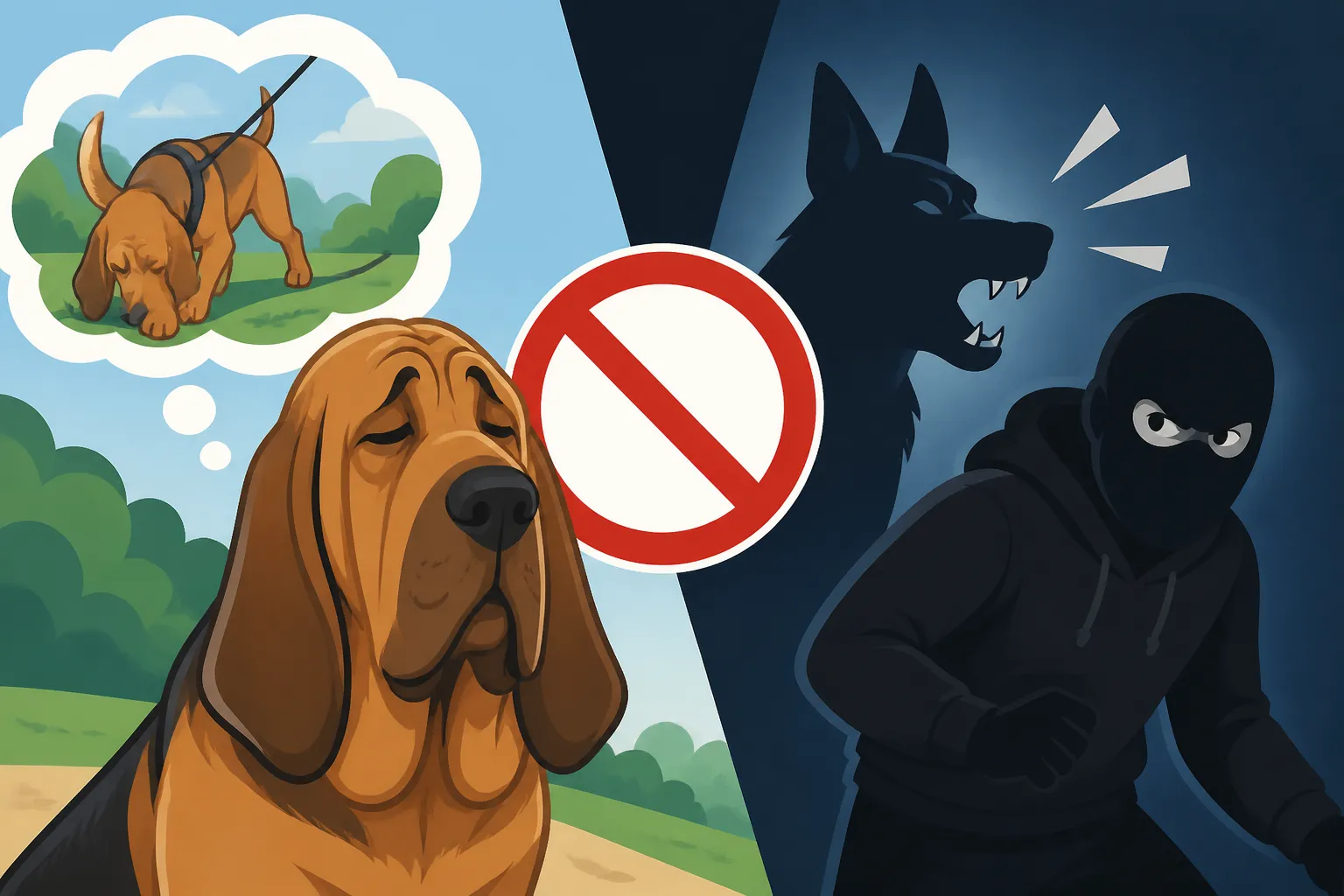
Why a Bloodhound Is Not a Protection Dog
It's easy to look at a majestic, powerful dog like a Bloodhound and assume they'd make a fantastic protection dog. Their sheer size, deep bay, and imposing presence can certainly give the impression of a formidable guardian, ready to defend their home and family. However, the reality is quite different from this common misconception. This guide will delve into why Bloodhounds, despite their impressive stature, are fundamentally unsuited for protection work, focusing instead on their incredible, unique talents.
The Bloodhound's Innate Purpose: Scent Work, Not Protection
When we talk about what a dog is for, we're really talking about what they were bred to do over centuries. For the Bloodhound, that purpose was singularly focused on scent discrimination and trailing. Every aspect of their physical design and mental makeup points to this one incredible ability, leaving very little room for the instincts needed to be a true protection dog.
A Nose Built for Trailing, Not Threat Assessment
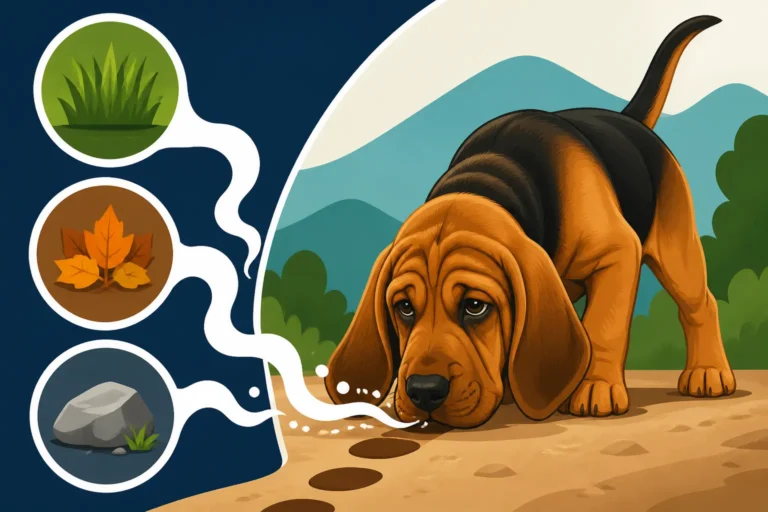
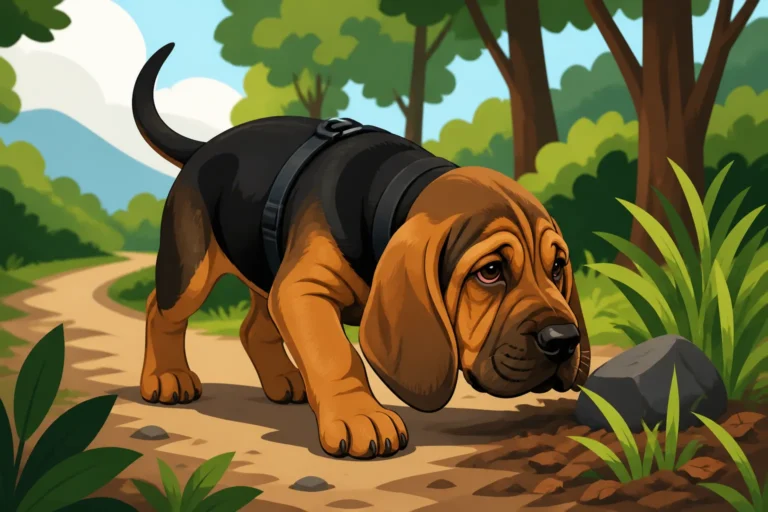
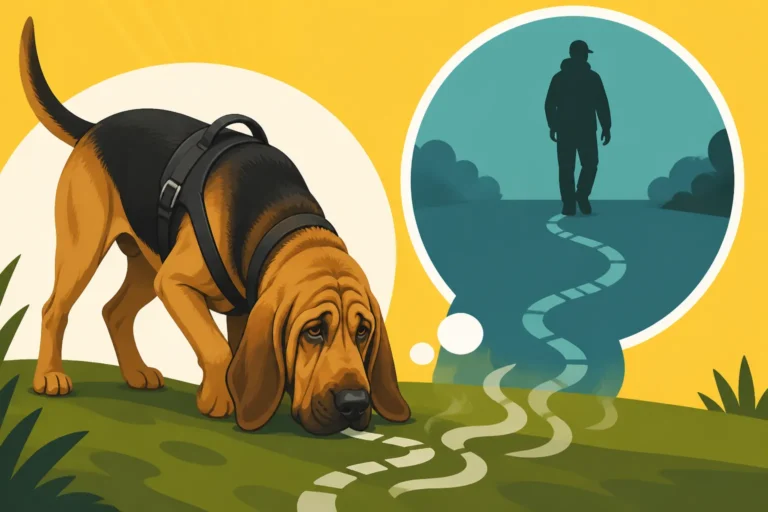
Imagine a Bloodhound's brain as a supercomputer dedicated solely to processing scent information. This isn't just a strong nose; it's an entire neurological system optimized to pick up, dissect, and follow a faint human scent trail, sometimes days old, over incredible distances and through complex environments. When a Bloodhound's nose hits a scent, their world narrows to that single, invisible thread. Everything else — sights, sounds, even a perceived threat — fades into irrelevance. Their instinct tells them, "Follow that scent, find the source," and they will pursue it with an unwavering, almost obsessive determination that truly defines their breed.
This single-minded focus, while invaluable for search and rescue or law enforcement, is precisely why they don't excel at protection. A dog bred for protection needs to be constantly vigilant, assessing its surroundings for potential threats and reacting decisively. A Bloodhound, however, is much more likely to be engrossed in the faint smell of a squirrel that ran across the yard five minutes ago than to be concerned with a stranger walking up the driveway. Their joy comes from solving the puzzle of a trail, not from guarding territory or engaging with perceived dangers. If a "threat" appeared during a trailing exercise, the Bloodhound's primary thought would likely be, "Oh, a new scent! Where did that come from?" and they'd be off, attempting to follow it.
Gentle Giants by Nature
Beyond their specialized noses, Bloodhounds are renowned for their remarkably placid and amiable temperament. They are, almost universally, gentle giants. This isn't just anecdotal; it's a deeply ingrained characteristic of the breed, carefully cultivated by breeders who understood their working role. A dog that is meant to follow a human trail, often finding lost children or vulnerable individuals, cannot be aggressive or intimidating upon "the find." Instead, they are expected to be calm, friendly, and approachable.
This inherent gentleness extends to almost everyone they meet, including strangers. A Bloodhound is far more likely to lean into a stranger for a head scratch or offer a slobbery kiss than to exhibit aggression. They tend to view the world, and everyone in it, with a friendly curiosity rather than suspicion. While their deep bay can be startling, it's typically an expression of excitement, boredom, or a particularly interesting smell, not a warning growl. They are tolerant with children, generally accepting of other animals, and possess a calm demeanor that makes them wonderful companions, but completely unsuitable for any role requiring active defense or aggression.
Instinct Over Training: Why Traditional Protection Training Fails
When you look at breeds like German Shepherds, Rottweilers, or Belgian Malinois, you see dogs whose instincts include territoriality, a strong protective drive, and a willingness to engage. These traits are the foundation upon which sophisticated protection training is built. A Bloodhound simply doesn't possess these inherent drives, making traditional protection training not only difficult but often counterproductive and unfair to the dog.
The Lack of Guarding Instinct
A true protection dog exhibits specific behaviors: they are often wary of strangers, possess a strong territorial instinct, and are naturally inclined to challenge or deter perceived intruders. They learn to differentiate between a friendly visitor and a genuine threat, and they are motivated by a desire to protect their pack and territory. Bloodhounds, on the other hand, generally lack these critical guarding instincts. They are not naturally territorial in an aggressive sense, nor do they typically view strangers with suspicion. In fact, many Bloodhounds greet new people with an enthusiastic, if slightly clumsy, welcome.
Imagine an attempted break-in. A German Shepherd might immediately stand between the intruder and its family, barking furiously, body language tense and confrontational. A Bloodhound, however, might be more interested in sniffing the intruder's shoes, curious about the new scent they've brought into the house. Their immense size and deep bay can be an alarm, but it's rarely coupled with the intent to physically guard or confront. Their baying is often just a very loud announcement, much like a child shouting, "Look, a person!" not "Get out of my house!" You can spend countless hours trying to teach a Bloodhound to "protect," but you're working against thousands of years of selective breeding that wired them to find people, not repel them. Trying to force a Bloodhound into a guarding role can lead to a confused, anxious, or even fearful dog, rather than an effective protector.
The Distraction of Scent
The single biggest obstacle to a Bloodhound performing protection duties is, paradoxically, their greatest asset: their nose. A Bloodhound's world is dominated by scent. Any new, interesting, or strong smell can completely derail their focus, even in what might be considered a high-stakes situation for another breed. This intense sensory input is constant and often overwhelming, making it nearly impossible for them to maintain the sustained vigilance and focus required for protection work.
Consider a scenario where a Bloodhound has been trained, however minimally, to "protect" a specific area or person. If a new, intriguing scent — perhaps from a small animal, a neighbor's barbecue, or even a discarded food wrapper — drifts into their airspace, their primary instinct will almost certainly kick in. They will drop their head and begin trying to trace that smell, completely forgetting any "protection" duties. This isn't stubbornness; it's their intrinsic nature. Their brains are wired to prioritize scent above all else. Trying to overcome this drive through training is like trying to teach a fish to fly; it goes against their very essence. This is why professional search and rescue Bloodhounds are trained to follow specific human scents, and even then, handlers learn to read when their dog has been distracted by extraneous smells. If you're considering a working dog for scent work, Mantrailing Is the Answer to a Bloodhound, Not Obedience is a much better path to explore.
Understanding Realistic Bloodhound "Protection": Alerting vs. Deterrence
While a Bloodhound isn't a protection dog in the traditional sense, they do offer a form of "security" through their presence and their remarkable vocalizations. It's important to distinguish between these passive forms of deterrence and active, confrontational protection.
The Loud and Clear Alarm
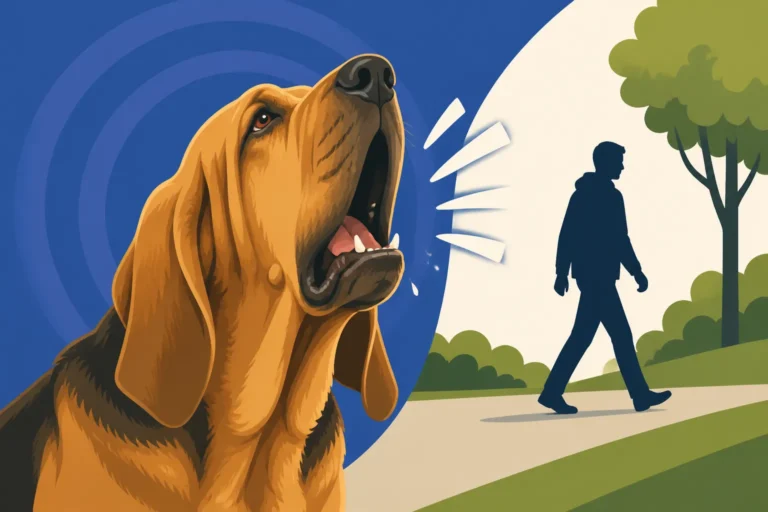
If you've ever heard a Bloodhound bay, you know it's not a sound you easily forget. It's a deep, resonant, and incredibly loud vocalization that can carry for long distances. While it's typically a sign of excitement over a scent or a desire for attention, that powerful voice can certainly serve as a fantastic alarm system. If a stranger approaches your property, your Bloodhound is very likely to announce their presence with a bay that will be hard to ignore.
This is where a Bloodhound's "protection" capabilities truly shine: as a highly effective, albeit non-aggressive, alert system. Their baying can startle potential intruders, alert neighbors, and certainly wake up everyone in your household. It's an unmistakable signal that someone or something unusual is present. However, it's crucial to understand that the bay itself is the "action." The Bloodhound is alerting you, not preparing to engage in a physical confrontation. They are letting you know a person is there, possibly even excitedly, like a child pointing out something new. If you're looking for a dog that provides a robust warning system, the Bloodhound's voice is definitely effective, and you'll soon learn The Baying a Bloodhound Cannot Be Trained Out Of.
Physical Presence as a Deterrent
Let's be honest: a full-grown Bloodhound is an imposing animal. Standing tall, often exceeding 100 pounds, with loose skin and a serious expression, they command attention. Their sheer size alone can be a significant deterrent to anyone with ill intent. Many potential intruders, upon seeing a large, powerful dog, regardless of its actual temperament, will think twice before proceeding. It's a psychological deterrent, rather than a physical one.
This "intimidation factor" is a passive form of security. Your Bloodhound doesn't need to be aggressive or trained in bite work to make someone reconsider entering your home. Their impressive physique alone does much of the work. However, this is not active protection. If an intruder were to persist, a typical Bloodhound would likely not stand its ground or confront. They might continue to bay, they might try to solicit attention, or they might even follow a new, interesting scent the intruder inadvertently brings in. Their large size makes them look like they could be a protection dog, but their gentle nature and primary drives ensure they usually won't act like one. It's about perception, not intent.
What a Bloodhound Is Good For: Their True Strengths
Understanding what a Bloodhound isn't good for helps us appreciate what they are exceptional at. These dogs were bred for specific, incredible talents, and focusing on these strengths allows them to thrive and brings immense joy to their owners.
Unparalleled Trailing Ability
There is no other breed quite like the Bloodhound when it comes to scent work. Their olfactory system is so finely tuned and their drive to follow a trail so profound that their evidence is even admissible in courts of law. From finding lost children in the wilderness to tracking suspects for law enforcement, Bloodhounds are true heroes. This isn't just about having a good nose; it's about unparalleled stamina, relentless focus, and an instinctual understanding of scent dynamics that is simply breathtaking to witness.
If you're looking for a working dog, channeling your Bloodhound's natural instincts into trailing or mantrailing activities is the most fulfilling path for both of you. Many Bloodhound owners engage in amateur or professional scent work, which provides incredible mental and physical stimulation for these dogs. Organizations like BAXTER & Bella offer online puppy training classes that can lay a foundation for good behavior, which is essential before diving into more specialized scent work. These classes focus on positive reinforcement, building a strong bond, and understanding canine communication, all of which are crucial for any working relationship with your Bloodhound. Training a Bloodhound to use their nose on a trail, whether for sport or actual search work, is deeply rewarding and aligns perfectly with their natural gifts. You can even explore How a Bloodhound Is Certified for Search Work if you're serious about pursuing this path.
Loving Family Companions
Beyond their incredible working abilities, Bloodhounds make truly wonderful family companions. Their gentle, patient, and affectionate nature endears them to everyone they meet. They are known for being incredibly tolerant with children, often soaking up attention and pets with a calm demeanor. Their laid-back attitude inside the house, especially after they've had their mental and physical exercise, makes them surprisingly easy to live with for such a large dog. They thrive on companionship and want nothing more than to be a part of their human family.
While their size can sometimes be a bit much for toddlers, a Bloodhound's careful disposition usually means they are aware of their body around smaller beings. Proper socialization from a young age is always key, but their inherent sweetness shines through. They tend to be "leaners" – they'll lean their entire body weight against you for comfort and affection, a habit that can be quite charming (if a bit heavy!). They bond deeply with their families and provide an endless source of quiet companionship, silly antics, and profound loyalty. If you're ready for a big, loving, slobbery companion who will keep you entertained with their nose-driven adventures, a Bloodhound might be the perfect addition to your home. For new puppy owners, a comprehensive program like the BAXTER & Bella Online Puppy School can help you navigate the early stages of training and socialization, ensuring your Bloodhound grows into a well-adjusted and beloved family member. For more on living with these gentle giants, check out A Bloodhound in a House With Small Children.
Here's a quick comparison of a Bloodhound versus a typical protection breed:
| Trait | Bloodhound | Typical Protection Breed (e.g., German Shepherd, Rottweiler) |
|---|---|---|
| Primary Drive | Scent trailing, finding, curiosity | Guarding, protecting, territorial defense |
| Temperament | Gentle, amiable, tolerant, friendly | Reserved, vigilant, confident, sometimes aloof with strangers |
| Response to Stranger | Curious sniffing, possibly a loud bay for attention | Wary, alert bark, body blocking, potential confrontation |
| Focus in Crisis | Easily distracted by new scents | Sustained focus on threat, handler's commands |
| Trainability for Protection | Very low aptitude due to conflicting instincts | High aptitude, excels with specialized training |
| Physical Deterrent | High (due to size) | High (due to size and assertive demeanor) |
| Vocalizations | Deep, resonant bay (alerting, not aggressive) | Sharp, authoritative bark (warning, challenging) |
| Overall Role | Scent tracker, loving companion | Guardian, protector, working dog in various fields |
You might find fantastic training accessories like extra-long tracking lines or snoods (to keep those long ears out of the food bowl) on platforms like Amazon, which are much more aligned with a Bloodhound's true needs and talents than any protection gear.
Disclaimer
This article is for general informational purposes only and does not constitute professional advice. Laws, prices and regulations vary by location and change over time. Consult a qualified professional for guidance on your specific situation.