How Loud a Bloodhound’s Bay Is
Anyone who has spent more than a few minutes with a Bloodhound knows one undeniable truth: these magnificent hounds have a voice, and they are not afraid to use it. If you're wondering just how loud a Bloodhound's bay can get, you're not alone. It's a question that often weighs on potential owners and sometimes challenges current ones, and understanding the sheer volume and distinct nature of their vocalizations is crucial for a harmonious life together. This guide will dive deep into the unique sound of a Bloodhound, why they make it, and what you can realistically expect in your home and neighborhood.
Understanding the Bloodhound Bay: More Than Just a Bark
When we talk about a Bloodhound's "bark," we're really missing the essence of their vocal expression. What they do isn't typically the sharp, explosive bark of a terrier or a shepherd. It's something far more ancient, far more resonant, and uniquely hound.
The Distinctive Sound Profile of a Bloodhound
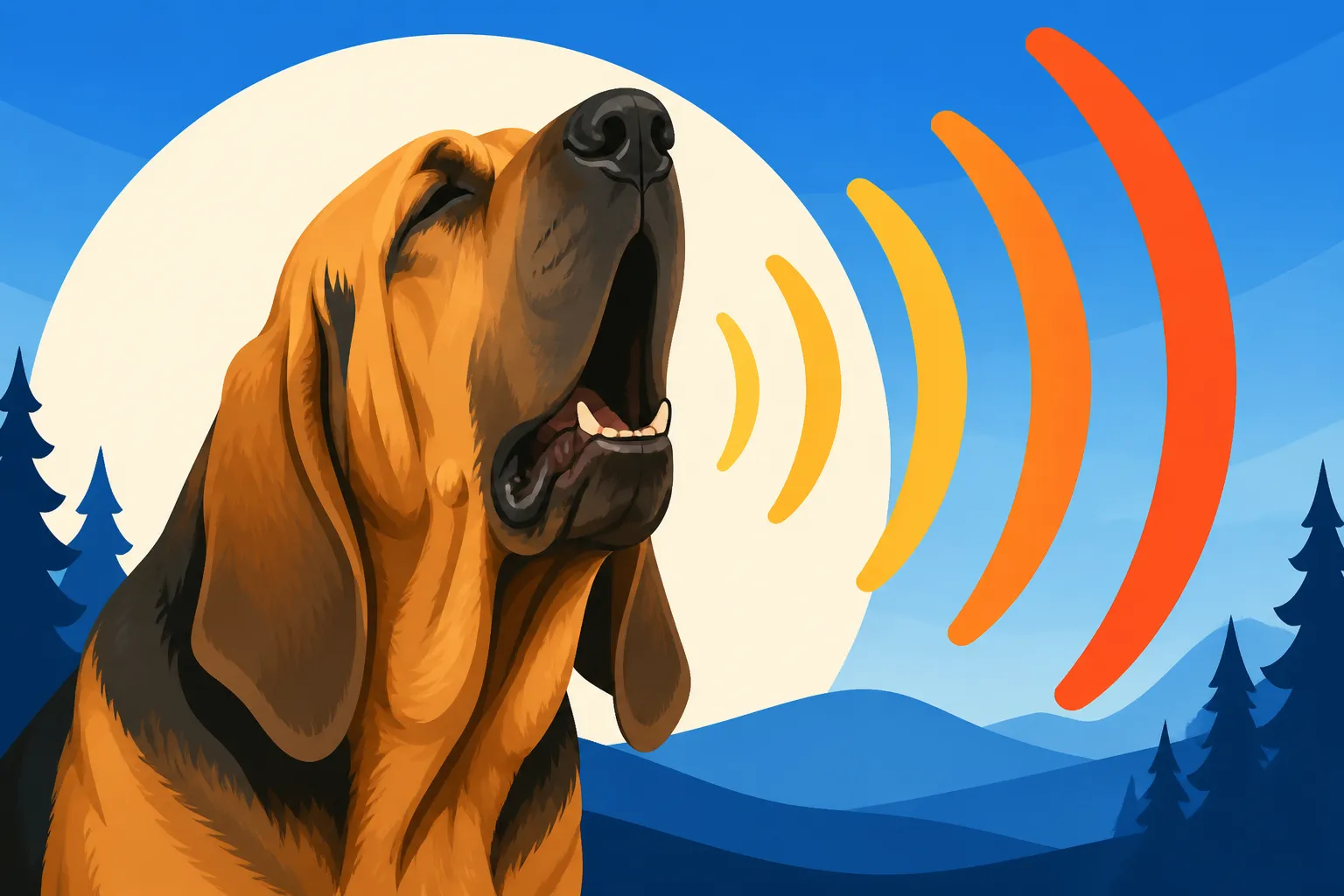
A Bloodhound's signature sound is its bay. Imagine a sound that seems to rise from the very depths of their chest, a deep, mournful, and incredibly prolonged bellow that carries with it an undeniable sense of purpose. It’s a sound that has been honed over centuries, designed to echo across vast distances and announce a discovery or call to the pack. Unlike a quick, sharp bark that might signify a startled reaction, a bay is a sustained vocalization, often stretching into several seconds, sometimes even a minute, with varying inflections that communicate different levels of urgency or emotion. It’s often described as sounding like a foghorn or a mournful cry, deep and sonorous, vibrating through the air rather than merely cutting through it.
The physical attributes of a Bloodhound play a huge role in the production of this sound. Their large, deep chests act like natural resonating chambers, amplifying the sound waves. Their loose flews (the pendulous upper lips) and pendulous ears aren't just for scenting; they also contribute to the unique acoustic quality, helping to shape and project that unmistakable bay. It's an almost primal sound, one that evokes images of ancient forests and long-lost trails. For many, it's the very soul of the breed expressed in sound, but for others, especially unprepared neighbors, it can be quite a shock.
What Triggers a Bloodhound's Vocalizations?
Understanding the triggers behind a Bloodhound's vocalizations is key to managing them. While they can bark like any other dog, their characteristic bay is most often tied to their extraordinary sense of smell. The primary, overarching trigger is scent. When a Bloodhound catches a compelling scent – whether it's the specific target of a trail, a deer crossing the property line, or even just an interesting squirrel in the yard – their entire being focuses on that olfactory information. The bay becomes their way of communicating their discovery and intense focus. It’s a message that says, "I'm on it! I've found something amazing!"
Beyond scent, other triggers exist, though they tend to result in more conventional barking or whining rather than the full-throated bay. Excitement, such as when their favorite human comes home, or anticipation of a walk or meal, can prompt joyful barks and whimpers. Loneliness or boredom, especially if a Bloodhound is left without adequate mental or physical stimulation, can also lead to sustained vocalizations. This isn't usually the deep, purposeful bay, but more of a fretful, attention-seeking, or anxious barking and howling. They are deeply social creatures and dislike being isolated. Territoriality, like a stranger approaching the door, can also elicit barks, though typically less of the sustained bay unless they're "trailing" the person's scent from inside. For a deeper dive into the reasons behind their distinctive voice, you might want to read Why a Bloodhound Bays.
Measuring the Volume: Decibels and Distance
It’s one thing to describe a sound as "loud," but another to quantify it. A Bloodhound's bay isn't just loud; it's a sound that can travel, penetrate walls, and make its presence known.
Comparing Bloodhound Bay to Other Breeds
When you ask how loud a Bloodhound's bay is, you're essentially asking about its decibel level and how it compares to other dogs. While specific decibel readings can vary wildly based on the individual dog, its size, the acoustics of the environment, and its level of excitement, Bloodhounds are generally considered among the louder breeds, especially when they are "on scent" or truly letting loose. A typical dog bark can range from 80-90 decibels. A Bloodhound's bay, particularly a full, excited one, can easily hit and even exceed 100-110 decibels. To put that in perspective, 100 decibels is often compared to a jackhammer, a motorcycle, or even a chainsaw. Sustained exposure to sounds at this level can be uncomfortable and potentially damaging to human hearing over time, although thankfully, it's usually not sustained for extremely long periods in a living environment.
Think of it this way: a small terrier's bark might be sharp and piercing, but a Bloodhound's bay is like a deep, resonant horn. It's not just the intensity, but the frequency and duration that make it so impactful. Compared to a Beagle, another scent hound, the Bloodhound's bay is typically deeper, more resonant, and has a more profound carrying power. While a Beagle might be more prone to sustained yapping, the Bloodhound's individual bays are often more imposing. Against a German Shepherd, which might have a powerful, authoritative bark, the Bloodhound's bay is distinctively different in its timbre and often in its endurance. The large lung capacity and muscular structure built for sustained exertion on a trail directly contribute to their ability to produce such a powerful and long-lasting vocalization.
The Impact of Distance and Environment
The real challenge with a Bloodhound's bay isn't just its immediate volume, but how incredibly far it can travel and how it interacts with its environment. Their low-frequency, resonant bays are particularly good at cutting through ambient noise and carrying over long distances. In an open, rural setting, a Bloodhound's bay can be heard for a mile or more, especially on a still night. This is precisely what it was bred for: to signal a successful find to a handler who might be far behind.
In more developed areas, the sound waves interact with buildings, trees, and other structures. While these might muffle higher-pitched sounds, the deep resonance of a Bloodhound's bay can often penetrate walls and travel around obstacles surprisingly well. Imagine living in a suburban neighborhood: your Bloodhound bays in the backyard. The sound might travel not just to your immediate next-door neighbors, but potentially two or three houses down, depending on the wind, time of day, and how closely packed the houses are. Concrete walls and dense foliage might absorb some of the sound, but a clear line of sight, or even just open air, allows it to ripple outwards with remarkable efficiency.
This carrying power means that even if you're inside your own home, you might still hear a neighbor's Bloodhound clearly, and vice-versa. During times when ambient noise is low, like the early morning or late evening, the bay's impact is even more pronounced. This characteristic is why managing a Bloodhound's vocalizations is not just about your peace of mind, but also about maintaining good relationships with those around you.
Here's a simplified look at how various dog sounds might compare, keeping in mind individual variations:
| Dog Type/Sound Characteristic | Typical Decibel Range (dB) | Common Perception | Carries How Far (Approx.) |
|---|---|---|---|
| Small Terrier Bark (sharp) | 80-95 | Piercing, annoying | Moderate (a few houses) |
| Lab/GSD Bark (authoritative) | 90-105 | Loud, warning | Significant (block or two) |
| Beagle Howl/Bark (yappy) | 95-105 | Persistent, high-pitched | Significant (block or two) |
| Bloodhound Bay (deep, resonant) | 100-115+ | Powerful, mournful, far-reaching | Very Far (1+ mile in open) |
| Quiet Whine/Grumble | 30-50 | Barely audible | Very short |
Note: These are approximations and will vary greatly based on individual dogs, environment, and specific circumstances.
Living with the Bay: Neighborly Concerns and Management
Owning a Bloodhound means accepting their voice as part of the package. It’s beautiful in its own way, a testament to their heritage, but it also requires thoughtful management to ensure it doesn't become a source of conflict.
The Reality of Bloodhound Noise for Homeowners
The reality for homeowners is that a Bloodhound's bay is a significant sound presence. It's not something you can easily ignore, and neither can your neighbors. Many people are simply not accustomed to a dog with such a powerful vocal output, and what sounds like a "sad song" to a Bloodhound enthusiast might sound like a constant nuisance to someone unfamiliar with the breed. The deep, sustained nature of the bay can feel more intrusive than sharp, intermittent barking, especially if it occurs frequently or at inconvenient hours.
It’s not uncommon for Bloodhound owners to receive complaints from neighbors, sometimes even leading to official interventions if the issue isn't addressed. People have busy lives, young children sleeping, or simply enjoy peace and quiet, and a loud, consistent bay can disrupt all of that. This is why when considering a Bloodhound, it’s not just about if you can tolerate the noise, but if your living situation and community can. A rural property with plenty of space between houses is often ideal, but even then, sound carries. In a suburban or urban environment, the challenges are amplified. You might find it useful to consider Whether Neighbors Tolerates a Bloodhound when making your decision.
Strategies for Minimizing Excessive Baying
While you can't train the bay out of a Bloodhound entirely – it's too deeply ingrained in their nature – you absolutely can manage and minimize excessive baying. The most effective strategies revolve around understanding why they are baying and addressing those underlying needs.
Firstly, and most importantly, is fulfilling their innate drive for scent work. A bored Bloodhound is a vocal Bloodhound. Their incredible noses are their primary way of interacting with the world, and if that powerful sense isn't engaged, they will find other, often louder, ways to express themselves. Engaging in regular mantrailing, even just as a hobby, provides an unparalleled outlet. Even twenty minutes of dedicated scent work can be more mentally tiring and satisfying for a Bloodhound than an hour-long walk around the block. Mantrailing Is the Answer to a Bloodhound, Not Obedience highlights this crucial point. Consider enrolling in online puppy training courses, like those offered by BAXTER & Bella, even if your dog isn't a puppy, to learn positive reinforcement techniques for general obedience and engagement that can indirectly help with vocalizations by building a stronger bond and providing mental stimulation.
Secondly, ensuring they get adequate physical exercise is vital, but always remember that physical exercise alone is often insufficient for a Bloodhound's mental needs. A sniffy walk where they get to engage their nose is far more beneficial than a brisk jog on a leash where they are discouraged from scenting.
Thirdly, management techniques, such as teaching a "quiet" cue, can be effective with consistent positive reinforcement. This involves rewarding them heavily when they are quiet or when they stop baying on command. It’s a process that takes patience and consistency, but it is achievable. For more information on this, explore Whether a Bloodhound Can Be Taught a Quiet Cue.
Finally, avoid inadvertently reinforcing the baying. If they bay for attention and you immediately give it to them (even negative attention), you're teaching them that baying works. Instead, wait for a moment of quiet before engaging. This is easier said than done, especially when neighbors are involved, but it’s a critical component of behavior modification. And under no circumstances should you resort to methods that punish vocalization, such as bark collars, as they are ineffective and detrimental for a Bloodhound. Why a Bark Collar Is the Wrong Answer for a Bloodhound explains this in detail.
The Scent-Driven Bay: Why It's Inherent and Important
To truly live with and appreciate a Bloodhound, you must understand that their bay is not a flaw in their character; it's a feature, a deeply ingrained part of their genetic makeup and historical purpose.
The Instinctual Nature of the Bloodhound's Voice
The bay of a Bloodhound isn't "bad behavior" in the way jumping on guests or chewing furniture might be. Instead, it's an intrinsic part of who they are, a direct manifestation of their unparalleled olfactory abilities. For centuries, Bloodhounds were selectively bred to follow scent trails, often for miles, sometimes days old, through challenging terrain. Once they found their quarry, or simply confirmed they were on the correct line, that deep, resonant bay was their signal. It told the hunters, who might be far behind, exactly where they were and that the trail was hot. Without that powerful voice, their utility as a trailing dog would have been severely hampered.
This means that when your Bloodhound bays at a scent, they are doing precisely what generations of their ancestors were bred to do. They are responding to an instinct that is as fundamental to them as breathing. It's not a choice to be "stubborn" or "disobedient"; it's a drive to communicate about the world's most fascinating element – scent. To deny them this form of expression entirely would be to deny a core part of their identity. Understanding this helps shift perspective from viewing it as a problem to viewing it as a characteristic that needs management and redirection. Why a Bloodhound Bays further delves into these deep-seated instincts.
Fulfilling the Bloodhound's Drive to Reduce Vocalizations
Given the instinctual nature of their bay, the most ethical and effective way to manage vocalizations is through fulfillment, not suppression. A Bloodhound who has had its mental and physical needs met, particularly its scenting needs, is a much quieter and more content Bloodhound. Consistent scent work is the hero here. This could mean formal mantrailing training, participating in nose work classes, or even just setting up simple "find it" games around your yard or house. The goal is to give their nose a job, to let them engage in the activity they were born to do.
Daily leashed walks where you allow your Bloodhound to genuinely "read the newspaper" with their nose – sniffing every bush, tree, and patch of grass – are incredibly important. These aren't just walks for physical exercise; they are mental exercises that engage their most powerful sense. Investing in a good quality, comfortable tracking harness and a long line (15-30 feet or more) is essential for these types of activities. You can find excellent options on Amazon, which offers a wide range of durable harnesses and long lines suitable for strong-pulling hounds. Allowing them to explore scents on a long line in a safe, open area satisfies their primal urge to follow a trail, without the risk of them disappearing off into the horizon. For advice on appropriate gear, see How Long a Line a Bloodhound Handler Buys.
Beyond formal scent work, enrichment toys that dispense treats and require problem-solving (like Kongs, puzzle feeders, or snuffle mats, often available on Amazon) can also provide mental stimulation, especially when you need to leave them alone. These tools help occupy their minds and can reduce boredom-induced vocalizations. Remember, a tired nose leads to a tired, quiet hound. And consistency is key; Bloodhounds thrive on routine, so regular engagement will yield the best results for a quieter home. The more you engage their nose and brain, the less they'll feel the need to broadcast their observations to the world at large.
Practical Tools and Environmental Considerations
While direct training and fulfillment are paramount, there are also practical tools and environmental adjustments that can help manage the sound levels of a Bloodhound's bay.
Acoustic Solutions for Sound Management
For those living in closer quarters or who simply want to create a calmer environment, considering acoustic solutions can be beneficial. While complete soundproofing is often impractical and expensive for an entire home, there are ways to minimize sound transmission, particularly in areas where your Bloodhound spends a lot of time, such as a designated kennel area or their sleeping space.
Heavy curtains or drapes over windows can absorb some sound waves. Installing solid core doors instead of hollow ones can also make a significant difference. For outdoor kennels, consider solid fencing panels or acoustic baffling designed for outdoor use, though this can be a more involved project. Even simply ensuring your windows and doors are well-sealed can prevent some sound from escaping or entering.
Inside the home, soft furnishings like carpets, rugs, upholstered furniture, and even wall hangings can help absorb sound. Think about creating a "quiet zone" for your Bloodhound, perhaps a cozy crate in a quieter part of the house, where they can retreat and feel secure. Playing gentle music or a white noise machine can also help mask some of your Bloodhound's sounds internally, and conversely, mask external sounds that might trigger them. Remember, these are aids to management, not a replacement for addressing the dog's underlying needs.
Gear and Management Aids
Beyond the training and environmental modifications, certain gear can be invaluable for managing a Bloodhound's powerful voice and ensuring their safety and contentment.
- Long Lines: As mentioned, a high-quality, durable long line is essential. These allow your Bloodhound to explore scents over a wider area while still remaining safely attached to you. They are critical for letting your Bloodhound "work" their nose in appropriate outdoor settings. You can find a wide variety of lengths and materials on Amazon.
- Secure Harnesses: A well-fitting, sturdy harness (not a collar) is crucial for Bloodhounds, especially when on a long line or even a standard leash. Their drive to follow a scent is so strong that they can easily pull out of a collar, risking injury to their neck or throat, and certainly escaping. A front-clip harness can help manage pulling, while a back-clip harness is often good for tracking.
- Heavy-Duty Crates: A large, sturdy crate provides a safe den for your Bloodhound, and can also be a useful tool for managing periods when you need them to be quiet or contained. Ensure it's appropriately sized and durable enough for a strong hound. Again, Amazon is a great place to research options.
- Snoods: These fabric tubes are worn around a Bloodhound's head to keep their long ears out of food and water bowls. While not directly related to baying, clean, healthy ears are part of overall well-being, and a comfortable dog is a more content, and potentially quieter, dog. You can find a variety of snoods from specialty pet retailers and general online marketplaces like Amazon.
- Appropriate Chew Toys: Durable chew toys are essential for all dogs, but especially for large, powerful chewers like Bloodhounds. Chewing is a natural, stress-relieving behavior. Providing appropriate outlets for this instinct can help prevent destructive chewing and also provide a quiet, engaging activity.
The key to all these aids is to use them as part of a comprehensive management strategy, focusing on meeting your Bloodhound's unique needs, rather than just trying to silence them.
Disclaimer
This article is for general informational purposes only and does not constitute professional advice. Laws, prices and regulations vary by location and change over time. Consult a qualified professional for guidance on your specific situation.