Whether an Average Owner Can Train a Bloodhound to Trail
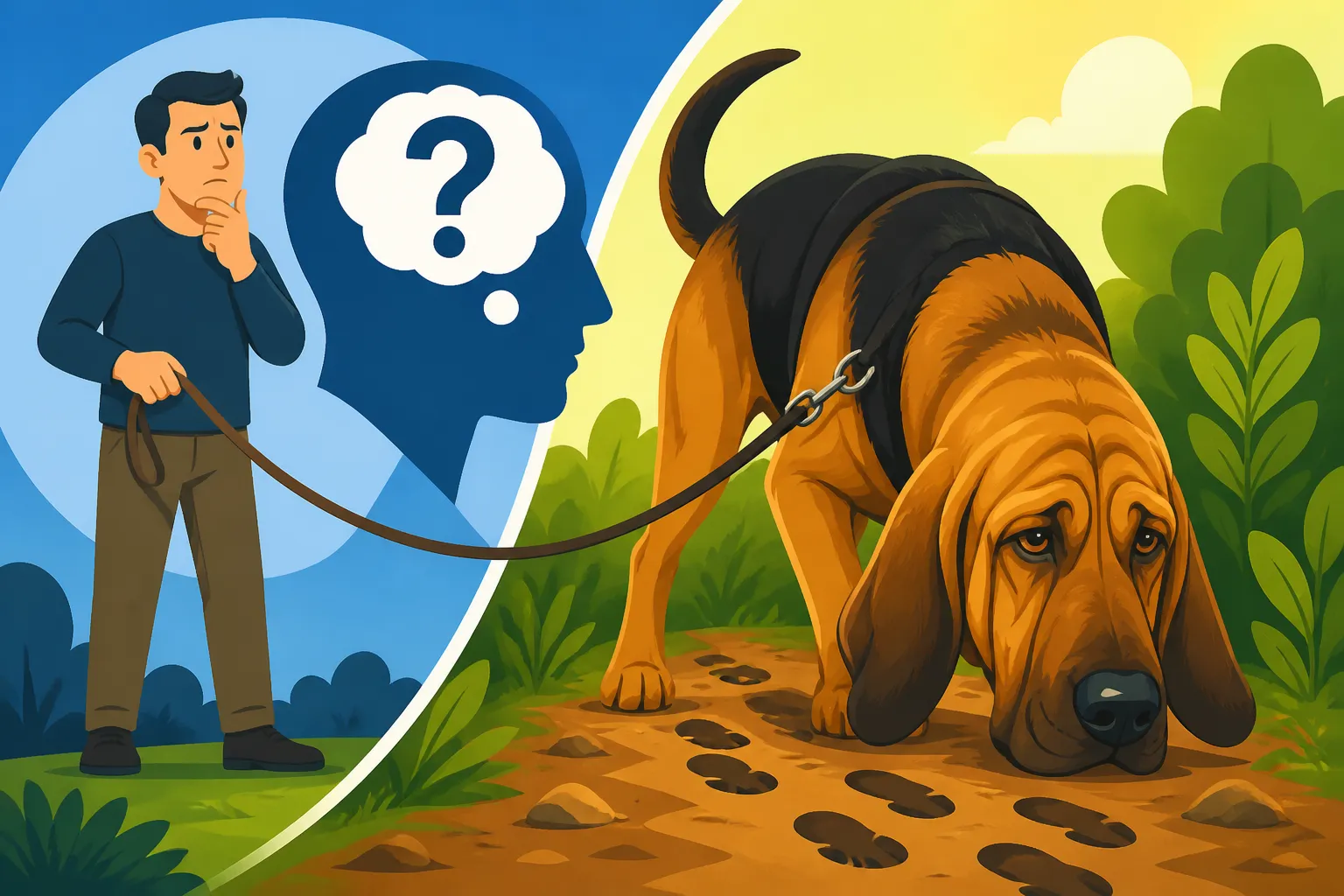
Many Bloodhound owners harbor a secret dream of seeing their majestic hound put that legendary nose to work, yet the idea of formal "trailing" often feels like something reserved for law enforcement K9 units or highly specialized search and rescue teams. It's easy to assume that such an incredible talent requires an equally incredible, professional trainer. But the truth is, the average pet owner can absolutely tap into their Bloodhound's innate scenting abilities, and this guide will show you how to embark on that incredibly rewarding journey.
Understanding the Bloodhound's Innate Trailing Drive
Before we even talk about training, it's vital to grasp that a Bloodhound isn't just a dog that can smell well; they are a dog that is defined by its nose. Their entire being is geared towards unraveling scent puzzles, and understanding this fundamental truth is the first step toward successful scent work with your hound.
Their Unparalleled Olfactory Ability
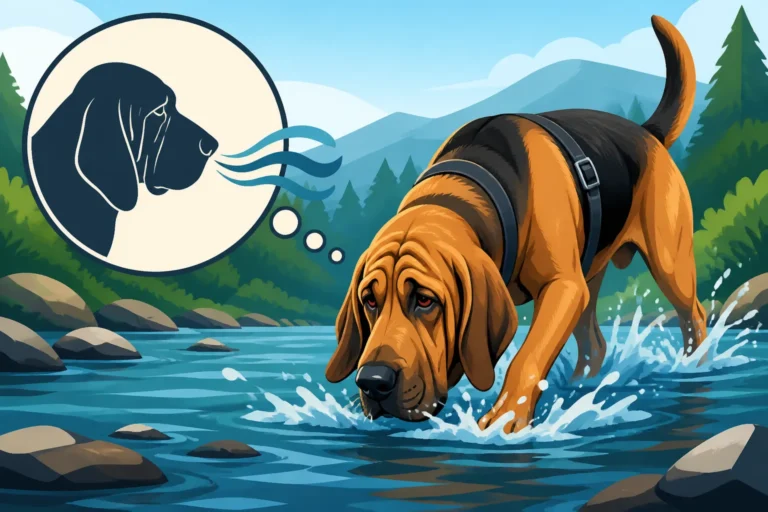
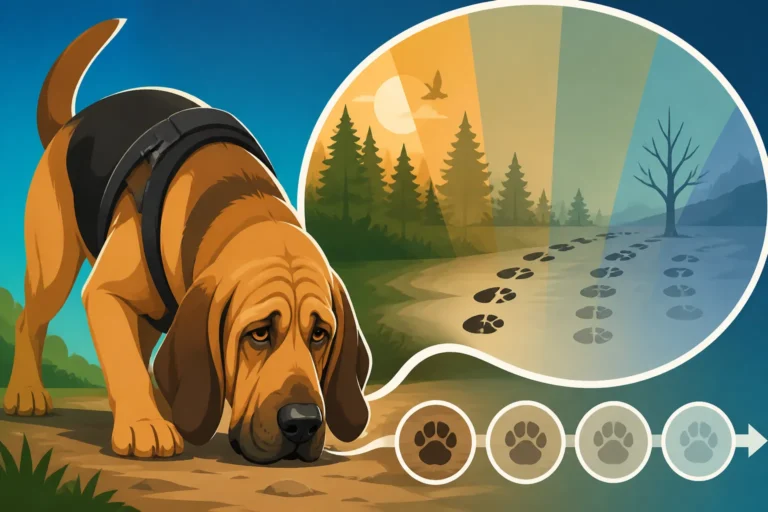
Bloodhounds possess an olfactory system that is, quite frankly, astonishing. It's not merely superior; it operates on a different plane than most other breeds, let alone humans. Imagine perceiving your world not primarily through sight or sound, but through an intricate, constantly shifting tapestry of odors. That’s a Bloodhound’s reality. This isn't a learned trick they perform; it's a fundamental aspect of their very being, a trait meticulously cultivated over centuries of selective breeding. They boast an astounding number of scent receptors, estimated to be hundreds of millions more than even other highly scent-driven breeds. This incredible density gives them the ability to not only detect faint odors but to distinguish and isolate individual human scent molecules from a complex background of environmental smells. It’s what makes them uniquely qualified to answer the question, What a Bloodhound Is Actually Smelling on a Trail.
Furthermore, their distinctive physical characteristics—those long, pendulous ears that sweep scent towards their nose, the deep dewlaps and profuse wrinkles that trap scent particles—all contribute to their unparalleled ability. These aren't just charming breed traits; they are functional tools designed to enhance their scenting prowess. For the average owner, this means you're not trying to teach a Bloodhound how to smell; you are simply providing the opportunity and framework for an instinct that is already profoundly and powerfully present within them. Your role is less about instructing and more about facilitating, acting as a supportive partner to their natural genius.
When a Bloodhound truly "hits" a scent, it’s a remarkable transformation. Their entire focus narrows, the world outside the invisible thread of scent dissipates, and they become a singular, driven entity. This intensity is why traditional obedience cues often fall by the wayside when a Bloodhound is engaged in scent work; their nose, with its undeniable pull, simply outvotes everything else. Recognizing and respecting this inherent, all-consuming drive is the cornerstone of any successful scent work endeavor with your Bloodhound.
The Instinctive Need to Follow Scent
For a Bloodhound, following a scent isn't just a fun pastime or a casual hobby; it is a deeply fulfilling, instinctual need. They are purpose-bred hounds, and that singular purpose is trailing. To deny them an outlet for this primal drive would be akin to expecting a Border Collie to ignore a flock of sheep or a Labrador Retriever to forgo retrieving a thrown ball. When a Bloodhound is given a scent and allowed to pursue it, you witness a remarkable metamorphosis. The often laid-back, sometimes clumsy house dog transforms into a focused, driven, and supremely confident working animal. This is where they truly come alive, where every fiber of their being feels aligned with their genetic destiny. It taps into something ancient and deeply satisfying within their spirit.
This profound inherent drive means that motivating a Bloodhound for scent work is often far more straightforward than attempting to teach them intricate obedience routines that may go against their independent nature. The reward for a Bloodhound isn't solely a treat or a toy at the conclusion of a successful track; the very act of trailing itself is intrinsically and overwhelmingly rewarding. The process of unraveling a scent puzzle, meticulously following the invisible thread left by a person, is the ultimate game for them. It engages their mind, stimulates their senses, and provides profound physical activity in a way that few other activities can match. This powerful intrinsic motivation is an enormous advantage for the average owner, as you are working with your Bloodhound's nature, harnessing their predispositions, rather than struggling to impose an artificial structure upon them.
Consider the unwavering focus a Bloodhound exhibits when its nose is to the ground, ignoring seemingly irresistible environmental distractions. This isn't mere stubbornness; it's an unwavering commitment to their primary sense, an indication of their single-minded devotion to the task. Many owners discover that once they truly embrace and provide an outlet for this core aspect of their Bloodhound, their entire relationship deepens and improves. It significantly boosts the dog's confidence, provides unparalleled mental and physical stimulation, and strengthens the unique bond between handler and hound as you learn to read and trust your dog's subtle cues on the trail. It evolves into a true partnership, a dance where the dog, guided by its nose, takes the lead.
Why "Obedience" Isn't the Goal
When we discuss training a Bloodhound for trailing, it is absolutely critical to recalibrate our mindset, moving away from conventional obedience paradigms. Many new owners come from backgrounds with other breeds where a crisp heel, lightning-fast recall, and rock-solid stays are the ultimate benchmarks of a well-trained dog. With a Bloodhound focused intently on a scent trail, such expectations are not only impractical but can actually be detrimental to their work. Your Bloodhound's primary objective in this context is to follow the designated scent, not to instantly respond to every command you issue. In fact, excessive interference or attempts to micromanage their every move can disrupt their concentration and hinder their natural abilities. This is precisely why we often emphasize that Mantrailing Is the Answer to a Bloodhound, Not Obedience.
The ultimate goal in scent work is to effectively facilitate your Bloodhound’s natural ability, not to exert rigid control over it. As the handler, your primary role is to skillfully manage the long line, anticipate and navigate environmental obstacles, and, most importantly, interpret the myriad of signals your Bloodhound is communicating through their nose, body language, and changes in their trailing pace. It is a profound partnership where the dog is unequivocally the expert in scent detection, and the human acts as the vital support crew, providing logistical assistance and understanding. If your Bloodhound, perhaps off-leash in a seemingly secure, fenced area, suddenly catches a compelling scent and takes off, no amount of urgent "come!" commands will be able to override the power of that invisible thread of odor. This unwavering commitment to scent is why Why Recall Fails on a Bloodhound Outdoors is a common and predictable reality for the breed.
This fundamental shift in perspective can be incredibly liberating for owners. Instead of engaging in a frustrating struggle to force a Bloodhound into a traditional obedience mold that fundamentally clashes with its deeply ingrained instincts, you learn to embrace and celebrate its unique and extraordinary talents. You develop a profound trust in their nose, learn to confidently follow their lead, and find immense satisfaction in celebrating their triumphs on the trail. A Bloodhound may never achieve an advanced obedience title, but it possesses the inherent capability to excel spectacularly at locating a "lost" person, whether that person is a family member playfully hiding in a local park or a dedicated volunteer meticulously laying a complex trail in a more challenging environment. The core secret lies in understanding that their intelligence and unparalleled talent reside in a different, highly specialized domain.
The Realities of Training a Bloodhound for Scent Work
While Bloodhounds are born with an extraordinary nose, guiding that talent into effective trailing requires more than just instinct. It demands dedication, the right kind of learning, and a clear understanding of what you're aiming for.
The Commitment Required
Let's be completely transparent: while your Bloodhound comes pre-loaded with an incredible olfactory system, "training" them to trail effectively still necessitates a substantial and consistent time commitment from you, the owner. This isn't a hobby you can realistically pursue once a month and expect significant progress. Consistent practice is the cornerstone for building your dog's confidence, refining their nascent trailing skills, and perhaps most crucially, developing your own handling proficiency. You'll need to allocate regular, dedicated sessions, ideally on a weekly or bi-weekly basis, to both laying and actively following trails. These sessions can range from short, enjoyable "runaways" conducted in your local park or even backyard, to more structured and longer trails designed to challenge your dog in diverse environments.
The commitment extends beyond just the physical hours spent on the trail. It encompasses a continuous learning process for you, involving the study of scent theory, understanding the various environmental factors that can impact scent longevity and dispersion, and diligently honing your observation skills to accurately interpret your Bloodhound's often subtle cues and shifts in behavior. It truly becomes a shared learning journey for both ends of the leash. You might find yourself dedicating time to meticulously mapping out potential trail locations, recruiting reliable "runners" (the individuals your Bloodhound will track), and even reviewing videos of your trailing sessions to identify areas for improvement in both your dog's work and your handling technique. It's an immersive and intellectually stimulating hobby that has a strong tendency to evolve into a profound passion.
Beyond these practical and intellectual aspects, there's an undeniable emotional and mental commitment involved. There will undoubtedly be frustrating days when your Bloodhound seems unusually distracted, or when you admittedly misread their signals, leading to confusion. There will be days when the weather conditions are far from ideal, or when finding a suitable, fresh location for a trail proves challenging. The commitment means persevering through these inevitable setbacks, celebrating every small victory with genuine enthusiasm, and consistently reminding yourself that the overarching goal is not unattainable perfection, but rather consistent progress and, most importantly, mutual enjoyment for both you and your incredible hound. It's about embracing the journey with all its ups and downs and appreciating the unique and powerful bond it intrinsically forges.
Finding the Right Guidance
While your Bloodhound is undeniably equipped with the world's most impressive nose, you, as the average owner, absolutely need expert guidance on how to properly facilitate, understand, and interpret their scent work. This is precisely where seeking out experienced mentors or joining a dedicated scent work group becomes an invaluable and often indispensable step. Attempting to navigate the complexities of trailing entirely on your own can quickly lead to profound frustration, the development of counterproductive habits, and missed opportunities to truly nurture your Bloodhound's exceptional talent. It's crucial to seek out groups that specifically focus on "mantrailing" (tracking a specific human) or "human remains detection" (HRD) for sport or real-world application, as these often provide a more tailored approach that truly taps into a Bloodhound's full potential, beyond more general "nose work" classes.
Many regions have active local tracking or trailing clubs, some of which may be affiliated with breed-specific organizations like the American Bloodhound Club or various independent scent work associations. These clubs typically offer structured training programs, provide a pool of dedicated "runners" to lay diverse and challenging trails, and, most importantly, offer access to experienced handlers who possess the critical ability to accurately read your dog's intricate behavior and provide expert guidance throughout the entire process. They can impart essential knowledge on correct leash handling techniques, demonstrate how to properly start a dog on a scent article, and educate you on understanding and mitigating environmental contamination on a trail. Exploring online resources, such as specialized forums or educational platforms like BAXTER & Bella online puppy school, can also provide valuable theoretical insights and often point you towards reputable local groups or individual instructors.
Do not be hesitant to travel a reasonable distance to access a truly excellent trainer or to attend a high-quality seminar. A concentrated weekend workshop led by a seasoned Bloodhound handler can provide an exponential jumpstart to your training endeavors, condensing months of self-study into a few days of intensive, hands-on learning. These experts frequently share invaluable insights into nuanced topics like How a Bloodhound Separates One Person's Scent From a Crowd or precisely How Old a Trail a Bloodhound Can Follow, which can prove to be incredibly enlightening for the aspiring handler. Investing in quality guidance early in your journey will pay significant dividends in the long run, helping you circumvent the development of poor habits and ensuring that your Bloodhound’s extraordinary talent is nurtured and directed correctly and ethically.
The Difference Between Pet Trailing and Professional Work
It's fundamentally important for the average Bloodhound owner to establish a clear distinction between training their dog for a fulfilling hobby and preparing a Bloodhound for demanding professional search and rescue (SAR) or law enforcement work. While the underlying scent detection and trailing skills are intrinsically the same, the level of intensity, the breadth of expectations, and the ultimate real-world consequences differ vastly between these two domains. A pet Bloodhound engaging in scent work is typically doing so for enjoyment, profound mental stimulation, and to deepen the bond with its owner. In stark contrast, a professional SAR Bloodhound is rigorously trained with the explicit purpose of saving human lives, often operating under extreme and hazardous conditions, and must meet exceedingly stringent certification standards.
For the average owner, defining success might involve your Bloodhound confidently locating your hidden friend in a sprawling public park or successfully completing a simulated "lost child" scenario within your local training group. Achieving these milestones is profoundly rewarding and offers ample challenge and satisfaction. You are generally not dealing with the pressures of actual crime scenes, tracking individuals over trails that are several days old, or navigating treacherous terrain during severe weather events. The inherent pressure is significantly lower in pet trailing, which fosters a more enjoyable and less stressful learning experience for both you and your dog. This relaxed environment allows for more patience and positivity in training.
However, it’s worth noting that the fundamental techniques and core principles learned and applied in pet-level trailing serve as the essential foundation for any more advanced work. Should an owner and their Bloodhound develop a genuine passion and demonstrate a strong aptitude for scent work, there are certainly pathways to explore further certification, perhaps through organizations such as the American Bloodhound Club or various other specialized scent work associations. But for the vast majority of owners, the profound joy emanates simply from engaging their hound's unparalleled natural abilities and witnessing that incredible nose in action, all without the added stress and immense responsibility associated with real-world emergencies. You can achieve truly amazing and deeply satisfying results with your pet Bloodhound, fostering a stronger bond and providing immense enrichment, without ever needing to aim for a "professional" career.
Essential Tools and Resources for the Average Owner
Getting started with Bloodhound trailing doesn't require a huge upfront investment. The most important "tool" you have is your dog's nose, but a few key pieces of equipment and access to the right knowledge can make all the difference.
Basic Gear for Scent Work
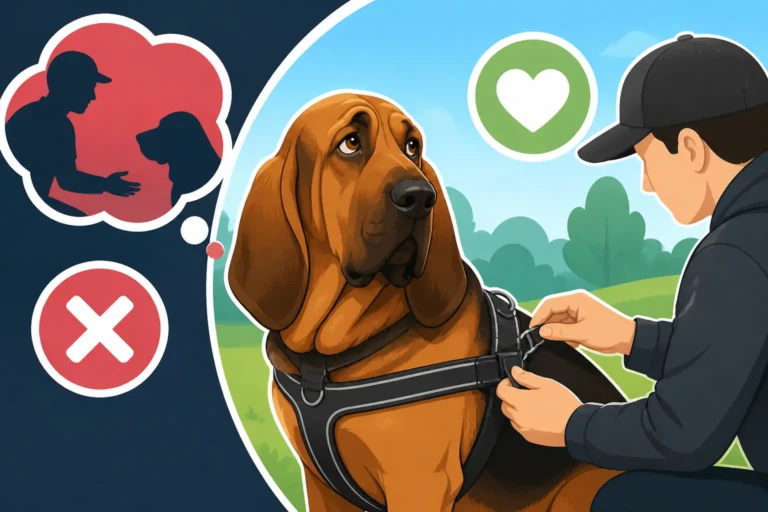
One of the most appealing aspects of embarking on scent work with a Bloodhound is that it typically doesn't necessitate an extravagant investment in highly specialized or expensive equipment. The essential items are remarkably simple, yet profoundly effective, and are readily available to any owner. First and foremost, a high-quality, properly fitted harness is an absolute must-have. You must discard any notions of using a neck collar for actual trailing; collars can constrict breathing, cause discomfort, and even lead to tracheal damage when your Bloodhound is pulling with intense focus and purpose. An appropriately designed Y-front or H-back harness, which allows for a full and unrestricted range of shoulder movement, is ideal. Reputable brands like Ruffwear or other robust, well-constructed designs often found on Amazon are excellent choices. While there is always some discussion among handlers, most agree on the principles outlined in Which Harness a Bloodhound Trails In.
Next, a long line is not merely recommended; it is an absolutely non-negotiable piece of equipment. This is distinct from a retractable leash, which should never be used for trailing. A long line is a solid, continuous length of material, typically made from durable nylon or biothane, and can range from 15 to 30 feet in length, with even longer options available for expansive, open environments. Its purpose is to grant your Bloodhound the freedom to work a scent trail naturally, without you inadvertently stepping on their heels or inadvertently interfering with their natural pace and method, all while maintaining a crucial, safe connection to you. A 20-foot line is generally an excellent starting point for many new handlers. The optimal length for How Long a Line a Bloodhound Handler Buys often varies depending on the specific terrain, the level of experience of both dog and handler, and the nature of the trail. You'll also need a designated "scent article" – a small piece of clothing (like a sock or t-shirt) or an object that has been handled directly by the person your Bloodhound will track.
Finally, never underestimate the power of high-value rewards! While the intrinsic act of following a scent trail is inherently gratifying for a Bloodhound, a truly delicious, high-value treat (such as small pieces of cooked chicken, hot dogs, or cheese) or their absolute favorite toy delivered enthusiastically at the conclusion of a successful find dramatically reinforces the positive association with the experience. A small, easily accessible pouch worn on your belt for these treats is incredibly handy. Beyond these critical items, ensure you have comfortable, sturdy walking shoes for yourself, clothing appropriate for the weather conditions, and plenty of fresh water for both you and your canine partner. A small notebook or a smartphone app for meticulously logging your trails can also be exceptionally helpful for tracking progress and identifying patterns.
Online and Local Training Options
The advent of the digital age has democratized access to information and opened up a vast array of learning opportunities for aspiring Bloodhound handlers. Online courses, virtual workshops, and dedicated communities can serve as a fantastic initial stepping stone, particularly for acquiring theoretical knowledge and understanding core principles. Many seasoned handlers and experienced instructors now offer comprehensive virtual seminars or structured online courses that delve into intricate scent theory, teach you how to accurately read subtle canine body language on the trail, and provide problem-solving strategies for various trailing scenarios. While it is true that nothing can fully replicate the nuanced experience of hands-on, in-person training, these accessible online resources can certainly build a robust foundational understanding before you even set foot on your first trail.
However, for the practical, boots-on-the-ground application of these theories, actively seeking out local training groups or engaging with private instructors who specialize in scent work is absolutely crucial. When searching, prioritize clubs or individuals who explicitly focus on "mantrailing" or "tracking" disciplines within your geographic area. These groups frequently organize regular, structured group sessions where you can gain invaluable hands-on experience, receive immediate and personalized feedback from experienced mentors, and significantly benefit from the collective wisdom and insights of other Bloodhound owners. These local groups also serve as an excellent mechanism for finding reliable "runners" to lay diverse trails for your dog, and in turn, you can offer your services to others, fostering a cooperative learning environment. A targeted online search using terms such as "Bloodhound tracking club near me" or "mantrailing classes" can often yield promising local results.
Moreover, do not overlook the immense value of attending specialized seminars or intensive workshops. These concentrated educational events, often led by nationally recognized professionals in the field, possess the remarkable ability to condense months of independent learning into a few highly focused days. They provide invaluable practical insights, guide you through targeted exercises, and offer unparalleled networking opportunities with fellow enthusiasts and experts. Even if you consider yourself an "average owner" simply seeking a fulfilling and engaging hobby for your Bloodhound, these immersive experiences can dramatically accelerate your progress and deepen your understanding of your Bloodhound’s incredible natural abilities. They are also powerful motivators for both you and your dog, injecting new energy and fresh ideas into your regular training routine, making the journey even more exciting.
Building Your Scent Work Foundation
The journey of starting a Bloodhound puppy on scent work can begin surprisingly early, with an emphasis on positive association and short, fun "runaways." The initial goal isn't to achieve perfection, but rather to systematically build your puppy's confidence, cultivate their enthusiasm, and reinforce the powerful idea that following a specific person's scent is the most fantastic and rewarding game imaginable. Your very first steps might be as straightforward as having a trusted friend or family member walk a short, clearly defined straight line, just out of sight, and then allowing your puppy to enthusiastically follow their scent to locate them, culminating in an exuberant party and highly coveted, high-value rewards at the triumphant conclusion. As detailed in Starting a Bloodhound Puppy on a Trail, every initial experience should be overwhelmingly positive, low-pressure, and filled with joy.
As your Bloodhound matures and gains experience, you can gradually and incrementally increase both the length and the complexity of the trails. This might involve introducing mild, manageable distractions, varying the types of terrain your dog works on, or even allowing more time for the scent to age. The overarching principle always remains to set your dog up for consistent success. You want them to genuinely feel like they are actively "solving" the scent puzzle through their own incredible ability, rather than being passively dragged along or subjected to frustrating corrections. A successful find, even if the trail was deliberately made "easy," serves as a powerful confidence booster and builds immense motivation for the next trailing session. It's imperative to remember that Bloodhounds, being sensitive and intelligent creatures, thrive on positive reinforcement; harsh corrections or an overtly frustrated handler can easily lead to a significant shutdown of their delicate drive and enthusiasm for scent work.
A truly critical component of building this foundational skill set is learning to accurately recognize and adapt to your individual Bloodhound's natural trailing pace and unique working style. Some Bloodhounds are inherently methodical and slow, meticulously working every single scent molecule with painstaking precision. Others might be naturally faster, covering ground more quickly while still maintaining incredible accuracy. Neither approach is inherently "better"; the key is to deeply understand your specific dog and to adjust your handling style to perfectly complement their innate method. Your paramount role as a handler is to be a supportive and attentive partner, providing gentle guidance when absolutely necessary, but for the most part, staying out of their way and allowing their unparalleled nose to perform its truly extraordinary work, trusting in their inherent ability.
Navigating Common Pitfalls and Expectations
Training any dog has its challenges, but Bloodhounds bring their own unique quirks to scent work. Understanding these can help you avoid frustration and build a stronger partnership.
Managing the Bloodhound's Independent Nature
Bloodhounds are not typically the type of "people-pleaser" dogs that some other breeds might be, eagerly looking to you for every instruction. Their deepest loyalty, when on a trail, lies unequivocally with the scent itself, rather than with your immediate verbal commands. This inherent independent streak, which can sometimes be a source of frustration in a typical obedience class setting, actually transforms into an enormous asset when engaged in scent work. What you desire in a trailing dog is one that trusts its own nose above all else, even in moments when you, the handler, might be convinced the scent should logically follow a different path. This often leads to situations where the adage Why a Bloodhound's Nose Outvotes Its Handler becomes strikingly evident and profoundly true. They are singularly focused on the task at hand, which is to meticulously follow and locate the source of the designated scent.
This profound independence inherently demands that you, as the handler, cultivate a deep and unwavering sense of trust in your dog's capabilities. It can be incredibly challenging, particularly for new handlers, to relinquish the reins of control and allow your Bloodhound to confidently lead the way, especially when their chosen path diverges from what your human logic or preconceived notions suggest is the "correct" route. However, more often than not, they truly know best. Learning to accurately read your Bloodhound's often subtle body language – observing the precise movements of their head, the nuanced changes in their tail carriage, or the precise intensity and cadence of their sniffing – will empower you to understand their decisions on the trail, even when those decisions initially seem to contradict your expectations. This is the art of handling a Bloodhound; it's about listening to them.
The "average owner" might initially find this perceived lack of direct control challenging to navigate. It necessitates the cultivation of a different kind of bond, one that is firmly built upon mutual respect for each other's distinct roles within the trailing partnership. Your responsibility is to provide the critical opportunity, ensure safety, and offer logistical support; their unparalleled expertise lies in the actual scent detection and trailing. If you attempt to dominate or forcefully direct a Bloodhound while they are working a trail, you will very quickly find yourself in a losing battle, risking shutting down their natural drive. Instead, foster a genuine partnership where their extraordinary expertise is consistently valued and celebrated, and where your guidance is always gentle, supportive, and only intervenes when absolutely necessary for safety or to maintain the forward momentum of the trail.
The Challenge of Distractions
Even with the most intensely focused Bloodhound, distractions are an undeniable and ever-present reality on any given trail, particularly during the initial stages of training. A squirrel darting suddenly across the path, the distant barking of another dog, or a particularly interesting patch of grass that warrants a quick, investigative sniff – these are all common environmental stimuli that can momentarily divert your Bloodhound's attention from their primary task. While their innate scent drive is extraordinarily potent, they are, at the end of the day, still dogs, and the world around them is replete with a myriad of fascinating and often tempting things. Learning to manage and navigate these inevitable distractions is a core part of effective trailing.
Effective training involves a systematic and gradual introduction to, and management of, these various distractions. You wouldn't realistically begin a novice Bloodhound's training on a bustling city sidewalk; rather, you would wisely initiate sessions in a quiet, low-distraction environment such as a secluded park or an open field. As your Bloodhound progressively gains more experience and builds confidence in their abilities, you can then incrementally expose them to increasingly challenging and distracting environments. A crucial handling skill involves learning how to effectively re-engage your Bloodhound and gently bring their focus back to the scent without allowing yourself to become frustrated. Sometimes, sheer patience is the most effective approach; at other times, a subtle verbal cue or a very gentle, guiding tug on the long line is sufficient to remind them of their primary mission.
It's also critically important to learn how to accurately differentiate between a momentary distraction and your Bloodhound legitimately losing the trail. Occasionally, what might appear to be a distraction is actually your dog engaged in complex scent work, "casting" around to pick up a fading or disrupted scent line. Learning to discern this crucial difference comes with considerable experience and, ideally, with the benefit of good mentorship. This aspect also directly relates to understanding How Long a Bloodhound's Attention Lasts in a Session – maintaining appropriately short, successful sessions, especially for younger or less experienced dogs, is vital. This prevents them from becoming overwhelmed by environmental stimuli and helps them sustain their focus and enthusiasm for the task.
Setting Realistic Goals
For the average owner embarking on the journey of training a Bloodhound to trail, establishing realistic and attainable goals is arguably the single most important factor for long-term success and satisfaction. It is simply unrealistic to expect that you will be tracking escapees from a maximum-security prison or locating missing persons in vast, untamed wilderness areas within a few short months of starting training. That level of high-stakes, professional-grade work demands many years of incredibly dedicated training, adherence to highly specific certifications, and a commitment level that goes far beyond what most pet owners can realistically provide. It’s a different league entirely.
Instead, learn to enthusiastically celebrate the smaller, yet incredibly significant victories. Can your Bloodhound successfully find your spouse who walked around the block and strategically hid behind a large tree? Can they confidently follow a relatively short trail through a familiar local park, skillfully navigating around park benches, playground equipment, and the occasional other foot traffic? These achievements, though perhaps modest in scale compared to professional search work, represent enormous accomplishments for a pet Bloodhound and are profoundly rewarding for both dog and handler. The overarching objective for pet owners should always be to provide meaningful mental and physical enrichment for your dog, to actively build their confidence in their inherent abilities, and to continuously strengthen the unique bond you share. It is fundamentally about thoroughly enjoying the entire process of discovery and partnership.
Many owners find immense joy and a sense of purpose in participating in more informal, fun trials or in earning various achievement titles that are often offered by a multitude of scent work organizations catering specifically to amateur handlers. These opportunities can provide valuable structure to your training and instill a genuine sense of accomplishment without imposing the intense, high-pressure demands of professional certification. The steadfast focus should consistently remain on your Bloodhound's inherent enjoyment and overall well-being. If your Bloodhound is clearly having a fantastic time, if their incredible nose is being thoughtfully and consistently utilized, and if they are thriving in the activity, then you have already achieved a resounding success, regardless of any official titles or external accolades. The journey itself is the reward.
Beyond Formal Training: Everyday Scent Opportunities
You don't need to be part of a formal training group every single day to give your Bloodhound's nose a workout. There are plenty of ways to incorporate scent-based enrichment into your daily life.
Incorporating Scent Games at Home
You absolutely do not need expansive wilderness or a dedicated professional trail layer to tap into and stimulate your Bloodhound’s extraordinary olfactory capabilities. Meaningful and engaging scent games can be successfully integrated right into the comfort of your own home or backyard, providing fantastic mental stimulation and consistently reinforcing their natural, powerful scenting abilities. Simple, yet effective, "hide and seek" games played with a favorite toy or a highly coveted, high-value treat can profoundly engage both your Bloodhound's nose and their active brain. Begin by allowing them to watch you openly hide the item, then progressively increase the difficulty by making the hiding spots more challenging, eventually working towards concealing items in different rooms or expertly tucked away under various objects.
Another wonderful and easily implemented scent game is a classic "find it" exercise. With your Bloodhound either safely contained in another room or practicing a solid "stay" command, meticulously hide several treats or pieces of their regular kibble strategically around a designated area. Then, with an enthusiastic cue like "Find it!", release them and allow them to eagerly sniff out their hidden treasures. This activity actively encourages methodical searching behavior and profoundly rewards their natural, instinctive sniffing. You can elevate the challenge of this game by placing the treats inside interactive puzzle toys or by hiding them underneath inverted cups, thereby adding a valuable problem-solving dimension to their scent work. This type of mental engagement, as explored in Whether Nose Work Tires a Bloodhound More Than Walking, can be just as exhausting and fulfilling as strenuous physical exercise.
These daily, often informal, scent games not only keep your Bloodhound thoroughly entertained and mentally sharp, but they also significantly strengthen the unique bond between you and your canine companion. You naturally evolve into the provider of fun, engaging, and enriching activities, which in turn builds immense trust and fosters greater cooperation. Furthermore, for those inevitable days when the weather outside is inclement, or when your available time is limited, these indoor scent games become an absolute lifesaver, ensuring that your Bloodhound still gets to enthusiastically utilize that incredible nose, even if it's not a full-fledged outdoor trail. This consistent mental engagement is crucial for a breed as intelligent and scent-driven as the Bloodhound.
Short, Fun "Runaways"
"Runaways" are essentially simplified, miniature trails where a familiar person, typically a family member or a trusted friend, simply walks away and then hides, allowing your Bloodhound to eagerly track them down. These exercises are exceptionally beneficial for building your dog's confidence, cultivating their enthusiasm for scent work, and are particularly effective for younger dogs or those just beginning their trailing journey. You can easily conduct runaways in a local, quiet park, within a friend's securely fenced large backyard, or even on a serene, less-trafficked walking path. The absolute key to successful runaways is to keep them consistently short, relatively easy to follow, and to always conclude with an exuberant, highly positive celebration upon your Bloodhound successfully finding the hidden person.
For a truly effective runaway, the "runner" might carry a specific, familiar scent article, such as a worn t-shirt or a handkerchief, which the Bloodhound can sniff intensely before initiating the trail. The runner then proceeds to walk a relatively straightforward path, perhaps incorporating a gentle turn around a corner or crossing a minor, manageable distraction, before ultimately hiding in plain sight behind a large bush or a sturdy tree. The Bloodhound, securely attached to its long line and wearing its harness, is then presented with the scent article and enthusiastically encouraged to find their person. The sheer, unadulterated joy evident on a Bloodhound's face when they triumphantly "find" their person is truly priceless and serves as the ultimate reward for both the dog and the handler.
The inherent beauty of runaways lies in their remarkable flexibility and adaptability. You, as the handler, maintain complete control over the difficulty level, the overall length of the trail, and the specific environment in which it is conducted. You can gradually and systematically increase the challenge as your Bloodhound steadily gains more experience and confidence. These sessions are deliberately not about achieving formal certifications or adhering to stringent professional standards; rather, they are fundamentally about providing your Bloodhound with a deeply satisfying job that they were born to do and witnessing them revel in its execution. Runaways offer a wonderful and practical way to seamlessly integrate basic trailing skills into your regular routine, providing a perfect blend of physical exercise, profound mental stimulation, and invaluable bonding time.
The Joy of the Journey, Not Just the Destination
Many owners, particularly those who are relatively new to the world of scent work, often tend to focus intensely on the "find" – that climactic moment when their Bloodhound triumphantly locates the person at the very end of the trail. While the "find" is undeniably exciting and a moment of great triumph, the true, profound joy and the deepest learning actually unfold throughout the entire journey of the trail itself. It is in the quiet, observant moments of watching your Bloodhound's nose meticulously work the ground, in perceiving the subtle shifts in their body language as they pick up a stronger scent, and in the gradual development of unwavering trust in their instincts as they skillfully navigate various environmental obstacles. These are the precious moments where the real magic happens.
It's crucial to embrace and savor the moments of "casting," where your Bloodhound might lift its head, take several deep sniffs of the air, and then confidently commit to a particular direction based on the aerial scent. Appreciate the nuanced changes in their trailing pace, the slight, almost imperceptible swing of their head, or the remarkable way they might ignore an otherwise tempting distraction because the human scent they are pursuing is far more compelling and overriding. These are the intricate details that eloquently tell the story of your Bloodhound's incredible sensory world and beautifully illustrate the ongoing evolution of your unique partnership. Learning to interpret these signals is a skill that only develops through patient observation and shared experience.
For the average owner, the profound journey of training a Bloodhound to trail is an adventure in itself, a continuous process of discovery and mutual understanding. It presents an unparalleled opportunity to witness your dog truly alive, deeply engaged, and fully embodying its deepest genetic purpose. It is a bonding experience unlike any other, meticulously built upon a foundation of trust, careful observation, and shared discovery. Resist the urge to become overly fixated on achieving absolute perfection or falling into the trap of comparing your beloved Bloodhound to professional, high-stakes working dogs. Instead, immerse yourself in and revel in the unique and deeply rewarding experience of unlocking your own hound's extraordinary potential and wholeheartedly celebrating every single sniff, every deliberate cast, and every successful step you take together along the incredible trail.
Comparison of Scent Work Activities for Pet Bloodhounds
| Activity | Description | Skill Level | Time Commitment | Benefits | Typical Gear |
|---|---|---|---|---|---|
| Indoor Scent Games | Hiding treats or toys around the house for your dog to find. | Beginner | 5-15 minutes daily | Mental stimulation, builds confidence, easy to do anywhere. | Treats, toys, puzzle feeders |
| Backyard Runaways | A family member walks a short path in the yard and hides; dog tracks them. | Beginner | 15-30 minutes weekly | Builds tracking enthusiasm, controlled environment, great for puppies. | Harness, long line (15-20 ft), scent article, high-value treats |
| Park Trailing | Following a "runner" in a local park, navigating mild distractions. | Intermediate | 30-60 minutes weekly | Introduces environmental distractions, longer trails, real-world exposure. | Harness, long line (20-30 ft), scent article, treats, water |
| Formal Mantrailing Classes | Structured lessons with experienced instructors and practice trails. | Intermediate | 1-2 hours weekly | Expert guidance, diverse scenarios, strong community support, structured learning. | Harness, long line, scent article, treats, weather-appropriate gear |
| Mock SAR Trails | Simulating real-world search scenarios (e.g., in woods, urban areas). | Advanced | 2-3 hours bi-weekly | Challenges advanced skills, realistic conditions, prepares for higher certifications. | Full trailing gear, safety equipment, communication devices |
Disclaimer
This article is for general informational purposes only and does not constitute professional advice. Laws, prices and regulations vary by location and change over time. Consult a qualified professional for guidance on your specific situation.