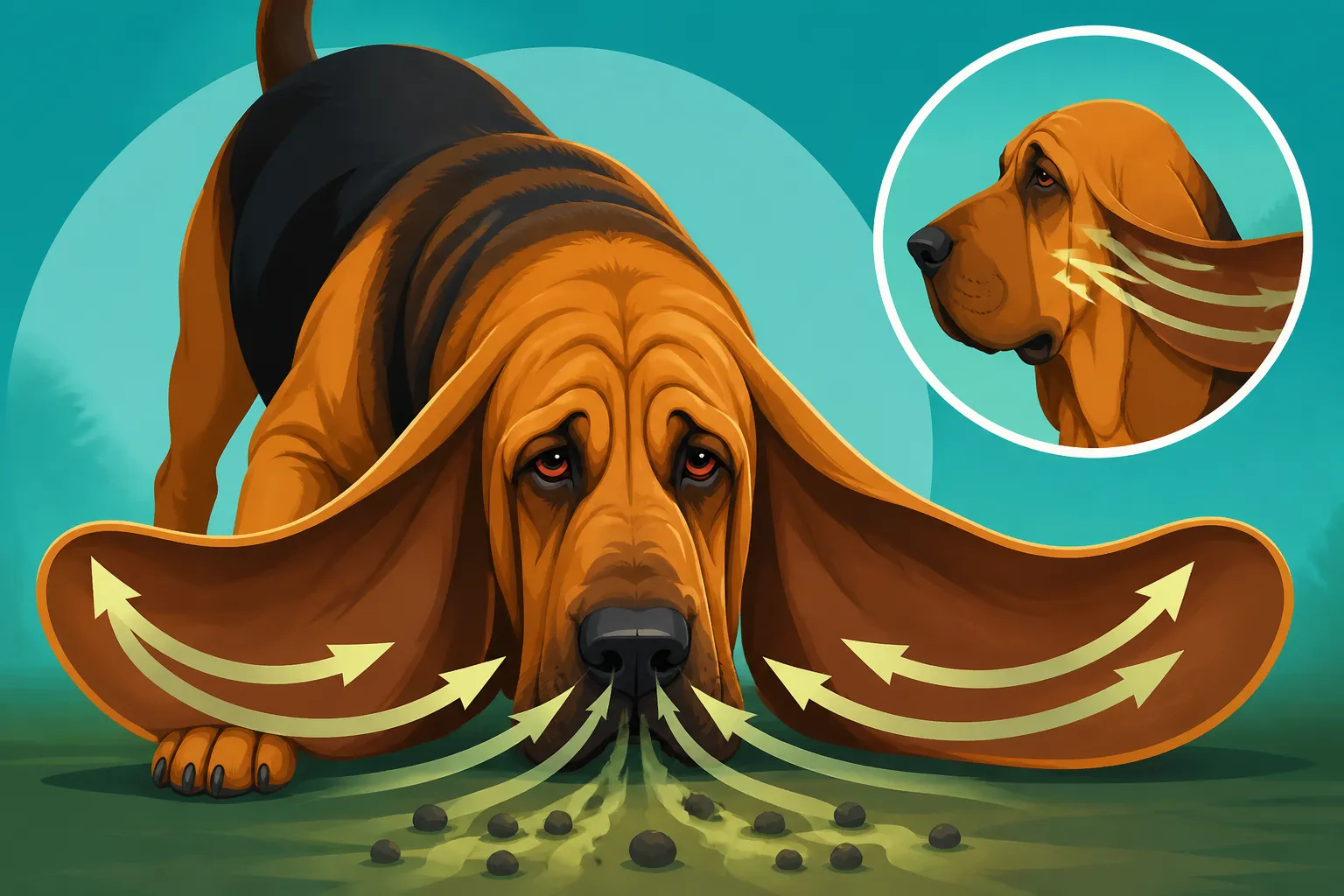
Why a Bloodhound’s Ears Sweep Scent Toward Its Nose
If you've ever watched a Bloodhound at work, nose to the ground, those impossibly long, pendulous ears flapping, you might wonder if they're more of a hindrance than a help. It’s easy to think such heavy ear leather would just get in the way, but nothing could be further from the truth. In reality, a Bloodhound’s unique ear structure is a meticulously designed part of its world-famous scenting apparatus, crucial for gathering and concentrating the faintest of odors. This guide dives deep into the fascinating anatomy and science behind those magnificent ears, explaining just how they play a vital role in making your Bloodhound an unparalleled tracker.
The Anatomy of a Scent-Sweeper: How Bloodhound Ears Are Built
The Bloodhound's ears aren't just long; they are a masterpiece of evolutionary design, perfectly adapted to their primary purpose: finding scent. When you look closely at these impressive appendages, you start to see how every feature contributes to their incredible function. It's a system that works in concert with their powerful nose and loose skin to create a scenting superpower.
The Sheer Length and Leather
One of the most striking features of a Bloodhound is the sheer length and thickness of its ear leather. These aren't delicate flaps; they are substantial, heavy, and often extend well past the end of their nose when pulled forward. This isn't just for aesthetics; the weight and length mean they hang low, often dragging along the ground as the dog follows a trail. Imagine a pair of natural brooms, constantly sweeping the ground. This physical contact is crucial, as it helps to disrupt and lift scent particles that might otherwise remain undisturbed or too dispersed to gather effectively. The thick leather also gives them a certain stiffness, preventing them from just fluttering aimlessly and instead allowing them to create a directed movement of air.
Beyond the ears themselves, the Bloodhound's entire head contributes to this unique design. The skin on their head is incredibly loose, contributing to the famous "wrinkled" look. This laxity allows for a lot of movement, not just in the ears but in the skin around them, further enhancing the sweeping action and the creation of a scent funnel. It’s all about maximizing every opportunity to capture and direct scent.
The Wrinkled and Velvety Underside
Flip a Bloodhound's ear over, and you'll notice it's not a smooth, simple surface. The underside, particularly towards the face, is often quite wrinkled and has a velvety texture. These folds and the texture are far from accidental. As the ears sweep and move, these internal wrinkles create micro-turbulences in the air, helping to stir up scent molecules from the ground. Think of it like a miniature, intricate landscape designed to capture and hold onto the tiniest particles.
This velvety texture, combined with the natural warmth and slight dampness often found under such heavy ears, can actually help to temporarily "trap" scent molecules. Scent is often carried on microscopic moisture droplets or dust particles. When the ear leather sweeps through these, the texture can grab hold of them, bringing them closer to the nose with each movement. It's a passive, yet highly effective, method of collecting a sample for the keenest of sniffers.
The Deep-Set Eye and Loose Facial Skin Connection
The Bloodhound's iconic droopy face, with its deep-set eyes and abundant loose skin, isn't just endearing; it's another integral part of the scenting mechanism. The folds of skin, particularly those around the muzzle and extending down the neck, work in conjunction with the ears. As the dog moves its head, these folds shift and ripple, further disturbing the air around the scent trail. This dynamic movement helps to push scent-laden air upwards, creating an atmospheric cone that guides the odor directly into the Bloodhound's nostrils.
The deep-set eyes are also protected by these heavy facial folds, which might seem unrelated to scenting, but they allow the dog to keep its face low to the ground, completely focused on the trail, without worrying about debris or glare distracting its vision. It all adds up to a dog engineered from head to toe for one specific, incredible purpose. This overall pendulous appearance, while sometimes leading to specific health challenges we'll discuss later, is intrinsically linked to the breed's extraordinary ability to follow a scent.
The Science Behind the Sweep: Air Currents and Scent Concentration
Understanding the physical structure of a Bloodhound's ears is just the beginning. The real magic happens when you observe them in action, specifically how they manipulate air currents to optimize scent detection. It’s a subtle ballet of motion and physics that allows them to pick up trails days old or across vast distances.
Creating a Scent Funnel
When a Bloodhound is working, its head is typically held low, with its nose just inches from the ground. As it moves, those long, heavy ears swing gently from side to side, or sometimes even drag directly on the surface. This sweeping motion isn't just random; it's a deliberate action that literally funnels air and scent particles upwards and inwards, directly towards the nostrils. The large surface area of the ears acts like a pair of scoops.
Imagine a miniature vortex being created right under the dog’s head. The ears push air and any scent molecules present from the periphery towards the center, where the nose is. This effectively concentrates the faint odor, making it stronger and more discernible for the Bloodhound's powerful olfactory system. This constant, rhythmic action ensures that a continuous stream of scent-rich air is presented to the nose, even when the original trail is weak or dispersed.
Minimizing Environmental Interference
One of the biggest challenges for any scenting dog is environmental interference: wind, distracting odors, and ground cover. The Bloodhound's ears provide an ingenious solution to this. By sweeping the ground and creating that localized scent funnel, the ears also act as a physical barrier against external air currents. They shield the immediate area around the nose, preventing cross-winds from scattering the scent or bringing in distracting smells from other directions.
This effectively creates a "scent tunnel" that the Bloodhound can navigate with incredible precision. While other breeds might struggle with a swirling breeze dispersing a trail, the Bloodhound's ears help it to maintain focus on the specific ground scent it is following. This protective mechanism allows the dog to isolate the target odor from a cacophony of competing smells, a critical ability when tracking in complex environments like busy urban areas or dense wilderness. Without this localized protection, even the most sensitive nose would be overwhelmed.
The Role of Moisture and Trapping Scent
Beyond simply moving air, the ears, by dragging on the ground, can also pick up minute amounts of moisture, dew, or even damp earth. This might seem counterintuitive for a dog prone to ear infections, but it serves a crucial purpose in scent detection. Scent molecules are often more readily transported and retained in a slightly humid environment. The ears, gathering this moisture, can become a sticky surface that helps "capture" and hold individual scent particles.
When these damp, scent-laden ears swing upwards and inwards toward the nose, they act as a secondary delivery system. The accumulated scent on the ears is then presented more directly to the nostrils, amplifying the signal for the dog. The combination of the velvety texture, the sweeping motion, and the ability to retain moisture makes the Bloodhound’s ears incredibly efficient scent traps and projectors, ensuring that even the most volatile and evasive scent compounds are brought to the forefront for analysis.
Beyond the Sweep: Other Functions of Those Magnificent Ears
While their primary function is undoubtedly to aid in scent tracking, the Bloodhound's distinctive ears also serve a few other roles, some beneficial and some that create unique challenges for owners. It's a reminder that even the most specialized physical traits often come with trade-offs.
Protecting the Ear Canal
Those long, heavy ear flaps, or "leathers" as they're often called, offer a significant degree of physical protection to the inner ear canal. As a Bloodhound works with its head low to the ground, constantly sweeping through brush, dirt, and debris, these ears act like natural shields. They help prevent foreign objects like twigs, seeds, or burrs from entering the delicate ear canal, and also keep out excessive amounts of water or dust. This protection is vital for a working dog that spends so much time in varied, often challenging, outdoor environments.
However, this protection comes at a cost. The very structure that protects the inner ear also creates a warm, dark, and often moist environment within the ear canal. This lack of airflow, combined with potential dampness, makes Bloodhound ears notoriously prone to yeast and bacterial infections. It's a classic example of nature's double-edged sword: superb for scenting and protection, but a constant maintenance concern for owners. This is why regular cleaning is not just good practice, but an absolute necessity for Bloodhounds. A Bloodhound's Ears Are a Standing Infection Risk is a reality every owner faces.
Enhancing Acoustic Perception (or lack thereof)
Unlike some breeds with upright or semi-prick ears that can swivel to pinpoint sound, a Bloodhound's pendulous ears don't offer the same directional hearing capabilities. In fact, their heavy, floppy nature might actually slightly dampen sounds, making them less effective at detecting distant noises. Their design prioritizes scent over sound, reflecting their specialized role as tracking dogs rather than alert guardians or hunters who rely on acute hearing to locate prey.
While they still possess normal canine hearing, it's not enhanced or directional in the way a German Shepherd's ears might be. The Bloodhound's world is primarily experienced through its nose, and its anatomy reflects this focus. So, while your Bloodhound might not hear the rustle in the bushes from a mile away, rest assured it can likely smell who walked past that bush three days ago.
Breed Identification and Aesthetics
Beyond pure function, the Bloodhound's ears are an undeniable part of its iconic appearance and breed standard. They contribute significantly to the dog's noble, dignified, and somewhat melancholic expression, which has made them famous in art, literature, and film. For anyone familiar with scent hounds, those long, wrinkled ears immediately signal "Bloodhound."
For breeders and enthusiasts, the length, texture, and set of the ears are crucial conformational points. These aesthetic qualities, developed over centuries of selective breeding, are intrinsically linked to the historical image and working capabilities of the breed. While we know their primary purpose is practical, there's no denying that they also contribute to the Bloodhound's unique and beloved visual identity. They are, quite simply, quintessential Bloodhound.
| Ear Type | Scenting Aid | Ear Canal Protection | Hearing Acuity / Directional | Maintenance Needs (General) |
|---|---|---|---|---|
| Bloodhound (Long, Pendulous) | Sweeps & funnels scent to nose, traps particles | Excellent (from debris/water) | Reduced directional hearing | High (infection risk) |
| Upright/Prick (e.g., GSD) | Minimal (relies on nose directly) | Moderate (open to elements) | Excellent directional hearing | Low (good airflow) |
| Rose/Semi-prick (e.g., Bulldog/Collie) | Minimal | Moderate | Good | Moderate |
| Button/V-shaped (e.g., Fox Terrier) | Minimal | Moderate | Good | Moderate |
Practical Implications for Owners: Caring for Those Specialized Ears
Owning a Bloodhound means accepting a special kind of responsibility for those magnificent, scent-sweeping ears. Their unique structure, while perfect for tracking, makes them particularly vulnerable to certain health issues and requires a diligent care routine. This isn't just about keeping them pretty; it's about safeguarding your dog's health and comfort.
The Constant Need for Cleaning and Drying
Because those long ears create a warm, moist, and poorly ventilated environment over the ear canal, they are a prime breeding ground for bacteria and yeast. This makes regular ear cleaning an absolute non-negotiable part of Bloodhound ownership. Without it, infections can quickly take hold, leading to pain, discomfort, and potentially serious medical bills. Many Bloodhound owners find themselves Cleaning a Bloodhound's Ears Every Week for Life, and sometimes even more frequently if their dog is prone to issues or has been swimming.
You'll need a good quality, vet-approved ear cleaner. Your vet can recommend specific brands that are gentle yet effective. The process involves saturating the ear canal with the cleaner, gently massaging the base of the ear to break up debris, and then allowing your Bloodhound to shake its head. Afterwards, you'll need to use cotton balls or soft gauze to wipe away any excess cleaner and debris from the visible parts of the ear. It's crucial not to use cotton swabs deep inside the ear canal, as this can push debris further in or damage the eardrum. Ensuring the ears are thoroughly dry after cleaning, swimming, or even a rainy walk is equally important to prevent moisture from lingering and inviting infection. Why a Bloodhound's Ear Canal Stays Damp is a constant battle you'll be fighting.
Preventing Injuries and Maintaining Health
Beyond infections, the very nature of a Bloodhound's long ears makes them susceptible to various injuries. Think about it: they drag through everything! Burrs, thorns, sharp twigs, and even ice can cause nicks, cuts, and scrapes on the delicate ear leather. These minor injuries can become infected if not cleaned and treated promptly. After every outdoor adventure, especially in wooded or brushy areas, take a moment to inspect your Bloodhound's ears thoroughly for any foreign bodies or damage.
Another common issue is an aural hematoma, which can occur when a Bloodhound shakes its head so vigorously (often due to an underlying ear infection) that it ruptures blood vessels within the ear flap, causing it to swell like a pillow. These are painful and usually require veterinary intervention, often surgery, to drain and repair. Regular ear care and prompt treatment of any itching or discomfort can help prevent the vigorous head shaking that leads to such injuries. The tips of their ears can also be prone to cracking in cold, dry weather, or getting scraped raw from repeatedly hitting surfaces when they shake their head.
Feeding Considerations with Long Ears
Anyone who has fed a Bloodhound can attest to the challenge of keeping those long ears out of the food and water bowl. It's not just messy; constantly dipping into wet food or water can exacerbate the damp environment that contributes to ear infections. Thankfully, there are several simple solutions to this very common Bloodhound problem.
Many owners opt for a "snood," which is essentially a fabric tube that slips over the Bloodhound's head, holding the ears back and out of the way during meal times. You can find a variety of snoods on platforms like Amazon, from simple fabric tubes to more elaborate designs. Alternatively, specially designed bowls, often narrow and deep, can help keep ears clear. Elevated bowls can also be beneficial, allowing your Bloodhound to eat more comfortably without bending its neck at an awkward angle. If you're starting with a puppy, positive reinforcement techniques, much like those taught by programs like BAXTER & Bella, can make introducing a snood or getting them used to eating from specialized bowls a much smoother experience, setting them up for a lifetime of cleaner, healthier ears. What a Snood Does for a Bloodhound is a game-changer for many.
Historical Context: Breeding for the Ultimate Scent Hound
The Bloodhound's ears are not an accident of nature; they are the result of centuries of meticulous selective breeding, driven by a singular purpose: to create the most effective scent hound possible. To truly appreciate their design, we need to look back at the breed's origins.
Origins and Purpose of the Breed
The lineage of the Bloodhound dates back to medieval Europe, specifically to the Abbey of Saint Hubert in the Ardennes region, now part of Belgium. The monks there were renowned for breeding large, powerful hounds known as the "Chien de Saint Hubert." These dogs were primarily used to track large game, such as deer and boar, through dense forests. Their ability to follow a cold trail for extended periods was paramount. Over time, as hunting practices evolved and the need for human tracking emerged, the qualities of these hounds were further refined.
The emphasis was always on scenting ability above all else. Appearance was secondary to performance. Breeders consistently selected for dogs with the keenest noses, the most stamina, and the physical characteristics that enhanced their tracking prowess. The long, pendulous ears, along with the loose skin and powerful build, were not just aesthetic choices; they were functional adaptations that made these dogs indispensable for locating lost people or tracking criminals. The Abbey of Saint Hubert Bred the Bloodhound's Ancestor is a fascinating read on their beginnings.
Evolution of the Ear Structure
While the earliest ancestors of the Bloodhound likely had some form of drop ears, they may not have been as exaggerated as those we see today. The extreme length and pendulous nature of the modern Bloodhound's ears, along with the abundant facial wrinkles, are believed to have been intensified through generations of selective breeding. As breeders observed that dogs with longer ears and looser facial skin seemed to be more effective at tracking, they continued to favor these traits in their breeding programs.
This refinement wasn't about making a dog look "sadder" or more unique; it was about maximizing the physical mechanisms that assisted the nose. The theory was that these features, by sweeping and concentrating scent, provided a tangible advantage in challenging tracking conditions. Over centuries, these subtle advantages compounded, leading to the highly specialized anatomy we recognize in the Bloodhound today. The ears are a testament to focused breeding for a specific, demanding job.
The Unparalleled Nose and its Supporting Cast
Ultimately, the Bloodhound's ears are an auxiliary system, a sophisticated accessory to the true star of the show: its nose. The Bloodhound possesses an olfactory system that is truly legendary. With approximately 300 million scent receptors (compared to about 5 million in humans), and a large olfactory bulb in its brain, its ability to detect, differentiate, and follow scent is unmatched in the canine world. This is why The Bloodhound Is the Only Dog Whose Evidence Stands in Court – their nose is that reliable.
The ears, while incredibly important, are part of a larger, integrated system. The deep muzzle, the moist nose leather, the hundreds of millions of scent receptors, the large brain dedicated to processing scent information, and the unique ear structure all work in perfect harmony. The ears prepare the scent for the nose, the nose detects it, and the brain interprets it. It’s a remarkable example of natural selection and human-directed breeding creating an animal perfectly engineered for its purpose, making the Bloodhound a truly unique and awe-inspiring creature. How Many Scent Receptors a Bloodhound Has is an incredible figure that underscores their ability.
Disclaimer
This article is for general informational purposes only and does not constitute professional advice. Laws, prices and regulations vary by location and change over time. Consult a qualified professional for guidance on your specific situation.