Whether a Bloodhound Can Show After Eyelid Surgery
It’s a truly disheartening moment when you look at your magnificent Bloodhound, a dog you’ve poured your heart and soul into, only to notice something isn't quite right with their eyes. The worry sets in – not just for their comfort and health, but for their future in the show ring, a place where every detail of their conformation is scrutinized. Rest assured, addressing eyelid issues in a Bloodhound is first and foremost about their well-being, and this guide will walk you through whether having these vital corrections done means the end of their showing career.
Understanding Eyelid Issues in Bloodhounds and Why Surgery is Needed
Bloodhounds are known for their distinctive, loose skin, which contributes to their incredible scenting ability by trapping scent particles. However, this characteristic skin, especially around their head and eyes, can also predispose them to several uncomfortable and potentially serious eyelid conditions. These aren't just minor cosmetic quirks; they can cause chronic pain, infections, and even impair vision if left untreated. As responsible owners, our priority is always their comfort and long-term health.
Common Eyelid Conditions in Bloodhounds
Several eyelid conditions are particularly prevalent in Bloodhounds, making understanding them crucial for any owner. The most common issues include ectropion, entropion, and sometimes cherry eye. Each condition presents differently and requires specific attention.
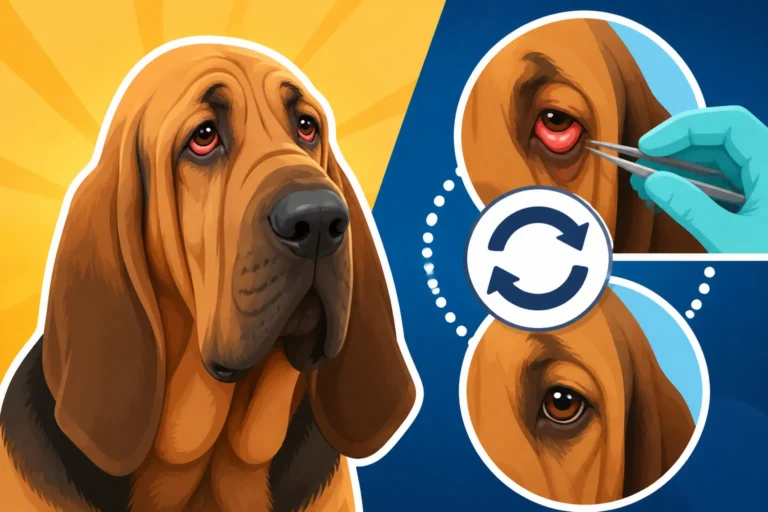
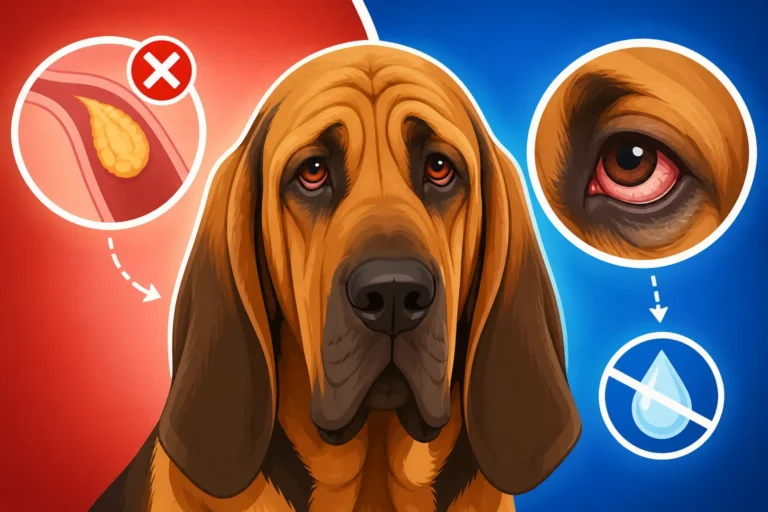
Ectropion is a condition where the lower eyelid rolls outward, exposing the delicate conjunctiva (the pink tissue lining the eyelid) and the surface of the eye. This gives the Bloodhound that characteristic "sad" or "droopy" eye appearance. While a certain degree of lower lid droop is considered standard for the breed and contributes to their classic expression, excessive ectropion can lead to significant problems. It allows dust, debris, and irritants to easily enter the eye, and the exposed conjunctiva can become dry, inflamed, and prone to chronic infections. You might notice constant tearing or discharge. If you're wondering what this looks like, you can learn more about What Ectropion Looks Like on a Bloodhound. For many Bloodhounds, this loose skin is part of their charm, but when it begins to cause chronic irritation or recurrent infections, surgical correction becomes a necessary consideration, despite the breed standard typically allowing for a certain degree of laxity.
On the flip side, entropion is a condition where the eyelid, usually the lower one, rolls inward, causing the eyelashes and surrounding hair to rub against the cornea. This is incredibly painful and irritating. Imagine having a constant hair poking your eye; that's what your Bloodhound experiences with entropion. This persistent rubbing can lead to corneal abrasions, ulcers, and, if severe enough, permanent scarring and vision impairment. Unlike ectropion, which can sometimes be managed with diligent cleaning and drops if mild, entropion almost always requires surgical intervention to prevent ongoing damage and discomfort. Understanding What Entropion Does to a Bloodhound's Eye highlights why prompt action is so important.
Another common issue is cherry eye, which occurs when the gland of the third eyelid prolapses, appearing as a red, swollen mass in the inner corner of the eye. This gland is crucial for tear production, and its prolapse can lead to dry eye if left untreated or if the gland is simply removed instead of being tucked back into place. While often not as painful as entropion, it can still cause irritation and is a significant aesthetic concern, often requiring surgical repositioning. You can read more about Cherry Eye in a Bloodhound to fully understand this condition.
The Health Implications of Untreated Eyelid Problems
It’s easy to dismiss a little eye discharge or redness as just "a Bloodhound thing," but leaving these conditions untreated can have severe long-term consequences for your dog's health and quality of life. Chronic irritation from ectropion can lead to recurring conjunctivitis, a painful inflammation of the eye's lining. The constant exposure to environmental irritants can also exacerbate allergic reactions, making your Bloodhound even more uncomfortable.
With entropion, the risk is even higher. The continuous abrasion of hair against the cornea can quickly escalate from minor discomfort to serious corneal ulcers. These ulcers are not only excruciatingly painful but can become infected, potentially leading to vision loss or even rupture of the eyeball if not treated aggressively. A corneal ulcer is always considered an emergency, and you need to know Signs a Bloodhound Has a Corneal Ulcer so you can seek immediate veterinary care. Regular, daily eye care, while helpful, often isn't enough to prevent these more severe outcomes when the underlying anatomical issue persists. This is why many Bloodhound owners realize they need to address these issues head-on, even if it means considering surgery.
These eye conditions are among The Four Eye Problems a Bloodhound Is Born Toward, indicating their genetic predisposition. Ignoring these issues because of concerns about showing is not only inhumane but also shortsighted. A dog in chronic pain or with impaired vision cannot perform well in any capacity, let alone the demanding environment of a show ring. Moreover, the financial cost of managing chronic infections and ulcers over a lifetime can quickly outweigh the cost of a surgical correction. Many owners find that having a comprehensive pet insurance plan, like those offered by Healthy Paws, can certainly alleviate some of that financial burden, making the decision to opt for necessary surgery much easier on the wallet.
Conformation Show Rules and Surgical Corrections
When it comes to showing dogs, the American Kennel Club (AKC) and other kennel clubs have specific rules about surgical alterations. The general philosophy is to present dogs as naturally as possible, without artificial enhancements or corrections that hide genetic faults. This is where the line between cosmetic and health-driven procedures becomes incredibly important.
AKC Regulations on Corrective Surgery
The AKC's rules for conformation showing state that any dog that has been surgically altered to correct a disqualifying fault or to improve its appearance to the point where it misrepresents its true conformation may be disqualified. However, there's a crucial exception: surgeries performed solely for the health and well-being of the dog are generally permissible, provided they do not artificially improve the dog's conformation to mislead judges.
For Bloodhounds, where eyelid issues are so common and often have significant health implications, many corrective surgeries fall under this "health and well-being" umbrella. For example, a Bloodhound suffering from severe entropion that is causing corneal ulcers, or ectropion leading to chronic infections and pain, would likely be a candidate for surgical correction that is considered acceptable in the show ring. The key is intent. The surgery isn't to create an "ideal" eye that the dog didn't naturally possess, but to restore it to a functional, pain-free state. Breeders and owners are encouraged to be transparent about any procedures, and typically, veterinary documentation can clarify the medical necessity.
It's important to differentiate between necessary medical interventions and purely cosmetic alterations. If a Bloodhound has extremely loose eyelids that the owner feels detract from its appearance but cause no health issues, and they opt for surgery purely for the "look," this might be viewed differently. However, with Bloodhounds, the line is often blurred because the "look" of excessively loose eyelids does frequently lead to health problems. Therefore, most reputable veterinarians and ophthalmologists will only recommend surgery when there's a clear medical indication for it. This aligns with the breed standard, which describes the eyes as deeply set with "the lower lid turning outwards and downwards to show a considerable part of the haw." The issue arises when this becomes extreme and causes genuine suffering. You might be interested in learning Whether a Bloodhound's Drooping Lid Is a Defect or the Standard to understand this nuance better.
The Difference Between Cosmetic and Health-Related Procedures
This distinction is perhaps the most critical point for show Bloodhound owners. A cosmetic procedure is one performed purely to enhance appearance, without a medical necessity. For instance, if a dog has perfectly healthy eyes but an owner wants to tighten them slightly to achieve a "more alert" look, that would be cosmetic. These types of surgeries are typically frowned upon in the conformation world and could lead to disqualification.
On the other hand, a health-related procedure is one that addresses a condition causing pain, discomfort, or threat to the dog's well-being. When a Bloodhound undergoes surgery for severe entropion to prevent corneal damage, or for ectropion that causes chronic infections, this is unequivocally a health-related procedure. These surgeries are aimed at restoring normal function and comfort, not at "fixing" a genetic fault solely for aesthetic gain. The improvement in appearance is a positive side effect of addressing the medical problem. In these cases, the dog's eligibility for showing is generally maintained. When a specialized veterinary ophthalmologist performs these procedures, they are focused on resolving the medical issue, which ultimately benefits the dog's entire demeanor and presentation. Choosing a specialist for eyelid surgery is often recommended, and you can explore Whether a Bloodhound's Eyelid Surgery Needs a Specialist.
The cost of these procedures, which can be considerable, further highlights their medical nature. Eyelid Surgery Is the Bill Bloodhound Owners Do Not Expect, and it's a significant investment in a dog's health. Financial preparations, perhaps through pet insurance like Healthy Paws, are a practical step for Bloodhound owners, knowing that these breed-specific health challenges might arise. Such insurance plans are designed to cover unforeseen medical expenses, confirming that these are indeed medical, not elective cosmetic treatments.
Navigating the Show Ring After Eyelid Surgery
So, your Bloodhound has had necessary eyelid surgery for their health. Can they still shine in the show ring? The answer is generally yes, but transparency and their overall health are paramount. Judges are primarily looking for a sound, healthy dog that conforms to the breed standard, and a dog free from chronic eye pain is certainly a healthier and happier specimen.
Documentation and Transparency with Judges
If your Bloodhound has undergone eyelid surgery, especially for conditions like severe entropion or ectropion that required more significant correction, it's always best to be transparent. This isn't about hiding anything; it's about providing context. You should have veterinary records detailing the specific condition, the necessity of the surgery, and the surgical procedure performed. This documentation can be invaluable if a judge questions the appearance of your dog's eyes.
While you don't typically need to proactively inform every judge before your dog enters the ring, being prepared to discuss it if asked shows responsibility and integrity. Most judges, especially those experienced with hound breeds, understand the prevalence of certain health issues and the necessity of surgical corrections. Their main concern will be whether the surgery was genuinely health-driven and if it has significantly altered the fundamental conformation beyond restoring health. A well-performed surgery for a legitimate medical reason will generally not hinder a Bloodhound's chances.
Furthermore, a dog that has had its painful eye condition resolved will likely present much better. Chronic discomfort can make a dog less enthusiastic, affect its expression, and even impact its gait or confidence. A comfortable, pain-free Bloodhound will naturally exude more confidence and character in the ring, which judges absolutely appreciate. This improved well-being is a direct result of prioritizing their health, and it inadvertently enhances their show presence.
Impact on a Bloodhound's Overall Appearance and Expression
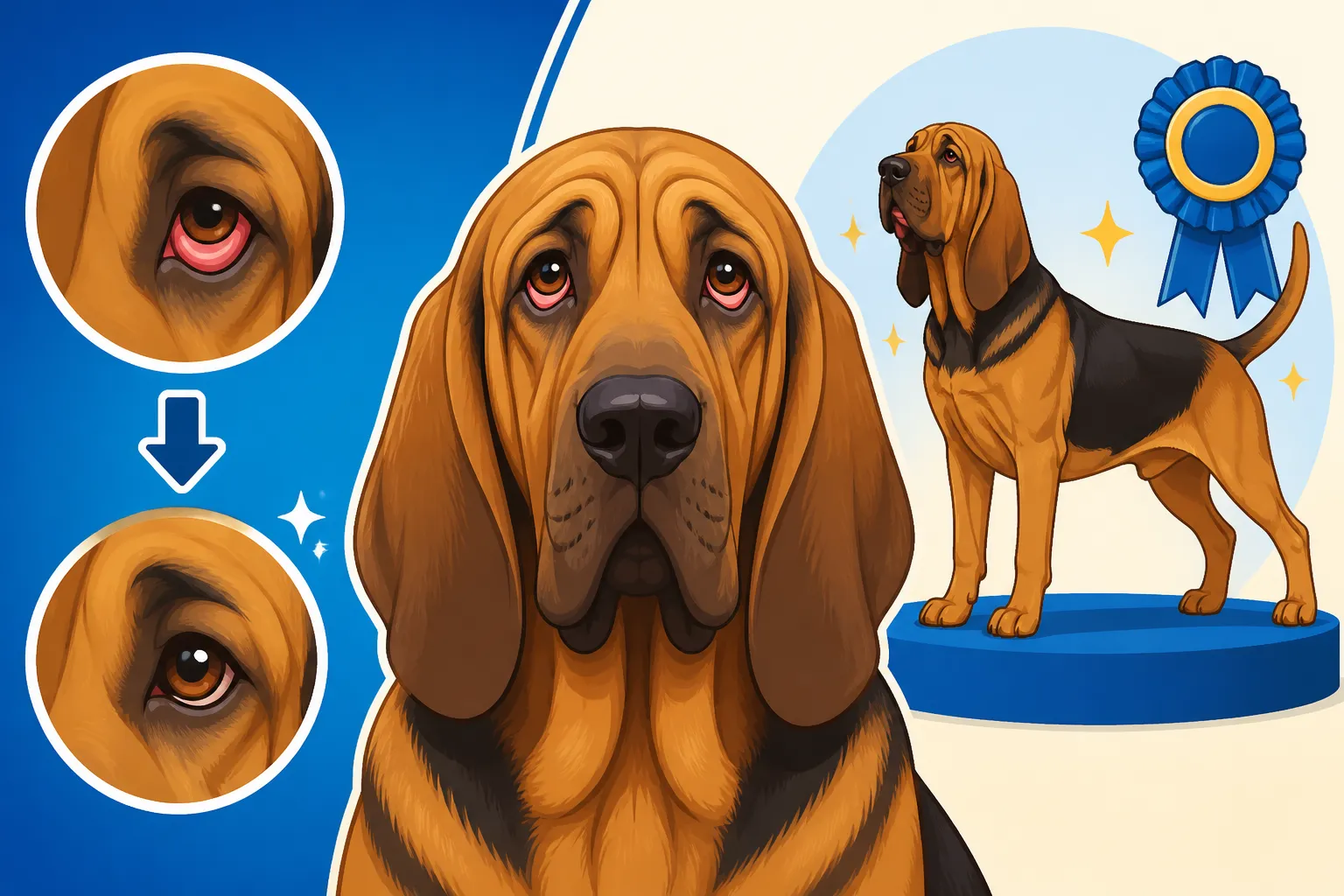
The goal of health-driven eyelid surgery isn't to drastically change your Bloodhound's appearance, but to restore a functional and comfortable eye. In many cases, the surgical outcome is a more natural, healthier eye that still maintains the characteristic Bloodhound expression. The "sad" look is a hallmark of the breed, but this should stem from their loose skin and deep-set eyes, not from chronic pain or irritation.
A successful surgery for ectropion or entropion will often result in eyes that are clear, bright, and free from discharge. The dog will no longer squint or paw at its face. While there might be minor scarring, skilled veterinary ophthalmologists strive for minimal aesthetic impact. Often, once healed, any surgical lines are almost imperceptible to the casual observer. The overall improvement in the dog's comfort and health typically makes them appear more vibrant and alert, even if their eyes still retain that signature Bloodhound droop.
For conditions like cherry eye, the goal is to re-position the gland without removing it, preserving tear production. This procedure usually leaves no visible scarring and restores the eye's natural appearance. The outcome is often an eye that looks exactly as it should, without the unsightly red mass. Ultimately, a Bloodhound whose eyes are no longer a source of pain or chronic infection will have a more authentic, joyful expression, which is far more valuable than a "perfect" but uncomfortable eye. This focus on long-term comfort and health means that while the initial consideration of What Ectropion Surgery Costs on a Bloodhound might be daunting, the investment in their quality of life pays dividends in their overall happiness and ability to engage fully, even in the show ring.
Long-Term Considerations and Ethical Breeding
For anyone involved in the world of Bloodhounds, whether as an owner, exhibitor, or breeder, the health and longevity of the breed must always take precedence. Eyelid surgery is a vital tool for managing specific health issues, but it also prompts a broader discussion about ethical practices.
Prioritizing Health Over Show Wins
The decision to pursue eyelid surgery for your Bloodhound should always be rooted in prioritizing their health and comfort. No ribbon or title is worth a lifetime of pain or the risk of vision loss for your beloved companion. In many cases, addressing these issues early can prevent more severe, expensive, and potentially irreversible complications down the line. Regular veterinary check-ups, including thorough eye examinations, are crucial for early detection. Your vet can advise you When a Bloodhound's Eyelids Need Surgery before conditions escalate.
This health-first approach also resonates with the ethical standards of most kennel clubs and breed associations. A truly "typey" Bloodhound is not just one that looks the part, but one that is sound, healthy, and able to perform its historical function. A dog suffering from untreated eye pain is neither sound nor truly able to enjoy its life. By investing in their health, you are not only doing right by your individual dog but also setting an example within the breed community that welfare comes first.
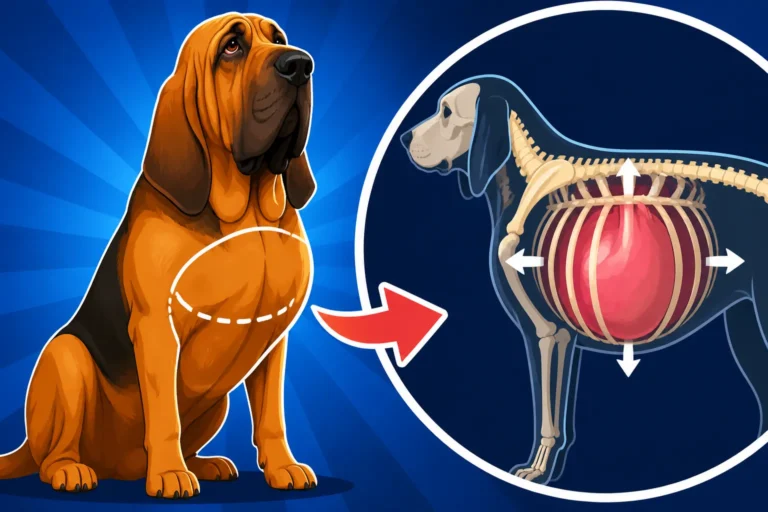
It's also worth noting that some owners consider insurance plans as a safety net. Whether you're considering Whether a Bloodhound Owner Should Insure After a Bloat or for ongoing health issues, a reputable pet insurance provider like Healthy Paws can significantly reduce the stress of unexpected veterinary bills. Knowing you have that financial backing can make the choice to pursue necessary surgeries much less agonizing.
The Role of Responsible Breeding
While eyelid surgery can correct an individual dog's problem, it doesn't erase the genetic predisposition for such conditions. Many of these eye issues, particularly entropion and severe ectropion, have a hereditary component. Therefore, a Bloodhound that required significant corrective surgery for a genetic eye condition, even if successfully shown afterward, should ideally not be used for breeding.
Responsible breeders are dedicated to improving the health and soundness of the breed. This means carefully screening their breeding stock and making tough decisions about which dogs to include in their programs. The American Bloodhound Club and other organizations advocate for health screening and ethical breeding practices to reduce the incidence of hereditary diseases. Understanding What the American Bloodhound Club Asks Breeders to Screen is vital. If a dog requires surgery to alleviate a genetic defect, breeding that dog risks passing those issues on to future generations, perpetuating the very problems we're trying to minimize.
In some cases, a Bloodhound might have very mild ectropion that is not causing any health issues and is within the acceptable range for the breed, and this dog might be a valuable addition to a breeding program if carefully paired. However, any case requiring surgical correction due to actual health compromise should give a breeder pause. The ultimate goal is to produce healthy, long-lived Bloodhounds who don't need significant surgical interventions just to be comfortable.
| Eyelid Condition | Description | Common Symptoms | Need for Surgery | General Show Implications |
|---|---|---|---|---|
| Ectropion | Eyelid (usually lower) rolls outward, exposing conjunctiva. | Redness, chronic discharge, dryness, recurrent infections, visible "haw." | Often recommended if severe or causing chronic health issues (pain, infection, corneal damage). | Generally permissible if for health; transparency is key. Minor cases might not need surgery. |
| Entropion | Eyelid (usually lower) rolls inward, causing eyelashes to rub against the cornea. | Pain, squinting, excessive tearing, redness, corneal ulcers, sensitivity to light. | Almost always requires surgery to prevent irreversible damage and alleviate severe pain. | Generally permissible if for health; seen as a necessary medical correction. |
| Cherry Eye | Prolapse of the gland of the third eyelid, appearing as a red mass in the inner corner of the eye. | Red, swollen mass in the inner corner of the eye, sometimes irritation, reduced tear production. | Recommended to reposition the gland and preserve tear function. Simple removal is discouraged. | Generally permissible as it restores normal appearance and preserves a vital tear gland. |
Disclaimer
This article is intended for informational purposes only and does not constitute veterinary advice. Always consult with a qualified veterinarian or a board-certified veterinary ophthalmologist regarding any health concerns or before making decisions about your Bloodhound's medical care or showing eligibility.