Whether a Bloodhound’s Eyes Are Meant to Droop
A Bloodhound’s drooping eyes are part of the breed’s familiar look, but “normal for the breed” does not mean every degree of sagging is harmless. Loose lower lids can expose the pink tissue beneath the eye and leave it more vulnerable to irritation. This guide explains what typical Bloodhound eyes look like, what changes deserve attention, and how to care for them safely.
Why a Bloodhound’s eyes droop
The breed’s loose skin and lower eyelids
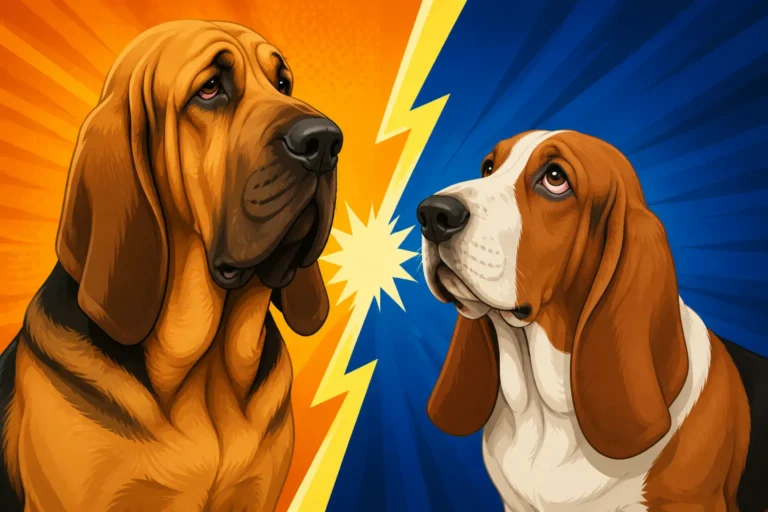
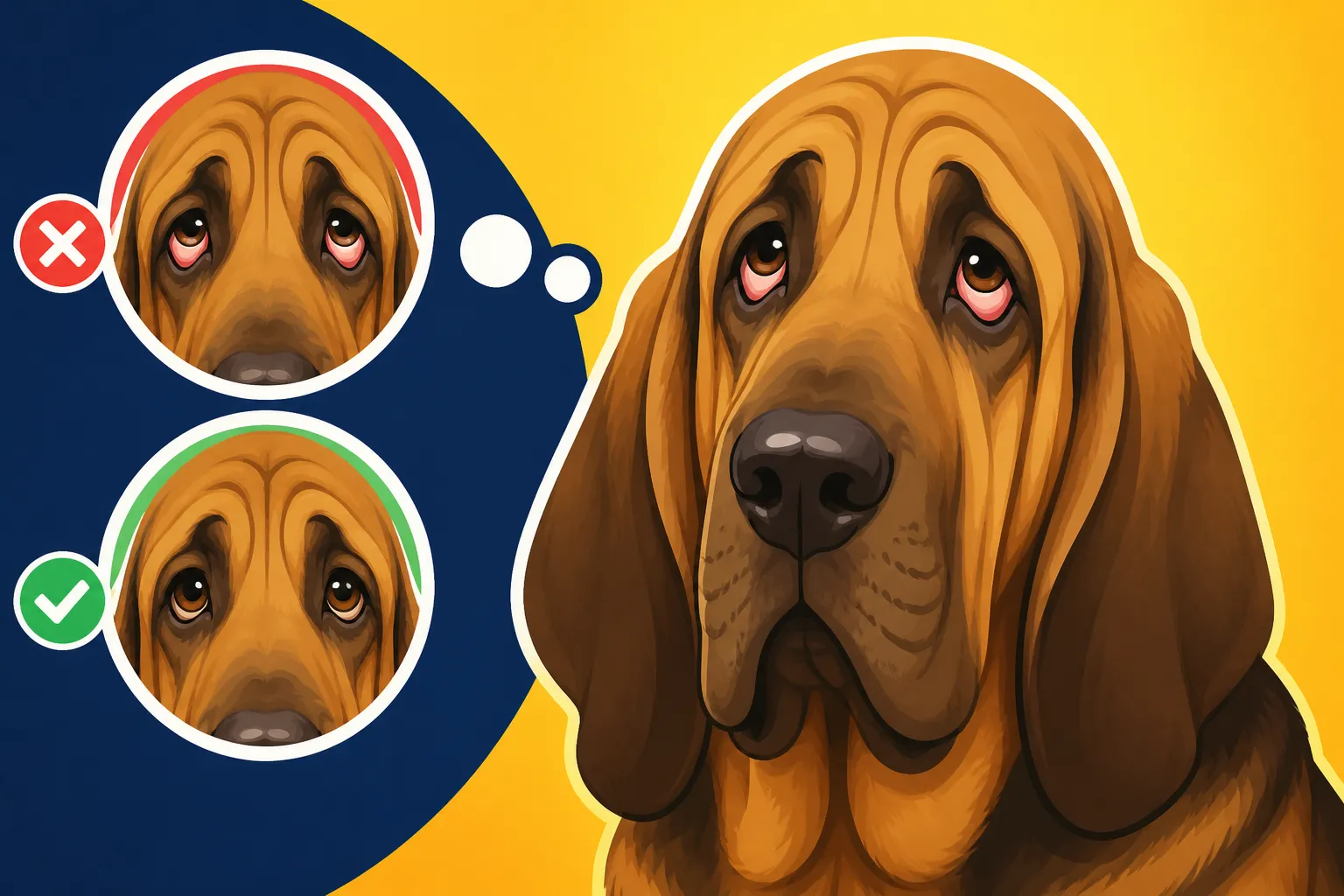
Bloodhounds are known for loose skin around the head and face. That skin, together with the shape of the lower eyelids, contributes to the soft, droopy expression many people recognize. In a typical Bloodhound, the lower lid may hang away from the eyeball enough to show some of the pink conjunctiva, sometimes called the haw. The result can look striking, but it is not automatically a sign of illness.
The key is to look at the whole eye, not just whether the lid hangs. A comfortable dog with clear eyes, ordinary blinking, and no persistent redness or discharge may simply have the breed’s characteristic conformation. Even so, the amount of droop varies from dog to dog. One Bloodhound may show little pink tissue, while another has a more noticeable lower lid.
The standard describes a general breed appearance; it cannot tell you whether an individual dog’s eyelids are protecting the eye well. If you are comparing your dog with photographs or other Bloodhounds, remember that camera angles, lighting, age, and facial expression can make the lids look more or less prominent. For background on how the breed’s facial features fit together, see Whether a Bloodhound Must Have Loose Skin and Whether a Bloodhound's Eyes Are Meant to Droop is the question this guide explores in practical terms.
Normal droop versus an eyelid problem
Ectropion is the term veterinarians use when an eyelid turns or sags outward. A mild degree may be part of a Bloodhound’s appearance, but more pronounced outward rolling can leave the eye surface less protected. This may make it easier for dust, plant material, or other irritants to reach the eye, and it can contribute to ongoing irritation or discharge.
Entropion is different: the eyelid rolls inward, so hair or eyelashes may rub against the eye. These conditions can sometimes occur in the same dog, affecting different parts of the lids or even the same eye in different ways. It is not possible to tell from a photo or a quick glance exactly what is happening, especially if the dog is squinting or holding its head at an unusual angle.
A veterinarian can examine the eyelids and eye surface to decide whether the appearance is simply the dog’s usual conformation or a problem that needs treatment. If the lid’s position has changed, the eye looks uncomfortable, or discharge has become persistent, arrange an examination rather than assuming that the change is “just Bloodhound eyes.” Related reading includes What Ectropion Looks Like on a Bloodhound and What Entropion Does to a Bloodhound's Eye.
| What you notice | What it may suggest | A sensible next step |
|---|---|---|
| A stable, mildly drooping lower lid with a clear, comfortable eye | Typical facial conformation may be a factor | Mention it at routine veterinary visits and watch for changes |
| More visible pink tissue, mild redness, or recurring discharge | Irritation or an eyelid-position concern may be present | Arrange a veterinary examination |
| Squinting, pawing at the eye, marked redness, or cloudiness | Pain or eye injury is possible | Contact a veterinarian promptly |
| Sudden change in the eye, an apparent injury, or inability to open it | An urgent eye problem may be present | Seek urgent veterinary care |
Signs a drooping eye needs veterinary attention
Changes in comfort and appearance
A relaxed Bloodhound may have a naturally droopy expression, but discomfort tends to show up in behavior as well as appearance. Watch for repeated squinting, frequent blinking, rubbing the face on furniture, pawing at one eye, or holding the eyelids partly closed. A dog that turns away from bright light or seems unusually reluctant to have its face touched may also be uncomfortable.
Look for changes from your dog’s own baseline. A little clear tearing may happen in response to wind or dust, but thick discharge, increasing redness, swelling, or a sudden difference between the two eyes deserves attention. Cloudiness, a visible mark on the surface, or an eye that looks enlarged should not be dismissed as part of the breed’s look.
Bloodhounds can be patient and easygoing, so a dog may not make an obvious fuss when something is wrong. That is why small changes matter. If you are unsure whether the eye looks different, take a clear photo in ordinary light and compare it with earlier photos, but do not let picture-taking delay care when the dog appears painful. For another guide to eye warning signs, see Signs a Bloodhound Has a Corneal Ulcer.
When to call promptly
Contact a veterinarian promptly if your Bloodhound is squinting, pawing at the eye, has persistent or worsening redness, or develops unusual discharge. Eye problems can worsen quickly, and a veterinarian may need to use specific tests to examine the surface and assess tear production. Trying to diagnose the cause by appearance alone can lead to delays or the wrong home treatment.
Treat sudden cloudiness, an apparent scratch or injury, significant swelling, or an eye held shut as urgent. If a foreign object seems lodged in or near the eye, do not try to pull it out. Avoid pressing on the eye or forcing the lids open. Call a veterinary clinic for instructions on getting your dog examined safely.
Some eyelid problems can be managed with monitoring or medical care, while others may need a veterinary ophthalmologist or surgery. The appropriate option depends on the dog’s anatomy, comfort, and the condition of the eye—not simply on how droopy the lids look. Read When a Bloodhound's Eyelids Need Surgery for more context on how that decision is approached.
Safe everyday eye care for a Bloodhound
Gentle cleaning without irritating the eye
If there is a small amount of discharge on the surrounding skin, use a clean, soft cloth dampened with warm water to wipe it away gently. Use a fresh part of the cloth for each eye, and avoid rubbing the eye itself. If the material is stuck, soften it with the damp cloth rather than tugging at lashes or crusts.
Keep grooming products, household cleaners, and fragranced wipes away from the eye. Do not use human eye drops, leftover prescription medication, or homemade rinses unless your veterinarian specifically recommends them. Even a product marketed for pets may not be suitable for a particular eye problem. If the eye looks irritated or the discharge keeps returning, cleaning the outside is not a substitute for finding out why.
For basic supplies, a washable soft cloth is often enough. Chewy and other pet retailers carry pet-care wipes and cleaning items, but check the label carefully and ask your veterinarian before using anything close to the eye. If the goal is simply to remove dirt from the surrounding skin, plain water on a clean cloth may be the safer choice. Guidance on routine care is available in How to Clean a Bloodhound's Eyes and Whether a Bloodhound's Haw Should Be Rinsed.
Keep a simple observation routine
A quick daily look can help you notice changes before they become harder to assess. Choose a calm moment, such as after a walk or before brushing, and check whether both eyes look similar to their usual appearance. Look for new redness, discharge, swelling, or a change in how fully the dog opens each eye. You do not need to handle the lids forcefully or inspect beneath them if your dog resists.
Make face handling pleasant and brief. Offer a treat, touch the cheek gently, then stop before your Bloodhound becomes worried. If cleaning is needed, keep the cloth and supplies nearby so the routine does not turn into a long struggle. A retailer such as Chewy may be convenient for finding washable cloths or pet-safe grooming supplies, but the product’s suitability around the eyes matters more than where it is sold.
If your dog has recurring eye trouble, note when it happens, which eye is affected, and whether it follows a particular activity such as a dusty walk. Bring those observations—and any clear photos—to the veterinary appointment. They can help explain what has changed, but they do not replace an examination. For related face-care concerns, see Daily Eye Care for a Bloodhound and Whether Dust Reaches a Bloodhound's Exposed Eye.
What to expect from a veterinary assessment
How the eye is evaluated
A veterinarian will usually ask when the change began, whether one or both eyes are affected, and whether you have noticed rubbing, squinting, or discharge. They may examine the eyelids, the visible eye surface, and the surrounding tissues. Depending on what they find, they may use tests to check for surface damage or assess tear production.
Try to describe what is normal for your dog. A recent photo from a time when the eye seemed comfortable can be useful, especially if the droop is longstanding and the current concern is a new symptom. Bring a list of any eye products or medications you have used, including non-prescription items. Do not apply medication before the appointment unless the clinic has advised you to do so.
The examination is not only about deciding whether the eyelid looks attractive or unusual. The practical question is whether the eye is comfortable and adequately protected, and whether there is damage or an underlying condition that needs care. This is one reason a breed’s characteristic look should not be used as a reason to ignore a painful or changing eye.
Monitoring, treatment, and follow-up
If the eyes are comfortable and the veterinarian finds no concerning problem, they may recommend observation and routine checks. If irritation is present, treatment will depend on the cause. That may involve addressing the irritation, managing an eye condition, or discussing whether the eyelid position itself needs intervention. Ask what changes should prompt a recheck and what signs should lead you to call sooner.
When surgery is discussed, ask what the procedure is intended to improve, what recovery involves, and whether a veterinary eye specialist should be consulted. The decision is individual. A mild droop without symptoms is not the same situation as an eyelid position that repeatedly exposes or irritates the eye. Avoid trying to judge the need for surgery from photographs or from another Bloodhound’s experience.
The goal is a comfortable, healthy eye—not a particular expression. With a routine of gentle observation, careful cleaning when needed, and timely veterinary advice for changes, you can appreciate your Bloodhound’s distinctive face while still taking eye health seriously. For more on the conditions that may be involved, see The Four Eye Problems a Bloodhound Is Born Toward.
Disclaimer
This article is for general informational purposes only and does not constitute professional advice. Laws, prices and regulations vary by location and change over time. Consult a qualified professional for guidance on your specific situation.