Whether a Bloodhound Is Used in Cold Cases
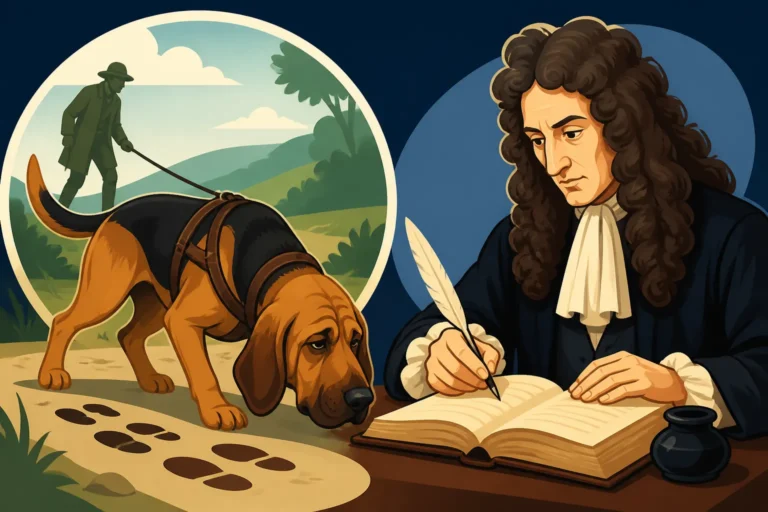
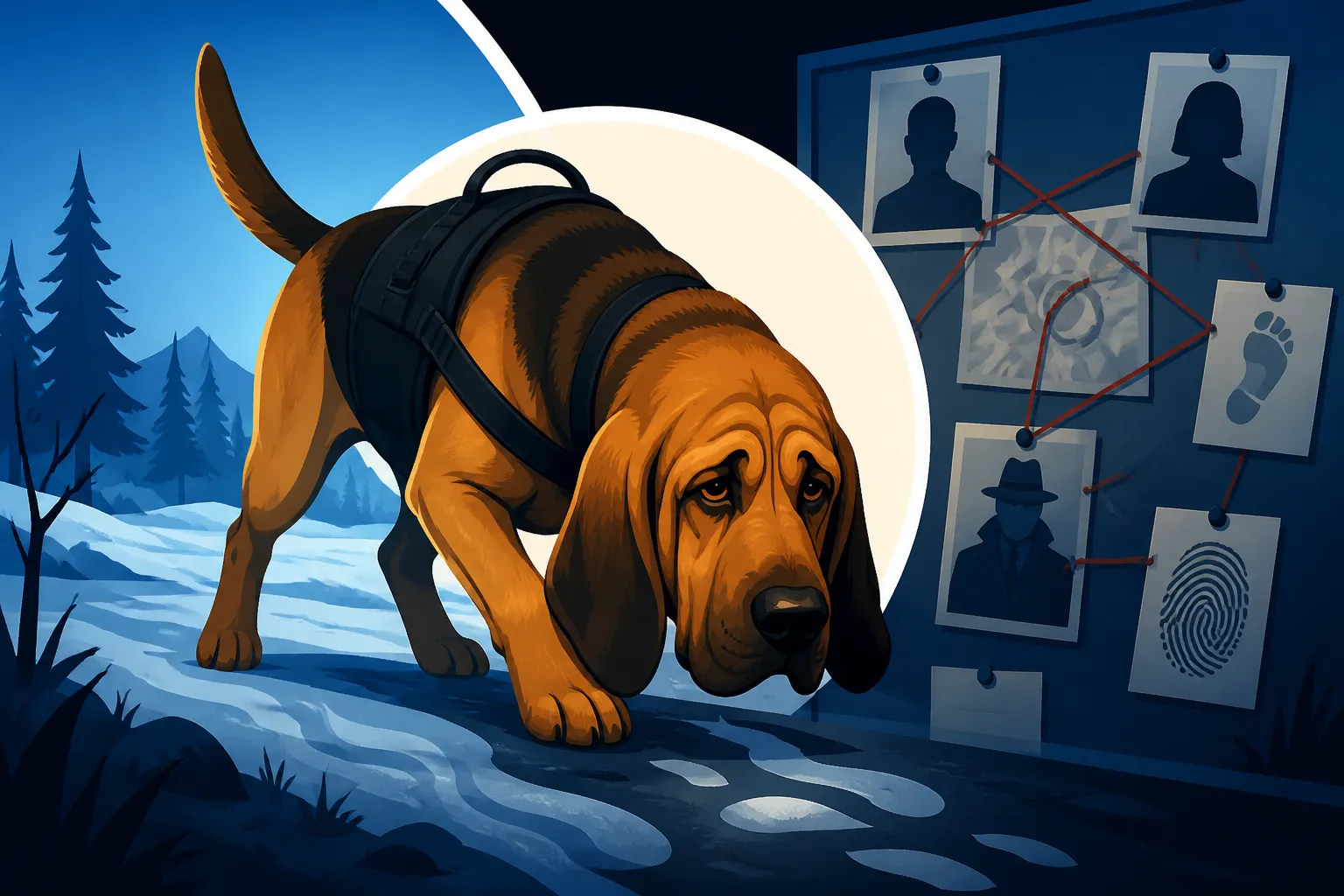
It’s a powerful image, isn't it? The determined Bloodhound, nose to the ground, bringing closure to a case that has stumped investigators for years. Movies and television have really romanticized the idea of a Bloodhound solving ancient mysteries. Many people wonder if these incredible scent hounds are actually deployed to dig up clues in those notoriously difficult cold cases, hoping their legendary noses can unravel what human detection has missed. This guide will delve into the reality of how Bloodhounds are, and aren't, utilized in these profoundly challenging investigations.
The Bloodhound's Legendary Nose: A Deep Dive into Scent Capabilities
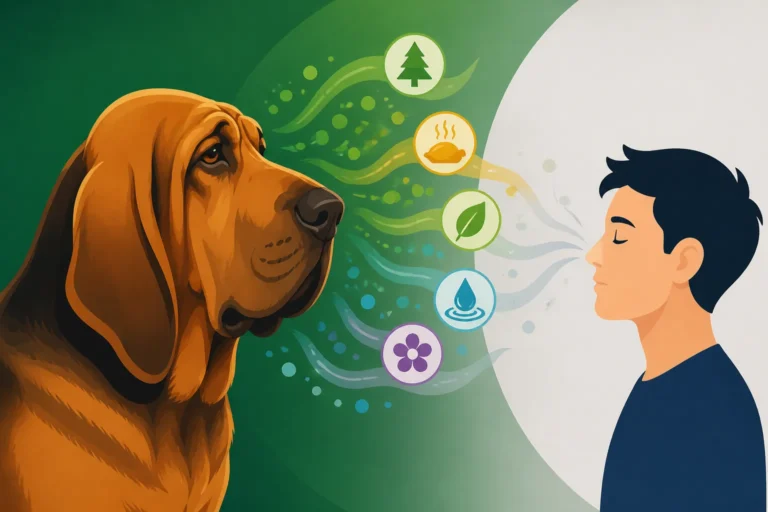
Let's start with why this question even comes up. The Bloodhound's nose is, quite simply, a marvel of nature. It's not just a little bit better than other dogs; it operates on an entirely different level. These dogs possess an estimated 300 million olfactory receptors, dwarfing the roughly 6 million found in humans. But it's not just the sheer number of receptors; it's the entire package – the moist, deeply wrinkled muzzle, the long, pendulous ears, and even the loose skin around their faces – all designed to capture and funnel scent particles directly to their incredible noses. Their unique anatomy essentially creates a scent vacuum, concentrating odor molecules for processing.
When a Bloodhound is on a trail, they're not just smelling a general "human" odor. They are picking up the individual scent signature left behind by a specific person. This signature is composed of shed skin cells (rafts of them, in fact), sweat, hormones, and all the microscopic detritus that falls off us constantly. This is incredibly persistent, even when we can't detect it at all. The notion that a Bloodhound could follow a trail days, weeks, or even months old is precisely why people hope they can contribute to cold cases. They are experts in discerning a specific individual's scent from a myriad of other odors in the environment, a critical skill for any tracking work. It's also worth noting how well their sense of smell performs in different conditions, as explored in Whether a Bloodhound Trails Better in Morning Air.
The Science of Scent Detection and Persistence
The scientific community has spent years studying the Bloodhound's unparalleled olfactory abilities. Beyond the sheer number of receptors, their vomeronasal organ, also known as Jacobson's organ, plays a role in detecting pheromones and other non-airborne chemicals, adding another layer to their tracking prowess. When a Bloodhound drops its nose to the ground, those long flews (the hanging lips) and dewlaps (loose skin under the chin) help to stir up scent particles, while their heavy, low-set ears sweep scent directly towards their nostrils, preventing it from dispersing too quickly. It’s a beautifully evolved system for maximizing scent detection and retention.
Crucially, human scent isn't just a fleeting puff; it's a persistent residue. Our skin cells are constantly sloughing off, carrying with them unique biochemical markers. These cells, even when dry and seemingly inert, continue to emit volatile organic compounds that a Bloodhound's nose can detect. Environmental factors like temperature, humidity, and airflow certainly influence how long a scent persists and how widely it disperses, but they don't erase it entirely. This endurance of human scent, the ability of a Bloodhound to discern it, and the fact that they are not distracted by other scents like animal trails or food odors, are the cornerstones of their reputation as master trackers. This is why How Many Scent Receptors a Bloodhound Has is such a fascinating topic when considering their tracking abilities.
How Old a Trail Can a Bloodhound Follow?
This is where the excitement for cold cases really comes into play. Stories abound of Bloodhounds following trails that are several days, or even weeks, old. While individual results can vary wildly depending on environmental conditions and the specific dog, the inherent capability to pick up aged scent is certainly there. A fresh trail is always ideal, of course, but Bloodhounds are unique in their ability to work what's called a "cold" trail, meaning a trail that isn't hot off the press.
However, there's a significant difference between a trail that's a few days old and one that's several years or even decades old, which is the definition of many cold cases. While scent persists, it also degrades and disperses. Over time, the concentration of scent particles diminishes, and they can be washed away by rain, blown away by wind, covered by snow, or simply walked over by countless other people and animals, creating a bewildering tapestry of overlapping odors. Still, the fundamental ability of the Bloodhound to detect minute traces means the potential for them to find something is always considered. It’s a testament to their dedication and drive to pursue a scent, as detailed in What a Bloodhound Does at the End of a Trail.
The Realities and Limitations of Using Bloodhounds in Cold Cases
While the Bloodhound's nose is truly exceptional, the romanticized image of them effortlessly solving decades-old cold cases often clashes with the practical realities of such investigations. Time, environmental factors, and the nature of cold cases themselves present formidable challenges that even the most skilled Bloodhound cannot always overcome.
The Impact of Time and Environment on Scent Trails
When we talk about a "cold case," we're often looking at incidents that happened years, even decades, ago. Imagine the layers of environmental changes over that time: seasons changing, countless people walking over the area, vehicles driving by, construction, weather events like floods or wildfires, and general decomposition. All these factors relentlessly work against the integrity and concentration of a scent trail.
A scent left on a protected surface in a climate-controlled environment might persist for a very long time, but outdoor crime scenes are rarely so accommodating. Rain washes away soluble components, UV radiation from the sun breaks down organic molecules, and even simple air currents can carry scent particles far from their original location. While a Bloodhound might detect a faint trace of human scent on an old item, confirming it belongs to a specific person of interest after such a long period, especially if there's no comparison scent, becomes an incredibly complex task. It's not just about detecting scent, but about interpreting it accurately in a profoundly contaminated environment.
Differentiating a Trail from General Scent
Here's another critical distinction: a Bloodhound is trained to follow a specific trail of an individual. They need a "scent article" – an item handled exclusively by the person they are meant to track – to establish that individual's unique scent profile. In a cold case, obtaining a pure scent article from a perpetrator or victim from years ago can be nearly impossible. Think about it: a piece of clothing from decades past, stored improperly, handled by numerous people, or exposed to contaminants, loses its value as a clean scent article quickly.
Even if a Bloodhound were to indicate on a spot at an old crime scene, what exactly are they indicating? Is it the scent of the victim from when they were last there? The scent of a passerby? An investigator from years ago? Or, indeed, the scent of a suspect? Without a clear, uncontaminated starting point and a fresh scent article, any "find" by a Bloodhound in a cold case can be difficult to interpret definitively. The dog is telling us a scent is present, but not necessarily whose scent or when it was deposited. This is a fundamental challenge that separates a fresh missing person's trail from a cold case.
Why Bloodhound Evidence is Typically for Active Cases
The legal system values the Bloodhound for their ability to follow a specific, fresh trail. Their evidence is admissible in court primarily because their work can be demonstrated and corroborated in relatively current scenarios. When a Bloodhound is used to track a missing person or a fleeing suspect, the trail is usually recent, and the dog’s actions can often be verified by other evidence or eyewitness accounts. This level of confidence is hard to achieve with a cold case.
For an active missing person search, a Bloodhound can quickly determine a path of travel, saving crucial time and resources. For example, if a child wanders off, a Bloodhound can pick up their fresh scent from a blanket and follow their route, sometimes for miles, leading searchers directly to them. This is a clear, actionable application. When it comes to cold cases, where the goal is often to find new evidence that can lead to an arrest or conviction, rather than simply locating a person, the Bloodhound's role becomes far more nuanced and less straightforward. The standards for legal admissibility are incredibly high, and it's much harder for a handler to credibly testify about a trail that is many years old. You can read more about this in Whether a Bloodhound Handler Must Be Qualified to Testify.
The Nuance of "Cold Cases": When Bloodhounds Might Be Used
Despite the significant challenges, it's not entirely accurate to say Bloodhounds are never used in cases that could be classified as "cold." The context, however, is everything. Their involvement is usually highly specific and often aims to support other investigative efforts rather than being the sole method of breaking a case.
Re-examining Specific Evidence or Locations
A Bloodhound might be brought into a cold case if new information emerges or if a specific piece of evidence from the past is being re-examined. For instance, if an old vehicle or a specific item believed to be connected to the case is found years later, a Bloodhound might be deployed to see if any human scent can be detected on it. Even then, the goal isn't necessarily to follow a trail from that item, but to confirm the presence of any human scent that could then be analyzed further (e.g., for DNA, if possible) or to indicate if the item was handled by someone specific.
Consider a scenario where a piece of clothing was found near a cold case scene decades ago, but was improperly stored and handled. If modern forensic techniques are being applied, a Bloodhound might be asked to check if any residual scent remains on a specific part of the garment before it undergoes more destructive testing. This is a far cry from turning a Bloodhound loose on a historical crime scene and expecting them to lead investigators to a suspect's current address. Their contribution here would be highly focused, perhaps confirming a handling event or indicating areas of high scent concentration on an artifact.
Supporting New Leads, Not Generating Them
In some instances, if new witness testimony or forensic evidence points to a very specific, previously unexamined location related to a cold case, a Bloodhound might be deployed to that new specific area. For example, if a witness suddenly remembers seeing a suspect near a particular abandoned building years ago, a Bloodhound could be used to search that building for human remains or distinct scent patterns. But again, this is reactive, supporting a new lead, rather than generating a fresh direction purely from an old scene.
It's about having a focused objective. Without a very clear starting point and a relatively confined area of interest, the vastness of an old crime scene and the degradation of scent make a Bloodhound's task almost impossible to yield actionable results. The expertise they bring is in scent discrimination and following, but even they need something coherent to follow. As an owner, you understand that even a well-trained Bloodhound needs a scent article and a clear idea of what they're looking for to be effective.
The Value of Canine Detection Beyond Trailing
It's also important to remember that not all scent dogs are Bloodhounds, and not all scent work is "trailing" for a living person. Other specialized canines, like human remains detection (HRD) dogs, are specifically trained to locate the scent of decomposed human tissue, which could be extremely valuable in cold cases where the location of remains is unknown. While Bloodhounds are primarily known for live-find trailing, the general concept of canine olfactory prowess being applied to long-term investigations certainly holds true for HRD dogs.
The distinction is crucial: a Bloodhound follows a trail left by a living individual. An HRD dog detects the presence of decomposed human scent, regardless of who left it or when. So, while a Bloodhound might have limited direct application in the trailing aspect of a decades-old cold case, specialized scent dogs, often from various breeds, play a vital role in searching for forensic evidence like human remains, which is a key component of many cold cases. The amazing capacity of these dogs to detect tiny particles, be it skin cells or decomposition compounds, is what makes them invaluable assets in any complex investigation.
Practical Considerations and Expectations
If you're ever considering the use of a Bloodhound for a cold case, it's crucial to approach it with realistic expectations and a thorough understanding of the logistical challenges involved. This isn't a TV show where a dog magically points to the culprit.
Scent Article Integrity for Cold Cases
As mentioned, the scent article is paramount. For a Bloodhound to work effectively, they need a "clean" scent article from the individual of interest. This means an item that has been handled only by that person, and preferably stored in a way that preserves the scent. In a cold case, such items are exceptionally rare. Imagine trying to get an uncontaminated scent article from a suspect from a crime that happened 30 years ago. Any item from that time would likely have been handled by police, family members, or simply exposed to environmental factors that would severely compromise its scent integrity.
Even if an item exists, proving its purity to the rigorous standards required for legal evidence can be almost impossible. Without a reliable scent article, a Bloodhound's ability to focus on a specific individual's trail is severely hampered. They become more like a general scent detector than a precise individual tracker, which isn't typically what's needed for solving a cold case. When you're dealing with a working Bloodhound, you know that the right equipment, often found through resources like Chewy, is just as important as a clean scent article for effective training and deployment.
The Interpretation of a Bloodhound's "Find"
What does it mean if a Bloodhound "finds" something in a cold case? It's often not as simple as them leading to a definitive answer. A Bloodhound might indicate on a spot, but that indication needs interpretation. Did they find an old piece of discarded clothing? Did they indicate on a general area where multiple people had been? Or did they indicate on a specific item handled by the person of interest? The context around the "find" is critical.
Unlike active cases where a Bloodhound might lead directly to a missing person, in a cold case, an indication might just be another piece of a very complex puzzle. It often necessitates further forensic investigation, DNA testing, or correlation with other evidence. The Bloodhound's work is rarely the final word; it's a valuable input that informs the next steps in an investigation. This is also why Whether a Bloodhound Can Be Wrong is an important topic to understand in any trailing scenario.
The Role of Handlers and Certification
Any Bloodhound working in a law enforcement capacity, especially where their findings might be used in court, must be handled by a certified, experienced handler. This certification ensures the handler understands the dog's capabilities, limitations, and proper procedures for working a trail and documenting their findings. For cold cases, this becomes even more critical due to the increased ambiguity. The handler must be able to articulate what the dog is indicating, the conditions under which the trail was worked, and the protocols followed to ensure the integrity of the process.
The handler's expertise in reading their dog's subtle cues is paramount. A good handler knows when their dog is truly "on" a specific trail versus simply showing interest in an area with general human scent. In cold cases, where trails are faint and contaminated, this nuanced understanding from an experienced handler is absolutely essential. The American Bloodhound Club and similar organizations often set standards for training and certification that are critical for professional use.
Here's a quick comparison of ideal vs. cold case trailing conditions:
| Feature | Ideal Trailing Conditions (Active Case) | Typical Cold Case Conditions |
|---|---|---|
| Scent Article | Fresh, uncontaminated, directly from person | Old, potentially contaminated, handled by many |
| Trail Age | Hours to a few days | Weeks, months, or many years |
| Environment | Relatively undisturbed, stable weather | Heavily contaminated, varied weather over time |
| Contamination | Minimal outside of trail scent | High, from environmental factors and human activity |
| Objective | Locate specific person or recent path of travel | Uncover new forensic evidence, confirm old leads |
| Legal Value | Often admissible as corroborating evidence | Difficult to establish, highly circumstantial |
| Handler Focus | Following dog's clear indications | Interpreting faint signals in complex environments |
While the image of a Bloodhound solving a decades-old cold case is compelling, the reality is far more complex. Their extraordinary noses are indeed invaluable, but their most impactful role remains in active search and rescue or criminal pursuit where trails are relatively fresh and scent articles are reliable. For cold cases, their deployment is much more specialized, typically supporting other forensic efforts or confirming specific, newly developed leads, rather than being the primary investigative tool. It's a testament to their skill that they are even considered, but it's important to understand the significant hurdles that time and environmental degradation present. You can explore more about their legal standing in Whether a Bloodhound's Trail Alone Can Convict.
Disclaimer
This article is for general informational purposes only and does not constitute professional advice. Laws, prices and regulations vary by location and change over time. Consult a qualified professional for guidance on your specific situation.