The Colors a Bloodhound Comes In
When you picture a Bloodhound, a very specific image often comes to mind, doesn't it? Perhaps it's that deep mahogany red, or more likely, the classic black and tan coat with those soulful eyes peering out. But for anyone new to this incredible breed, it can be a real surprise to learn that Bloodhounds actually come in a few distinct, recognized colors. It's not just a matter of preference; understanding these variations helps you appreciate the breed's history and genetic tapestry, and frankly, helps you make informed decisions when you're looking for your own floppy-eared companion. This guide will walk you through the stunning palette of Bloodhound coats, from the official standards to the fascinating genetics behind them, and even what to watch out for as a responsible owner.
The Distinguished Palette: Standard Bloodhound Colors
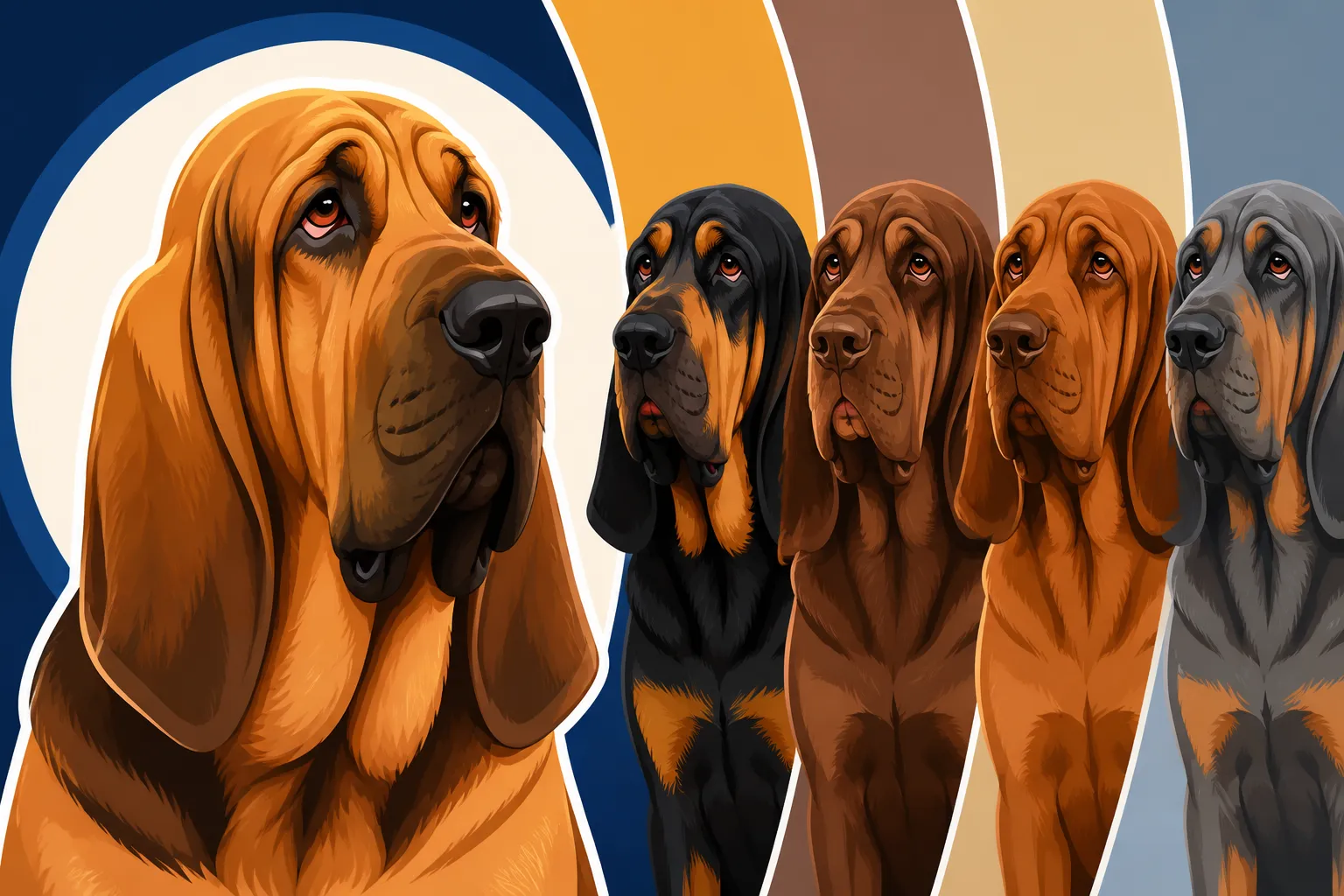
The Bloodhound, with its ancient lineage and unmistakable appearance, has a surprisingly concise, yet beautiful, set of coat colors recognized by breed clubs around the world. These aren't just arbitrary choices; they are deeply tied to the breed's history and genetic makeup. When you see a Bloodhound, its color often tells a story about its heritage and sometimes, even its potential genetic predispositions.
The Iconic Black and Tan
Ah, the black and tan Bloodhound. For many, this is the quintessential look of the breed. It's the one you often see in old photographs, classic illustrations, and even in many movies featuring these incredible scent hounds. The deep, rich black and striking tan markings give them an air of noble seriousness, almost like they're wearing a finely tailored suit.
This coloration is characterized by a solid black 'saddle' or blanket that covers most of the back and sides, extending up over the neck and sometimes part of the head. The tan color, which can range from a light cream or fawn to a deep, burnished reddish-tan, appears on the muzzle, cheeks, throat, chest, legs, and under the tail. You'll also typically find those distinctive tan 'eyebrows' above their deep-set eyes, which add to their wise and often mournful expression. The contrast between the dark black and the warm tan is what really makes this color pop and gives the Bloodhound its classic, distinguished appearance. It’s a coat that’s both functional for blending into shadows on a trail and incredibly handsome for striking a pose.
The Richness of Liver and Tan
While perhaps less commonly depicted than the black and tan, the liver and tan Bloodhound is a truly stunning sight, offering a softer, earthier alternative to its black-saddled cousin. Instead of black, these Bloodhounds feature a deep, rich chocolate brown – often called 'liver' – for their saddle and darker markings.
The liver coloration replaces all the black pigment on the dog. This means that not only is the saddle a beautiful brown, but their nose leather, eye rims, and paw pads will also be brown, rather than black. The tan points remain, appearing in the same locations as on a black and tan dog: muzzle, cheeks, chest, legs, and beneath the tail. The overall effect is incredibly warm and inviting, often giving these dogs an even more gentle appearance. The liver shade itself can vary from a lighter milk chocolate to a dark, almost espresso-like brown, and when paired with a rich tan, it creates a harmonious and visually appealing coat. If you've never seen a liver and tan Bloodhound up close, you're missing out on a truly beautiful variant of the breed's recognized colors. You might be surprised to see What a Liver and Tan Bloodhound Looks Like in person, the depth of color is quite striking.
The Spectrum of Red
Then there's the red Bloodhound. This might sound straightforward, but "red" in the Bloodhound world actually encompasses quite a range of shades, making each red Bloodhound unique. From a light, almost golden fawn to a deep, dark mahogany that borders on chestnut, the red Bloodhound is a magnificent sight.
A red Bloodhound typically has a coat that is uniformly colored across its body, though some may exhibit darker shading along their back or ears, which adds depth to their appearance. Unlike the bi-color black and tan or liver and tan, red Bloodhounds do not have distinct tan points; their entire body is essentially one shade of red. However, they will still have black pigment for their nose, eye rims, and paw pads, which provides a lovely contrast to their warm coats. Imagine a Bloodhound whose coat shimmers with the color of autumn leaves or a rich, dark cherry wood – that's the range of beauty you can find in a red Bloodhound. It’s a color that exudes strength and vitality, perfectly matching their tireless working spirit. That a red Bloodhound is standard (Whether a Red Bloodhound Is Standard) means that these variations are fully accepted within the breed's definition, allowing for a lovely diversity within the standard.
Decoding the Genes: The Science Behind Bloodhound Coat Colors
Understanding Bloodhound coat colors isn't just about looking at them; it's about delving into the fascinating world of canine genetics. Just like with our own hair and eye colors, specific genes determine the pigment that gets expressed in a Bloodhound's coat. It’s a complex dance of dominant and recessive alleles, leading to the beautiful and distinct colors we've just explored. You don't need a biology degree to grasp the basics, but it helps to know why your Bloodhound looks the way it does!
The Basic Building Blocks: Eumelanin and Pheomelanin
At the heart of almost all canine coat colors are two primary pigments: eumelanin and pheomelanin. Think of these as the fundamental colors on an artist's palette. Eumelanin is responsible for black and liver (brown) pigmentation. If a dog has the genes to produce eumelanin, it will have black fur, nose, and eye rims, unless another gene modifies it to liver. Pheomelanin, on the other hand, is the pigment that creates red and yellow colors. This is what you see in the tan points of a black and tan Bloodhound, or the overall red coat of a solid red one.
The amount, distribution, and modification of these two pigments are what give us the incredible variety of dog coat colors across all breeds. In Bloodhounds, these pigments are carefully orchestrated by a few key genes to produce their characteristic black and tan, liver and tan, or red coats. It's a delicate balance, and any slight change in these genetic instructions can lead to a different visual outcome.
The "B" Factor: Black vs. Liver Pigmentation
One of the most significant genetic factors in Bloodhound coat color is what's known as the "B" locus. This gene determines whether the eumelanin pigment (the dark stuff) will be expressed as black or liver (brown). It's a fairly straightforward dominant/recessive relationship.
The dominant allele, 'B', results in black pigment. So, if a Bloodhound inherits at least one 'B' allele (BB or Bb), its eumelanin will be black. This means its black saddle, black nose, black eye rims, and black paw pads. However, if a Bloodhound inherits two recessive 'b' alleles (bb), its eumelanin is diluted to liver. This is how you get those beautiful liver and tan Bloodhounds, with their brown saddles, brown noses, brown eye rims, and brown paw pads. It’s a classic example of how a single gene can dramatically alter a dog's appearance, taking it from the stark contrast of black and tan to the warm tones of liver and tan.
The Agouti Series: Patterns and Points
Once we know whether the eumelanin will be black or liver, the next piece of the puzzle for Bloodhounds often comes from the "A" locus, also known as the agouti series. This gene group dictates the distribution of eumelanin and pheomelanin, essentially deciding where the colors appear on the dog's body.
For Bloodhounds, the most common allele at the A locus is 'at', which stands for tan points. When a dog has two copies of the 'at' allele (at/at), it will express the classic tan point pattern, like what you see in our black and tan or liver and tan Bloodhounds. This means the dark eumelanin (black or liver) forms a solid 'saddle' over the back, while the lighter pheomelanin (tan) appears as distinct points on the face, chest, and legs. If a Bloodhound has an 'ay' allele (for fawn/sable) and is also genetically clear of the black and tan pattern, it will express as a solid red. It's these specific genetic combinations at the A and B loci that give us the fundamental color patterns we recognize in the Bloodhound breed.
Subtle Details: Acceptable Markings and Color Variations
While the primary colors of black and tan, liver and tan, and red form the core of the Bloodhound's appearance, the breed standard also allows for certain subtle variations and markings. These aren't just quirks; they add character and individuality to each dog, often making them even more endearing. It's important to understand what's considered normal and acceptable within the breed, so you can appreciate the unique beauty of your own hound.
The Grace of White Markings
Many Bloodhounds, regardless of their main coat color, will sport a little bit of white. This isn't usually extensive, but small splashes of white are perfectly normal and accepted within the breed standard. You might see a tiny splash of white on the chest, often called a 'star' or a 'blaze', or perhaps on the tips of the toes. Sometimes, a small amount of white can also appear on the chin or throat.
These white markings are typically considered a charming addition rather than a fault, as long as they are minimal. They don't detract from the dog's overall appearance or genetic health, simply adding a unique touch. However, extensive white markings, like a large white blaze up the face or a significant amount of white on the legs or body, are generally considered undesirable in the breed standard. But for those small, distinctive touches, they just add to the individual character of your Bloodhound, making them truly one-of-a-kind. It's good to know Whether a Bloodhound Can Have White Markings and what to expect.
Shading and Masking: Natural Coat Nuances
Beyond the primary color, Bloodhounds can also exhibit various forms of shading and masking that add depth and complexity to their coats. For example, some red Bloodhounds might have a darker overlay or 'mantle' of red fur along their backs or on their ears, giving them a rich, almost tri-toned appearance despite being classified as "red." This isn't a separate color entirely, but a variation in the intensity of the pheomelanin pigment.
Similarly, even in black and tan or liver and tan Bloodhounds, you might notice subtle differences in the richness and depth of the tan points. Some might have very pale, almost cream-colored points, while others boast deep, fiery tan markings. These natural coat nuances are often polygenic, meaning multiple genes contribute to their expression, creating a beautiful spectrum within each primary color. These aren't faults; they're simply part of the natural genetic diversity and beauty of the Bloodhound's coat, making each dog a unique masterpiece.
How Puppy Coat Changes with Age
It's a common and sometimes surprising experience for new Bloodhound owners: their puppy's coat color can actually change quite a bit as they mature! What you see in a fuzzy little eight-week-old isn't always what you'll get in a stately adult. This is especially true for red Bloodhounds and those with very light tan points.
A red Bloodhound puppy, for instance, might start out as a very pale fawn or a lighter shade of red, only to deepen significantly into a rich mahogany as they grow older. The tan points on black and tan or liver and tan puppies can also start quite light and become more intense and defined over their first year. Conversely, sometimes a very dark puppy might lighten just a touch, revealing more of the underlying pigments. These changes are completely normal and part of the developmental process as the adult coat comes in. It's fascinating to watch their colors mature alongside their personalities! So, don't be alarmed if your little fawn pup turns into a deep red marvel; it's just nature doing its beautiful work. Understanding Whether a Bloodhound Puppy's Color Changes can manage expectations and add to the joy of watching them grow.
Beyond the Standard: Colors Not Recognized by Breed Clubs
While the recognized colors for Bloodhounds are undeniably beautiful, you might occasionally stumble upon descriptions of Bloodhounds in other, more unusual hues. These "non-standard" colors, while sometimes visually striking, are not recognized by official breed clubs like the American Bloodhound Club, for important reasons. It's crucial for prospective owners to understand why certain colors exist outside the standard and what that might imply.
Solid Colors: Black and Liver without Tan Points
Occasionally, you might see a Bloodhound that appears to be entirely solid black or solid liver (brown), without any of the characteristic tan points. While the black and tan or liver and tan patterns are very common, a true solid color is not recognized in the breed standard for Bloodhounds.
The appearance of a solid black or liver Bloodhound often comes down to specific genetic combinations at the A (agouti) and K (dominant black) loci. For instance, if a Bloodhound inherits the dominant 'K' allele at the K locus, it can override the agouti patterns, resulting in a solid black dog, even if it genetically carries for tan points. Similarly, a liver dog with this genetic combination would appear solid liver. While these dogs are genetically purebred Bloodhounds, their appearance falls outside what is considered ideal and historically accurate for the breed. Responsible breeders will generally avoid breeding for these solid colors to maintain the integrity of the established breed standard. If you’re curious about the limits, check out Whether a Bloodhound Can Be Solid Black.
Dilute Hues: Blue and Isabella Bloodhounds
Even rarer and definitely not recognized are dilute colors like "blue" or "Isabella" (lilac) Bloodhounds. These colors are the result of a specific gene called the 'D' locus, which acts as a dilution gene. If a dog inherits two copies of the recessive 'd' allele (dd), it dilutes black pigment to blue (a grayish-blue color) and liver pigment to Isabella (a pale, often grayish-tan or lilac color).
When a black and tan Bloodhound carries two 'd' alleles, its black saddle would turn blue, and its nose, eye rims, and paw pads would also be blue. Similarly, a liver and tan Bloodhound with the 'dd' genotype would become Isabella and tan, with Isabella pigment in all the areas that would typically be liver. These dilute colors have a washed-out or pastel appearance. While present in some other breeds (like Weimaraners or some Dobermans), these dilute genes are not part of the Bloodhound's traditional genetic makeup and are considered a disqualifying fault by breed standards. Breeders who produce these colors are often not prioritizing the health and historical standard of the breed, and these "rare" colors might come with other potential issues, which we'll discuss shortly.
Other Anomalies: Brindle, Sable, and More
Beyond the more common dilute genes, other extremely rare or anomalous patterns might pop up in Bloodhounds, such as brindle or sable. Brindle is characterized by tiger-like stripes of dark pigment over a lighter base, while sable involves individual hairs being tipped with black, giving a shaded appearance.
These patterns are also determined by different alleles at the K and A loci. While these genes exist in the wider canine gene pool, they are not typically present or expressed in purebred Bloodhounds. If such a pattern were to appear, it would be an indication of a very unusual genetic combination or, in some cases, might raise questions about the dog's purebred lineage if it's not from a long-established, health-tested line. These are definitely not recognized by any breed standard and are highly uncommon, making them more of a genetic curiosity than a part of the accepted Bloodhound spectrum.
Color Myths: Separating Fact from Fiction
It's amazing how many myths and old wives' tales swirl around dog breeds, and Bloodhounds are no exception. Often, these myths extend to coat color, with people mistakenly believing that a certain color means a particular temperament, health predisposition, or even higher intelligence. As a seasoned Bloodhound enthusiast, I'm here to tell you that when it comes to coat color, most of these beliefs are simply not true.
Temperament and Coat Color: No Connection
One of the most persistent myths is that a dog's coat color dictates its personality. You might hear people claim that red Bloodhounds are more stubborn, or black and tans are calmer. Let me be absolutely clear: there is no scientific or anecdotal evidence to suggest that a Bloodhound's coat color has any bearing on its temperament, intelligence, or training aptitude.
A Bloodhound's personality is shaped by a complex interplay of its genetics (inherited from both parents), early socialization, training, and individual life experiences. Whether your Bloodhound is a regal black and tan, a gentle liver and tan, or a vibrant red, its core Bloodhound traits—its relentless nose, its sweet and docile nature with family, its legendary stubbornness on a scent, and its booming bay—will be present. Don't let anyone tell you that a certain color means a "better" or "worse" Bloodhound. They are all wonderful, idiosyncratic creatures, irrespective of the hue of their fur. Focus on the individual dog's personality and the quality of its breeding, not its shade.
Color and Health: What to Be Aware Of
Generally speaking, for the standard colors of Bloodhounds (black and tan, liver and tan, and red), there is no inherent health difference directly tied to their coat color. A red Bloodhound is just as healthy, or prone to specific breed health issues, as a black and tan one. The health concerns for Bloodhounds, such as Hip and Elbow Dysplasia in the Bloodhound, Bloat Is What Kills Most Bloodhounds, or The Four Eye Problems a Bloodhound Is Born Toward, are breed-wide issues that transcend coat color.
However, when we venture into non-standard, particularly dilute colors like blue or Isabella, there can sometimes be associated health concerns in some breeds. For instance, in breeds like the Doberman Pinscher or Great Dane, the dilute gene can sometimes be linked to a condition called Color Dilution Alopecia (CDA), which causes hair loss and skin problems. While dilute Bloodhounds are exceedingly rare and CDA might not be a prevalent issue specifically in Bloodhounds, the existence of such links in other breeds highlights why responsible breeders adhere to established color standards. These standards often developed over centuries, prioritizing overall health and soundness, not just aesthetics. So, while your standard-colored Bloodhound isn't more or less healthy because of its color, stepping outside those standards can, in some breeds, introduce unforeseen issues. Knowing Whether Bloodhound Lifespan Has Improved isn't about color, but about responsible breeding across the board.
"Rare" Colors and the Breeder's Responsibility
This is a critical point that can save prospective owners a lot of heartache and money. You might occasionally see breeders or individuals advertising "rare" or "designer" Bloodhound colors, often at an inflated price. Words like "blue Bloodhound" or "Isabella Bloodhound" are red flags.
As discussed, blue and Isabella are dilute colors that are not recognized by the breed standard. When a breeder advertises these as "rare" and charges more, they are often preying on a lack of knowledge and a desire for something unique. In reality, "rare" in this context usually means "non-standard" and potentially indicates a breeder who is not prioritizing the health, temperament, or integrity of the breed. Responsible breeders focus on producing healthy, well-socialized puppies that conform to the breed standard, which includes accepted colors. They will screen their breeding stock for genetic health issues and stand behind their puppies. Anyone intentionally breeding for non-standard colors or using terms like "rare" to justify a higher price should be approached with extreme caution. It's much better to find a Bloodhound whose health and lineage are paramount. When buying pet supplies, you look for trusted names. Similarly, for your pet, you should look for trusted breeders. You'll find all the supplies your Bloodhound needs, from durable beds to their favorite treats, on reputable sites like Chewy, but never a "rare" colored puppy from a responsible source.
Preserving the Breed: The Role of the Breed Standard in Color
The breed standard might sound like a stuffy document to some, but for breeds like the Bloodhound, it's a vital blueprint. It describes the ideal physical appearance, temperament, and even movement of the dog, acting as a guide for breeders dedicated to preserving the breed's unique qualities. When it comes to color, the standard isn't just about aesthetics; it's about maintaining identity, genetic health, and historical lineage.
Why Conformation Standards Exist
Breed conformation standards, established by organizations like the American Kennel Club (AKC) and the American Bloodhound Club, are more than just a beauty contest rulebook. For centuries, dogs were bred for specific functions – hunting, guarding, herding, trailing. The Bloodhound, as the ultimate scent hound, was meticulously developed for its unparalleled nose, endurance, and distinctive appearance, all contributing to its working ability.
The standard ensures that these functional and characteristic traits are preserved. For instance, the Bloodhound's loose skin and long ears aren't just for show; they help funnel scent to their incredibly powerful noses. Similarly, the accepted coat colors have been part of the breed's identity for generations. Deviating wildly from these standards, whether in physical traits or color, can dilute the breed's distinctiveness and sometimes even inadvertently introduce health issues that aren't typical of the breed. It's about maintaining a consistent, recognizable, and healthy Bloodhound for future generations. If you want to learn more about the dedication to the breed, look into Whether the American Bloodhound Club Keeps a Health Registry.
Identifying a Responsible Breeder Through Color
A breeder's adherence to the breed standard, including color, can often be a strong indicator of their overall responsibility and dedication to the breed. A reputable Bloodhound breeder will know the breed standard inside and out and will strive to produce puppies that exemplify it. This means they will breed for correct temperament, health, structure, and, yes, accepted colors.
They won't be trying to create "new" or "rare" colors outside the standard. Instead, they will be focusing on the established black and tan, liver and tan, and red. A breeder who focuses on "rare" colors or sells puppies that are clearly outside the accepted range might be prioritizing novelty or profit over the breed's welfare and heritage. They may not be doing essential health screenings or focusing on crucial temperament traits. When you're looking for a Bloodhound puppy, always ask about the parents' health clearances, temperament, and how closely the breeder adheres to the breed standard. This includes asking about the colors they typically produce. This is a far better approach than falling for a flashy but unsupported "rare color" claim.
The Importance of Genetic Testing, Beyond Just Color
While coat color is a visible trait, a responsible breeder's commitment to genetics goes much deeper. Genetic testing is paramount for identifying potential health issues that aren't immediately apparent in a puppy's coat. This includes screening for hip and elbow dysplasia, certain eye conditions, and cardiac health, all of which are important for Bloodhounds.
A good breeder will openly share the results of these health tests for both parent dogs. They understand that a beautiful coat color, whether black and tan or red, means very little if the dog is predisposed to debilitating health problems. This commitment to health screening is a hallmark of an ethical breeder and should always be a higher priority than any specific color. It's often where What a Health Tested Bloodhound Puppy Costs comes into play, reflecting the investment in healthy lineage. So, while we love our Bloodhounds for their striking colors, their long-term health and well-being should always be the guiding principle when choosing a puppy.
Caring for Your Bloodhound's Coat: A Lifetime of Luster
No matter what color your Bloodhound proudly wears, its coat care is generally straightforward, but consistent attention ensures they look and feel their best. These hounds might have short hair, but their skin and folds require regular checks to prevent issues, and managing their shedding is part of life with a Bloodhound.
Basic Grooming for the Bloodhound Coat
The good news for Bloodhound owners is that their coats are relatively low-maintenance compared to many other breeds. They have a short, dense, and somewhat coarse coat that doesn't require complex clipping or stripping. However, "low-maintenance" doesn't mean "no maintenance." Regular basic grooming is still essential for keeping their skin healthy and minimizing shedding around your home.
A weekly brushing session with a rubber curry brush, like a grooming mitt or a hound glove, is usually sufficient. This helps to remove loose hair, distribute natural skin oils, and stimulate circulation. It's also a great bonding experience with your dog. While brushing, it's an excellent opportunity to check their skin for any irritations, bumps, or dry patches, especially in those magnificent folds and wrinkles. You'll find a wide array of brushes and shampoos designed for short-coated breeds on sites like Chewy, ensuring you have the right tools for your black and tan, liver, or red Bloodhound.
Seasonal Shedding and Coat Maintenance
Despite their short coats, Bloodhounds do shed. And when they shed, they really shed. It’s not the fluffy tumbleweeds you might find with long-haired breeds, but rather a constant shower of stiff, short hairs that can embed themselves into fabric with impressive tenacity. While they shed year-round, you can expect heavier shedding seasonally, typically in spring and fall as they blow their coats to prepare for warmer or cooler weather.
During these heavier shedding periods, you'll want to increase your brushing frequency to a few times a week, or even daily, to help remove as much loose hair as possible before it ends up on your couch, clothes, or floors. Bathing can also help dislodge dead hair. While it might feel like a never-ending battle, consistent grooming will go a long way in managing the onslaught of hair. Embracing the shed, and having a good quality vacuum, are just parts of the Bloodhound ownership experience! It's a real factor in How Much a Bloodhound Sheds.
Addressing Skin and Coat Issues, Regardless of Color
Bloodhounds, due to their unique skin structure, can be prone to certain skin and coat issues that aren't tied to their color, but rather to their wonderful wrinkles and deep folds. These areas can trap moisture, dirt, and bacteria, leading to irritation or infection.
Regularly checking and cleaning their skin folds, especially around the face, neck, and lips, is crucial. Use a damp cloth or a pet-safe wipe to keep these areas clean and dry. Any redness, odor, or discharge in a fold could indicate a problem that needs veterinary attention. Similarly, their long, pendulous ears are also prone to infections due to poor airflow; these also require routine cleaning. Regardless of whether your Bloodhound is black and tan, liver and tan, or red, these preventive measures are key to keeping their skin healthy and their coats lustrous. If you notice persistent itching, flaky skin, or an unusual odor, don't hesitate to consult your vet. A healthy coat, above all, reflects a healthy hound.
Disclaimer
This article is for general informational purposes only and does not constitute professional advice. Laws, prices and regulations vary by location and change over time. Consult a qualified professional for guidance on your specific situation.