Whether a Bloodhound Can Be Solid Black
It's quite common for prospective Bloodhound owners to envision their future companion in a variety of coat colors, sometimes even imagining a sleek, all-black version of this magnificent hound. However, the question of whether a Bloodhound can genuinely be solid black touches upon the very foundation of breed standards and genetics, and the reality might be a bit different from what you've pictured. This guide will clarify the accepted coat colors for Bloodhounds, explain why solid black isn't typically one of them, and discuss what these color distinctions mean for you as an owner or enthusiast.
Understanding the Bloodhound Breed Standard for Color
When we talk about a dog breed, especially one as historically significant as the Bloodhound, the breed standard is like a blueprint. It outlines the ideal characteristics, from temperament and structure down to the acceptable coat colors. These standards are developed by parent clubs, like the American Bloodhound Club, and recognized by kennel clubs, such as the American Kennel Club (AKC). For the Bloodhound, these standards are quite specific about color, and solid black doesn't make the cut.
The Officially Accepted Bloodhound Colors
The breed standard for the Bloodhound specifies a very clear palette of acceptable colors, and they all involve some combination or shade of red, tan, or black. You'll primarily see Bloodhounds in one of three main color patterns, sometimes with varying degrees of white markings that are also considered acceptable within limits.
First, there's the classic black and tan. This is perhaps one of the most iconic looks for a Bloodhound, featuring a deep, rich black saddle or blanket pattern over the back and sides, contrasted by expressive tan markings on the muzzle, chest, legs, and under the tail. The tan can range from a light cream to a deep, ruddy copper. This pattern truly highlights the Bloodhound's majestic presence.
Then we have liver and tan. This is a beautiful variation where the black areas of a black and tan hound are replaced by a rich, dark brown, often referred to as liver. The tan markings remain, providing a striking contrast against the liver. It's a slightly softer look than the black and tan but equally captivating.
Finally, there's red. This can range from a light tawny or reddish-brown to a very deep, almost mahogany red. A red Bloodhound will have a uniform color across its body, though shading might vary slightly in different areas. Many people find the red Bloodhound incredibly striking, often with a noble, dignified air.
The standard also allows for a small amount of white on the chest, feet, and tip of the stern. This means a little white blaze on the chest or white toes isn't considered a fault; it's simply part of the breed's accepted appearance. So, while variations within these colors exist, a completely solid black Bloodhound is not what the official standard describes. If you're looking for information on all the accepted shades, you might find our article on The Colors a Bloodhound Comes In helpful for a more detailed look.
Why Solid Black Is Not Standard
The reason solid black is not an accepted color for Bloodhounds boils down to genetics and historical breeding. The genetic markers that produce a solid black coat simply aren't characteristic of the Bloodhound line that has been preserved and developed over centuries. Breeders, guided by the breed standard, aim to produce dogs that conform to the historical and functional ideals of the breed. This means prioritizing the specific coat patterns and colors that are inherent to the Bloodhound's genetic makeup.
Any dog that is purebred but displays a color outside the standard is often considered a "disqualification" in the show ring, meaning it cannot compete for championship titles. While this doesn't make the dog any less of a Bloodhound in terms of its heritage or personality, it does mean it doesn't meet the aesthetic criteria set forth by the breed's governing bodies. These standards are not arbitrary; they reflect the breed's origins and the specific characteristics that define it. The loose skin, the long ears, the deeply set eyes – these are all part of the Bloodhound's unique identity, and so are its traditional coat colors.
The Reality of a "Solid Black" Bloodhound
So, if the breed standard doesn't include solid black, what does it mean if you encounter a dog that appears to be a Bloodhound but is entirely black? There are a few possibilities, and understanding them helps clarify the situation.
Possible Origins of a Solid Black Appearance
One of the most common reasons a dog resembling a Bloodhound might be solid black is that it's a mix breed. Perhaps it has some Bloodhound ancestry mixed with another breed known for solid black coats, such as a Labrador Retriever, a Rottweiler, or a certain type of Coonhound. This blending of genetics can certainly result in a solid black coat, even if many other physical traits lean heavily towards the Bloodhound side. These dogs can be wonderful companions, but they wouldn't be considered purebred Bloodhounds by breed standards.
Another less common, but still possible, scenario is a genetic anomaly within a purebred Bloodhound litter. Sometimes, even within established lines, a recessive gene can unexpectedly express itself, leading to a coat color not typically seen. While this might technically be a purebred Bloodhound by parentage, it would still fall outside the breed standard and wouldn't be eligible for conformation showing. Such instances are rare, and reputable breeders typically breed to maintain the established colors and traits.
Lastly, there's the question of perception. Sometimes, a very dark black and tan Bloodhound, especially one with minimal tan markings or in certain lighting, might appear to be solid black at first glance. However, upon closer inspection, the tan points would usually be discernible, perhaps on the toes, under the tail, or inside the ears. It's also worth noting that a Bloodhound puppy's color changes as it grows, with markings often becoming more distinct with age.
What Non-Standard Color Means for an Owner
For the vast majority of Bloodhound owners, a dog's coat color is a matter of personal preference and has absolutely no bearing on the dog's ability to be a loving, loyal companion. If you fall in love with a dog that has Bloodhound traits but is solid black, and you're not planning to enter the competitive conformation show ring, then the color deviation from the standard is largely irrelevant. Your dog will still have that incredible nose, that gentle disposition, and those soulful eyes that make Bloodhounds so beloved.
However, if you have aspirations of showing your Bloodhound in AKC conformation events, then adherence to the breed standard, including color, is crucial. A dog with a non-standard color would be disqualified, preventing it from competing for championship points. This is an important consideration for anyone looking to purchase a show-quality puppy. Similarly, if you plan to breed, choosing dogs that conform to the standard ensures you are contributing to the preservation of the breed's recognized traits.
It's also important to differentiate between official recognition and a dog's inherent value. A solid black Bloodhound might not be recognized in the show ring, but it's still a dog with all the amazing qualities of the breed. Its nose for tracking, for example, would be just as keen as a standard-colored hound's. The Bloodhound is, after all, the only dog whose evidence stands in court due to its unparalleled scenting abilities, a trait completely independent of coat color.
The Importance of Health Over Aesthetics
While color can be an interesting topic, a reputable breeder will always prioritize health and temperament above all else. When considering any Bloodhound, whether for pet, show, or work, focusing on robust health is paramount.
What to Prioritize When Choosing a Bloodhound
When you're looking for a Bloodhound puppy, the color of its coat should be low on your list of priorities. Far more important are the health clearances of the parents, the breeder's commitment to the breed, and the puppy's socialization. The American Bloodhound Club has specific recommendations for health screenings that responsible breeders follow. You'll want to ask about screenings for common Bloodhound ailments like hip and elbow dysplasia, eye conditions, and cardiac health. Our article on What the American Bloodhound Club Asks Breeders to Screen provides an excellent overview of these vital checks.
A healthy puppy from well-screened parents is far more valuable than a puppy of a specific, perhaps non-standard, color. Investing in a healthy Bloodhound now can save you a lot of heartache and considerable expense down the road. Remember, a Bloodhound's money is spent in the operating room more often than many other breeds, largely due to predispositions like bloat and certain orthopedic issues. You'll want a breeder who is open about these potential health concerns and actively works to minimize them in their lines.
Responsible Breeding and Color
Reputable Bloodhound breeders meticulously plan their litters, aiming to produce healthy, well-tempered puppies that conform to the breed standard. This means they will breed for the recognized colors: black and tan, liver and tan, and red. If a breeder claims to specialize in "rare" solid black Bloodhounds, it should raise a red flag. This might indicate that they are breeding for novelty rather than health or standard adherence, or that their dogs are not purebred as claimed.
When discussing the purchase of a puppy, ask the breeder directly about their breeding goals and how they select their breeding pairs. A transparent breeder will happily share health certificates, pedigrees, and explain why they adhere to the breed standard colors. They will also be able to explain what a health tested Bloodhound puppy costs and why that cost is justified. A good breeder's contract will also outline health guarantees and possibly clauses about what happens if a dog develops certain conditions.
For general supplies for your new Bloodhound, no matter its color, online retailers like Chewy offer a fantastic selection of food, toys, and grooming essentials. From large breed puppy food to sturdy leashes and snoods (to keep those long ears out of the food bowl!), Chewy is a convenient one-stop shop for all your Bloodhound's needs.
Genetic Markers and Coat Color Inheritance
Understanding how coat color is inherited in dogs can shed more light on why solid black isn't standard for Bloodhounds. Canine coat color genetics is complex, involving several different genes, but generally, specific genes control the production and distribution of pigments.
The A-Locus and Bloodhound Colors
In many breeds, the "A" locus (Agouti series) plays a crucial role in determining whether a dog is solid-colored, has tan points, or is sable. Bloodhounds carry the genes for tan points, which means they express areas of black or liver, combined with tan markings. For a dog to be solid black, it would typically need to express a different combination of genes at the A-locus, often associated with a dominant black gene (K-locus).
For Bloodhounds, the genetics favor the expression of eumelanin (black or liver pigment) and phaeomelanin (red/tan pigment) in specific patterns. The black and tan pattern (atat) is a classic example of this, where black (or liver) covers the body, and tan points appear on specific areas. Red Bloodhounds usually have a different genetic combination that suppresses eumelanin production across most of the body, allowing phaeomelanin to dominate.
A truly solid black dog, without any tan points, would possess a different genetic blueprint than what is typical for a Bloodhound. This is why a solid black coat is a strong indicator of either mixed ancestry or a very rare genetic mutation that deviates from the established breed type. While it's fascinating to explore canine genetics, for Bloodhounds, the visual evidence of their traditional colors is a testament to generations of selective breeding.
White Markings and the Breed Standard
Even the presence of white markings is genetically regulated. Small white markings on the chest and feet, often referred to as "Irish spotting," are acceptable in Bloodhounds. These markings are caused by genes that restrict pigment production in certain areas. However, extensive white markings, or a piebald pattern (large patches of white), would generally be considered outside the Bloodhound standard.
This meticulous attention to color and marking within the breed standard ensures that the Bloodhound maintains its distinctive and recognizable appearance. The standards aren't just about aesthetics; they're also about preserving the genetic integrity and historical identity of the breed. From the texture of their short, dense coat to the specific shading of their tan points, every detail contributes to what makes a Bloodhound, a Bloodhound.
The Broader Context of Bloodhound Appearance
Beyond color, the Bloodhound's appearance is defined by several unique physical characteristics that contribute to its exceptional scenting ability and dignified presence. These traits, like their deep wrinkles and long ears, are central to the breed standard.
Defining Bloodhound Features Beyond Color
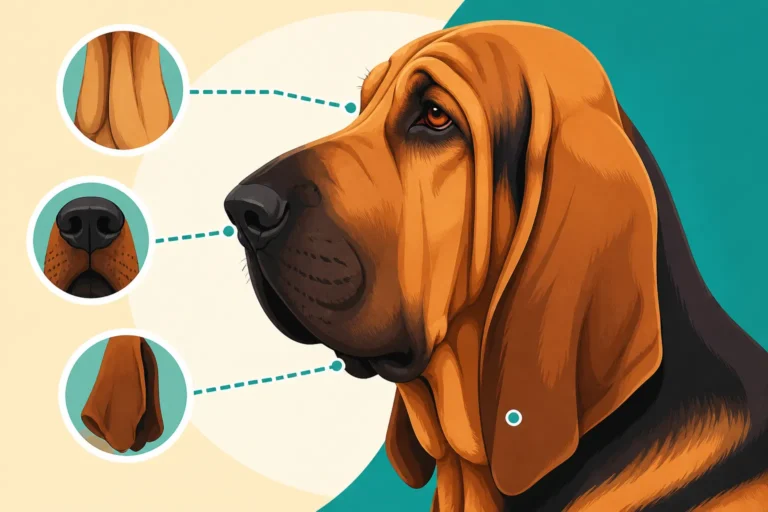
When you picture a Bloodhound, you likely imagine those loose, pendulous ears that sweep scent towards their incredible nose. You see the deep wrinkles on their forehead and muzzle, sometimes referred to as 'dewlaps', which also play a role in trapping scent. And of course, those expressive, often droopy eyes that give them such a mournful, wise look. These are all critical aspects of the breed standard.
The general impression of a Bloodhound should be one of substance and power, yet with an air of nobility. They are large, powerfully built dogs with a deep chest and strong legs. Even their tail, carried high in a saber-like curve, contributes to their distinctive silhouette. These physical traits are far more indicative of a purebred Bloodhound than a singular coat color, especially one that deviates from the norm. Our article on What an Adult Male Bloodhound Weighs can give you a better idea of the substantial size these dogs achieve.
A responsible breeder focuses on preserving all these traits, not just a particular color. They are aiming for a dog that functions as a Bloodhound should – with an unparalleled sense of smell and the stamina to follow a trail for miles. The color is merely one aspect, and one that must conform to tradition.
The Role of Kennel Clubs and Breed Standards
Kennel clubs like the AKC play a vital role in maintaining the integrity of dog breeds. They publish breed standards, register purebred dogs, and sanction events like conformation shows. These standards are developed by experts and breed enthusiasts with deep knowledge of the breed's history, function, and desired characteristics. For the Bloodhound, the standard is a comprehensive document that details everything from skull shape to foot structure, and, of course, acceptable colors.
While some might view breed standards as overly restrictive, they serve to guide responsible breeding practices and ensure the preservation of distinct breed traits. Without these standards, breeds could quickly lose their defining characteristics, potentially leading to a dilution of their unique qualities and an increase in generic characteristics. When you purchase an AKC-registered Bloodhound, you're buying into a lineage that adheres to these standards, confirming that the dog you're bringing home truly embodies the traits of its ancient and noble breed. If you're curious about the costs associated with purebred dogs, you might want to read whether an AKC Registered Bloodhound costs more.
Ultimately, while the idea of a solid black Bloodhound might be appealing aesthetically to some, it's important to understand that such a dog would not conform to the established breed standard. This doesn't lessen the dog's individual worth or capacity for companionship, but it's a key piece of information for anyone interested in the specifics of the Bloodhound breed.
| Bloodhound Coat Color | Description | Standard | Notes |
|---|---|---|---|
| Black and Tan | Black saddle/blanket with tan points on muzzle, chest, legs. | Accepted | Classic Bloodhound appearance. |
| Liver and Tan | Dark brown (liver) saddle/blanket with tan points. | Accepted | A softer version of black and tan. |
| Red | Uniform reddish-brown, from light tawny to dark mahogany. | Accepted | Solid color, no distinct markings of a different shade. |
| Solid Black | Entirely black coat, no tan points or other markings. | Not Accepted | Indicates mixed breeding or a rare genetic deviation from the standard. |
| White Markings | Small patches of white on chest, feet, or tail tip. | Accepted | Limited white is permissible within all accepted colors. |
Conclusion: Embracing the Bloodhound's True Colors
So, to directly answer the question: according to the official breed standards recognized by major kennel clubs, a Bloodhound cannot be solid black. The standard explicitly calls for black and tan, liver and tan, or red, with or without limited white markings. A dog that is truly a purebred Bloodhound will always fall into one of these accepted color categories.
If you encounter a dog that appears to be a Bloodhound but is solid black, it's most likely a mixed breed, or in very rare cases, a purebred with a genetic deviation that places it outside the conformation standard. Neither of these scenarios diminishes the dog's value as a companion, but it's crucial for understanding the nuances of breed recognition. When you choose a Bloodhound, whether for its incredible scenting ability, its gentle nature, or its distinguished appearance, you're embracing a breed with a rich history and a very specific, beautiful palette of traditional colors.
Disclaimer
This article is for general informational purposes only and does not constitute professional advice. Laws, prices and regulations vary by location and change over time. Consult a qualified professional for guidance on your specific situation.