What a Bloodhound Weighs and How Tall It Stands
It’s easy to look at a Bloodhound puppy, all loose skin and gangly paws, and wonder just how big they're actually going to get. Will they fit on the sofa? Will they tower over your kids? Will you need a bigger car? These aren't idle questions; the sheer size of a Bloodhound is one of the most significant factors in their daily care and your life together. This guide will walk you through everything you need to know about the impressive stature and weight of these noble hounds, helping you prepare for the wonderful, oversized companion you're about to welcome into your home.
Understanding Bloodhound Size: More Than Just Numbers
When we talk about a Bloodhound's size, we're not just rattling off measurements for bragging rights. For owners, understanding the full scope of their hound's physical presence is critical for everything from choosing the right food bowl to navigating crowded spaces. These aren't small dogs, and their large frame comes with unique considerations that impact their health, behavior, and your lifestyle.
Why Size Matters for a Bloodhound Owner
Living with a giant breed like a Bloodhound is a world away from sharing your home with a smaller dog. Their size dictates so much: the amount of space they need to stretch out, the robustness required of their toys, the sheer volume of food they consume, and even the type of veterinary care they might need. A large dog means larger doses of medication, larger surgical spaces, and often, larger bills. It also means you need to be physically capable of handling a powerful, scent-driven animal that can easily outweigh many children and even some adults. Ignoring these realities can lead to preventable issues down the line, from uncomfortable living arrangements to accidental injuries.
The Bloodhound's Imposing Presence
A fully grown Bloodhound commands attention. Their deep chests, long, muscular legs, and massive heads are instantly recognizable. They are undeniably impressive, often drawing admiration and sometimes a little apprehension from strangers who aren't familiar with their gentle nature. This imposing presence isn't just for show; it's a testament to centuries of breeding for endurance and strength, allowing them to tirelessly follow a trail for miles across varied terrain. While they might look like they could take down a small deer, their true power lies in their nose and their relentless drive to follow a scent, rather than any aggressive tendencies.
Debunking the "Bigger is Better" Myth
There's a common misconception, particularly with large breeds, that a bigger dog is always a better or healthier dog. With Bloodhounds, this couldn't be further from the truth. While they are a large breed, there are breed standards for a reason, and maintaining a healthy, proportionate size is crucial for their long-term well-being. Overfeeding a puppy to make it grow faster or encouraging an adult dog to carry excess weight puts immense strain on their joints, heart, and other organs. It can exacerbate conditions like hip and elbow dysplasia, which are already concerns in larger breeds. For a Bloodhound, "better" isn't about being the biggest on the block; it's about being well-conditioned, agile, and at a healthy weight that allows them to move freely and perform their natural scenting work. Keeping a Bloodhound Lean on Purpose is a vital aspect of responsible ownership.
The Standard Bloodhound Height: A Look at the Wither
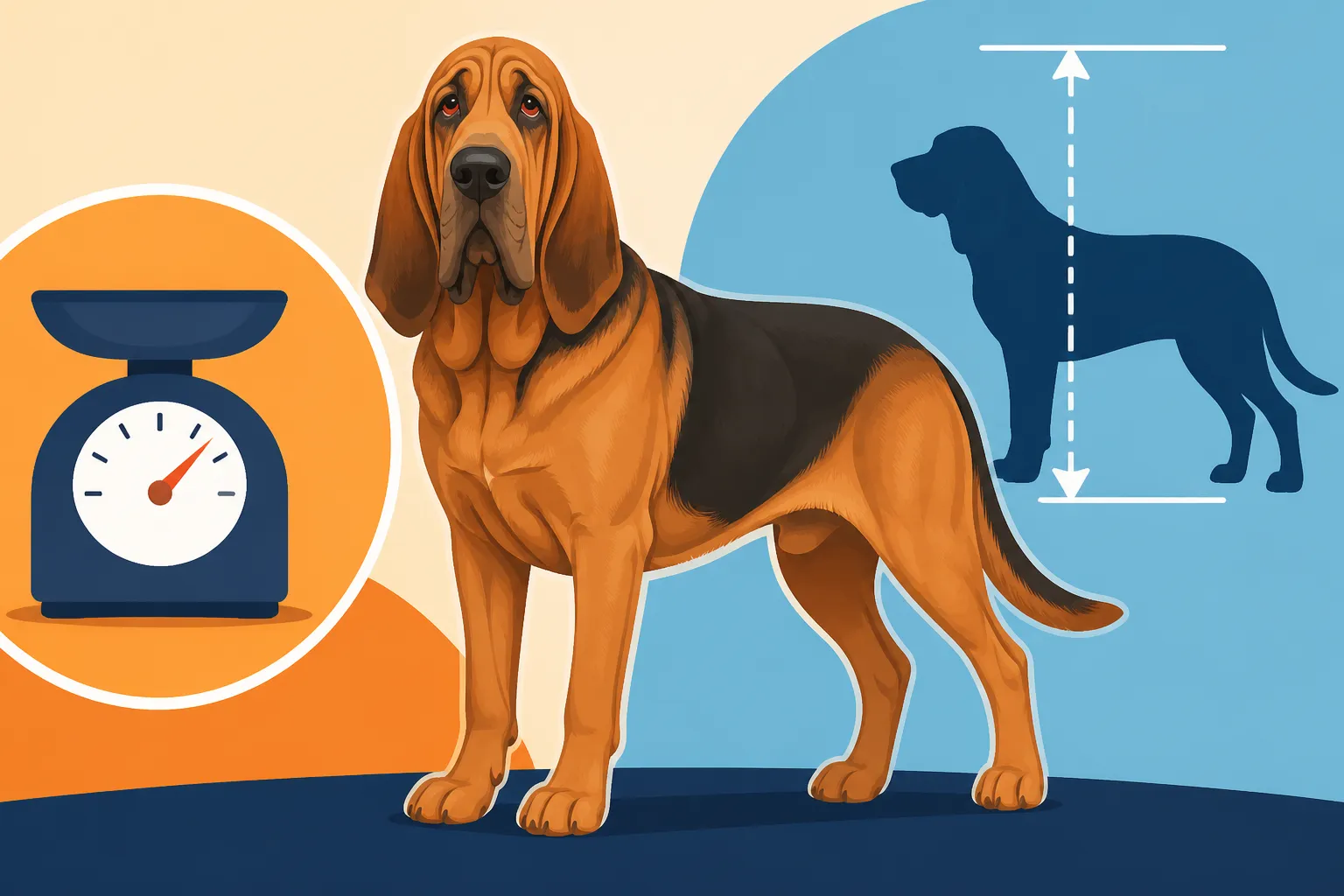
When we talk about a dog's height, we're almost always referring to their measurement at the wither. This is the highest point on their back, between the shoulder blades, and it's where their spine rises. It provides a consistent point of reference, regardless of head position or how much they might be slouching. For Bloodhounds, their height contributes significantly to their iconic silhouette and working ability.
Official AKC and FCI Standards for Height
Both the American Kennel Club (AKC) and the Fédération Cynologique Internationale (FCI) – the two major international kennel clubs – provide specific guidelines for what constitutes an ideal Bloodhound height. These standards are not just arbitrary numbers; they are based on the breed's historical function and health considerations.
For males, the typical height range at the wither is usually between 25 and 27 inches (approximately 63 to 69 cm). Anything significantly above or below this range, especially in the show ring, can be considered a deviation from the ideal. However, in a working dog or beloved pet, a little deviation doesn't spell disaster, as long as the dog is proportionate and healthy.
For females, the standard is slightly smaller, typically ranging from 23 to 25 inches (approximately 58 to 63 cm) at the wither. This sexual dimorphism is common in many dog breeds, with males generally being larger and more heavily built than females. These standards ensure that Bloodhounds retain the physical characteristics that make them excellent scent hounds, capable of covering vast distances with power and endurance.
Height Differences Between Male and Female Bloodhounds
The difference in height between male and female Bloodhounds is usually quite noticeable. A male Bloodhound will often stand a full two inches taller than his female counterparts, making him appear more imposing. This isn't just about height; it usually correlates with an overall more robust build and heavier bone structure in males. Think of it like comparing a male and female deer – same species, but the male tends to be larger and more powerfully muscled. This size difference can affect everything from how high they can reach to grab things off the counter to the size of crates and dog beds you'll need. It's important to remember that these are averages, and individual Bloodhounds can fall outside these ranges while still being perfectly healthy and wonderful companions. You might find a particularly tall female or a shorter male, and that's usually just a variation within the breed. Whether a Male Bloodhound Is Much Larger Than a Female is a common question, and generally, yes, they are.
Measuring Your Bloodhound Accurately
Getting an accurate measurement of your Bloodhound's height can be trickier than it sounds, especially with a dog that might rather be sniffing the ground than standing still for inspection! You'll need a flat, hard surface and a measuring stick or a carpenter's square. The key is to have your Bloodhound stand four-square, with their legs perpendicular to the ground, not leaning or slouching.
- Find a flat surface: This is crucial. Don't try to measure on carpet or uneven ground.
- Position your dog: Have your Bloodhound stand naturally, looking straight ahead, with their head in a neutral position – not craning up or down. You might need a helper to hold them still, perhaps with a treat from a brand like Chewy to keep them focused.
- Locate the wither: This is the highest point of the shoulder blade, just behind the neck.
- Measure: Place a level or a straight edge across the wither, parallel to the ground. Then, measure from the underside of the level straight down to the ground. A carpenter's square is excellent for this, as you can place the long arm on the ground and slide the perpendicular arm up until it touches the wither.
It might take a few tries to get an accurate reading, especially with a wiggly hound. Don't worry if it's not exactly on the dot with the breed standard; consistency in growth is often more important than hitting a specific number, unless you're aiming for the show ring.
The Standard Bloodhound Weight: A Range, Not a Hard Line
Just like height, a Bloodhound's weight is an important indicator of their health and adherence to breed type. However, weight can be more variable than height, influenced by muscle mass, bone density, and body condition. It's a range for a reason, allowing for healthy individual differences within the breed.
Official Breed Standards for Weight
The AKC and FCI also provide weight standards for Bloodhounds, acknowledging that these hounds are substantial. These aren't dainty dogs; they are built for power and endurance, and that requires a certain amount of mass.
For males, the standard weight typically falls between 90 and 110 pounds (approximately 41 to 50 kg). A well-conditioned male will feel solid and muscular, not bony or excessively padded.
For females, the ideal weight range is usually between 80 and 100 pounds (approximately 36 to 45 kg). Again, females tend to be lighter than males, reflecting their generally smaller frame.
It's vital to remember that these are ideal ranges. A Bloodhound carrying too much weight can face significant health problems, just as an underweight dog might indicate underlying issues. The emphasis is always on a healthy, functional weight for the individual dog, not just hitting a number on the scale. When considering What an Adult Male Bloodhound Weighs or What an Adult Female Bloodhound Weighs, it's important to visualize a lean, athletic dog, not an obese one.
Weight Variation Between Sexes
The weight difference between male and female Bloodhounds is quite pronounced. A male Bloodhound can easily carry 10-20 pounds more than a female, even at a healthy body condition. This is due to their larger bone structure and greater muscle mass. Think of the difference between a male and female human athlete of the same height – the male will typically have more lean muscle mass and bone density, resulting in a higher healthy body weight. This difference in mass affects their energy needs, the strength required to walk them, and even how much impact they have on your furniture or floors. Owners often notice that males seem to "fill out" more, developing broader chests and more substantial heads as they mature.
The Impact of Bone Structure on Perceived Weight
A Bloodhound's weight isn't just about how much fat they're carrying; their heavy bone structure plays a massive role. Bloodhounds have dense, strong bones, which contribute significantly to their overall weight. This means a Bloodhound might look lean, but still weigh quite a bit on the scale. You can have two Bloodhounds of the same height, both at a healthy body condition, but one might weigh more due to naturally heavier bone.
This heavy boning is a hallmark of the breed, giving them the resilience and power needed for their demanding work. It's why relying solely on a number on the scale can be misleading. A veterinarian or experienced Bloodhound owner will often assess a dog's weight not just by the number, but by feeling their ribs (they should be easily palpable, but not visible), observing their waistline tuck, and checking for an overall athletic appearance. This is where understanding body condition scoring becomes incredibly helpful, moving beyond just the numbers to assess health.
Growth and Development: From Puppy to Full-Grown Hound
Watching a Bloodhound puppy grow is an incredible journey. They start as clumsy, wrinkly bundles of joy and rapidly transform into majestic, powerful adults. This growth phase is critical, and understanding its stages can help owners provide the best care to support healthy development.
The Rapid Growth of a Bloodhound Puppy
Bloodhound puppies grow at an astonishing rate. In their first year, they can put on pounds and inches seemingly overnight. This rapid growth spurt is common in large and giant breeds, but it also comes with its own set of challenges and considerations. During this time, proper nutrition is paramount. Whether a Bloodhound Puppy Needs Restricted Calcium is a question many owners ponder, and typically, large breed puppy formulas are designed to support this rapid growth without overdoing calcium or phosphorus, which can lead to skeletal problems.
Owners need to be mindful of exercise during this period, avoiding high-impact activities that can stress developing joints. Puppy play is natural and healthy, but forced running, jumping from heights, or prolonged strenuous exercise should be avoided until their growth plates have closed. It's a delicate balance: you want them active enough to develop muscle and coordination, but not so active that they risk injury to their soft, growing bones.
When a Bloodhound Stops Growing
This is a frequently asked question, and the answer isn't a simple "one year old." While much of their height is achieved by 12-18 months, Bloodhounds continue to fill out and gain muscle mass for quite a bit longer. Many won't reach their full adult weight and mature appearance until they are closer to two or even three years old.
Think of it this way: they hit their growth spurts for height early on, like a teenager shooting up, but then they spend the next year or two "bulking up" and maturing in terms of muscle and bone density. The Age a Bloodhound Stops Growing is a more gradual process than many people expect, and it's why patience and consistent care are so important throughout their early years. You'll notice changes in their build, their head shape, and their overall presence even after they've reached their full height.
Developmental Stages and Milestones
From a floppy-eared, clumsy pup to a confident, scent-driven adult, Bloodhounds go through several key developmental stages:
- Birth to 8 weeks: This is the critical socialization window with their littermates and mother. Pups gain weight rapidly.
- 8 weeks to 4 months: Owners bring their puppies home. They are still growing quickly, exploring the world, and starting basic training. This is a crucial time for proper nutrition and gentle socialization.
- 4 months to 8 months: The "teenage" phase. Growth is still rapid, and puppies can become gangly and uncoordinated. They may test boundaries, and consistent training is key. This is also when some of their adult features, like the wrinkles and dewlaps, start to become more prominent.
- 8 months to 18 months: Growth in height typically slows and eventually stops, but they continue to gain weight and muscle. They become more coordinated, though still very much puppies in their minds. Joint health remains a top priority.
- 18 months to 3 years: Physical maturity is reached. They've filled out, their bone structure is complete, and their musculature is fully developed. Mentally, they may still have a playful puppy side, but they're settling into adulthood.
Understanding these milestones helps owners set realistic expectations for growth and development, ensuring their Bloodhound receives the appropriate care at each stage.
Factors Influencing Bloodhound Size: Genetics, Nutrition, and Lifestyle
While breed standards give us a general idea, not every Bloodhound will be exactly 25 inches tall or weigh 100 pounds. Several factors interact to determine an individual Bloodhound's final size and build. It's a complex dance between nature and nurture that shapes our magnificent hounds.
The Role of Genetics from the Breeding Pair
Genetics is, without a doubt, the most significant factor in determining a Bloodhound's potential size. The size, bone structure, and overall conformation of the sire and dam will largely dictate the genetic blueprint for their puppies. Responsible breeders carefully select breeding pairs not just for temperament and health clearances, but also for conformation that aligns with the breed standard.
Puppies from two large, well-boned parents are likely to be large and well-boned themselves. Conversely, if one or both parents are on the smaller end of the spectrum, their offspring might also tend towards a more moderate size. This is why looking at the parents and even grandparents (if possible) of a puppy can give you a good indication of what to expect in terms of adult size. However, genetics isn't a guarantee – there's always a range of possibilities within a litter.
How Nutrition Impacts Growth and Adult Size
Nutrition plays a crucial supporting role in achieving that genetic potential. High-quality dog food, specifically formulated for large breed puppies, is essential during their rapid growth phase. These foods are designed with appropriate calcium-to-phosphorus ratios and controlled calorie levels to prevent too-rapid growth, which can stress developing joints and lead to orthopedic issues like hip and elbow dysplasia.
Overfeeding, especially with calorie-dense adult foods, can cause a puppy to grow too quickly, leading to skeletal problems. Similarly, underfeeding or providing inadequate nutrition can stunt growth and prevent a Bloodhound from reaching its full, healthy size. Once they reach adulthood, maintaining a balanced diet appropriate for their activity level is key to keeping them at a healthy weight. Many owners find quality large-breed formulas at places like Chewy, ensuring their hounds get the right balance of nutrients.
Exercise and Environmental Factors
While not as dominant as genetics or nutrition, exercise and environmental factors can also subtly influence a Bloodhound's development. Appropriate exercise is vital for building strong muscles and supporting healthy joint development. Consistent, moderate exercise helps maintain a healthy weight and promotes overall fitness. However, as mentioned earlier, excessive or inappropriate exercise (like intense jumping or long runs on hard surfaces) during puppyhood can be detrimental to still-developing bones and joints.
Environmental factors like living conditions, access to veterinary care, and even stress levels can also have minor impacts. A healthy, low-stress environment with plenty of room to move and access to regular vet check-ups will always support optimal growth and development. Conversely, a deprived or stressful environment could potentially impact growth, though this is less common with conscientious owners.
The Practical Implications of Bloodhound Size in Daily Life
Owning a Bloodhound isn't just about their impressive stature; it's about how that size translates into everyday living. From fitting through doorways to sharing your couch, a Bloodhound's large size requires thoughtful consideration and practical adjustments.
Accommodating a Large Hound in Your Home
Your home needs to be ready for a Bloodhound. This means more than just having enough floor space, though that's certainly a start. Their tails, thick and powerful, can sweep coffee tables clear in a single enthusiastic wag. Their long legs can make navigating narrow hallways a comical, if sometimes chaotic, affair.
- Furniture: Say goodbye to delicate items at tail height. You might also find your furniture becomes "Bloodhound-sized," as they often believe they are lap dogs, despite weighing 100 pounds. Consider durable, washable covers for your sofas.
- Crates: If you plan to crate train, you'll need one of the largest crates available. A Bloodhound needs ample room to stand, turn around, and lie down comfortably. Skimping on crate size can lead to discomfort and anxiety.
- Doors and Entrances: While most doors are wide enough, a Bloodhound's height means they can easily nose open lever-style door handles or see what's on the kitchen counter. Child locks or higher handles might become necessary.
- Flooring: Their substantial weight can be hard on soft floors or even cause wear and tear. Hard-wearing, easy-to-clean surfaces are a plus.
- Space: They need room to stretch, roll, and sleep. A small apartment might be challenging unless you're exceptionally dedicated to daily outdoor excursions and have a very calm individual.
Travel and Transport Challenges
Getting a Bloodhound into a standard car can be an adventure, let alone transporting them regularly.
- Vehicles: A compact car is simply not suitable for a Bloodhound. You'll likely need an SUV, a minivan, or a truck with a secure, well-ventilated bed or a large, sturdy crate. They need space to lie down comfortably for even short trips.
- Car Safety: For their safety and yours, Bloodhounds should be secured in a vehicle, either in a crash-tested crate or with a heavy-duty seatbelt harness. A loose 100-pound dog becomes a dangerous projectile in an accident.
- Getting In and Out: Their size and potential for joint issues mean you might need a ramp for them to get in and out of taller vehicles. This saves stress on their joints and your back.
- Public Transport: Depending on your location, public transport options for a Bloodhound might be limited or nonexistent due to their size. Always check regulations beforehand.
Safety Considerations with a Big Dog
Owning a large dog comes with inherent safety considerations, both for your Bloodhound and for those around them.
- Accidental Knock-Overs: A playful, excited Bloodhound can easily knock over a small child or an elderly person without meaning to. Early training to keep all four paws on the floor when greeting people is crucial. Whether a Bloodhound Knocks a Child Over is a valid concern, and prevention through training is key.
- Leash Handling: Their strength means they can easily pull an unprepared handler off their feet if they catch a strong scent. A sturdy harness and a strong leash are non-negotiable, and training for polite leash walking is essential. Why Off Leash Is Not a Goal With a Bloodhound is something every owner must understand due to their powerful scent drive.
- Jumping Fences: Don't underestimate their ability to clear fences or push through weak spots. A six-foot fence is often recommended for Bloodhounds, and even then, some can be surprisingly agile. How High a Fence a Bloodhound Needs is a serious consideration for containment.
- Eating Hazards: Their height means more counter-surfing opportunities. Keep food and other tempting (but dangerous) items well out of reach. What's on the counter for a smaller dog is often nose-level for a Bloodhound.
Maintaining a Healthy Weight for Your Bloodhound
For a Bloodhound, maintaining an ideal weight isn't just about aesthetics; it's fundamental to their health and longevity. Overweight dogs, especially large breeds, are prone to a host of debilitating health issues. Underweight dogs might be battling underlying illness or not receiving adequate nutrition.
Identifying an Ideal Body Condition Score
The best way to assess your Bloodhound's weight isn't just the number on the scale, but their Body Condition Score (BCS). This is a visual and tactile assessment, usually on a scale of 1 to 9, where 1 is emaciated, 9 is obese, and 4-5 is ideal.
At an ideal BCS:
- Ribs: You should be able to easily feel your Bloodhound's ribs when you run your hands along their side, without pressing hard. You shouldn't necessarily see them, but they shouldn't be hidden under a thick layer of fat either.
- Waist: From above, you should see a discernible waist tucking in behind their ribs.
- Abdominal Tuck: From the side, their abdomen should tuck up slightly, rather than hanging low.
- Musculature: They should have a good amount of muscle mass, feeling firm rather than soft and flabby.
Your vet can help you accurately assess your Bloodhound's BCS and guide you on what to look and feel for. This is far more informative than simply comparing them to a breed standard weight that might not suit their unique frame.
Risks of Being Overweight or Underweight
Both extremes of weight can be detrimental to a Bloodhound's health:
Risks of being Overweight:
- Joint Problems: Excess weight puts tremendous strain on their large joints, worsening conditions like hip and elbow dysplasia, accelerating arthritis, and leading to pain and lameness.
- Heart Disease: Carried weight increases the workload on the heart, contributing to cardiovascular issues.
- Diabetes: Obesity is a significant risk factor for diabetes in dogs.
- Breathing Issues: Extra fat can make breathing more difficult, especially in warm weather.
- Reduced Stamina: An overweight Bloodhound will have less energy and be less capable of enjoying walks or scent work.
- Increased Bloat Risk: While research is ongoing, some studies suggest a link between body condition and bloat risk. Whether a Lean Bloodhound Bloats More Easily is a specific question, but overall healthy weight is important.
- Shorter Lifespan: Overweight dogs generally have a shorter life expectancy than their healthy-weight counterparts. Why a Bloodhound Dies Younger Than Its Size Predicts is a pillar post that delves into various health challenges.
Risks of being Underweight:
- Weakened Immune System: Dogs that are too thin may have a compromised immune system, making them more susceptible to illness.
- Lack of Energy: Insufficient nutrition can lead to lethargy and poor performance.
- Poor Coat and Skin Health: A thin dog often has a dull coat and dry skin.
- Underlying Health Issues: Being underweight can be a sign of parasites, dental disease, malabsorption issues, or other serious medical conditions that need veterinary attention.
Tailoring Diet and Exercise for Weight Management
Achieving and maintaining a healthy weight for your Bloodhound requires a personalized approach to diet and exercise. There's no one-size-fits-all solution, as individual metabolism, age, and activity level play a huge role.
- Diet: Feed a high-quality, large-breed appropriate dog food. Pay close attention to feeding guidelines on the bag, but always adjust based on your dog's individual needs and BCS. Many owners find products from reputable brands like Chewy offer suitable options. If your Bloodhound needs to lose weight, look for lower-calorie formulas or simply reduce their current intake under veterinary guidance. Split meals are often recommended for Bloodhounds to reduce bloat risk; this also allows for better portion control. How Many Meals a Day a Bloodhound Should Eat is a great reference for this.
- Treats: Treats are calories! Factor them into their daily intake. Opt for low-calorie, healthy treats, or use portions of their daily kibble as rewards.
- Exercise: Provide consistent, moderate exercise. This doesn't mean marathon runs, especially for a young Bloodhound. Daily long walks, opportunities for supervised play in a secure yard, and scent work sessions are ideal. Scent work, like Mantrailing Is the Answer to a Bloodhound, Not Obedience, is mentally and physically tiring for them without being high-impact.
- Regular Vet Check-ups: Your veterinarian is your best partner in weight management. They can help you determine an ideal weight range, create a diet plan, and rule out any underlying medical causes for weight gain or loss.
Comparing Bloodhound Size to Other Breeds
To truly appreciate the Bloodhound's stature, it helps to put them in context by comparing them to other well-known breeds. They occupy a unique space in the canine world, neither the absolute largest nor the smallest, but distinct in their proportions and build.
Bloodhound vs. Other Scenthounds
Compared to their scenthound cousins, Bloodhounds are typically at the larger end of the spectrum.
- Beagle: A Beagle is a small-to-medium hound, generally weighing 20-30 pounds and standing 13-15 inches tall. A Bloodhound is an absolute giant in comparison, often five times the weight and nearly twice the height!
- Basset Hound: Basset Hounds are distinctive for their low-slung bodies, long ears, and mournful eyes. While they are substantial dogs in terms of bone and weight (40-65 pounds), they are much shorter than a Bloodhound, typically standing no more than 15 inches at the shoulder. A Bloodhound towers over a Basset, having both greater height and significantly more mass.
- Coonhounds (e.g., Black and Tan Coonhound): Coonhounds are closer in size to Bloodhounds, often standing 23-27 inches tall and weighing 65-110 pounds. There's significant overlap, and both are powerful, athletic hounds. Bloodhounds, however, typically carry more loose skin, wrinkles, and dewlaps, giving them a heavier, more ancient appearance compared to the sleeker Coonhounds. The Bloodhound Against a Coonhound covers these differences in more detail.
Bloodhound vs. Larger Guard Breeds
When placed next to some of the truly giant breeds, the Bloodhound, while large, doesn't always claim the title of the biggest.
- Great Dane: Great Danes are often considered the "Apollo of Dogs" for their immense height, easily reaching 30-32 inches at the shoulder and weighing 120-175 pounds. While a Bloodhound is substantial, a Great Dane will typically be taller and often heavier, with a more lean, elegant build compared to the Bloodhound's more rugged, heavy-boned appearance.
- Mastiff (English Mastiff): English Mastiffs are true giants, often weighing 150-230 pounds and standing 27-30 inches tall. They are much heavier and more massively built than a Bloodhound, with a broader head and a more compact body. The Bloodhound, while muscular, has a longer, more athletic frame designed for endurance, whereas the Mastiff is built for sheer power.
- German Shepherd Dog: German Shepherds are large, athletic working dogs, typically 22-26 inches tall and 50-90 pounds. A Bloodhound will generally be taller and significantly heavier than a German Shepherd, with a much more powerful and dense build. Their working styles also differ, with the Bloodhound focusing entirely on scent.
The Unique Proportions of the Bloodhound
What makes the Bloodhound truly unique isn't just its height or weight in isolation, but the combination of its proportions. They have:
- Heavy Bone: Their skeletal structure is notably dense and robust.
- Deep Chest: This gives them immense lung capacity for long hours on the trail. Why a Bloodhound's Chest Shape Causes Bloat is a crucial health consideration related to this physical trait.
- Long Back: Their body length contributes to their endurance.
- Loose Skin: The famous wrinkles and folds aren't just for character; they are believed to help trap scent particles, enhancing their tracking ability. Whether a Bloodhound's Loose Skin Helps It Trail is a fascinating aspect of their anatomy.
- Massive Head: Their head, with its long ears and abundant loose skin, is perhaps their most defining feature.
These combined features create a dog that is built like an endurance athlete, a powerful and tireless machine designed for one purpose: following a scent trail for miles. This unique blend of size and conformation has made them legendary in the world of scent detection.
| Feature | Male Bloodhound (Approx.) | Female Bloodhound (Approx.) |
|---|---|---|
| Height | 25-27 inches (wither) | 23-25 inches (wither) |
| Weight | 90-110 pounds | 80-100 pounds |
| Build | More robust, heavier bone | Slightly finer bone |
| Growth Period | 18-30 months to mature | 18-24 months to mature |
| Energy Needs | High, especially scent work | High, especially scent work |
Disclaimer
This article is for general informational purposes only and does not constitute professional advice. Laws, prices and regulations vary by location and change over time. Consult a qualified professional for guidance on your specific situation.