Whether a Bloodhound Needs a Deshedding Tool
If you're a Bloodhound owner, you know the struggle: you've got a short-coated dog, yet your house is still covered in hair. It's enough to make you wonder if you're missing some secret grooming weapon, like one of those popular deshedding tools that promise to rid your home of loose fur. You see all those commercials and hear anecdotes from friends with double-coated breeds, and it's natural to think, "Maybe my Bloodhound needs one of those too!" But the truth about Bloodhounds and deshedding tools is a bit more nuanced than you might expect.
Understanding Your Bloodhound's Coat and Shedding Cycle
It's easy to assume a short-coated dog means less shedding, but anyone who lives with a Bloodhound knows that's a myth quickly busted. Their coats are deceptively prolific when it comes to leaving their mark on every surface.
The Bloodhound's Unique Coat
Bloodhounds possess a short, dense, and somewhat coarse coat. It's not the soft, fluffy undercoat you find on a Golden Retriever or a Siberian Husky, nor is it the wiry texture of a terrier. Instead, it's a practical, weather-resistant coat, perfectly suited to protect them from brambles and harsh weather conditions when they're out on a trail. This coat isn't designed to keep them warm with layers of downy fur, but rather to be protective and fairly low-maintenance in terms of tangles or mats.
Many new Bloodhound owners are surprised by the sheer volume of hair that comes off their seemingly sleek hounds. You might look at their smooth, short fur and think, "This will be easy!" Then you find yourself constantly lint-rolling your clothes and sweeping up hair tumbleweeds. It's a common frustration because the expectation often doesn't match the reality of their consistent shedding. This isn't a coat that "blows" twice a year like some breeds; it's a coat that undergoes continuous turnover, meaning there's always some hair coming out.
The Reality of Bloodhound Shedding
Despite their short hair, Bloodhounds are significant shedders. They tend to shed year-round, with noticeable peaks during seasonal changes, typically in spring and fall. During these peak times, it can feel like your hound is trying to re-carpet your entire home with their fur. The individual hairs are short and stiff, which makes them particularly good at weaving themselves into upholstery, carpets, and clothing – sometimes even more so than longer hairs that might just sit on the surface.
Unlike breeds with a distinct, thick undercoat that "blows out" in large clumps, a Bloodhound's shedding is more of a constant, low-level release. There isn't a massive, fluffy layer to remove, but rather a steady stream of individual hairs. This constant turnover means that while you might not fill a trash bag with fur from one session, the cumulative effect over days and weeks is substantial. If you've ever wondered How Much a Bloodhound Sheds, trust me, it's more than you'd think for a short-haired dog! Managing this requires a consistent, rather than intensive, approach to grooming.
Traditional Grooming Tools vs. Deshedding Tools for Bloodhounds
When faced with a house full of Bloodhound hair, it's natural to reach for whatever promises the quickest solution. But it's important to understand the difference between tools and what truly benefits your Bloodhound's unique coat.
The Everyday Essentials: Brushes, Mitts, and Combs
For a Bloodhound's short, dense coat, the most effective tools are often the simplest. A good quality rubber curry brush, sometimes called a shedding blade (though it's not sharp!), is a fantastic choice. These brushes have rubber nubs that massage the skin, stimulate circulation, and gently pull loose, dead hairs from the coat without irritating the skin. They are also excellent for distributing natural skin oils, which contributes to a healthy, shiny coat. You can find excellent options on retailers like Chewy or Amazon.
Another highly effective tool is a hound glove or a grooming mitt. These are essentially gloves with rubber nubs or bristles on the palm, allowing you to "pet" your dog while simultaneously removing loose hair. They're particularly good for Bloodhounds because they conform to their contours, especially over their muscular shoulders and prominent bones. For general tidying and bringing out a shine, a soft bristle brush can also be used after the curry brush. These tools are designed to work with the Bloodhound's short coat, making grooming a pleasant experience for both of you. If you're curious about different types, you might want to look into Which Brush Suits a Bloodhound's Short Coat.
What Deshedding Tools Are Designed For and Why They Might Not Be Ideal for Bloodhounds
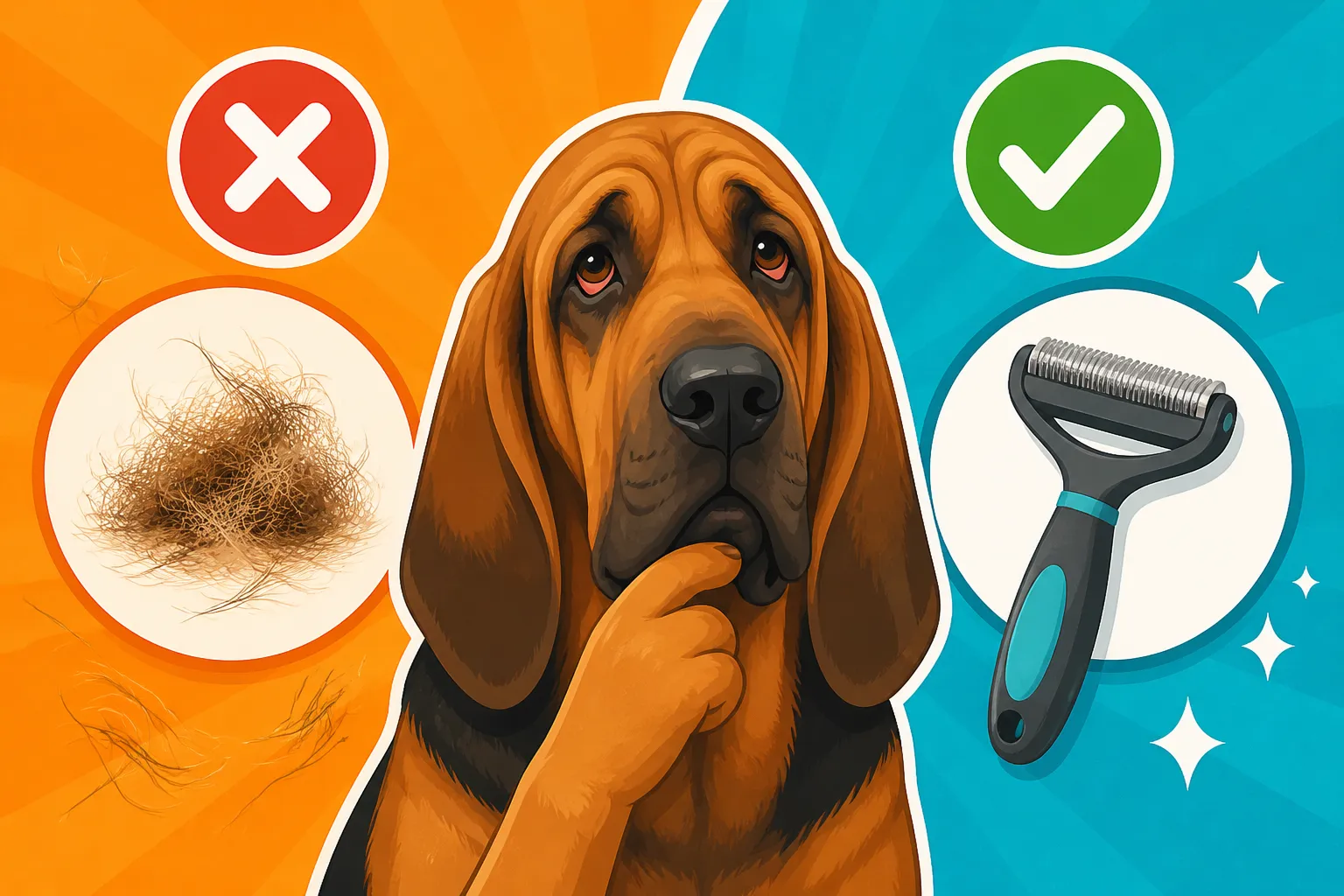
Deshedding tools, like a well-known brand often recognized by its curved blade with small teeth, are primarily designed to reach deep into a dog's coat to remove the dense undercoat that many breeds possess. These tools essentially 'rake' out dead, fluffy undercoat hairs before they can be shed around the house. They can be incredibly effective for breeds like German Shepherds, Collies, or Newfoundlands, which have thick, double-layered coats.
However, a Bloodhound's coat doesn't typically have that dense, insulating undercoat layer that these tools are made for. Using a deshedding tool on a Bloodhound can be counterproductive, and in some cases, even harmful. The fine teeth of these tools can scrape or irritate a Bloodhound's sensitive skin, or they might cut and damage their healthy guard hairs. Instead of removing truly 'dead' undercoat, you might just be pulling out healthy topcoat hairs or causing skin redness. It's a common misconception that any shedding dog needs a deshedding tool, but for a Bloodhound, a gentler, more surface-oriented approach is usually best to avoid causing discomfort or damage.
The Best Approach to Managing Bloodhound Hair
Instead of reaching for aggressive deshedding tools, the most effective way to manage your Bloodhound's shedding is through consistent, regular grooming with the right tools. Think of it as a marathon, not a sprint. Daily or every-other-day brushing with a rubber curry brush or a hound glove will make a significant difference in the amount of hair floating around your home. This consistent removal of loose hair prevents it from building up and eventually shedding all over your furniture.
Regular brushing not only helps control shedding but also promotes healthy skin and coat by stimulating blood flow and distributing natural oils. Coupled with occasional baths using a good quality dog shampoo, you'll find that the shedding is much more manageable. Remember, a Bloodhound's coat, despite its short length, benefits most from gentle, consistent care rather than harsh, infrequent sessions with tools not suited for its specific texture. Don't forget that Bathing a Bloodhound Reduces the Smell and choosing Which Shampoo Suits a Bloodhound's Skin can also significantly contribute to overall coat health.
Practical Strategies for a Hair-Filled Home
Living with a Bloodhound means accepting a certain level of hair in your life, but it doesn't mean surrendering to a fur-covered existence. With a few practical strategies, you can keep the hair at a manageable level and maintain a comfortable home.
Incorporating Grooming into Your Routine
Consistency is truly the secret weapon when it comes to managing Bloodhound shedding. Aim for a quick 5-10 minute brushing session every day, or at least every other day. Make it a positive experience with praise and treats, and your Bloodhound will likely come to enjoy this bonding time. A rubber curry brush or a simple grooming mitt is perfect for this routine. Many owners find brushing their Bloodhound outdoors, if weather permits, helps contain the flying fur and makes cleanup a breeze. If not, a designated grooming spot indoors with an easy-to-clean floor is ideal. You can easily find these basic grooming tools on reputable online pet supply stores like Chewy or Amazon, making it convenient to keep up with your routine.
Remember that regular grooming isn't just about removing hair; it's also a chance to check your Bloodhound's skin for any irritations, bumps, or dry patches that might indicate a larger issue. This proactive approach can catch problems before they become serious, especially important for a breed prone to skin fold issues.
Beyond the Brush: Keeping Your Home Tidy
Let's be realistic: even with diligent brushing, some Bloodhound hair will find its way onto your furniture, floors, and clothes. Their short, stiff hairs are particularly adept at embedding themselves into fabric. This is where supplementary strategies come in handy. Investing in good quality, washable furniture covers can be a lifesaver, allowing you to simply toss them in the laundry periodically. A powerful vacuum cleaner, ideally one designed for pet hair, will become your best friend. Regular vacuuming, even daily in high-traffic areas, will significantly reduce accumulation.
Keep lint rollers strategically placed around your home – by the front door, in your car, and in your laundry room. They're invaluable for a quick pass over your clothes before you head out. Don't underestimate the power of a damp cloth for wiping down hard surfaces where hair settles. It might seem like a lot of effort, but it's about establishing a routine that works for your household. You might be surprised at Whether a Bloodhound's Hair Sticks in Fabric and just how useful it is to practice Whether a Bloodhound Owner Should Buy Washable Everything. It truly helps.
Nutritional Support for a Healthy Coat
While external grooming is crucial, a healthy coat also starts from within. A high-quality diet plays a fundamental role in minimizing excessive shedding and promoting skin health. Look for dog foods that list real meat as the first ingredient and contain beneficial fatty acids like Omega-3 and Omega-6. These nutrients are vital for skin integrity and a shiny, resilient coat. A diet lacking in essential nutrients can lead to dry, flaky skin and increased shedding.
Consider speaking with your veterinarian about adding a fish oil supplement to your Bloodhound's diet. These supplements are rich in Omega-3s and can do wonders for skin and coat health, often reducing inflammation and improving coat luster. This can also help address issues like dry skin that might exacerbate shedding. Reputable fresh food companies like Ollie often focus on diets rich in the nutrients that support overall health, including a healthy coat, by using high-quality ingredients. If you're wondering Whether a Bloodhound Needs Fish Oil, the answer is often yes, especially for coat health.
When to Consider Professional Help or Veterinary Advice
While Bloodhound grooming is generally straightforward, there are times when professional expertise or veterinary intervention becomes necessary. Knowing when to seek help can save you time, money, and your hound discomfort.
Professional Groomers and Bloodhounds
For the most part, you can handle a Bloodhound's grooming needs at home. However, a professional groomer can be a valuable asset for several reasons. They can provide a thorough bath and drying, ensuring all that loose hair is properly washed away and their skin is clean. For hounds who are particularly resistant to baths or nail trims, a groomer has the experience and equipment to handle the task safely and efficiently. They can also perform a full skin check, getting into those deep wrinkles and folds that can be tricky to examine at home.
While most groomers won't use a harsh deshedding tool on a Bloodhound, they will often use high-velocity dryers, which are excellent for blowing out loose hair without causing skin irritation. They can also offer advice on proper ear cleaning techniques and nail care, which are crucial for this breed. Think of a professional grooming session as a deep clean and check-up for your hound, complementing your regular home routine.
Addressing Excessive Shedding or Skin Issues
If you notice a sudden, dramatic increase in shedding, bald patches, skin redness, irritation, or excessive scratching, it's time to consult your veterinarian. While some shedding is normal, an abnormal amount can be a symptom of an underlying health issue. This could include allergies (environmental or food-related), parasitic infestations (fleas, mites), fungal infections, or hormonal imbalances like Hypothyroidism in a Bloodhound.
Your vet can perform diagnostic tests to identify the cause of the problem and recommend appropriate treatment, which might involve medicated shampoos, dietary changes, or oral medications. Never assume that excessive shedding is just "part of the breed" if it's accompanied by other concerning symptoms. Early intervention can prevent minor issues from escalating into more serious conditions, ensuring your Bloodhound remains comfortable and healthy.
Bloodhound Grooming Tools: A Quick Comparison
| Tool Type | Description | Suitability for Bloodhounds | Primary Benefit | Potential Drawbacks (if any) |
|---|---|---|---|---|
| Rubber Curry Brush | Flexible rubber nubs, often fits in hand. | Excellent for daily use. | Removes loose hair, massages skin, distributes oils. | Can be less effective on heavily matted areas (rare for BH). |
| Hound Glove/Mitt | Glove with rubber or silicone nubs. | Excellent for gentle, full-body grooming, good for contours. | Bonds with dog, removes loose hair, good for sensitive areas. | Not as effective for very heavy shedding bursts. |
| Bristle Brush | Soft to medium bristles, typically natural or synthetic. | Good for finishing, adding shine, distributing oils. | Smooths coat, adds luster, light hair removal. | Not effective for primary shedding control. |
| Shedding Blade | Metal loop with short, blunt teeth (not sharp). | Use with caution; some can be too harsh, but gentle ones can work. | Good for removing loose topcoat hair. | Can be too aggressive if not used properly, risk of irritation. |
| Deshedding Tool | Fine-toothed metal comb with a protective edge. | Generally NOT recommended. | Designed for dense undercoats, which BH lacks. | Can cut healthy guard hairs, irritate skin, cause discomfort. |
Disclaimer
This article is for general informational purposes only and does not constitute professional advice. Laws, prices and regulations vary by location and change over time. Consult a qualified professional for guidance on your specific situation.