Signs a Bloodhound’s Ear Cleaning Is Overdue
Bloodhound ears are a thing of beauty, truly. Those long, velvety leathers frame their soulful faces, giving them that classic, wise expression we all adore. But let's be real, those magnificent ears are also a constant source of worry and, often, frustration for us owners. Because of their unique design, Bloodhound ears are notoriously prone to getting dirty and, worse, infected. It's not always obvious when things are going awry beneath those heavy flaps, and knowing the subtle (and not-so-subtle) signs that your Bloodhound’s ear cleaning is overdue can save them a lot of pain and you a hefty vet bill. This guide will walk you through exactly what to look for, so you can keep those precious ears healthy and happy.
The Unique Challenges of Bloodhound Ears
If you've ever owned a Bloodhound, you know their ears aren't just for show. They're a crucial part of their incredible scenting ability, sweeping odors towards their powerful nose. But this very design, while perfect for trailing, creates a perfect storm for ear problems. It's a constant balancing act between appreciating their natural equipment and managing the health risks that come with it.
Anatomy Designed for Trouble
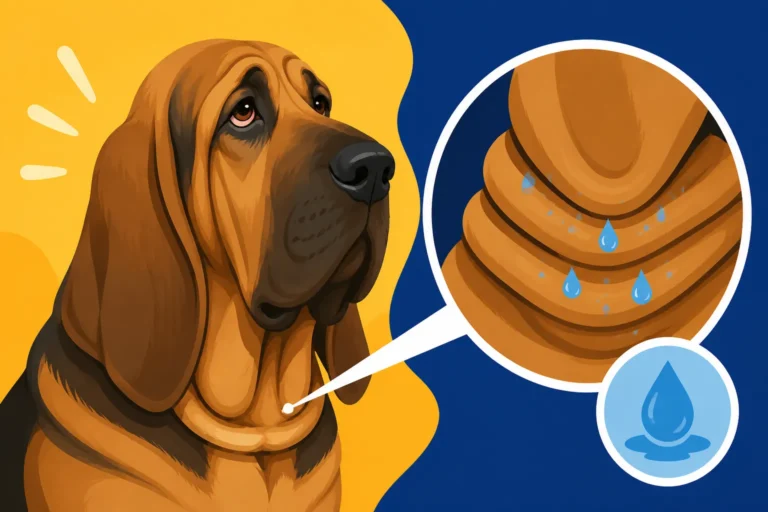
Imagine trying to keep a dark, warm, damp cave clean. That's essentially what a Bloodhound's ear canal is like. Unlike dogs with upright ears, or even those with shorter, lighter drop ears, the Bloodhound's ear leather is incredibly long, thick, and heavy. These ears completely cover the ear canal, blocking off any airflow. This lack of ventilation means moisture gets trapped inside, whether it's from humidity in the air, a quick drink from the water bowl, or even just natural ear wax and oils.
Beyond the external flap, the ear canal itself is quite deep and often has a winding, L-shaped structure. This anatomical quirk means that any debris, wax, or fluid that makes its way in struggles to get out naturally. It's like a cul-de-sac for gunk, and without regular, diligent cleaning, that cul-de-sac quickly becomes a stagnant pond. For more on this, you might find Why a Bloodhound's Ear Canal Stays Damp particularly illuminating.
A Breeding Ground for Microbes
When you combine warmth, moisture, and poor ventilation, you've created the ideal environment for all sorts of microorganisms to flourish. Yeast and bacteria, which are normally present in small, harmless amounts on your dog's skin, can quickly multiply out of control in these conditions. It's a common scenario for Bloodhound owners: one minute, everything seems fine, and the next, you're hit with that tell-tale odor.
Often, yeast infections are the first culprits. They thrive in damp, dark places and produce a distinct, sometimes sweet-ish but often pungent smell. If left unchecked, the yeast overgrowth can then make the ear canal even more irritated and compromised, opening the door for secondary bacterial infections. Bacterial infections are typically more serious, often presenting with different types of discharge and causing more intense pain. This cycle of irritation and infection is a constant battle for many Bloodhound owners, highlighting why staying on top of ear hygiene is not just good practice, but absolutely essential. A Bloodhound's Ears Are a Standing Infection Risk is another great read on this very topic.
Obvious Visual Cues of Neglected Ears
Sometimes, your Bloodhound will try to tell you something's wrong with their ears through their behavior, but often, the first signs are right there for you to see – if you know where to look. Getting into a routine of checking their ears visually is paramount.
Redness and Swelling in the Ear Flap and Canal
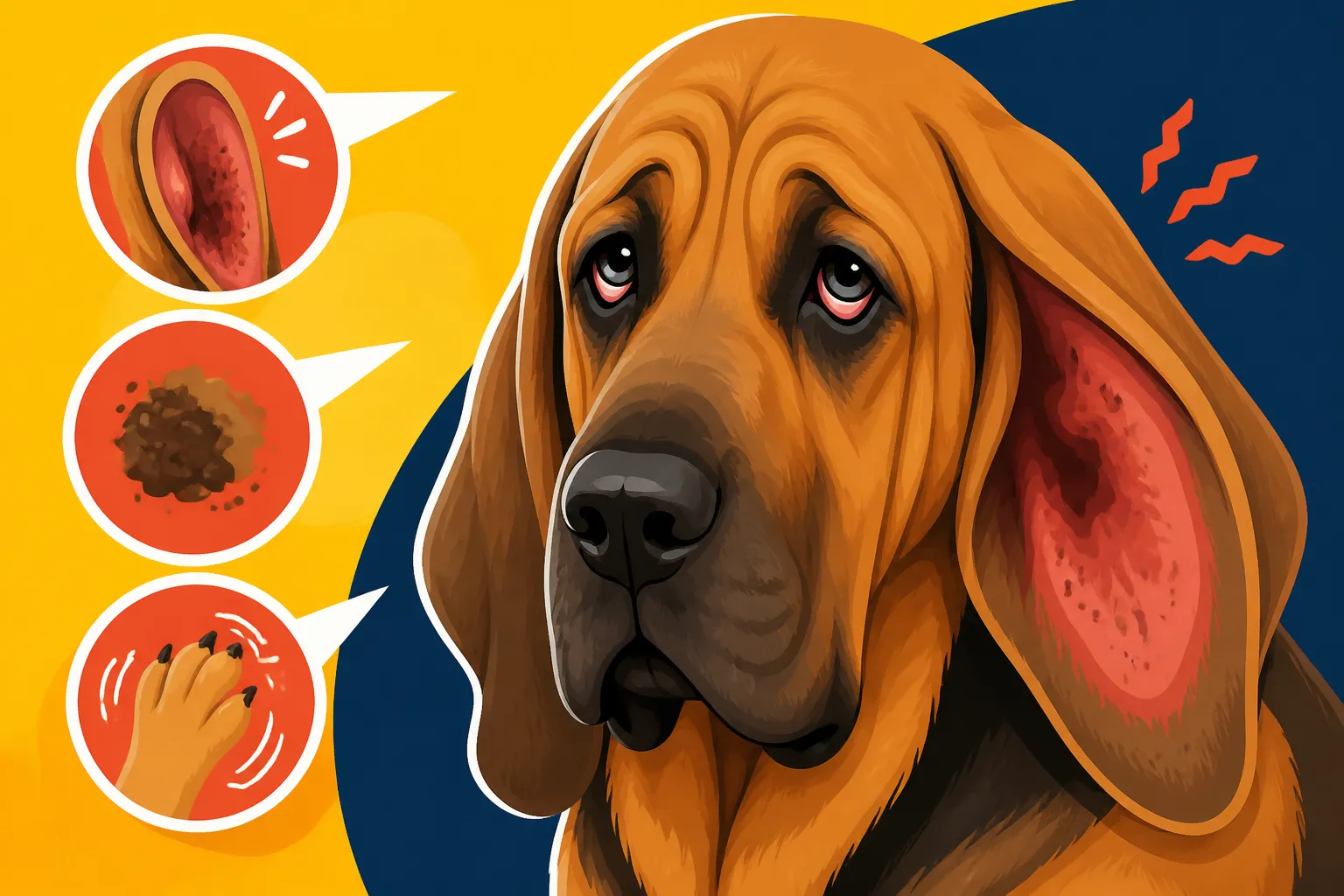
The most immediate and common visual cue that your Bloodhound's ear cleaning is overdue, or that an infection is brewing, is redness. Gently lift that long ear leather and peer inside. A healthy ear canal should be a pale, uniform pink. If you notice any distinct pinkish-red or even angry red patches, especially on the inner surface of the ear flap or further down into the ear canal opening, that's a red flag.
Accompanying the redness, you might also see some swelling. The skin inside the ear canal can become puffy and inflamed, sometimes making the opening appear narrower than usual. In severe cases, the swelling can be so pronounced that the ear canal is almost completely occluded, making it incredibly difficult for ear drops or cleaners to penetrate. This inflammation is a direct response to irritation or infection, and it’s your Bloodhound’s body sending a very clear signal that something isn't right.
Excessive Discharge and Debris
This is often where things get truly messy, both literally and figuratively. A healthy Bloodhound ear might have a small amount of light, yellowish-brown wax, which is normal and helps protect the ear. However, if your Bloodhound's ear cleaning is overdue or an infection has taken hold, you'll start to notice an increase in the quantity and change in the quality of the discharge.
Look for excessive dark brown, black, or yellowish-green discharge. This gunk can be waxy, thick, purulent (like pus), or even crusty around the edges of the ear canal opening. Dark, crumbly debris often points to yeast overgrowth, while a thick, yellowish-green discharge is highly indicative of a bacterial infection. Sometimes, you'll even see dried crusts clinging to the hairs or skin on the inner ear flap, indicating an accumulation that has been there for a while. This isn't just cosmetic; this discharge is often irritating itself, perpetuating the cycle of discomfort.
Odor That Hits You From Across the Room
Ah, the smell. This is perhaps one of the most undeniable and, frankly, unpleasant signs that your Bloodhound's ears are overdue for attention. A healthy dog's ears, when clean, should have minimal to no odor. A Bloodhound, given their inherent "hound smell," might have a faint, earthy scent to their ears even when healthy, but an infected ear is a whole different ballgame.
When yeast or bacteria run rampant, they produce waste products that smell truly awful. You might notice a strong, pungent, yeasty odor that can be sweet and sickly, or a foul, rancid, almost rotting smell indicative of bacterial infection. This isn't a subtle sniff; often, you can smell it when your Bloodhound walks by, shakes their head, or even just lays their head near you on the couch. It’s a powerful, unmistakable signal that their ears are not just dirty, but likely infected. If you're wondering how to differentiate between a healthy hound scent and an infected ear, our article Whether a Bloodhound's Ears Smell Even When Healthy might offer some helpful distinctions.
Behavioral Indicators of Ear Discomfort
Your Bloodhound might not be able to tell you in words that their ears hurt, but their body language will absolutely give it away. Paying close attention to subtle shifts in their normal behavior can be your first clue that their ear cleaning is overdue or that an infection is causing them distress.
Constant Head Shaking and Ear Pawing
This is often the very first behavioral sign owners notice. An itchy or irritated ear will prompt your Bloodhound to shake their head frequently and with increasing vigor. It’s not just a casual head shake after a nap; it becomes persistent, sometimes frantic, as they try to dislodge whatever is bothering them. You might see them shaking their head so hard that their long ears flap wildly, even hitting them in the face.
Along with head shaking, you'll likely observe increased pawing or scratching at their ears. They might use their back paws to vigorously scratch the affected ear, or rub the side of their head against furniture, the carpet, or even your leg, desperate for relief. This isn't cute or quirky behavior; it's a clear sign of discomfort and irritation. If you see this escalating, it's definitely time to investigate those ears. For more details on this specific behavior, check out Signs a Bloodhound's Head Shaking Means Infection.
Increased Sensitivity and Pain
As an ear infection progresses, what started as mere irritation quickly turns into outright pain. Your Bloodhound, normally an affectionate and tolerant companion, might become unusually sensitive or even defensive about their head and ears. If you try to gently lift their ear flap to inspect it, they might pull away sharply, yelp, or even snap. This isn't aggression; it's a pain response. They're telling you, in the only way they know how, that their ears are hurting.
You might notice they shy away from head pats or resist having their collar or harness put on because it involves touching their neck or ears. Grooming sessions, which might normally be a relaxed affair, can become a battle. This increased sensitivity is a crucial indicator that the problem has gone beyond just needing a simple cleaning and likely requires veterinary intervention.
Lopsided Head Tilt or Balance Issues
While less common, and usually indicative of a more advanced or severe ear issue, a persistent head tilt is a serious behavioral cue. If your Bloodhound consistently holds their head tilted to one side, especially if it's accompanied by other signs of discomfort, it could mean the infection has spread deeper into the middle or inner ear. These deeper infections can affect their vestibular system, which is responsible for balance.
In rare, severe cases, you might even notice some subtle balance issues, like wobbliness when walking, stumbling, or even circling. This is an urgent sign that needs immediate veterinary attention. Don't wait if you notice this; inner ear infections can be very serious and require prompt, aggressive treatment to prevent long-term damage.
Changes to the Ear Leather Itself
Beyond the immediate visual and behavioral signs, prolonged neglect or chronic ear infections can lead to more permanent changes in the physical structure of your Bloodhound's ear leather and surrounding skin. These are often signs of long-term inflammation and require dedicated care.
Thickened, Leathery Skin
If a Bloodhound has suffered from chronic, recurring ear infections, or if an infection has been left untreated for a significant period, the delicate skin lining the ear canal and inner ear flap can undergo changes. Constant inflammation and irritation cause the skin to thicken and harden, a process often referred to as "lichenification."
When you touch the inside of your Bloodhound's ear, instead of feeling soft and pliable, it might feel rough, tough, and almost leathery. In severe cases, the ear canal itself can become permanently narrowed due to this thickening, making it even harder for air to circulate and for medications to reach the affected areas. This change in texture is a sign that the ear has been under siege for too long, and it often points to a long-standing issue that will require consistent management, possibly even with a veterinary dermatologist. This stage of chronic infection highlights the importance of timely intervention to prevent such permanent changes. When a Bloodhound's Ear Infection Becomes Permanent delves into how persistent issues can become a permanent fixture.
Hair Loss Around the Ear Opening
The constant scratching, pawing, and rubbing that accompany an itchy or painful ear can take a toll on the surrounding fur. You might start to notice patches of hair loss around the opening of the ear canal, on the inner surface of the ear flap, or even on the skin directly in front of and behind the ear. This isn't usually due to the infection itself, but rather the mechanical trauma from your Bloodhound trying to get relief.
The skin in these areas might also appear red, irritated, or have scabs from self-trauma. This hair loss creates a vicious cycle: the exposed skin can become more vulnerable to secondary skin infections, which then add to the overall discomfort. It's another visual cue that the ear problem is impacting more than just the immediate ear canal and is causing your dog significant distress.
Hematoma Formation
This is perhaps one of the most dramatic and alarming physical changes you might observe, and it's a direct consequence of vigorous, prolonged head shaking. An aural hematoma occurs when blood vessels within the ear flap rupture, usually from the repeated forceful flopping and hitting of the ear against the head during intense head shaking.
The ear flap will swell up, becoming a soft, fluid-filled pouch. It can be quite large and painful to the touch. Visually, it looks like a balloon or a pillow on the ear. While not directly an ear infection itself, it's almost always caused by an underlying ear infection or severe irritation that leads to the excessive head shaking. An aural hematoma almost always requires veterinary intervention, often involving surgical drainage, to prevent permanent disfigurement of the ear flap and relieve pain. If you spot this, don't delay – get to the vet immediately. Our article Whether a Bloodhound's Ear Hematoma Needs Draining provides a deeper look into this specific issue.
What to Do When Signs Appear
Spotting the signs is only half the battle. Knowing how to react quickly and effectively is crucial for your Bloodhound's comfort and long-term ear health. It’s tempting to try and fix it yourself, but some situations absolutely require professional help.
Don't Delay a Vet Visit
As soon as you notice any of the concerning visual or behavioral signs – persistent head shaking, strong odor, redness, discharge, or pain – your first and most important step is to call your veterinarian. While some mild issues might seem like they could be handled at home, ear infections can escalate rapidly, and treating them effectively requires an accurate diagnosis. Different types of infections (yeast, bacteria, or a combination) require different medications, and trying to guess can not only be ineffective but also potentially harmful, masking symptoms or creating resistance to treatments.
Your vet will be able to perform an otoscopic exam, looking deep into the ear canal, and might take a sample of the discharge for cytology (microscopic examination). This allows them to identify the specific culprits and prescribe the correct ear drops, oral antibiotics, or anti-fungals. Delaying a vet visit can lead to the infection spreading, becoming more painful, harder to treat, and potentially causing permanent damage to the ear canal.
Gentle Cleaning as a First Step (if no pain)
If your Bloodhound's ear shows mild signs of wax buildup or a slight odor, and they aren't showing any signs of pain or sensitivity, you can often start with a gentle ear cleaning at home before a vet visit, or as part of their regular maintenance. The key word here is "gentle." You're not trying to aggressively scrub or poke deep into their ear canal.
Use a veterinarian-approved ear cleaning solution designed for dogs, which you can easily find at pet supply stores or online retailers like Chewy or Amazon. Never use alcohol, hydrogen peroxide, or human ear cleaners, as these can be irritating. Apply the solution into the ear canal as directed, gently massage the base of the ear for 20-30 seconds to help break up debris, and then let your Bloodhound shake their head. After they've shaken out the excess, use a soft cotton ball or gauze wrapped around your finger to wipe away any visible discharge and debris from the outer ear flap and the immediate opening of the ear canal. Never use cotton swabs deep inside the ear, as this can push debris further in and damage the eardrum. For a more detailed guide on how to perform this, refer to What to Clean a Bloodhound's Ears With.
Preventative Care is Key
The best defense is a good offense, and this couldn't be truer for Bloodhound ears. Establishing a consistent preventative ear care routine is the most effective way to keep those ear problems at bay. This involves regular checks and routine cleaning.
How often you clean their ears will depend on your individual Bloodhound and their predisposition to infections, but a good starting point is once a week, or at least every two weeks. After baths or swimming, always ensure their ears are thoroughly dried. You can use an ear-drying solution (again, easily found on Amazon or Chewy) to help remove any trapped moisture. Consider investing in a snood, especially if your Bloodhound's ears frequently trail in their food or water bowls. Consistency is vital. By incorporating ear care into your regular grooming routine, you can catch potential issues early, maintain a healthy ear environment, and significantly reduce the likelihood of full-blown infections. Our comprehensive guide on How Often a Bloodhound's Ears Need Cleaning offers more insights into establishing this routine.
Distinguishing Normal Bloodhound Ear Quirks from Problems
It’s easy to become hyper-vigilant when you own a Bloodhound, especially given their reputation for ear issues. But not every head shake means an infection, and a Bloodhound will always have some scent. Knowing the difference between normal Bloodhound quirks and genuine problems is important for your peace of mind and your dog's health.
The "Hound Scent" vs. Infection Odor
Let's address the elephant in the room: Bloodhounds have a natural "hound scent." It's part of their charm, or at least something we learn to live with and love! This natural odor can be a bit musky or earthy, and it comes from the oils in their coat and skin. Their ears, being part of this equation, might also carry a faint version of this natural smell, even when perfectly healthy and clean.
However, an infection odor is distinctly different and far more potent. It's usually pungent, acrid, sweet and yeasty, or deeply foul. It doesn't smell like a dog; it smells like something wrong. If you're unsure, try this: gently lift one ear, take a whiff. Then lift the other. Is one significantly stronger? Is it a smell that makes you wrinkle your nose in disgust rather than just acknowledging a "doggy" smell? Trust your nose. If it smells genuinely bad, it's likely an infection, not just a hound being a hound.
Occasional Head Shake vs. Obsessive Behavior
Every dog, Bloodhound included, will shake their head from time to time. They might do it to dislodge a bug, after scratching an itch, or just as a natural part of stretching. This is completely normal and no cause for alarm. An occasional, quick shake that clears something out of their ear and then they go back to normal is just part of dog life.
The concern arises when the head shaking becomes frequent, intense, and seemingly relentless. If your Bloodhound is shaking their head every few minutes, violently, or for prolonged periods, and it's accompanied by pawing, rubbing, or a general sense of discomfort, then it’s time to pay attention. The key is the consistency and intensity of the behavior. An obsessive focus on their ears, especially when paired with other visual or olfactory cues, is a clear signal that something more than a casual itch is going on.
Here’s a quick summary to help you keep track of what to look for:
| Category | Normal Bloodhound Ear | Overdue Cleaning / Infected Ear |
|---|---|---|
| Appearance | Pale pink skin, minimal light wax, no debris | Redness, swelling, thick dark wax, yellow/green discharge, crusts |
| Odor | Faint, earthy "hound scent" (if any) | Strong, pungent, yeasty, or foul smell, noticeable from a distance |
| Behavior | Occasional head shake, tolerant of ear handling | Constant head shaking, pawing, rubbing, sensitive/painful to touch |
| Physical | Soft, pliable ear leather, full hair coverage | Thickened/leathery skin, hair loss around ear, potential hematoma |
| Vocalization | Normal | Whining, yelping when ears are touched |
Taking care of those iconic Bloodhound ears is a commitment, but it’s a small price to pay for the love and companionship they bring. By being vigilant and understanding these signs, you can ensure your Bloodhound stays comfortable, healthy, and ready to put that amazing nose to work.
Disclaimer
This article is for general informational purposes only and does not constitute professional advice. Laws, prices and regulations vary by location and change over time. Consult a qualified professional for guidance on your specific situation.