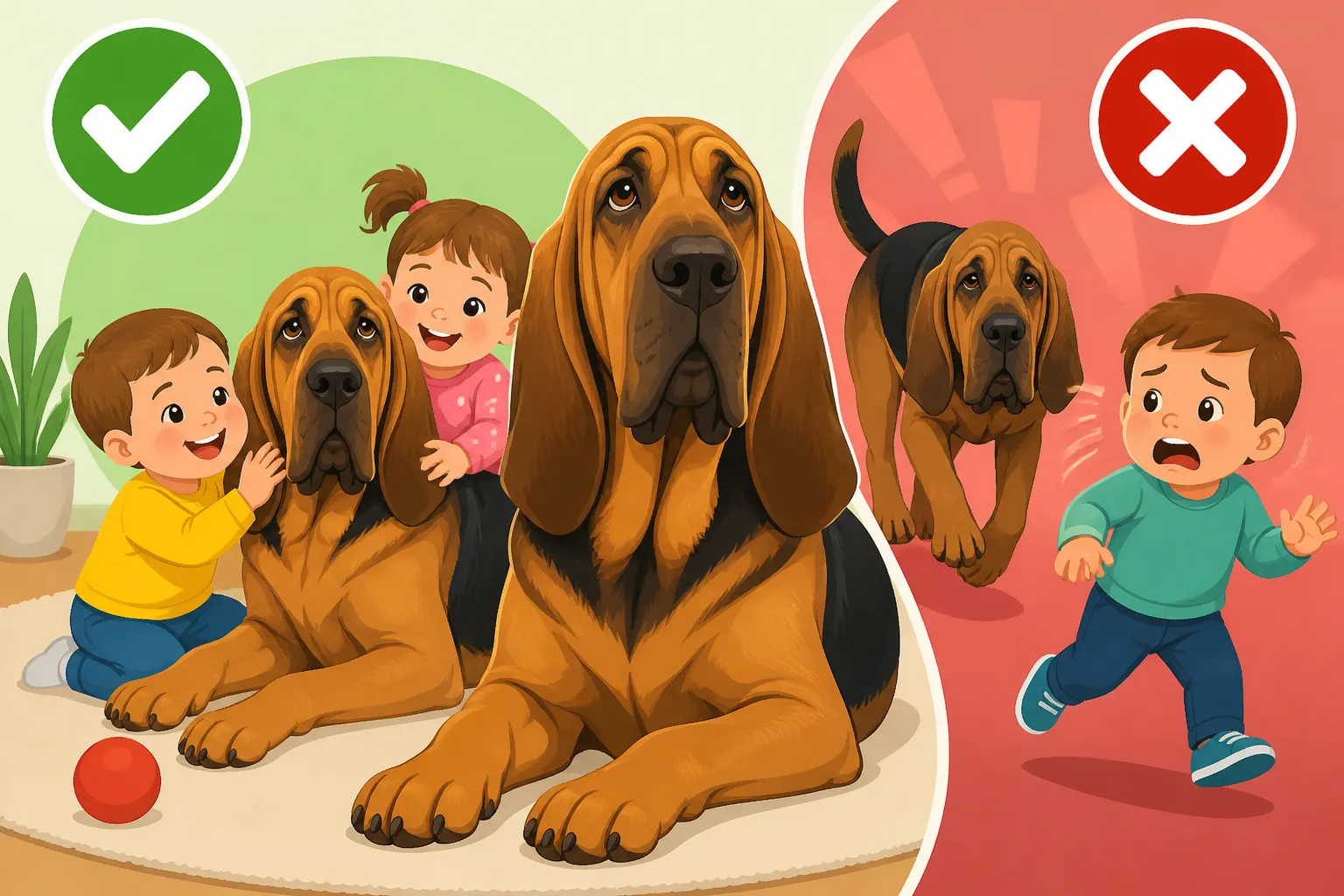
Whether a Bloodhound Suits a Family With Toddlers
A Bloodhound can be affectionate and gentle with children, but life with a toddler asks more of any large dog than a calm temperament alone. The challenge is managing a powerful, scent-focused dog around a small child who moves unpredictably. This guide explains what family life may look like, where the risks are, and how to decide whether the match suits your household.
Can a Bloodhound Be Safe Around Toddlers
A gentle nature does not remove the need for supervision
Bloodhounds are often described as patient, sociable dogs, and many enjoy being near their families. But a breed’s general temperament cannot guarantee how an individual dog will respond to a toddler. Children squeal, grab, stumble, hug, and change direction without warning; even a friendly dog may startle, become uncomfortable, or simply knock a little one over while turning around.
Never leave a toddler and a dog together without an alert adult close enough to intervene. That means staying in the same space and paying attention, not supervising from another room while checking a phone. If you cannot watch closely, separate them with a secure gate, play yard, or closed door. This applies even if your dog has lived peacefully with the child for months.
A Bloodhound’s size makes ordinary movement important, too. A happy greeting, a quick turn, or a step toward a dropped snack could topple a toddler. For a fuller look at the risks and ways to manage interactions, see A Bloodhound in a House With Small Children and Whether a Bloodhound Knocks a Child Over.
Watch the dog’s comfort, not just its behavior around children
A dog does not have to growl or snap to be signaling that it needs space. Turning its head away, moving off, licking its lips, yawning when not tired, becoming unusually still, or trying to hide can all be reasons to pause the interaction. These signs are easy to miss when adults are focused on the child, so learning to notice them is part of responsible supervision.
Give your Bloodhound a quiet, child-free place to rest. A bed behind a gate or in a room the toddler cannot enter lets the dog disengage without having to defend its space. Make sure the child is not allowed to climb onto the dog’s bed, follow the dog into its retreat, or disturb it while eating or sleeping.
If you see repeated signs of stress, create more distance and ask your veterinarian or a qualified, reward-based behavior professional for guidance. Do not punish a growl: it is useful information that the dog is uncomfortable. For more on interpreting everyday interactions, read How a Bloodhound Behaves Around a Toddler.
What Everyday Life With a Bloodhound and Toddler Looks Like
A large, scent-driven dog needs management indoors and out
Bloodhounds are built to follow scent, and a compelling smell can draw their attention away from a person’s voice. In a home with a toddler, that can mean the dog moves toward a snack, toy, open door, or interesting outdoor scent while the child is nearby. A leash, secure barriers, and consistent household routines are more reliable safeguards than expecting the dog to respond perfectly in every exciting moment.
Indoors, use gates to create separate zones when you are cooking, bringing in groceries, or helping your toddler with a bath or meal. Outdoors, check gates and fencing carefully; do not rely on an open yard or an electronic boundary as a substitute for a secure setup. A Bloodhound should be handled by an adult on walks, with the toddler safely out of the way when the dog is attached to a lead. The dog’s nose can pull it toward something fascinating, and a young child is not equipped to manage that force.
A Bloodhound’s vocalizations and greeting style matter as well. Some are enthusiastic at the door, and their size and baying may be a lot for a small child or close neighbors. Plan for arrivals by putting the dog behind a gate or on a leash before opening the door. How a Bloodhound Greets a Stranger at the Door offers more context on what to expect.
Drool, ears, and daily care are part of the family picture
A Bloodhound’s long ears and loose facial skin can make everyday household routines messier than a family expects. Drool may land on floors, clothing, furniture, or a toddler’s toys, while ear tips can drag through food or water. Toddlers also tend to touch whatever is within reach, so clean up spills promptly and keep grooming supplies, food, and medications out of reach.
Build a simple routine that does not depend on remembering everything in the middle of a busy day. Keep clean cloths where the dog spends time, wash bedding regularly, and check the dog’s ears and skin folds as part of normal care. If you shop for household supplies through Chewy, you might use a recurring shopping list for basics such as washable bedding or pet-safe cleaning items; always follow the product label and keep cleaners inaccessible to both dog and child.
Be cautious about letting a toddler handle the dog’s ears, face, or skin folds. Those areas can be sensitive, and routine care is best done by an adult when the dog is relaxed. For breed-specific upkeep, see Everything on a Bloodhound Hangs Down and Has to Be Cleaned.
How to Set Up Safe Interactions
Teach the child simple rules and make them consistent
Toddlers cannot be expected to manage a dog’s boundaries independently, but adults can repeat a few clear rules from the beginning: use gentle hands, do not climb on the dog, leave food and toys alone, and let the dog walk away. Keep instructions short and demonstrate them. A toddler may need frequent reminders, and that is normal; the adults remain responsible for preventing unsafe situations.
Avoid face-to-face hugs, pulling ears or skin, disturbing the dog while it eats, and waking it suddenly. Do not ask the dog to tolerate handling as a test of patience. Instead, reward calm behavior and end interactions while both child and dog are still comfortable. Keep dog food, chews, and favorite toys in an area the toddler cannot access, since competition over an object can turn a peaceful moment into a risky one.
Useful supplies can help you maintain boundaries, but they do not replace supervision. A sturdy gate can separate rooms while you prepare dinner, and washable covers can make shared living spaces easier to manage. If you use Chewy to compare pet-care basics, focus on fit, safety, and the manufacturer’s instructions rather than assuming a product alone makes an interaction safe.
Prepare for transitions and moments when attention is divided
Many difficult moments happen during ordinary transitions: a visitor arrives, the toddler drops food, the dog gets excited after a walk, or an adult is carrying laundry and cannot intervene quickly. Think through these situations ahead of time. For example, if the doorbell rings, place the dog behind a barrier before answering. If the toddler is eating, keep the dog at a comfortable distance rather than trying to manage both at arm’s reach.
Make the dog’s routine predictable. Give it regular rest, exercise, and opportunities to sniff in a controlled setting. A tired or overstimulated dog may be less able to settle, while a bored dog may seek its own entertainment. Age and individual health matter, so ask your veterinarian what activity is appropriate for your dog rather than relying on a one-size-fits-all exercise plan.
If your family is considering a puppy, remember that puppies mouth, jump, and need patient training. An adult dog may have a more visible temperament, but its history with children should still be assessed carefully. A rescue or breeder should be able to discuss the specific dog’s behavior and needs, not simply promise that the breed is “good with kids.” For further breed context, read The Household a Bloodhound Was Built For and Whether a Bloodhound Suits a First Time Owner.
Is a Bloodhound the Right Match for Your Family
Consider the adults’ time, space, and ability to manage the dog
A Bloodhound may suit a family with toddlers when the adults are prepared to supervise closely, use barriers, train kindly, and handle a large dog on leash. A fenced yard can be helpful, but it is not a replacement for walks, interaction, or secure gates. Families in smaller homes can still make a thoughtful plan, though the dog’s size, vocal nature, and need for separation space may be harder to accommodate.
Ask yourself practical questions: Can an adult reliably supervise every interaction? Is there a place the dog can rest without the toddler reaching it? Can the adults manage the dog if it pulls toward a scent? Is everyone willing to maintain daily care and clean up drool? If one answer is “not yet,” it may be better to adjust the home setup or wait until the child is older.
A dog’s history and temperament should guide the decision more than the breed label. If you already have a Bloodhound, a veterinary check can help rule out pain or illness when behavior changes, and a qualified trainer can help you build safer routines. If you are choosing a dog, arrange a careful, adult-led introduction and ask about the individual’s experience with young children.
A quick household readiness check
| Question | A safer sign | A reason to pause |
|---|---|---|
| Can an adult supervise every interaction? | Adults can stay close and attentive | The dog and toddler are often left together while adults are busy |
| Does the dog have a protected resting place? | A gated space is always available | The toddler can follow or climb onto the dog’s bed |
| Can adults manage the dog on leash? | An adult can safely handle the dog around distractions | A toddler is expected to hold or control the leash |
| Can the family manage daily care? | Adults are prepared for grooming, drool, and cleanup | Care tasks are likely to be skipped or left to the child |
| Has this individual dog shown comfort around children? | Behavior is assessed gradually with supervision | The decision rests only on the breed’s reputation |
If you need supplies such as gates, washable bedding, or grooming cloths, Chewy can be one place to browse options, but choose products that fit your home and follow their safety instructions. No purchase can replace attentive adults, a dog-only retreat, and a willingness to separate the pair whenever you are unsure.
A Bloodhound can become a loving family companion, but a toddler’s safety depends on the adults’ daily choices. If your household can provide structure, supervision, and room for the dog to opt out, the match may work well. If you cannot reliably maintain those safeguards right now, waiting or choosing a dog with a better fit for your circumstances is a caring decision for both child and dog. For more on breed relationships and household fit, see Whether a Bloodhound Gets On With Other Dogs and Whether a Bloodhound Suits a Rural Property.
Disclaimer
This article is for general informational purposes only and does not constitute professional advice. Laws, prices and regulations vary by location and change over time. Consult a qualified professional for guidance on your specific situation.