Whether Uncle Tom’s Cabin Misrepresented the Bloodhound
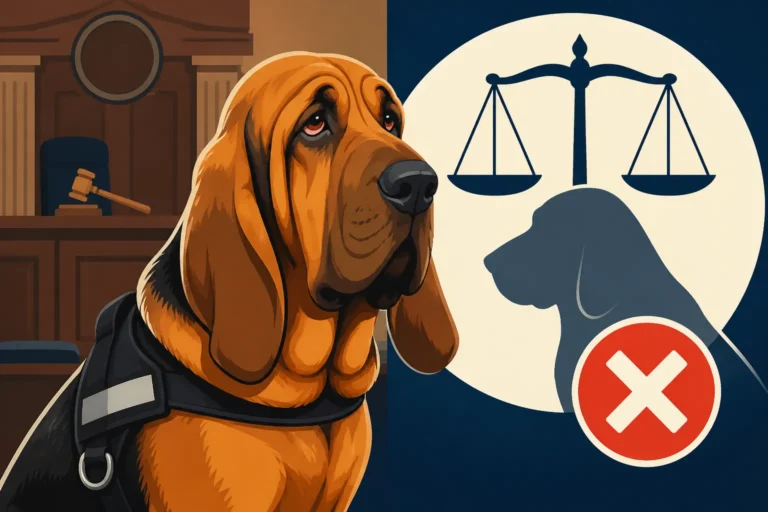
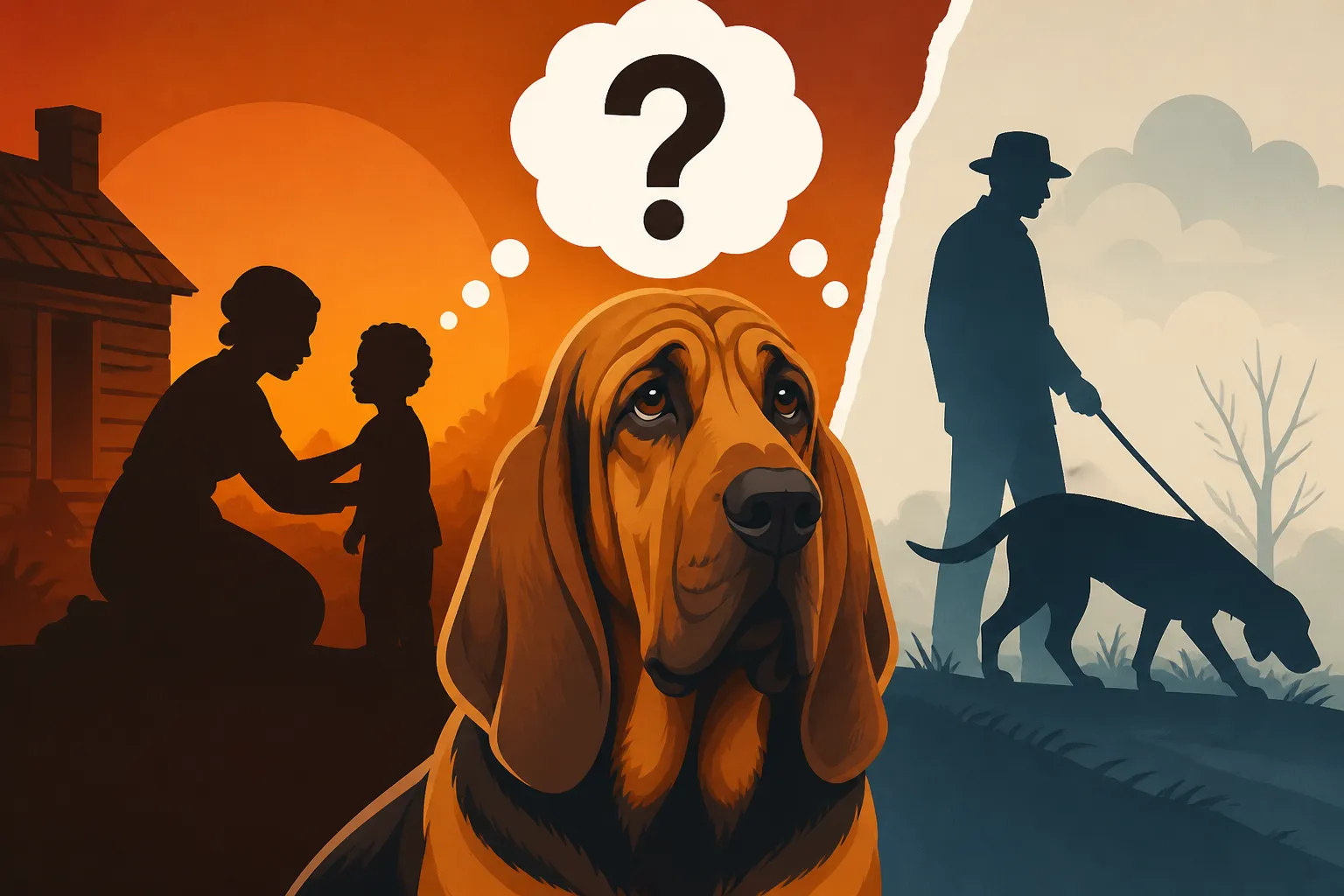
Uncle Tom’s Cabin helped fix the bloodhound in the public imagination as a frightening instrument of slave-catching. That image reflects a real history of dogs being used to pursue enslaved people, but it can blur important distinctions between documented practice, literary symbolism, and the modern breed. This guide explains what Stowe’s novel portrayed—and what it did not prove about Bloodhounds.
What Uncle Tom’s Cabin Says About Bloodhounds
The dogs are part of the machinery of pursuit
Harriet Beecher Stowe’s novel, first published in 1852, depicts enslaved people escaping and the danger of being captured. Bloodhounds appear within that world of pursuit: they are associated with the people and systems trying to find and seize fugitives. Their presence helps make the threat feel immediate and physical, especially for readers who knew that dogs could be used to track people.
That portrayal is not simply a scene about an animal doing what it naturally does. In the novel, the dogs function within a human system of coercion. People choose to use them, direct them, and benefit from the violence and forced return their work could enable. The story’s moral attention is on slavery and its consequences, not on offering a breed history or a neutral account of canine tracking.
Stowe’s treatment also belongs to a broader nineteenth-century culture in which stories, illustrations, and public debate circulated images of slave-catching dogs. The novel helped readers picture the danger of escape, but a fictional scene cannot, on its own, establish how often a particular breed was used or what most individual dogs were like.
The book’s purpose is different from a breed profile
A reader looking for a modern description of Bloodhound temperament will not find one in the novel. Stowe was not writing a guide to dog behavior, training, or conformation. She used the dogs as part of a dramatic and moral narrative about the pursuit of people who were resisting enslavement.
This distinction matters because the word “Bloodhound” can seem more precise than it was in everyday historical writing. People sometimes used breed names loosely, and a dog described as a bloodhound in a story or report is not automatically documented as a registered, purebred dog of the type recognized today. The historical record may identify the role of a dog without providing enough information to identify its ancestry.
For a wider look at why the breed’s name and history can be misunderstood, see Why Bloodhound Does Not Mean a Hound That Tracks Blood and What Blooded Stock Meant When the Bloodhound Was Named. Those distinctions help separate a label used in a text from evidence about a particular dog.
What Was Historically Real About the Bloodhound Image
Dogs were used to track people escaping slavery
The use of dogs to pursue enslaved people was not invented by Stowe. Dogs were used in some efforts to track and capture people who had escaped, and the threat of being pursued by dogs was part of the danger of flight. The practice varied by place and circumstance, and surviving descriptions do not always identify the dogs’ breeds reliably.
That uncertainty is important. A historical account may mention “dogs” or “bloodhounds” without giving details that would let a reader determine whether the animals were Bloodhounds in the modern breed sense, crosses, or dogs identified by their tracking role. It is safer to say that dogs were used in pursuit and that the term “bloodhound” became closely associated with that pursuit than to claim every such dog belonged to the modern breed.
The subject is addressed more directly in Whether Bloodhounds Were Used to Track Enslaved People. It is also useful to read When Bloodhounds Began Trailing People Instead of Game, which places human tracking within the breed’s wider working history rather than treating it as the breed’s only purpose.
A novel can reflect history without being a complete record
Uncle Tom’s Cabin is a work of fiction, even though it drew on the realities and arguments of its time. Its scenes can show what Stowe wanted readers to understand about slavery, escape, and the threat of recapture. They cannot tell us how common a practice was across every state, how often a specific dog breed was used, or what traits every dog involved had.
The distinction is similar to reading a novel about a soldier and treating it as a full military census. A story can be historically grounded and emotionally revealing while still selecting, arranging, and intensifying events for narrative effect. Stowe’s use of dogs should be read in that way: as part of a powerful depiction of pursuit, not as a comprehensive record of dog use.
| Question | What the novel can show | What it cannot establish by itself |
|---|---|---|
| Were dogs used to pursue people escaping slavery? | The practice was part of the historical reality Stowe drew upon | How often it happened in every location |
| Were all the dogs modern Bloodhounds? | The story uses the term “bloodhounds” as part of its imagery | The ancestry or breed registration of individual dogs |
| Does the novel describe Bloodhound temperament? | It shows dogs in a specific, frightening role | How Bloodhounds generally behave in ordinary homes |
| Is the book a historical document? | It offers evidence about the era’s literature and public imagination | A complete factual record of every pursuit or capture |
When asking whether a text “misrepresented” the breed, it helps to distinguish two things: whether the historical association was invented, and whether the literary image became an incomplete picture of the breed. The first claim is too simple; dogs were used in pursuit. The second is more persuasive: a novel’s dramatic image can outgrow its context and become the only thing some readers remember.
How the Novel Shaped the Breed’s Reputation
Fiction made a lasting image
The bloodhound image in Uncle Tom’s Cabin became part of a much wider cultural picture of the breed. Later stage adaptations, illustrations, and popular references helped circulate scenes of dogs tracking fugitives. Dramatic retellings could make the pursuit especially vivid, sometimes emphasizing spectacle over the complex history and human choices behind it.
That is one reason people may encounter the breed first as a symbol of danger rather than as a dog with a long working history and a range of individual temperaments. A familiar image can feel like a fact simply because it has been repeated so often. But one literary role does not describe every Bloodhound, any more than one fictional villain describes everyone who shares a profession or identity.
The long afterlife of this association is explored in Whether the Bloodhound’s Reputation Was Damaged by Fiction. It also connects with the broader question in Whether the Bloodhound’s Reputation Was Damaged by Fiction of how repeated depictions can shape what the public assumes about a breed. When discussing the book, it is worth naming the imagery directly without treating it as the whole story of the dog.
The dogs’ role should not eclipse the people in the story
There is another reason to read the scenes carefully: focusing only on the dogs can pull attention away from the people whose lives and freedom are at stake. In the novel, the dogs are part of the danger imposed by enslavers and slave catchers. The central moral issue is not that dogs are inherently cruel; it is that people used animals as tools in a system that treated human beings as property.
That does not make the imagery harmless. A reader can recognize the human agency behind the dogs’ use while also acknowledging that the breed became linked to a painful history. Context helps avoid two opposite mistakes: dismissing the association as pure invention, or treating the association as proof that Bloodhounds are naturally vicious.
The historical discussion also sits alongside the breed’s other working roles. Bloodhounds have been associated with tracking game and people, and their reputation for scent work became part of both practical work and popular storytelling. Whether the Bloodhound Was Used Against Poachers offers another angle on how tracking dogs could be framed in different social and legal contexts.
How to Read the Portrayal Today
Separate historical use from modern temperament
A present-day Bloodhound should not be judged by the role assigned to dogs in an antislavery novel. Temperament is shaped by the individual dog, its breeding, early experiences, training, health, and environment. The breed is known for persistence and a strong interest in scent, but those traits do not mean that a Bloodhound is naturally aggressive or suited to pursuing people without human direction.
It is also fair to discuss the history honestly. Avoiding the subject because it is uncomfortable can make the novel’s imagery seem mysterious or exaggerated, while repeating the image without context can reduce the breed to a single historical association. A balanced explanation acknowledges that dogs were used in pursuit, that “bloodhound” was not always a precise modern breed label, and that Stowe used the image to dramatize the brutality of enslavement.
For a broader look at the contrast between popular assumptions and everyday behavior, see Whether the Bloodhound Is Actually Gentle. The title’s question is useful because it prompts readers to consider the whole dog rather than accepting a stereotype as a behavioral rule.
Keep present-day ownership advice separate from the historical question
If reading about the novel has prompted you to learn about Bloodhounds as companions, start with ordinary care and safety rather than assumptions based on fiction. Their scent drive means secure handling matters, and their long ears, facial folds, and drool can make routine cleaning part of life with the breed. A household that is prepared for those needs will have a much more realistic picture than one formed from a dramatic scene in a novel.
For everyday supplies, some owners use retailers such as Chewy to look for items like washable cloths, ear-care products, or cleaning supplies. The important part is choosing products appropriate for your dog and asking a veterinarian about recurring irritation, odor, or discharge rather than trying to solve a persistent problem with a new product alone. A basic supplies list from a retailer such as Chewy may be convenient, but it does not replace veterinary guidance.
The goal is not to turn a discussion of slavery into a shopping conversation. It is simply to keep the historical image in its proper place: Stowe’s bloodhounds belong to a story about pursuit and human cruelty, while a dog living in a home today needs responsible care, training, and individual attention. Chewy is one possible place to browse routine pet-care supplies, but the breed’s history is best understood through careful reading and context, not through a product listing.
Disclaimer
This article is for general informational purposes only and does not constitute professional advice. Laws, prices and regulations vary by location and change over time. Consult a qualified professional for guidance on your specific situation.