Whether the Bloodhound Was Used Against Poachers
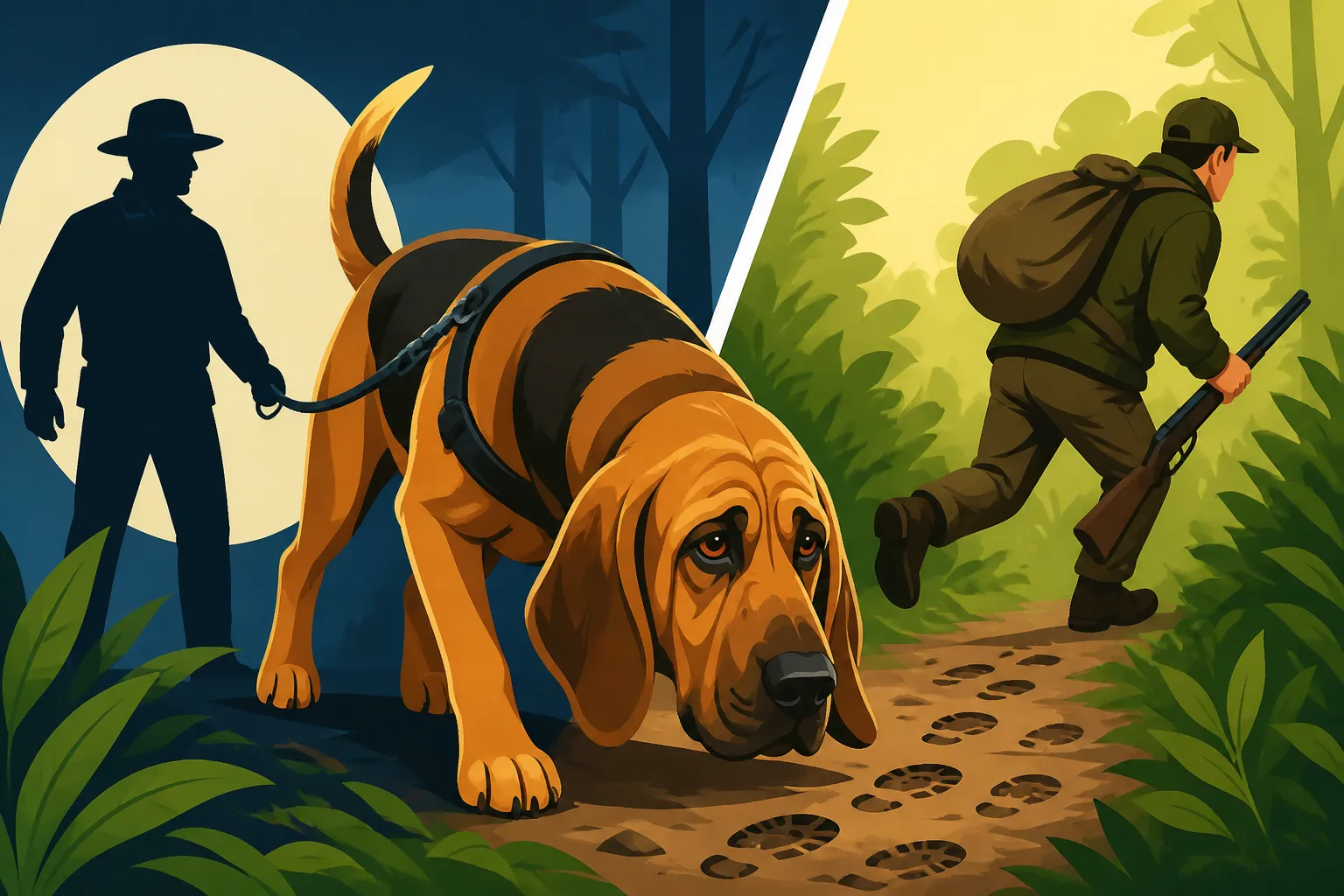
A Bloodhound’s celebrated nose made it a useful tracking dog, and historical accounts connect scent hounds with efforts to catch poachers. But the story is less tidy than the popular image suggests: old records used breed names inconsistently, and tracking a suspect was not the same as attacking one. This guide explains what Bloodhounds were used for and what the evidence can—and cannot—tell us.
Were Bloodhounds Used to Track Poachers
The short answer is yes, with an important qualification
Bloodhounds and other scent hounds were used to follow people who had fled after committing an offense, and poaching was among the offenses they could be tasked with tracking. A gamekeeper or landowner might use a dog to follow a poacher’s scent away from a game preserve or estate. In that sense, the Bloodhound’s tracking ability could serve the enforcement of game laws.
The qualification is that historical sources did not always use “Bloodhound” as precisely as modern breed registries do. The term could refer to a particular kind of hound, but it could also be used loosely for a reliable trailing dog. A report that mentions a “bloodhound” therefore does not automatically prove that the dog was a modern, pedigreed Bloodhound as the breed is understood today.
That distinction matters when reading old tales. A dog might be called a Bloodhound because it was a trusted, well-bred hound or because it was used to follow a trail—not necessarily because its ancestry was documented. The history of the name is explored in What Blooded Stock Meant When the Bloodhound Was Named.
What “used against poachers” meant in practice
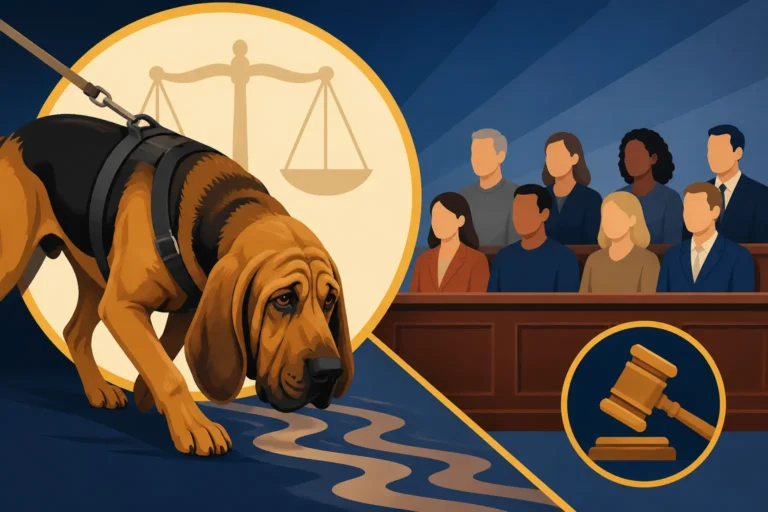
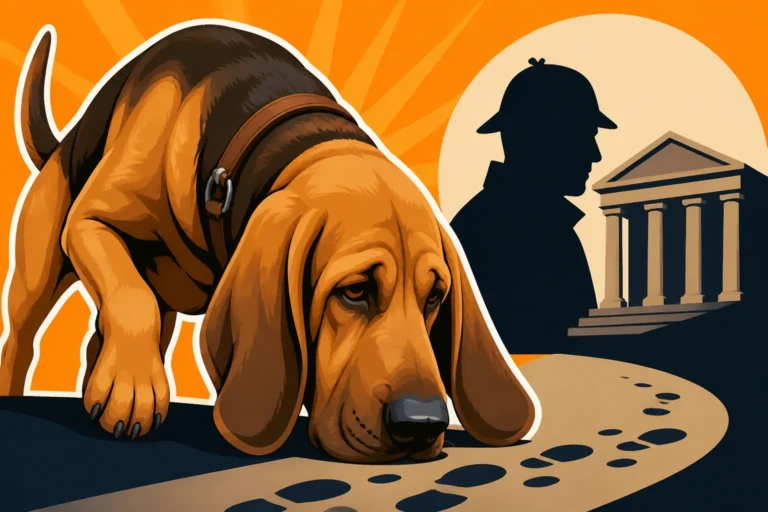
In practical terms, the dog’s job was to follow a scent trail. A handler might present the dog with a scent source associated with the person being sought, then allow it to work along the route the person had taken. The trail could cross fields, tracks, woodland edges, or other varied ground. The hound’s nose was the tool; its purpose was to help a human locate someone.
That is different from the dramatic version in which a dog is sent to attack a poacher. Tracking and apprehending are separate tasks. A hound can follow a trail without being trained or intended to bite, and finding a person does not by itself tell us what happened next. A handler or law officer would have to take over once the dog located the trail’s end.
Nor should every account be imagined as a formal pursuit with a uniformed handler and a single purebred dog. Historical practices varied by place and period. A landowner’s gamekeeper might use a dog as part of local enforcement, while other searches relied on people, witnesses, or different types of hounds.
Why the Bloodhound Was Suited to the Work
A trailing dog could follow a person’s scent
Bloodhounds were valued for their ability to investigate and follow scent. A person leaves scent as they move through an environment, and a trailing dog may work from a particular scent source rather than simply running after visible movement. That makes the task different from chasing an animal that is still in sight.
The dog’s work is not magic, though. The trail can be affected by weather, ground conditions, the time elapsed, and competing smells. A dog may need to work slowly, check an area, or recover the trail after losing it. The handler has to read the dog’s behavior and the situation, rather than assuming that every turn or pause gives a definite answer.
That particular style of work is why the breed’s history includes more than hunting game. The shift toward following human trails is part of the wider story described in When Bloodhounds Began Trailing People Instead of Game. The same ability that could help find a poacher could also be used to search for a missing person or follow a suspect in another kind of case.
Tracking did not make the dog a weapon
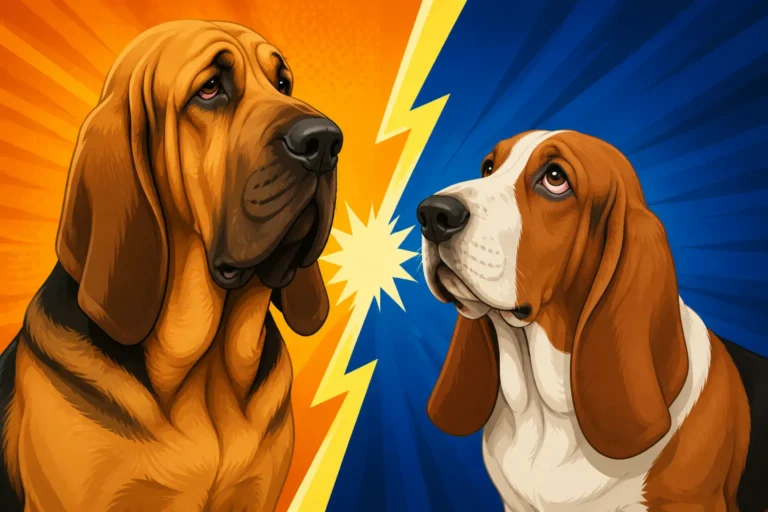
It is easy to picture the Bloodhound as an aggressive pursuit dog, especially because popular stories often cast hounds as fearsome. But a dog’s role depends on how people train and handle it. The core skill in this historical context was scenting and trailing, not attacking.
That distinction is worth keeping in mind when comparing Bloodhounds with dogs selected for guarding or protection work. A Bloodhound may be physically large and persistent, but those traits do not mean it was inherently a weapon against poachers. Its strength in a pursuit was its nose and willingness to stay with a scent trail.
The breed’s reputation has been shaped by fiction and by the ways people have used dogs in different eras. For a fuller look at how those images diverged from the dog itself, see Whether the Bloodhound's Reputation Was Damaged by Fiction. It is a useful reminder that a historical job should not be mistaken for a complete description of a breed’s temperament.
What the Historical Record Can Tell Us
Old terminology makes certainty difficult
When a source says “Bloodhound,” it may be tempting to read that as a precise breed identification. In many historical settings, however, dog names were not applied with the consistency expected today. Descriptions could refer to a type of hound, a dog’s reputation, or its function. Breeding records may be incomplete, and an account may not describe the animal’s ancestry at all.
So the careful answer is not that every poacher was pursued by a modern Bloodhound. Rather, Bloodhounds—or dogs described by that name—were among the hounds associated with human trailing and law enforcement. The exact dog and local practice could differ from one account to another.
This is a common problem in breed history: familiar names survive, but the meaning behind them can shift. When an account is brief, it may tell us that a dog followed a person without explaining whether it was a Bloodhound in the modern sense, how the trail was presented, or what happened when the person was found.
A dog’s trail was evidence of a search, not automatic proof
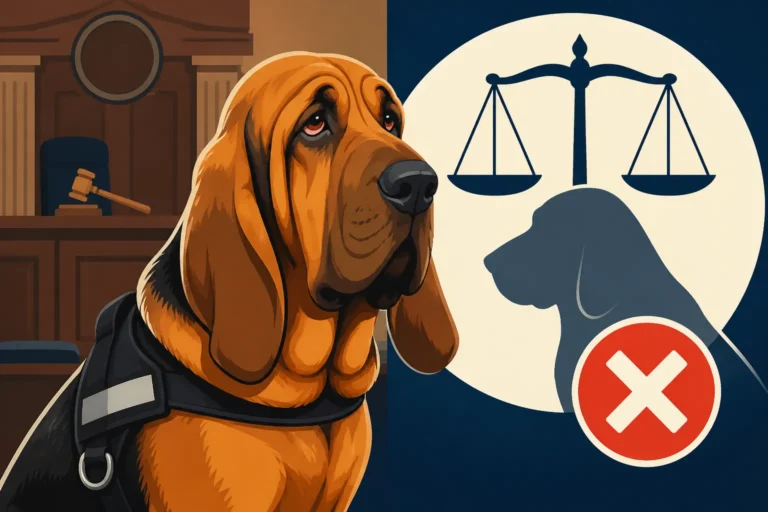
A dog following a scent could help direct people toward a suspect, but a trail should not be treated as a complete account of guilt. The dog might indicate a route or locate a person; it could not explain motive, identify every circumstance, or establish what had happened without human investigation.
This distinction still matters in discussions of Bloodhounds today. Their scenting ability is impressive, but handlers must interpret what the dog is doing, and the surrounding facts matter. The breed’s place in legal history is addressed in The Bloodhound Is the Only Dog Whose Evidence Stands in Court, while Whether a Bloodhound's Trail Alone Can Convict focuses on the limits of what a trail can establish.
| Historical question | Careful answer |
|---|---|
| Were Bloodhounds used to track poachers? | Yes, Bloodhounds and dogs described by that name were associated with tracking people, including poachers. |
| Was every dog in an old account a modern pedigreed Bloodhound? | Not necessarily. Historical naming was not always precise. |
| Did tracking mean the dog was sent to attack? | No. Following a scent and physically attacking someone are different tasks. |
| Could a dog’s trail prove every detail of a case? | No. A trail could assist a search, but it did not explain the full circumstances or replace human investigation. |
How Poaching History Fits Into the Bloodhound’s Wider Story
The work reflected the laws and power structures of its time
Poaching was not simply a matter of someone taking food from the countryside. In Britain, game laws and access to hunting grounds were tied to land ownership and social power. What counted as poaching, how seriously it was treated, and who had authority to enforce the rules depended on the period and place.
That context changes how we read stories about hounds tracking poachers. The dog was not acting independently or making a moral judgment. People chose to use a dog to help enforce rules. The same capacity to follow a scent could serve very different human purposes, from finding a missing person to pursuing someone accused of a crime.
The history of Bloodhounds also includes troubling uses of tracking dogs in other contexts. For example, Whether Bloodhounds Were Used to Track Enslaved People examines a separate and painful part of the historical record. It is important not to collapse distinct histories into one story, but looking at them together shows that the dog’s abilities were shaped by the people and institutions that put them to work.
The modern breed cannot be reduced to its historical jobs
A Bloodhound today is not a living piece of law-enforcement history. The breed’s reputation for trailing remains, but modern dogs live in homes, work in organized scent activities, and may participate in searches under trained handlers. A dog’s behavior depends on its individual temperament, early experiences, training, and daily care—not solely on what dogs of its type did generations ago.
For a prospective owner, the more useful question is whether the breed’s needs fit everyday life. Bloodhounds can be persistent when they catch a scent, so safe handling, secure boundaries, and realistic training matter. Their history may explain why the nose is such a defining feature, but it does not make off-leash freedom a sensible goal in every setting. Why Off Leash Is Not a Goal With a Bloodhound explores that practical challenge.
It is also worth looking beyond the breed’s dramatic reputation. Many Bloodhounds are affectionate family companions, while still bringing the energy, size, vocal habits, and scent-driven focus of a working hound. Whether the Bloodhound Is Actually Gentle offers more context on temperament, and The Household a Bloodhound Was Built For considers the kind of home that may suit the breed.
The fairest conclusion is that Bloodhounds were used, or described as being used, to track poachers in some historical settings. Their scenting ability made that work possible, but the surviving terminology can be vague, and the dog’s role was tracking—not an automatic attack. Seeing the difference between the dog’s ability and the human purpose behind it makes for a more accurate, less romanticized account of the breed.
Disclaimer
This article is for general informational purposes only and does not constitute professional advice. Laws, prices and regulations vary by location and change over time. Consult a qualified professional for guidance on your specific situation.