Whether a Bloodhound Should Ever Be Let Off Leash
Bloodhound off leash safety risks and scent tracking instincts are explained along with practical alternatives for owners.

Bloodhound off leash safety risks and scent tracking instincts are explained along with practical alternatives for owners.

Bloodhound trailing errors usually stem from handler misinterpretation, environmental interference, or shifted scent trails rather than dog failure.
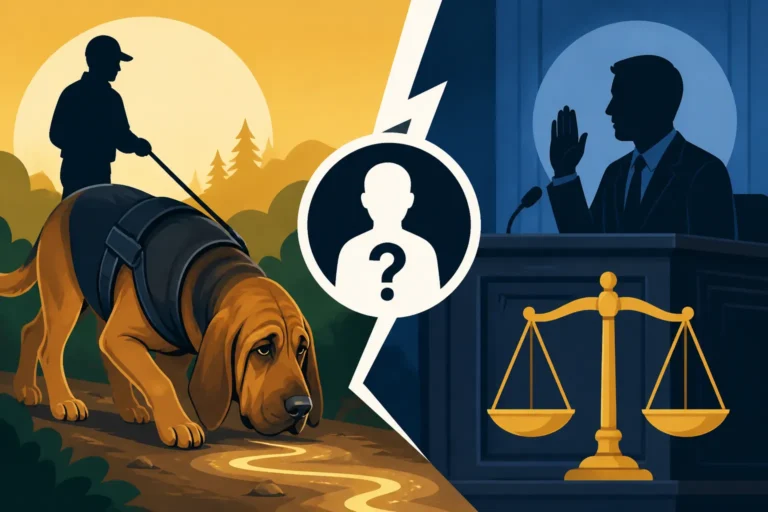
Bloodhound handler testimony explains canine scent tracking behavior and legal chain of custody during court proceedings.
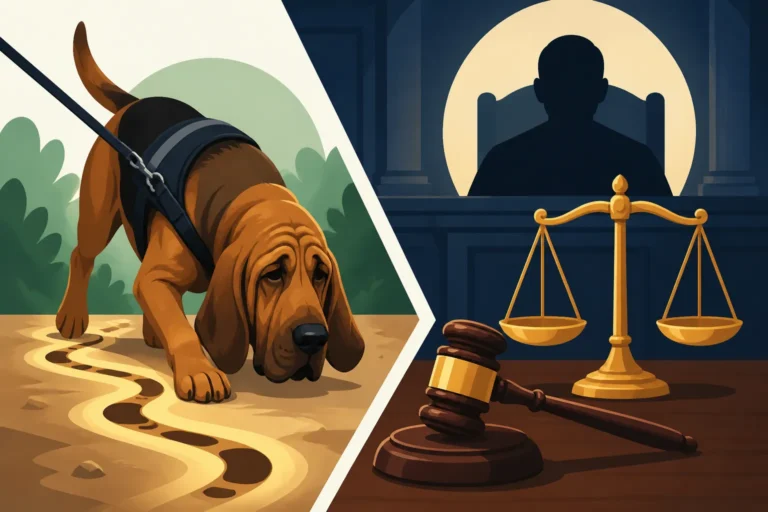
Bloodhound scent trailing evidence holds a unique legal standing in court, but it requires rigorous standards and corroboration.
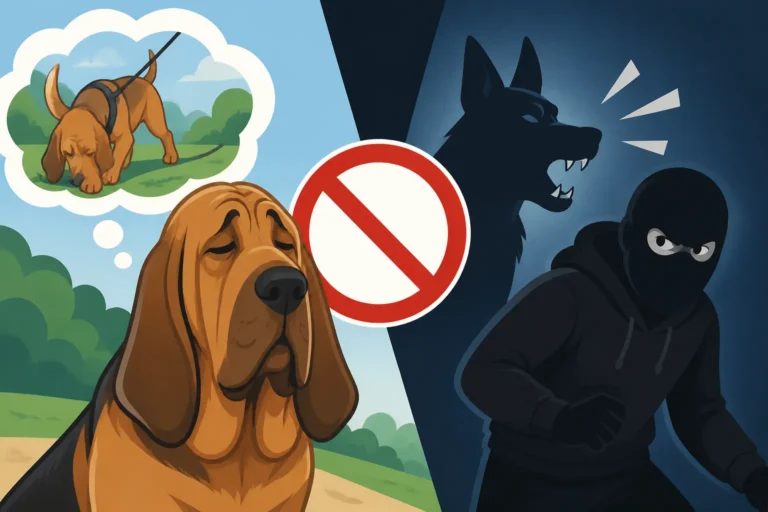
Bloodhounds lack protective instincts for guard work, possessing an amiable temperament optimized solely for trailing human scents.

Bloodhound training focuses strictly on trailing missing persons using scent, completely excluding any bite work or aggression.

Bloodhound trailing behavior explains how scent work dogs confirm finding a missing person without any aggressive apprehension.

Bloodhound trailing behavior and scent instinct explain how these dogs recognize the source of a human odor during tracking work.
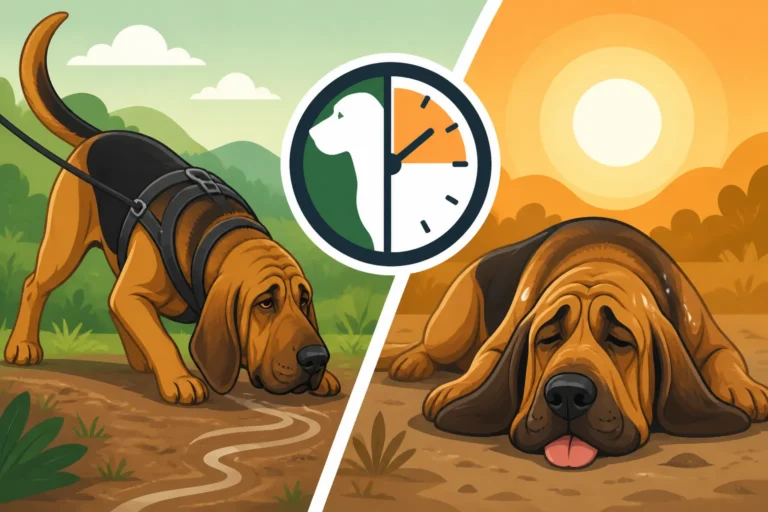
Bloodhounds work as endurance marathoners for hours, but age, fitness, and health dictate their physical limits on trails.
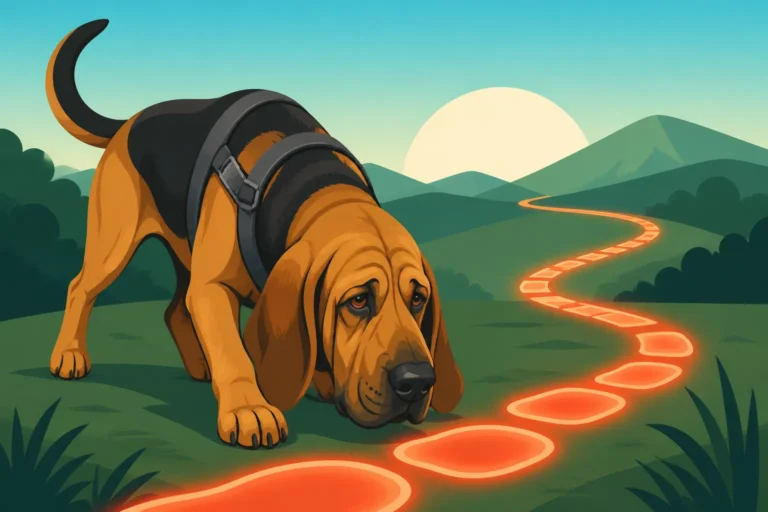
Bloodhound trailing distance depends on environmental conditions, scent quality, and their physical state during tracking.