The Exercise Limit on a Growing Bloodhound
Bloodhound puppy exercise limits and growth plate development timelines explain how to prevent joint injuries in large breeds.

Bloodhound puppy exercise limits and growth plate development timelines explain how to prevent joint injuries in large breeds.
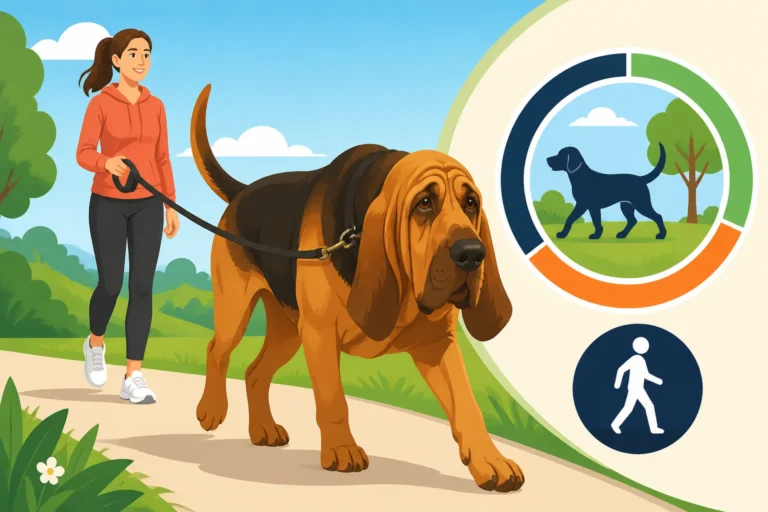
Bloodhound daily exercise requirements, physical stamina, and scent tracking needs explained to prevent behavioral issues.

Bloodhound behavior toward cats involves scent tracking and chase instincts rather than aggression, driven by millions of years of breeding.

Bloodhound protective instincts and friendly temperament explain why these large dogs make poor guard dogs for the home.

Bloodhound behavior around toddlers includes a gentle temperament, immense size, and potential clumsiness that requires constant supervision.

Harsh handling methods cause severe stress, confusion, and damage the trusting relationship between Bloodhounds and their owners.

Bloodhound motivation stems from a powerful sense of smell and the primal satisfaction of following scent trails across varied terrain.

Bloodhound hesitation before obeying commands stems from extraordinary scent processing and an independent breed nature.
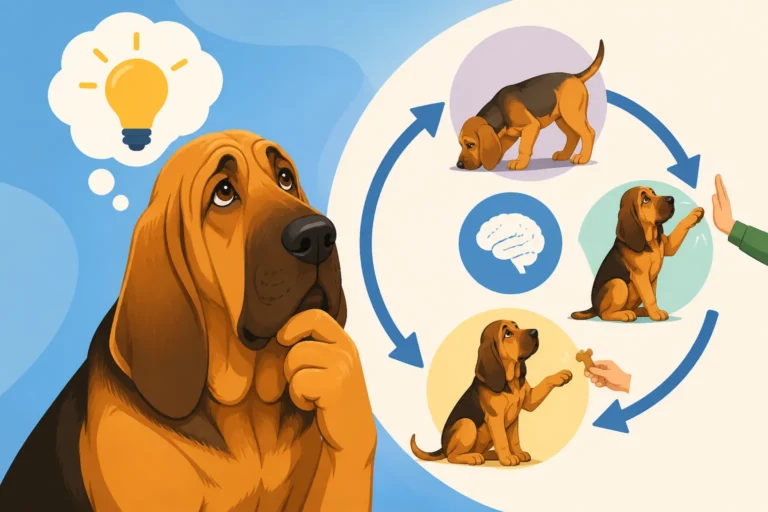
Bloodhound learning speed and how scent obsession influences their ability to understand new training cues and commands.

Bloodhound baying volume and neighbor tolerance explain how to manage loud vocalizations and maintain peaceful community relations.