How Often a Bloodhound Gets an Ear Infection
Bloodhound ear infections typically occur one to two times a year, influenced by allergies, anatomy, and trapped moisture.
Know what to watch for.
Breed-specific conditions, screening and DNA tests, what surgery actually costs, and the daily habits that stretch a healthy lifespan.
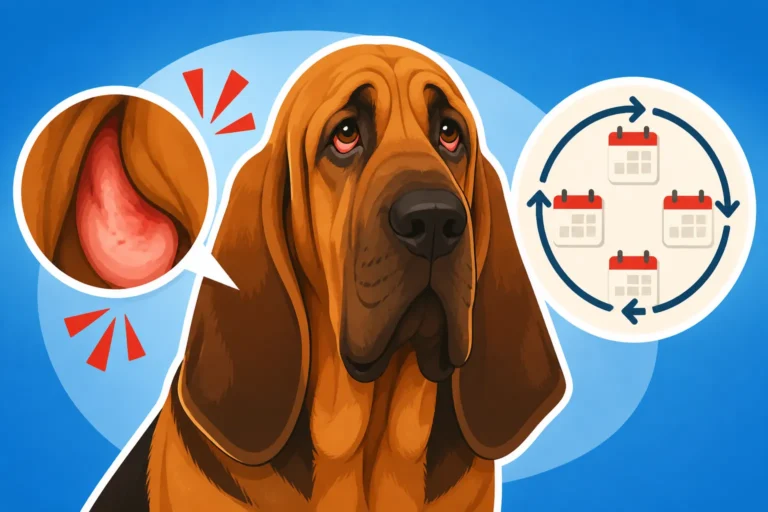
Bloodhound ear infections typically occur one to two times a year, influenced by allergies, anatomy, and trapped moisture.
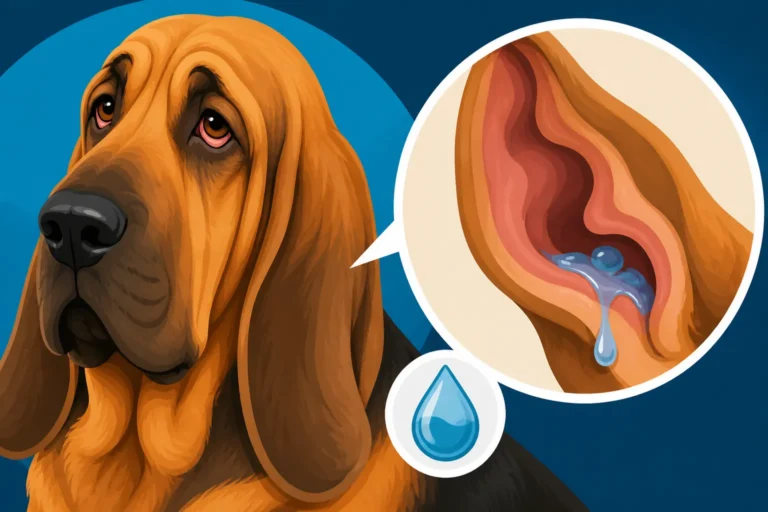
Bloodhound ear canal dampness occurs because heavy, pendulous pinna flaps and a deep L-shaped structure block airflow and trap moisture.
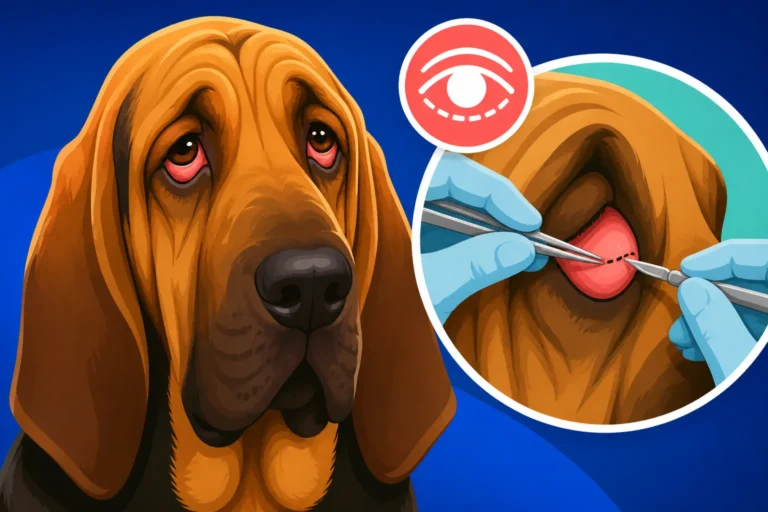
Bloodhound eyelid surgery details, including ectropion, entropion, and cherry eye conditions requiring veterinary medical intervention.
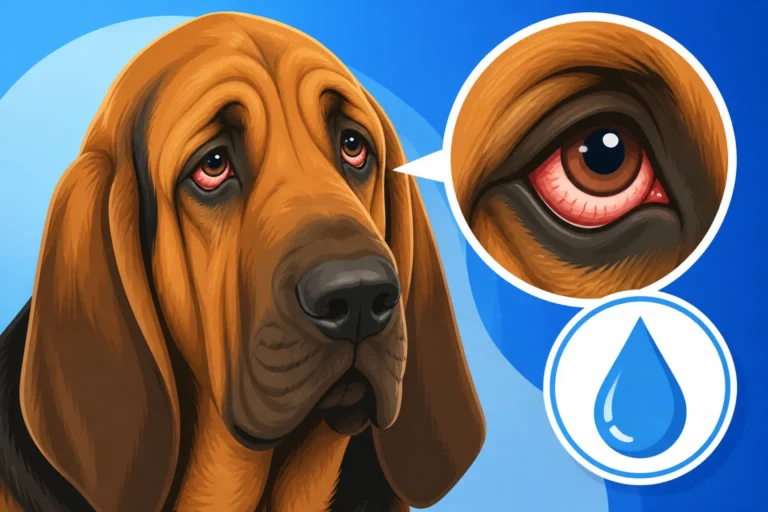
Dry eye in Bloodhounds causes inflammation and thick discharge when tear production fails. Learn treatment and care methods.
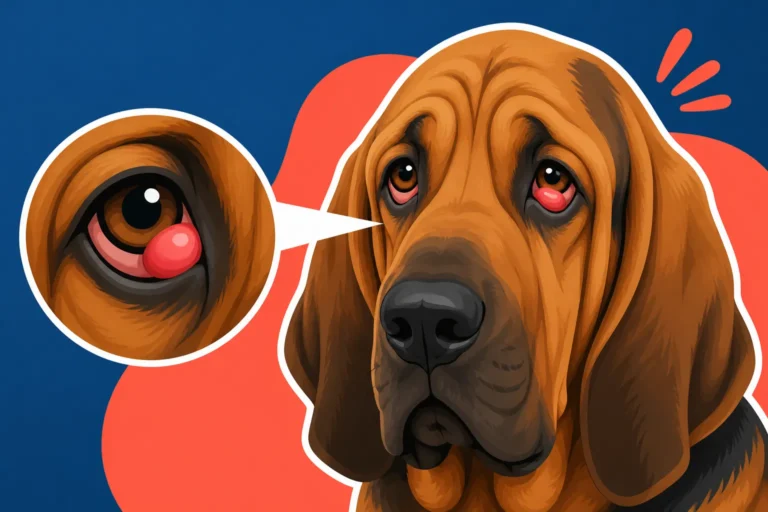
Cherry eye in Bloodhounds is a prolapsed third eyelid gland that causes a red mass due to weak genetic connective tissue.
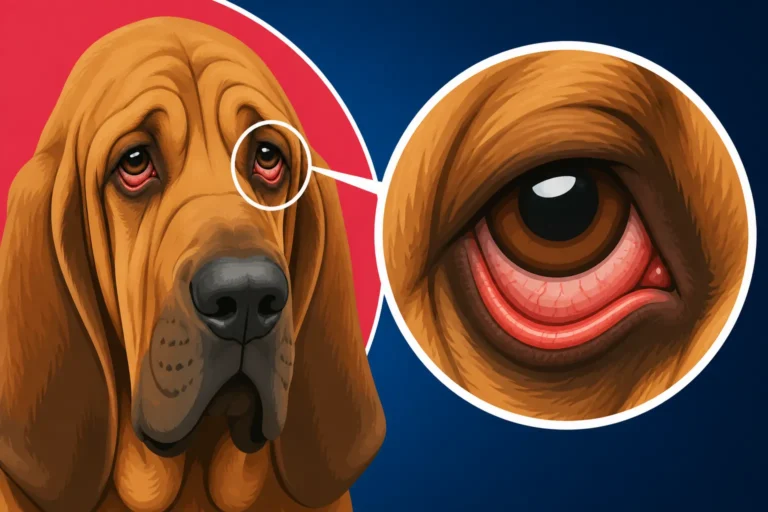
Entropion causes inward eyelid rolling in Bloodhounds, leading to constant corneal friction, tearing, redness, and pain.
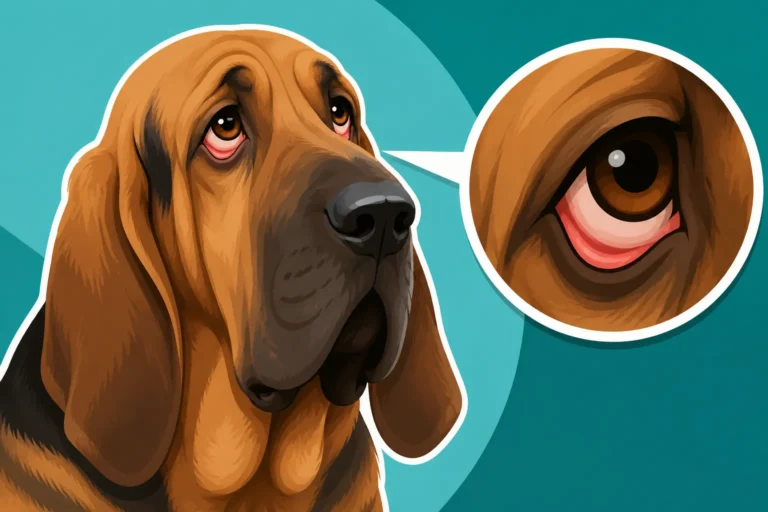
Bloodhound facial skin laxity and loose lower eyelid anatomy cause ectropion, exposing the delicate pink conjunctival tissue to elements.
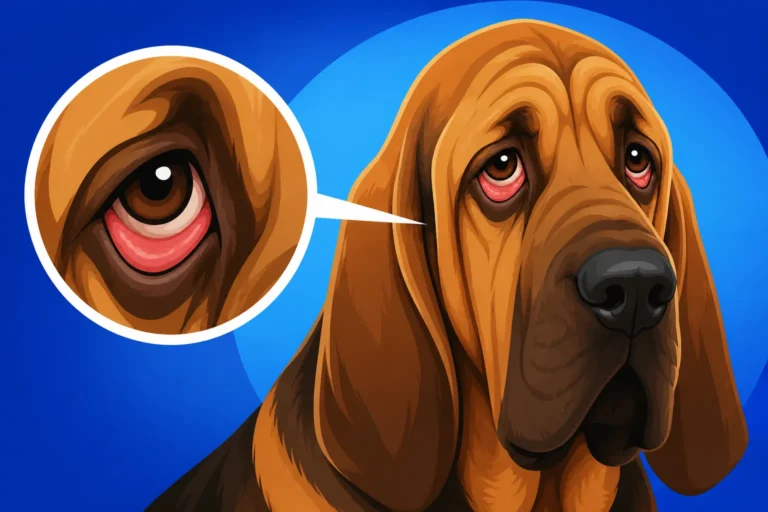
Ectropion in Bloodhounds features a sagging lower eyelid that exposes pink conjunctival tissue and causes chronic tearing.
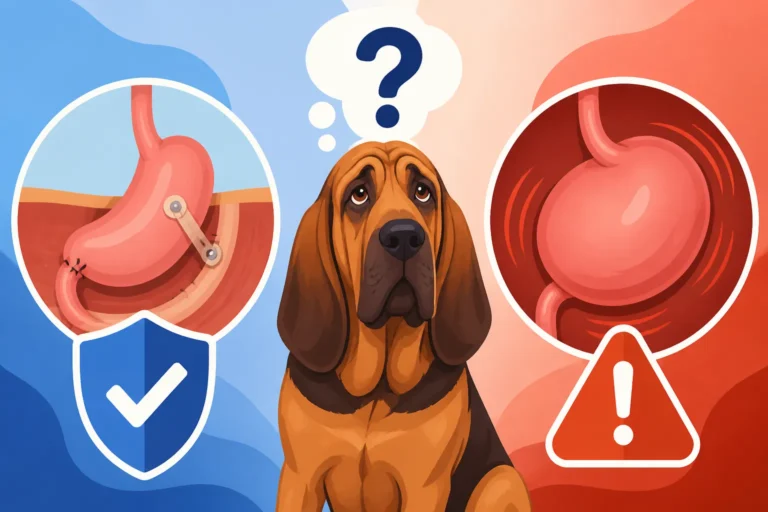
Bloodhound stomach twisting and gastric dilatation volvulus risks after gastropexy surgery, explaining rapid gas buildup and fatal torsion.
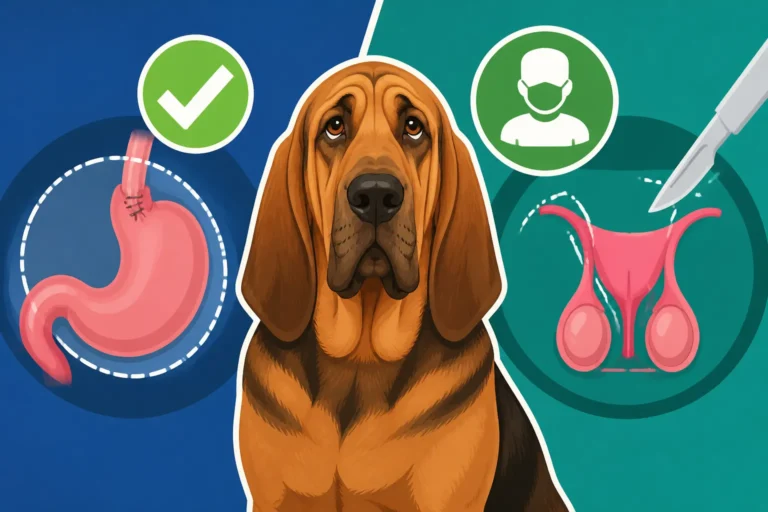
Combining a gastropexy with a Bloodhound neuter surgery prevents fatal stomach twisting and streamlines veterinary care.