Aging in a Bloodhound Starts at Six
Bloodhound senior aging begins around six years old due to rapid growth and heavy body mass causing faster cellular wear.
Know what to watch for.
Breed-specific conditions, screening and DNA tests, what surgery actually costs, and the daily habits that stretch a healthy lifespan.
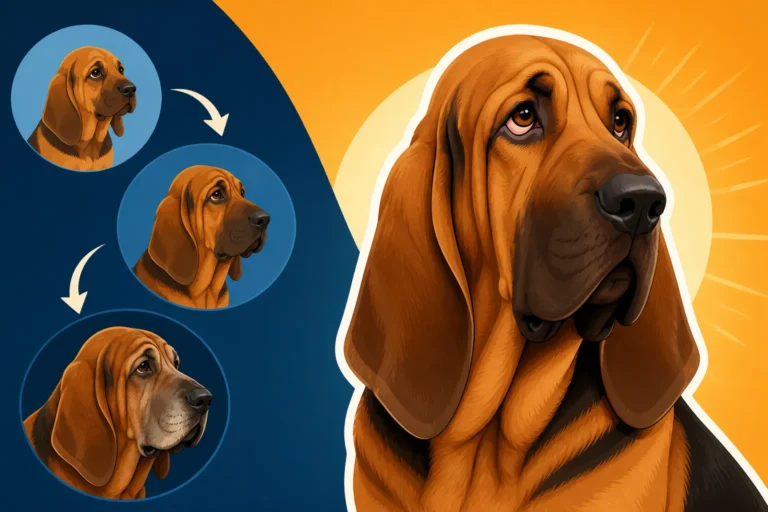
Bloodhound senior aging begins around six years old due to rapid growth and heavy body mass causing faster cellular wear.

Bloodhound heart disease involves conditions like Dilated Cardiomyopathy and Subaortic Stenosis, requiring early detection and proper management.
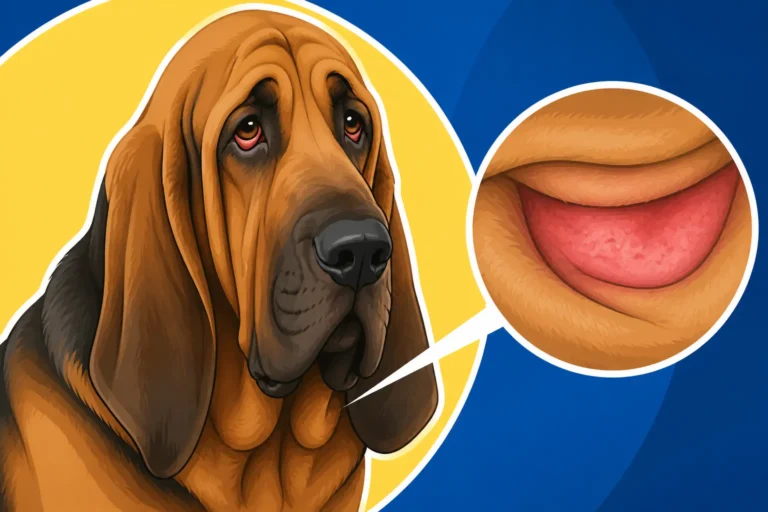
Skin fold dermatitis in Bloodhounds occurs when deep wrinkles trap moisture, causing persistent infections that owners must manage.

Bloodhound ear anatomy blocks airflow, traps moisture, and causes persistent infections in deep canals because heavy ear leather creates a warm environment.
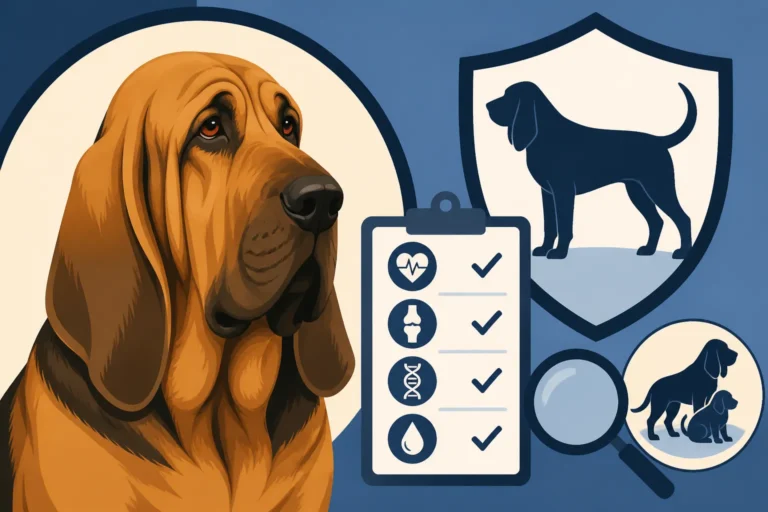
The American Bloodhound Club health screening recommendations help breeders minimize genetic diseases and orthopedic issues.
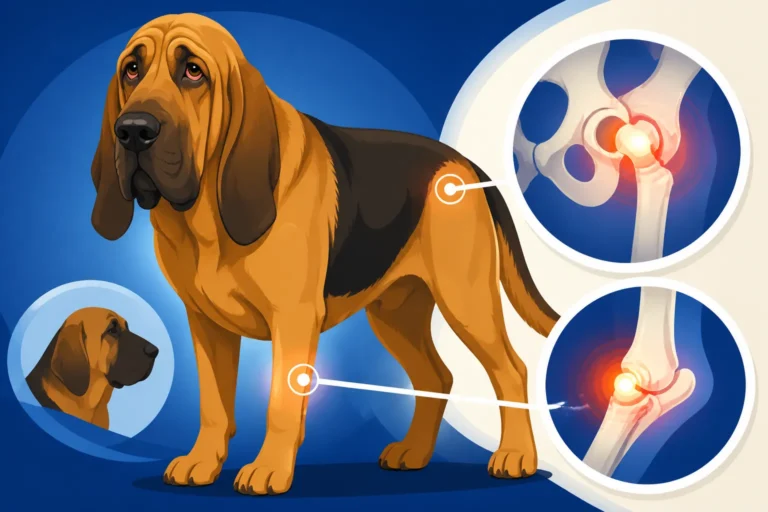
Hip and elbow dysplasia in Bloodhounds, detailing joint malformation, genetic causes, and ways to manage and prevent canine mobility issues.
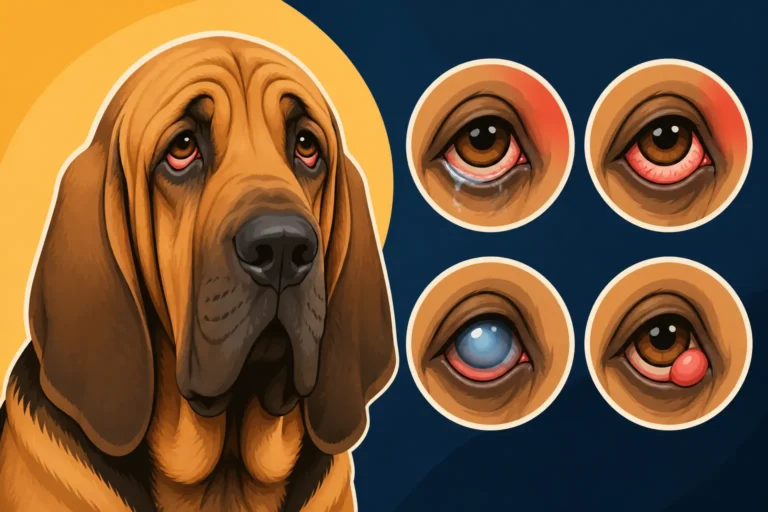
Bloodhound eye problems stem from loose facial skin, explaining the symptoms, risks, and treatments for four common conditions.

Bloodhound gastropexy prevents life-threatening gastric dilatation-volvulus by permanently securing the stomach to stop dangerous twisting and tissue death.
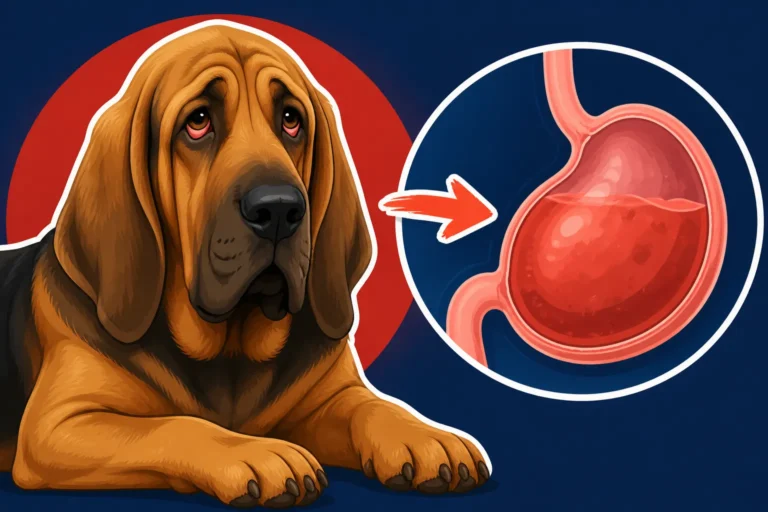
Gastric dilatation-volvulus in Bloodhounds involves stomach swelling and twisting, explaining why this condition kills most hounds.

Bloodhound health challenges and specific predispositions explain why this large breed has a shorter median lifespan of seven to ten years.