The Age a Bloodhound Is Considered Senior
Bloodhounds are considered senior dogs around five or six years old due to their large size and accelerated aging process.
Know what to watch for.
Breed-specific conditions, screening and DNA tests, what surgery actually costs, and the daily habits that stretch a healthy lifespan.

Bloodhounds are considered senior dogs around five or six years old due to their large size and accelerated aging process.
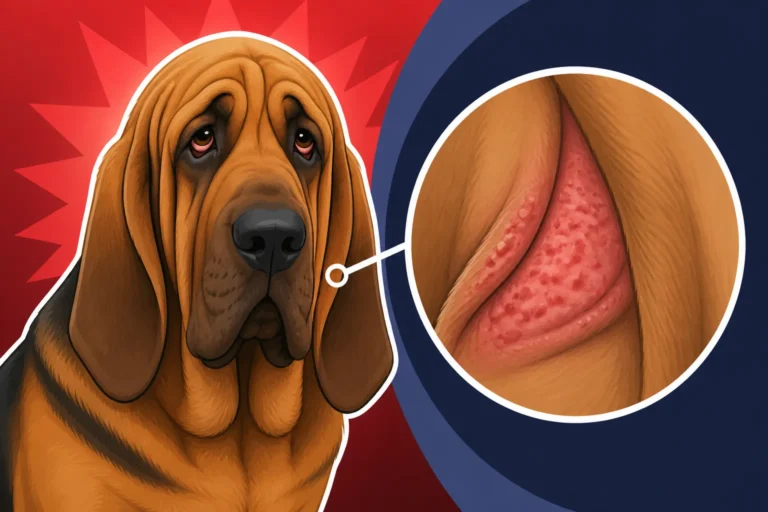
Bloodhound skin fold dermatitis creates painful inflammation in warm pockets around the eyes, muzzle, and dewlap from trapped moisture and friction.
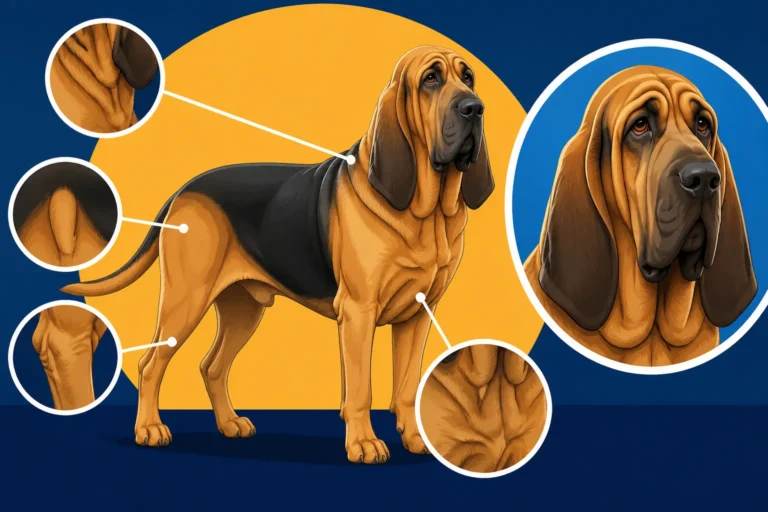
Bloodhound skin folds located around the head, muzzle, and neck trap scent particles and provide physical protection during tracking.

Epilepsy in Bloodhounds causes recurrent seizures, which are categorized as primary or secondary based on underlying causes.

Hypothyroidism in Bloodhounds causes dull coats and slow movement due to insufficient thyroid hormone production from the gland.

Bloodhound health screenings before breeding protect future generations from preventable genetic conditions and orthopedic problems.

The Orthopedic Foundation for Animals hip score evaluates genetic joint dysplasia and osteoarthritis risk in large Bloodhounds.
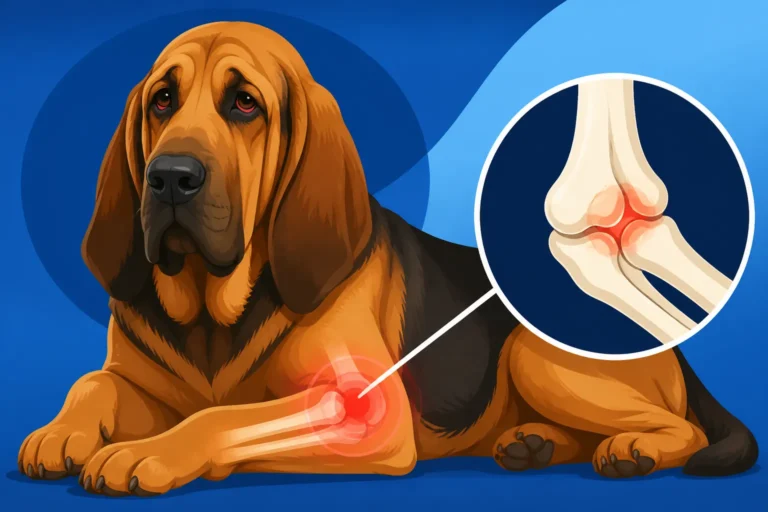
Elbow dysplasia in Bloodhounds causes joint pain and mobility issues through genetic developmental abnormalities in growing dogs.
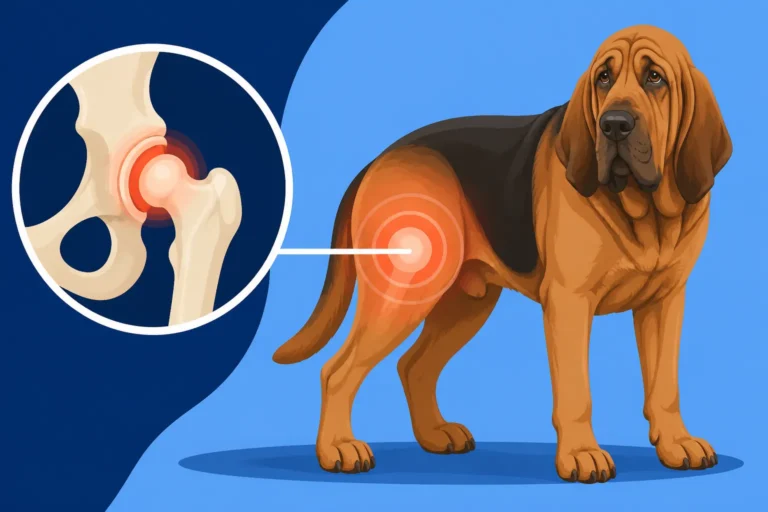
Hip dysplasia in Bloodhounds is a joint malformation causing pain, and this explains managing and preventing the condition.
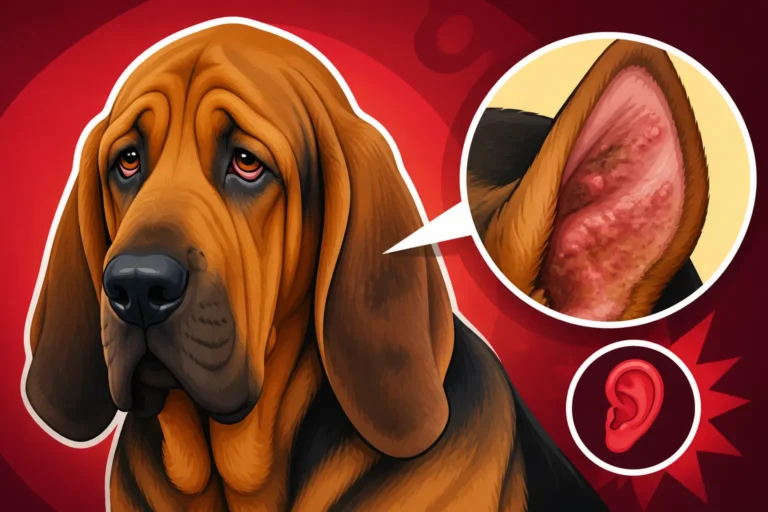
Chronic ear infections in Bloodhounds can become permanent conditions due to their unique ear anatomy and lack of airflow.