Whether a Bloodhound’s Chest Depth Can Be Measured
Bloodhound chest circumference and depth can be measured at home with tape or assessed clinically using veterinary X-rays.
Know what to watch for.
Breed-specific conditions, screening and DNA tests, what surgery actually costs, and the daily habits that stretch a healthy lifespan.

Bloodhound chest circumference and depth can be measured at home with tape or assessed clinically using veterinary X-rays.
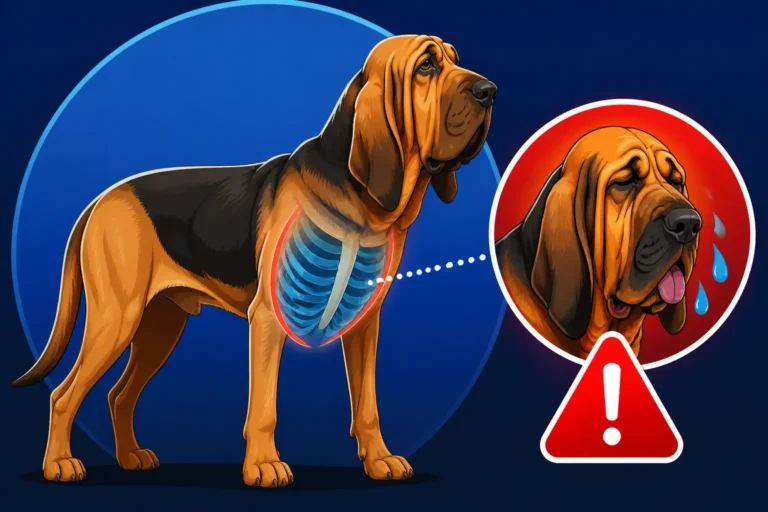
Bloodhound deep and narrow chest anatomy creates a spacious cavity that allows the stomach to twist and cause fatal bloat.

Gastric dilatation volvulus statistics and stomach twist mechanics reveal whether bloat causes a quarter of Bloodhound deaths.

Bloodhound mortality causes include a median age of seven to ten years, genetic health issues, and fatal stomach bloat.

Bloodhound lifespan statistics, historical median age ranges, and common health causes impacting longevity are examined.

Bloodhound weight variations and size differences do not determine whether a smaller dog lives longer than a larger one.

Working bloodhounds and show bloodhounds face different health factors affecting their lifespan, genetics, and daily care.

Bloodhound health challenges and genetic predispositions, including hip dysplasia and bloat, explain their shorter lifespan compared to Labradors.

Bloodhound lifespan averages seven to ten years, meaning eight years is normal for the breed and comparable to Great Danes.

The median age a Bloodhound reaches is explained as six to ten years, detailing genetic health factors and responsible breeding.