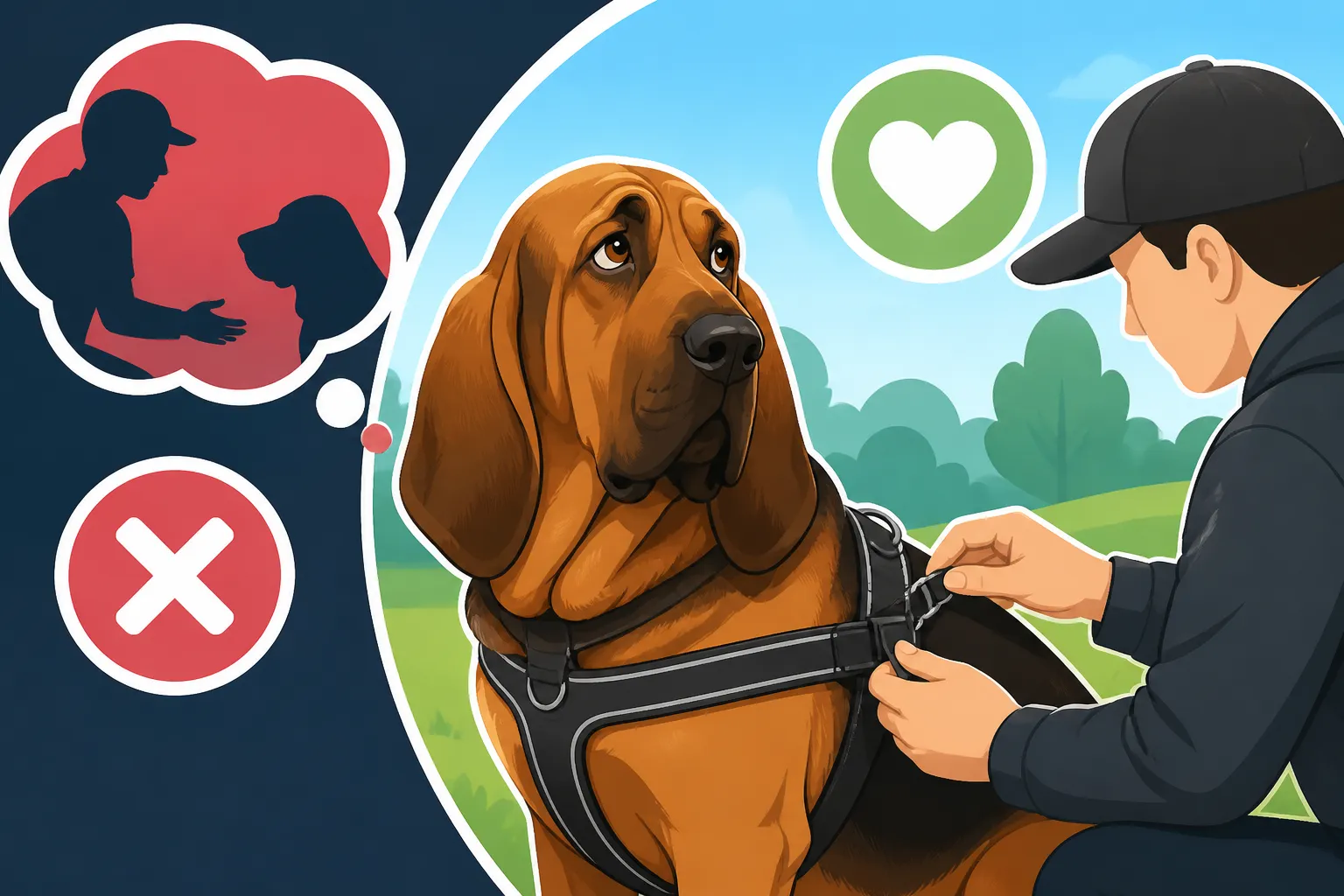
Whether a Bloodhound Minds Being Harnessed by a Stranger
It’s a common scenario for Bloodhound owners: you love your big, sweet-natured dog, but the thought of someone unfamiliar needing to put on their harness can bring a pang of worry. Whether it's a new dog walker, a friend helping out while you're away, or even a vet tech needing to move your hound, you want to know if your Bloodhound will tolerate this kind of intimate handling from a stranger. The truth is, while Bloodhounds are known for their gentle disposition, their comfort with being harnessed by someone new isn't always a given, and this guide will help you understand why and how to prepare your beloved sniffer for such interactions.
The Bloodhound's Nature and Its Impact on Stranger Handling
Bloodhounds are unique dogs, famous for their incredible noses and equally remarkable temperament. But just because they're gentle doesn't mean they're always eager for hands-on attention from every person they meet. Understanding their core nature is the first step in predicting how they'll react.
Inherently Gentle, But Cautious
Bloodhounds are indeed renowned for their placid and patient nature. They're often described as easygoing giants, calm and affectionate with their families. This inherent gentleness is one of the many reasons we adore them. However, "gentle" doesn't automatically translate to "unreservedly accepting of physical manipulation by a stranger." Think about it from their perspective: they are large animals with very sensitive skin, long, delicate ears, and often a keen awareness of personal space, even if they aren't overtly aggressive.
While a Bloodhound isn't typically going to show aggression towards a new person, they might display caution or reservation. They might stand still, but their body language can tell a different story. A slight stiffening of the posture, a quick darting of the eyes, a subtle lean away from the person, or even a low tail carriage can all signal that they are feeling a bit uneasy. It's vital for owners to become fluent in these subtle cues, because ignoring them can escalate into more pronounced discomfort, even if it never turns into outright aggression. It's not a flaw in their character; it's just a natural self-preservation instinct. They are not built to be protection dogs, but they do have an innate sense of self that means they prefer interactions on their terms, especially with those they don't know well. For more on their disposition, consider reading Whether a Bloodhound Is Actually Gentle.
This innate cautiousness means that while your Bloodhound might allow a stranger to put on a harness, they might not be entirely happy about it. They might tolerate it, but tolerance isn't the same as comfort or enjoyment. Their trusting nature is typically built over time with familiar individuals, and a new person represents an unknown variable in their carefully observed world.
The Role of Early Socialization and Exposure
Just like with any dog breed, a Bloodhound's early life experiences play a monumental role in shaping their adult temperament and their reactions to novel situations, including interacting with strangers and being handled by them. A Bloodhound puppy that has been thoughtfully and positively socialized will almost certainly be more adaptable and less prone to anxiety when a stranger needs to harness them.
This means exposing your Bloodhound pup to a wide variety of people from a young age – different ages, genders, appearances, and gaits. It's not just about meeting people, but about how those interactions happen. Every meeting should ideally be a positive one, reinforced with praise, gentle petting, and perhaps a tasty treat. Crucially, it should also involve gentle handling: touching their paws, ears, tail, and body, mimicking the kind of contact they might experience at the vet or from someone putting on a harness.
If a Bloodhound has grown up with numerous trusted individuals gently practicing putting on and taking off a harness, rewarding the dog for calm cooperation, they will be far more likely to accept the same from a stranger later in life. Conversely, a pup who has had limited exposure to different people or had negative experiences with handling might find the act of a stranger reaching for them, especially to put on equipment, to be overwhelming or even frightening. A good starting point for understanding broader socialization is Whether a Bloodhound Puppy Should Be Socialized to Traffic Early, as the principles apply across the board. The goal is to build a robust sense of confidence and an association of new people and new handling with good things, not fear or discomfort. The first year with a Bloodhound puppy is foundational, as discussed in The First Year With a Bloodhound That Already Wants to Trail, and this includes their socialization to the human world around them.
Factors That Influence a Bloodhound's Cooperation
Even with excellent early socialization, several factors on the day can influence how readily your Bloodhound accepts a stranger harnessing them. These often come down to past experiences, the specific approach of the stranger, and the dog's individual personality.
Previous Experiences with Handling and Equipment
Dogs are creatures of habit and memory, and a Bloodhound is no exception. If every time a harness has been put on, it was a rushed, uncomfortable, or even painful experience – perhaps due to an ill-fitting harness, impatient handling, or rough treatment – your Bloodhound will naturally develop a negative association with the harness itself and the act of putting it on. This baggage only intensifies when a stranger is the one attempting the task. They don't just forget past discomforts.
Consider also the type of equipment. If your Bloodhound has only ever worn a specific style of harness, say a step-in harness with two buckles, they might be confused or apprehensive if a stranger tries to use a different design, like an overhead harness with a chest plate, or one that pulls over the head. Unfamiliarity can breed anxiety, even if the new harness is perfectly comfortable. Having a variety of harness types available, perhaps purchased from retailers like Amazon, and slowly introducing them can help.
Conversely, if harnessing has consistently been associated with positive outcomes – exciting walks, fun training sessions, or delicious treats – your Bloodhound will likely approach the experience with more enthusiasm. This positive conditioning can be incredibly powerful. Many positive reinforcement trainers, including those whose methods are often taught through programs like BAXTER & Bella, stress the importance of pairing equipment with rewards. If harnessing always means good things are about to happen, a Bloodhound will be far more willing to cooperate, even with someone new. It's about building an expectation of reward and comfort around the process.
The Stranger's Approach and Body Language
Bloodhounds are incredibly perceptive animals, highly attuned to human demeanor, tone of voice, and body language. The way a stranger approaches and interacts with your Bloodhound can be the make-or-break factor in whether the harnessing attempt is successful and positive. A calm, confident, and slow approach is always best. Loud voices, sudden movements, or bending directly over the dog's head can be perceived as intimidating or threatening.
Ideally, the stranger should allow the Bloodhound to initiate contact, or at least approach them slowly and indirectly. They should avoid direct, sustained eye contact, which some dogs interpret as a challenge. Instead, a gentle side-on approach, offering a hand for a sniff (palm up, not directly at the face), and speaking in a soft, reassuring tone are much more likely to be accepted. They might even try tossing a treat to the side, letting the Bloodhound come to them rather than invading their space.
Patience is perhaps the most critical virtue for a stranger attempting to harness a Bloodhound. Trying to force a harness onto a reluctant hound will almost certainly result in a negative experience, potentially causing the dog to become evasive or fearful in future interactions. A stranger who understands and respects the Bloodhound's pace, and is willing to wait, perhaps even offering a high-value treat to build trust, will have a far greater chance of success. As we know from How a Bloodhound Greets a Stranger at the Door, their initial reaction can be key, and a gentle, respectful approach is always paramount. Rushing or using harsh methods can have long-lasting negative consequences, as highlighted in What Harsh Handling Does to a Bloodhound.
Preparing Your Bloodhound for Handling by Others
The good news is that you can actively prepare your Bloodhound to be more accepting of handling by strangers. It takes consistent effort and a commitment to positive reinforcement, but the benefits for both you and your dog are immense.
Desensitization to Varied Handling and Restraint
It's not enough for your Bloodhound to be okay with your touch. To prepare them for strangers, you need to systematically desensitize them to various types of handling, mimicking situations they might encounter with a vet, a groomer, or a new dog walker. This means gently touching their paws, ears (especially important for Bloodhounds!), tail, and all over their body. Practice holding them still for short periods, and gently manipulating their limbs. The more accustomed they are to being touched everywhere, the less likely they are to react negatively when an unfamiliar hand does so. This kind of consistent, gentle handling is part of The Weekly Routine a Bloodhound Owner Cannot Skip.
Involve trusted friends and family members in these desensitization exercises. Have them gently reach for the harness, click the buckles, and drape it over your dog, always rewarding liberally with high-value treats and calm praise. The goal is to make these interactions feel normal, predictable, and positive, rather than a special, anxiety-inducing event. You can start with simple touches and gradually increase the duration and "intrusiness" of the handling. For example, if you read How to Hold a Bloodhound Still for Ear Cleaning, you'll find similar principles apply to preparing for any kind of handling.
Remember to keep sessions short, positive, and end on a good note. If your Bloodhound shows any signs of discomfort, back off slightly, give them a break, and try again with less intensity. The aim is to build positive associations, not create fear or resistance. This systematic approach builds resilience and a positive emotional response to being handled by different people.
Conditioning a Positive Association with the Harness
The harness itself should be a symbol of joy and exciting adventures for your Bloodhound. If the harness only ever comes out for unpleasant events (like a vet visit without prior positive conditioning, or a stressful car ride), your dog will quickly learn to dread its appearance. Instead, ensure that every time the harness comes out, it predicts something good: a fun walk, a sniffari in the park, a car ride to a favorite spot, or a special training session.
Use high-value treats—think small pieces of cheese, cooked chicken, or a lickable treat paste—when you're putting on the harness. Start by simply showing the harness and giving a treat. Then, touch the harness to your dog and give a treat. Progress to draping it over them, then buckling one side, then fully buckling it, always pairing the action with a reward. This process helps your Bloodhound form a strong positive association with the harness itself. What a Bloodhound Will Work For often revolves around these high-value rewards, which are perfect for such conditioning.
It’s also crucial to ensure the harness fits properly. A poorly fitting harness can pinch, rub, chafe, or restrict movement, making any harnessing experience uncomfortable, regardless of who is doing it. There are many excellent harness options available from online retailers like Amazon, designed for different body shapes and functions, including specialized tracking harnesses for Bloodhounds, as explored in What a Mantrailing Harness and Long Line Cost. Investing in a well-fitting, comfortable harness is a small but significant step towards ensuring your Bloodhound's comfort during handling.
Guiding Strangers for Successful Harnessing
Even with a well-socialized and harness-conditioned Bloodhound, the way a stranger interacts with them is critical. As the owner, you play a vital role in setting up both your dog and the stranger for success.
Clear Communication with the Handler
Before a stranger ever attempts to harness your Bloodhound, clear and concise communication from you is absolutely essential. Do not assume they understand your dog's temperament or preferences. Take the time to explain your Bloodhound's quirks, their favorite high-value treats, and any sensitive spots (like their long ears or deep wrinkles). Tell them how your dog prefers to be approached—slowly, from the side, with soft vocal tones.
Even better, demonstrate the process yourself. Show them exactly how you put the harness on, where you gently touch your dog, and what verbal cues you use. This visual and verbal instruction can make an enormous difference. Emphasize the importance of patience and positive reinforcement, clearly stating that forcing the harness is counterproductive.
If possible, arrange for the stranger to meet your Bloodhound in a neutral, calm environment before the harnessing attempt. Let them interact informally, perhaps just sitting quietly and tossing treats, allowing your Bloodhound to acclimate to their presence without any immediate demands. This low-pressure introduction can significantly ease your dog's apprehension when it's time for more direct interaction. A Bloodhound in a House With Small Children highlights the general need for calm introductions for anyone new in their space.
Setting Up for Success (Environment and Tools)
The environment where the harnessing takes place can significantly impact your Bloodhound's comfort level. For a first attempt by a stranger, choose a calm, quiet, and familiar environment. Your home or a secure, private yard is far preferable to a busy street corner or a noisy park, where distractions and stress levels will be much higher. Minimize any potential distractions that might make your Bloodhound anxious or overly excited.
Ensure the stranger has access to your Bloodhound's favorite high-value treats. These are incredibly powerful motivators and can turn a potentially stressful interaction into a positive exchange. Have the harness readily accessible and in good condition. If your Bloodhound has a preferred type of harness that fits them perfectly, make sure that's the one being used. Consistency in equipment can be reassuring for your dog.
Empower the stranger with the knowledge that it's perfectly fine to take their time. Reassure them that if your Bloodhound shows any signs of discomfort—even subtle ones—they should back off, take a deep breath, and try again more gently. It is always better to take a few extra minutes and ensure a positive experience than to rush the process and create a negative association that could lead to future resistance. Encourage them to offer treats throughout the process, making it a "game" of gentle touch and reward.
| Aspect of Interaction | Signs of Comfort (Positive) | Signs of Discomfort (Negative) | Recommended Action for Stranger |
|---|---|---|---|
| Approach | Loose body, tail wag, sniffing hand voluntarily | Stiff body, averted gaze, lip licking, yawning | Approach slowly, indirectly; toss treats |
| Touch | Leaning in, soft eyes, gentle nudge | Freezing, pulling away, low growl, quick snap | Stop, retreat slightly, speak softly, offer treat |
| Harness Intro | Sniffs harness, looks at person expectantly | Backing away, cowering, trying to hide | Present harness calmly, pair with treat, wait for dog to approach |
| Harnessing | Stands still, wags tail, takes treats gently | Head turning away, trembling, trying to escape | Slow down, use more treats, reassess comfort |
| Overall | Relaxed posture, happy pant, engaged | Tense, wide eyes, whale eye, vocalization | Stop, remove harness, give space, seek owner guidance |
In summary, while your Bloodhound might initially be cautious or reserved when a stranger attempts to harness them, their gentle nature, combined with thoughtful socialization, positive reinforcement, and clear communication with the handler, can pave the way for successful and stress-free interactions. It's about respecting their space, understanding their cues, and making every experience with new people and new equipment a positive one.
Disclaimer
This article is for general informational purposes only and does not constitute professional advice. Laws, prices and regulations vary by location and change over time. Consult a qualified professional for guidance on your specific situation.