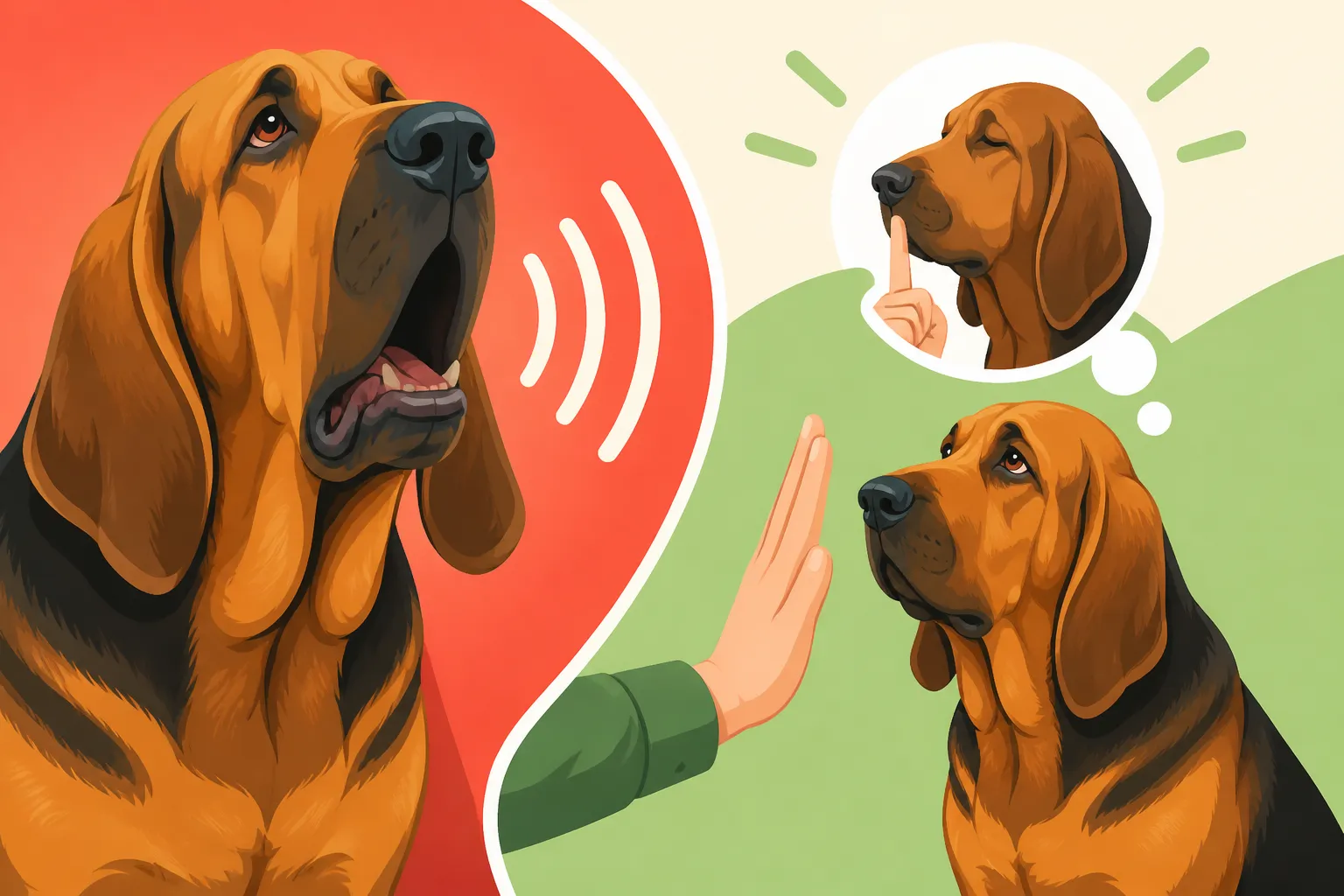
Whether a Bloodhound Can Be Taught a Quiet Cue
It’s a scenario familiar to many Bloodhound owners: you’re trying to enjoy a peaceful evening, or perhaps work from home, when suddenly that deep, resonant bay fills the air. It might be directed at a leaf blowing across the yard, a distant siren, or an entirely invisible scent only your hound can perceive. You love your Bloodhound dearly, but the constant baying can be… a lot. The natural question that arises is, can you actually teach a Bloodhound a "quiet" cue, or are you doomed to a lifetime of serenades? This guide will dive deep into understanding your Bloodhound’s vocal nature and explore practical, empathetic strategies to help manage their incredible voice.
Understanding the Bloodhound's Natural Inclination to Bay
Let's be honest, trying to get a Bloodhound to be entirely quiet is like asking a fish not to swim. These magnificent hounds are built for sound, and their voice is as integral to their being as their unparalleled nose. It's not a flaw; it's a feature, albeit one that requires significant management in a modern home environment.
Why Bloodhounds Bay in the First Place
The Bloodhound's bay isn't just a random noise; it's a deeply ingrained communication tool, honed over centuries of selective breeding. Historically, these dogs were bred to track game and later, people, over vast distances and varied terrain. Their bay served a crucial purpose: to alert their human handler to their location and progress on a trail. Imagine a handler following their dog through dense woods or over rolling hills – they needed to hear where their hound was. That deep, booming bay carries far and wide, cutting through ambient noise. It's their way of saying, "I'm on the scent! Keep up!"
It’s an entirely different vocalization from a quick bark, which might indicate alarm or demand attention. The Bloodhound’s bay is a prolonged, mournful, yet powerful sound. It's a vocal expression of intense focus and drive when they're working. Sometimes, it’s also an expression of sheer joy or deep-seated anxiety, but at its core, it's a testament to their purpose. Understanding this fundamental aspect of their nature is the first step toward managing it. You can learn more about this in Why a Bloodhound Bays. And if you've ever heard one, you know How Loud a Bloodhound's Bay Is.
The Challenge of Suppressing an Instinct
Given the powerful, instinctual nature of their baying, you can imagine why simply telling a Bloodhound "no" or punishing them for being vocal is incredibly frustrating for both you and your dog. It's like punishing a Border Collie for herding sheep – it's literally what they were born to do. When a Bloodhound bays, especially when they've picked up a fascinating scent, they are often in a state of intense concentration. They are not being "naughty" or disobedient; they are following their genetic imperative.
Attempting to suppress this natural instinct through punishment can lead to a host of behavioral problems. A Bloodhound might become anxious, fearful, or even shut down, believing they are being chastised for simply being a Bloodhound. This can damage the bond you share and make actual training more difficult. Instead of trying to eliminate the bay, our goal should be to teach our Bloodhounds when and where their voice is appropriate, and how to "turn it off" when asked. It’s about channeling that vocal energy, not stifling it completely. This is why tools like electric or spray bark collars are generally counterproductive and inhumane for a Bloodhound. They don't teach the dog what to do instead; they just punish the natural expression of their breed, as explored in Why a Bark Collar Is the Wrong Answer for a Bloodhound.
Realistic Expectations for a "Quiet" Cue with a Bloodhound
Before we even dive into training techniques, it's crucial to recalibrate our expectations. If your goal is a completely silent Bloodhound, you might be setting yourself up for disappointment and unnecessary stress. These aren't silent companions; they are vocal, sentient beings with a powerful voice.
Managing vs. Eliminating Baying in a Scent Hound
The most realistic and healthy approach to a "quiet" cue with a Bloodhound is management, not outright elimination. Think of it as teaching your dog an "off-switch" for their vocalizations, rather than permanently disabling the baying mechanism. A Bloodhound can certainly learn to stop baying on cue in certain situations, especially if they are not deeply engrossed in a scent. The success of a "quiet" cue often hinges on factors like the dog's drive, its current mental state, and the strength of the distraction.
For instance, teaching your Bloodhound to be quiet when the doorbell rings or when another dog barks nearby is far more achievable than expecting them to silently ignore a fresh, tantalizing deer trail in the woods. Their nose will always, always outvote their training when a truly irresistible scent presents itself. This isn't a sign of poor training; it's just the reality of owning a world-class scent hound. Our aim is to find a balance where they can express their natural instincts in appropriate ways (like during structured scent work) and settle down when asked in day-to-day life. It means accepting that sometimes, despite your best efforts, they will still bay, and that's okay.
Identifying Triggers and Context
To effectively teach a "quiet" cue, you first need to understand why your Bloodhound is baying. Baying isn't a monolithic behavior; it's triggered by a variety of factors. Keeping a log or simply being mindful of the context can reveal patterns that will inform your training.
Common triggers include:
- Environmental Stimuli: Sirens, other dogs barking in the neighborhood, unfamiliar people passing by, squirrels, birds, or even just leaves blowing past a window.
- Scent-Related Excitement: A particularly strong new scent wafting in through an open window, or picking up a scent during a walk.
- Boredom or Lack of Stimulation: A Bloodhound left alone with nothing to do can bay out of sheer boredom or frustration.
- Anxiety or Loneliness: Some Bloodhounds will bay when left alone, especially if they suffer from separation anxiety. This is a common reason Why Bloodhounds Are Surrendered.
- Attention-Seeking: If baying consistently gets your attention (even negative attention), your Bloodhound might learn that it's an effective way to get you to respond.
- Excitement: Greeting you after you've been away, or anticipating a walk or meal.
Consider the time of day, too. When a Bloodhound Bays at Night might be different from daytime baying. Likewise, understanding Whether a Bloodhound Bays When Left Alone vs. Whether a Bloodhound Bays at Every Passerby will guide your approach.
By identifying specific triggers, you can then develop targeted strategies for management and training. For example, if your Bloodhound bays at every passerby outside your window, addressing that specific trigger with desensitization will be more effective than a blanket "quiet" command for all situations.
Strategies for Teaching a "Quiet" Cue
Teaching a "quiet" cue involves a multi-pronged approach that combines direct training with environmental management and understanding your dog's needs. It's about proactive steps rather than reactive corrections.
The "Speak and Quiet" Method
This is a classic positive reinforcement technique that works by teaching your dog to bark (or bay, in this case) on command, and then immediately following it with a "quiet" command. The idea is to gain control over the vocalization, making it a behavior you can cue, rather than an uncontrollable outburst.
Here’s a step-by-step breakdown:
-
Teach "Speak" First:
- Find a reliable trigger that makes your Bloodhound vocalize. This could be ringing the doorbell, knocking, or holding a high-value treat just out of reach.
- As soon as they make a sound (even a low grumble or bay), mark the behavior with a verbal marker ("yes!" or a clicker) and immediately reward them with a high-value treat.
- Repeat this several times. Once they start to anticipate, add your verbal cue "Speak!" just before they vocalize.
- Practice until your Bloodhound bays reliably on the "Speak!" cue.
-
Introduce "Quiet":
- Once "Speak" is solid, cue your Bloodhound to "Speak."
- As soon as they start to bay, show them a treat (or simply wait a second for them to pause), and when they are momentarily quiet, mark ("yes!") and immediately give them the treat while saying "Quiet!"
- The crucial part here is the silence. You are rewarding the absence of baying.
- Initially, you might have to reward even a split-second pause in their baying. With practice, you'll increase the duration of silence required before the reward.
- Practice this sequence repeatedly: "Speak!" (bay) – wait for silence – "Quiet!" (reward).
-
Generalize and Practice:
- Once they understand the concept, practice in different environments with varying levels of distraction. Start in a quiet room, then move to areas with mild distractions, eventually working up to more challenging scenarios.
- Always use high-value rewards that your Bloodhound truly loves. This is key, as What a Bloodhound Will Work For often means something truly special.
This method gives your Bloodhound a clear understanding of what "quiet" means and rewards them for choosing silence. It empowers them to make the right choice rather than just suppressing a natural urge. If you're looking for structured guidance, programs like BAXTER & Bella often include training modules for specific behaviors like this, which can be incredibly helpful for new and experienced owners alike.
Environmental Management and Enrichment
Beyond direct training, managing your Bloodhound's environment can significantly reduce unwanted baying. Prevention is often easier than correction.
- Reduce Visual and Auditory Triggers: If your Bloodhound bays at everything outside the window, consider using opaque window film on lower panes, or simply keeping blinds or curtains closed during peak activity times. For auditory triggers like neighborhood noise or sirens, a white noise machine or playing calming music can help muffle external sounds.
- Provide Mental and Physical Stimulation: A bored Bloodhound is a vocal Bloodhound. These intelligent, high-drive dogs need a job.
- Scent Work: This is hands-down the best way to satisfy a Bloodhound's instincts. Activities like Mantrailing Is the Answer to a Bloodhound, Not Obedience or nose work classes are perfect. Even simple "find it" games around the house can be incredibly tiring and fulfilling for them.
- Puzzle Feeders and Chews: Instead of just putting food in a bowl, make your Bloodhound work for it. Puzzle feeders or KONG-style toys stuffed with treats can keep them engaged for extended periods. There are many great options available on Amazon for interactive feeding and chewing. Long-lasting, durable chews are also excellent for quiet chewing time.
- Structured Exercise: While a Bloodhound isn't a marathon runner, they do need consistent, moderate exercise. Regular walks (always on a leash!), and opportunities to explore new scents can help tire them out mentally and physically. However, remember the exercise limits on a growing Bloodhound puppy.
- Create a Safe, Quiet Space: A crate, den, or a quiet room can become your Bloodhound's personal sanctuary. If they are crate trained, this can be a place where they learn to settle down and be quiet. Ensure it's a positive space, associated with relaxation and comfort.
By ensuring your Bloodhound's needs are met for mental and physical stimulation, you'll naturally see a decrease in nuisance baying. A happy, fulfilled Bloodhound is less likely to bay out of boredom or frustration.
Desensitization and Counter-Conditioning
For specific triggers that reliably set off your Bloodhound, desensitization and counter-conditioning can be highly effective. This involves gradually exposing your dog to the trigger while simultaneously creating a positive association.
Let’s take the common example of baying at the doorbell:
- Identify the Trigger: Your Bloodhound bays every time the doorbell rings.
- Start with Low Intensity: Begin by recording your doorbell sound, or have someone gently tap the door, making a very soft sound. The key is for the sound to be so quiet that your Bloodhound barely reacts, or doesn't react at all.
- Positive Association: As soon as the soft sound occurs, immediately give your Bloodhound a high-value treat. Repeat this many times. The goal is for them to associate the sound with something wonderful.
- Gradual Increase: Slowly increase the volume or intensity of the doorbell sound over many, many sessions. Only move to a louder sound when your Bloodhound consistently remains calm and looks to you for a treat with the current, softer sound.
- Simulate Real Scenarios: Once they're calm with the actual doorbell, practice with someone ringing it from outside. Ensure the person stays outside at first. Again, reward for calm behavior.
- Introduce a "Quiet" Cue: As they improve, you can combine this with your "quiet" cue. When the doorbell rings, give your "quiet" cue, and reward for silence.
This process requires immense patience and consistency, but it can profoundly change your Bloodhound's emotional response to triggers, making them less likely to bay out of excitement or alarm. This method can also be adapted for other triggers like passing strangers or other dogs barking.
When to Seek Professional Help and Long-Term Commitment
Sometimes, despite your best efforts, a Bloodhound's vocalizations can become overwhelming or problematic. Knowing when to call in the cavalry can save your sanity and strengthen your relationship with your dog.
Recognizing When You Need a Trainer
There's absolutely no shame in seeking professional help. Bloodhounds are a unique breed, and their vocal tendencies can be intense. You might need a trainer if:
- Baying is excessive and constant: If your Bloodhound is baying for prolonged periods, multiple times a day, disrupting your household or bothering neighbors, it's time for expert intervention. Whether a Bloodhound Suits a Townhouse With Shared Walls often depends heavily on how well baying can be managed.
- The baying is accompanied by other problem behaviors: Such as destructive chewing when left alone, house-soiling, or signs of extreme anxiety. These indicate a deeper issue than just vocalization.
- Your own methods aren't working: If you've been consistent with positive reinforcement and environmental management, but aren't seeing progress, a fresh perspective from a professional can be invaluable.
- You're feeling overwhelmed or frustrated: Dog ownership should be a joy. If you're constantly stressed about your dog's baying, a trainer can provide the tools and support you need.
Look for a certified professional dog trainer (CPDT-KA) or a certified dog behavior consultant (CDBC) who uses positive reinforcement methods and has experience with scent hounds or working breeds. They can help you develop a tailored plan, identify subtle triggers you might be missing, and teach you advanced techniques. Some trainers even offer virtual consultations, which can be convenient. Consider joining a Bloodhound owner's group for recommendations for trainers in your area who understand the breed. You might even find resources through the American Bloodhound Club that can guide you towards experienced professionals.
The Lifelong Journey of Managing a Bloodhound's Voice
Bringing a Bloodhound into your life means committing to a lifelong journey of understanding and managing their unique traits, and their voice is certainly one of them. While a "quiet" cue can be taught and refined, it's rarely a one-and-done solution. Consistency is paramount. Every family member needs to be on the same page with commands, rewards, and management strategies. If one person allows the Bloodhound to bay for attention, it undermines everyone else's efforts.
Accepting that your Bloodhound will always have a powerful voice, and that occasional baying is just part of their charm, is crucial for your own peace of mind. Instead of fighting against their nature, learn to work with it. Provide ample opportunities for appropriate scent work, which allows them to "sing their song" in a constructive way. Recognize that the same intense focus that leads to their baying is what makes them such incredible trackers.
Ultimately, loving a Bloodhound means embracing their full, vocal personality. Many Bloodhound owners, despite the challenges, wouldn't trade their hounds for anything. In fact, if you ask Whether Bloodhound Owners Would Choose One Again, the answer is almost universally a resounding yes. With patience, consistent positive reinforcement, smart environmental management, and perhaps a little professional guidance, you can absolutely teach your Bloodhound a reliable "quiet" cue, allowing for a harmonious life together.
| Trigger for Baying | Potential Management Strategy | Training Focus |
|---|---|---|
| Doorbell/Knock | Opaque window film, white noise machine. | Desensitization, "Quiet" cue, "Go to mat" cue. |
| Other dogs barking outdoors | Keep windows closed, play music, white noise. | Desensitization to recordings, "Quiet" cue. |
| Sirens passing by | White noise machine, distracting with high-value treat during siren. | Counter-conditioning. |
| People/dogs walking past window | Window film, restrict access to bay window, use baby gates. | Desensitization from a distance, "Quiet" cue. |
| Boredom/lack of stimulation | Daily scent work, puzzle feeders (e.g., from Amazon), durable chews, interactive toys. | Increase mental & physical enrichment. |
| Attention-seeking | Ignore unwanted baying (if safe), reward silence. | Teach "Speak" then "Quiet," reward calm attention. |
| Separation anxiety | Crate training, short departures with positive associations, professional consultation. | Gradual desensitization to departures, focus on comfort. |
| Excitement (e.g., mealtime) | Implement "wait" command, teach calm greetings, feed after a period of quiet. | "Quiet" cue, "Wait" cue, reward calm behavior. |
| New outdoor scents | Consistent leash training, redirect attention with "leave it" or "focus" cues. | Strong recall on leash, engaging in structured scent work. |
Disclaimer
This article is for general informational purposes only and does not constitute professional advice. Laws, prices and regulations vary by location and change over time. Consult a qualified professional for guidance on your specific situation.